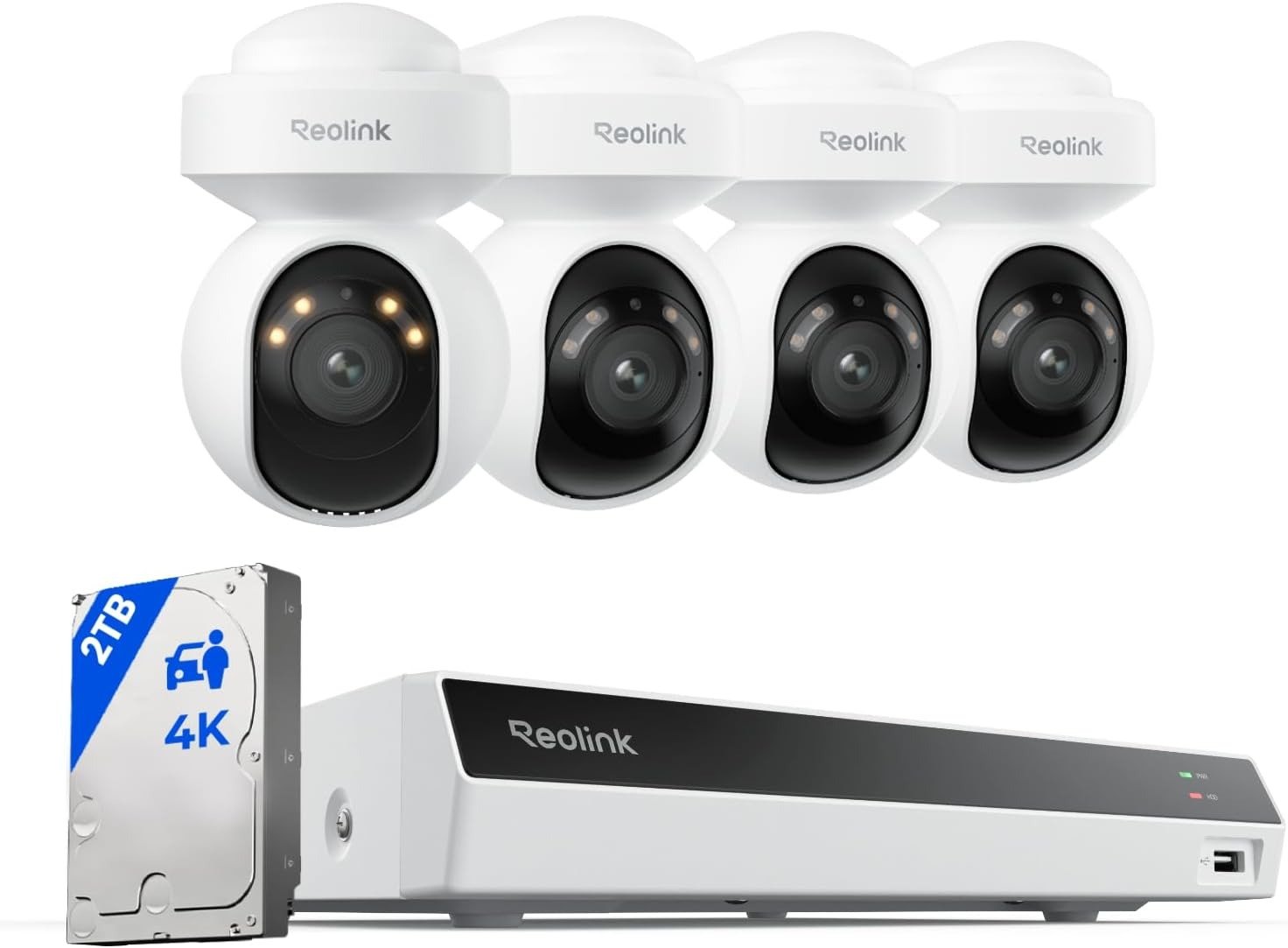
Reolink RLK8-800PT4: A Good System When the Goal Is Stable Coverage
DECISION ANALYSIS
After going through the official specifications, owner feedback, and real-world complaints, the conclusion I came to is simple: the Reolink RLK8-800PT4 makes sense when the real problem is coverage drift, not when the real desire is feature theater.
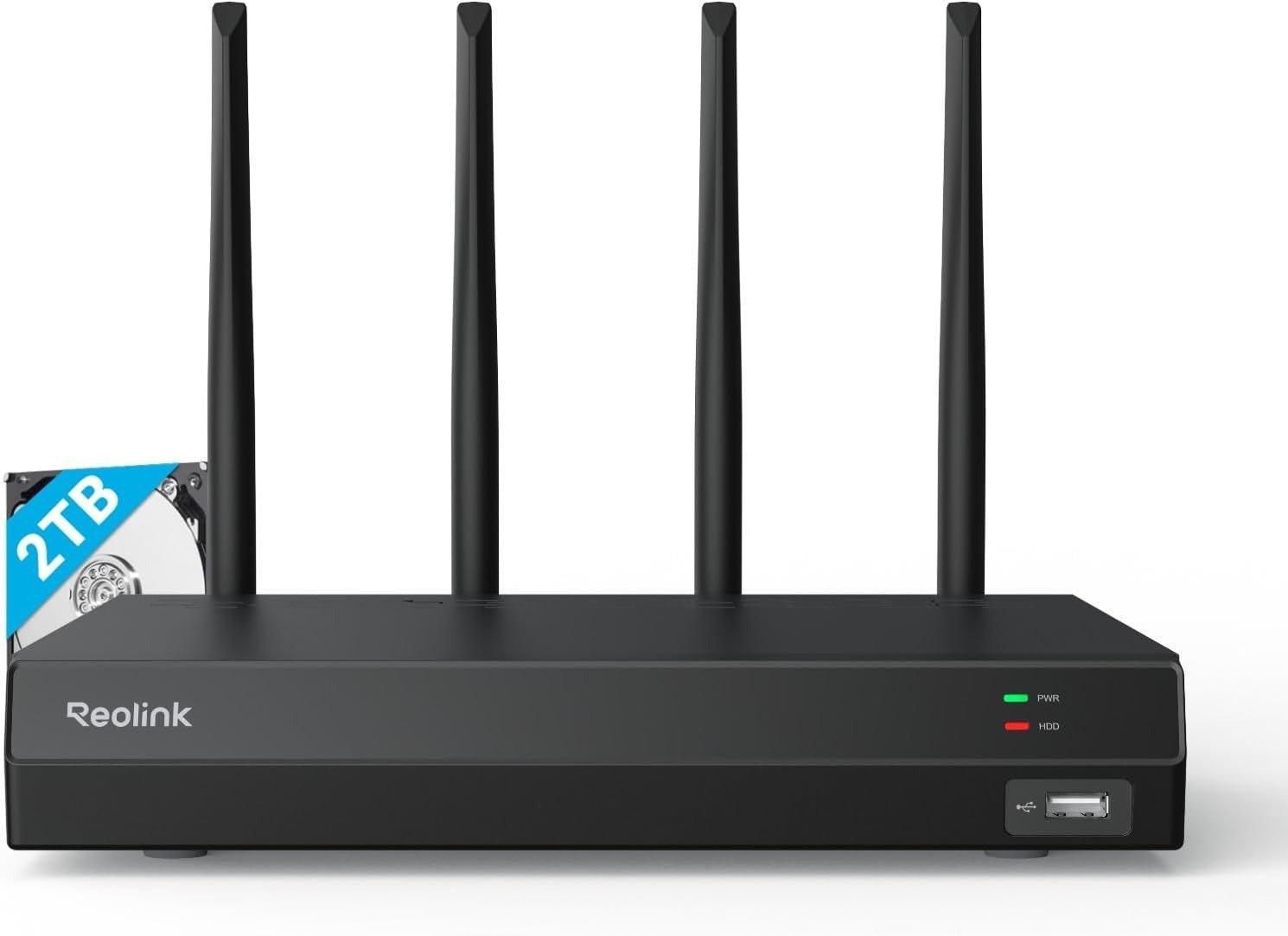
It is a wired 4-camera PoE kit built around an 8-channel NVR with a preinstalled 2TB hard drive, 4K 8MP cameras, 355° pan, 50° tilt, auto tracking, person/vehicle/animal detection, two-way audio, color night vision with adjustable 3000K spotlights, infrared night vision, and H.265/H.264 recording.
That is a serious list, but what matters to me is not the list itself. It is what that list does to daily surveillance variance.
What I Think This System Gets Right
The first thing I like is that the design is biased toward control.
PoE means one cable for power and data, which removes a lot of the flakiness people tolerate with cheaper Wi-Fi-first systems.
The cameras record through a local NVR, the included drive can be expanded up to 16TB, and the system supports 24/7 recording instead of forcing the user into short, selective moments.
That matters because security failures usually happen in the seconds before or after the clip a lightweight system decides to keep.
The RLK8-800PT4 also gives useful viewing tools around that recording layer: motion/person/vehicle/animal filtering, detection zones, smart playback, app and client access, and support for up to 20 user accounts.
Why the Cameras Feel Stronger Than Basic Fixed Units
I do not see the pan-and-tilt design here as a gimmick.
I see it as an attempt to reduce blind-spot drift without jumping all the way into a full patrol-style PTZ workflow.
Each camera offers a fixed 4mm lens, 88° horizontal field of view, 10x digital zoom, 355° pan, 50° tilt, and up to 64 preset positions, plus automatic tracking when a subject is detected.
In practical terms, that means the system is trying to stay relevant when motion happens off-axis rather than demanding that everything pass through one rigid frame.
For a driveway, front yard, side access route, or backyard edge, that is more useful than another fixed 4K camera that sees beautifully but only where it already happens to be pointed.
Night Use Is Where the Product Either Earns Respect or Loses It
This is also where I think the RLK8-800PT4 has a legitimate case.
The cameras are rated for 3840×2160 at up to 25fps, use an F1.2 lens, support infrared night vision out to about 12 meters, and can switch to spotlight-assisted color night vision.
Reolink positions this as “4K Color Night Vision,” and while marketing language is always louder than reality, the underlying hardware does support the broader claim that the kit is meant to preserve identity-level detail deeper into low light than a casual budget setup.
User comments I found line up with that general impression, especially where people mention good night vision with the spotlight on and useful detail in realistic yard distances.
The Main Limitation I Would Not Ignore
The weakness is not hidden, but it is easy to misunderstand.
This system supports auto tracking. It does not appear to offer patrol mode on this kit, and at least one owner reacted strongly after discovering that difference only after installation.
I think that frustration is real, even if the product did not falsely advertise patrol.
If someone’s mental model is “I want the camera to keep sweeping on its own,” this is the wrong expectation to bring into the purchase.
The RLK8-800PT4 is better understood as a stability-focused home surveillance kit with event-responsive movement, not a continuously roaming PTZ platform.
Compatibility Split 3.0
Good fit:
If I wanted a wired local-security system for a house, driveway, yard, workshop, or small business edge, and I cared most about stable recording, reduced false alerts, night coverage, and less dependence on cloud subscriptions, this kit would make sense to me.
The IP65 weather rating, offline recording path, Google Assistant support, two-way audio, and expandable storage all reinforce that use case.
Bad fit:
If I wanted a simple battery setup, a casual stick-and-forget camera, or a patrol-heavy PTZ experience, I would not force this system into that role.
The installation is more committed, the ecosystem is more NVR-centered, and the motion behavior is not designed around constant patrol.
Reddit feedback around this model reflects both sides of that split: satisfaction from buyers escaping weaker consumer systems, and frustration from people expecting a different kind of movement logic.
My Decision
I would not describe the Reolink RLK8-800PT4 as exciting.
I would describe it as structurally reassuring.
And for security, that is the better compliment.
The value here is not that it does one flashy thing.
The value is that it brings together the pieces that reduce long-term surveillance variance: wired PoE, local NVR recording, usable pan/tilt coverage, auto tracking, classification-based alerts, and credible night operation.
If that is the problem you are trying to solve, this is a coherent product.
If you want patrol mode or a more theatrical PTZ experience, it is coherent in the wrong direction.
For the buyer who wants a practical coverage machine rather than a toy, I come away thinking this kit is a solid and defensible choice.
Transparency Note:
This analysis is not based on quick personal impressions.
It is derived from documented system behavior, verified user patterns, and the physical constraints of storage capacity.
The goal is to translate complex technical behavior into a realistic performance model that helps you make a clear decision

One Comment