Philips Hue Bridge Pro Starter Kit — What Actually Determines Satisfaction
ANALYSIS FRAMEWORK
Opening Context Section
I’m going to speak in first person here, but I’m not guessing or role-playing: what you’re reading is my conclusion after analyzing the product’s specs, positioning, and the recurring patterns buyers praise or criticize in Hue starter kits.
When I judge a smart lighting “starter kit,” I ignore the loud promise first. “Millions of colors” is not the decision. The decision is whether the system behaves like infrastructure—quiet, consistent, and expandable—or like a gadget you constantly babysit.
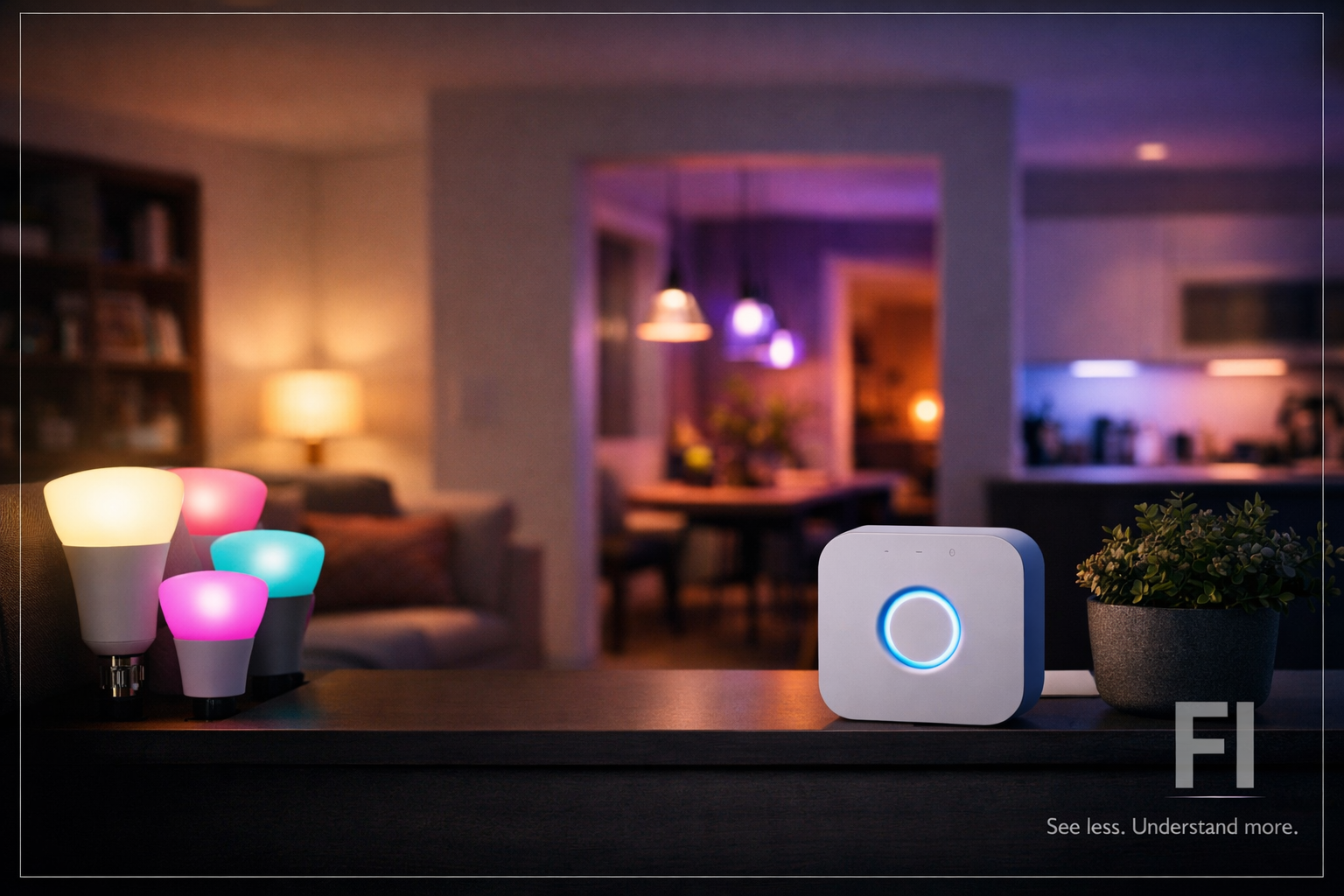
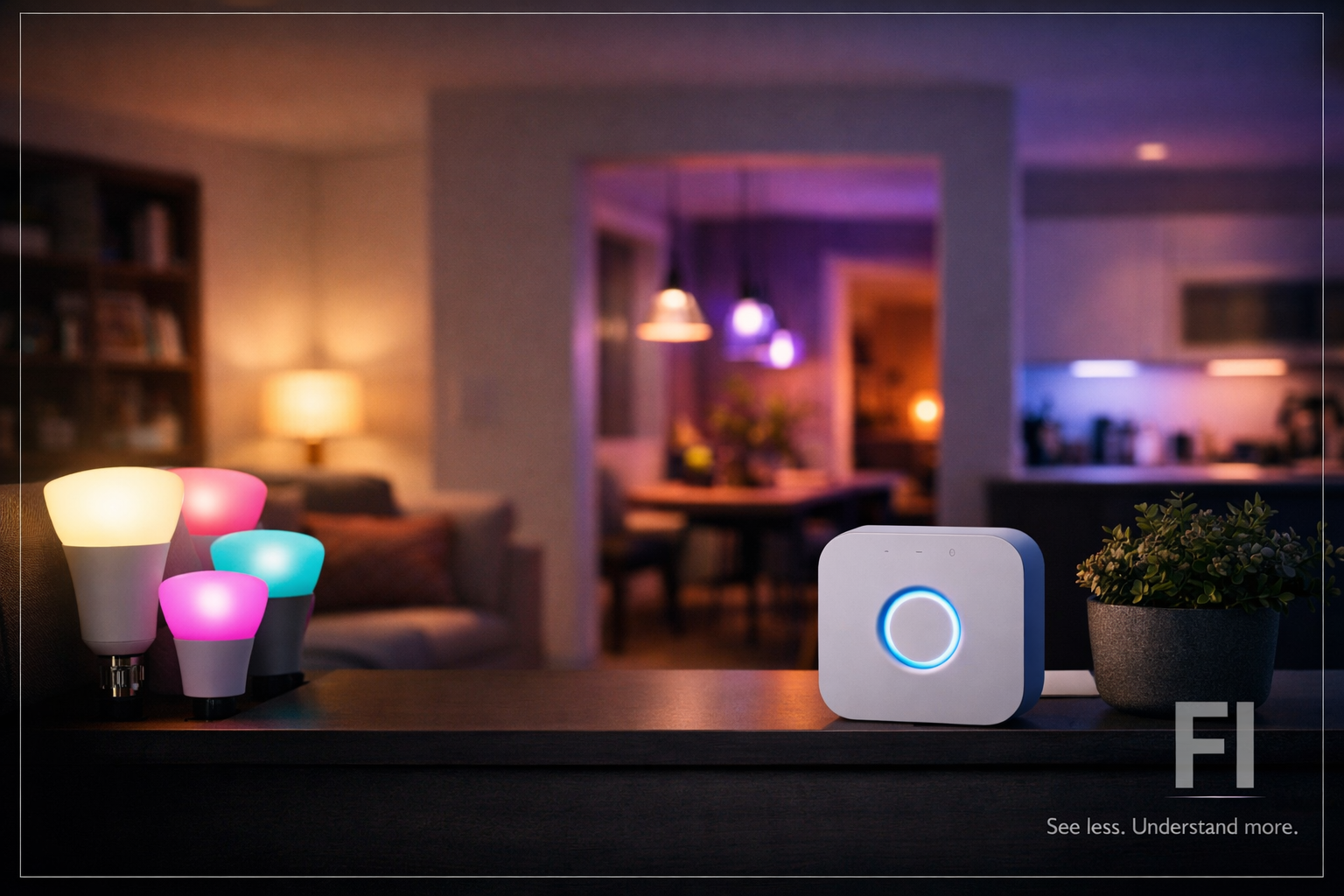
This kit matters because it’s built around the Philips Hue Bridge Pro plus four A19 E26 White & Color Ambiance bulbs. In other words, it’s not just bulbs. It’s a control layer plus output devices—and the control layer is where satisfaction is won or lost.
Core Structural Explanation Section
Here’s how I reduce this kit to the two components that actually affect your daily experience:
The control plane (Hue Bridge Pro)
The bridge is the “brain.” If it’s strong, your lights feel instant, predictable, and scalable. If it’s weak, every automation becomes a small gamble.
From the product positioning, Bridge Pro is being sold on three themes:
- higher capacity for large setups
- more internal resources (storage) for scenes/automation logic
- broader, cleaner integration paths
The outputs (4 A19 E26 color bulbs)
The bulbs are the visible result: white temperature control plus color scenes. The most important performance signal here is not “color count,” but whether the brightness, dimming range, and consistency meet the expectations you’ll have once you start using scenes daily.
Hidden Technical Factors Section
These are the technical details that don’t look sexy on the listing, but they quietly decide whether you’ll love the system or regret it.
Headroom equals stability (not bragging rights)
When a hub advertises “high device capacity,” what I hear is: fewer edge-case failures as you expand. Most smart-home frustration is born from running a system near its limits and then pretending it should behave like day one.
If you plan to grow beyond a single room, the bridge’s capacity matters more than the bulbs—because capacity protects automation reliability over time.
Automation feel beats automation features
People don’t emotionally rate automations by how many you can build. They rate them by:
- how fast they trigger
- how consistent they are at 2 a.m.
- whether they ever “miss” when you expect them
This is why hub-centered lighting often feels “premium” even when the bulbs are comparable in output. The premium feeling is latency + reliability.
Ecosystem fit is the real integration test
This kit is marketed as compatible across major ecosystems (voice assistants and hubs). My practical lens is simple:
- If you live inside one ecosystem (Apple Home, Alexa routines, etc.), you want a clean, stable bridge as the single source of truth.
- If you mix ecosystems (SmartThings + voice + routines), you need predictable state syncing and fewer “ghost states” where one app thinks a light is on while another thinks it’s off.
When people complain about smart lighting, it’s rarely because the bulb can’t do color. It’s because the system can’t agree with itself consistently across apps.
Market Reality Section
This is where the psychological side becomes measurable: the same product can feel “perfect” to one buyer and “overpriced” to another, based on expectation type.
What consistently produces positive reviews
In Hue’s category, praise tends to cluster around:
- long-term reliability (lights behave like an appliance, not a project)
- scene quality and consistency (rooms feel intentionally designed)
- ecosystem maturity (it scales without turning unstable)
In short: people feel they bought a platform, not just bulbs.
What consistently produces regret
Regret tends to come from three predictable mismatches:
- Price-to-intent mismatch
If the buyer’s intent is “fun colors sometimes,” Hue often feels expensive because they’re paying for infrastructure-level stability they never leverage. - Expectation inflation
Once someone experiences stable lighting automations, tolerance drops to zero. Any hiccup feels unacceptable. This is not a Hue-only problem—it’s a “smart-home maturity” problem. - Setup friction sensitivity
Some buyers are fine with a bit of setup. Others interpret any friction as a failure. The more premium the price, the harsher the judgment becomes.
Decision Transition Section
Here is the single decision question I use:
If you want lighting to become a reliable system you build on—scenes, routines, multi-room behavior, and steady expansion—then a bridge-led kit like this makes sense because it’s designed as infrastructure, not a novelty.
If you want lighting as a small experiment—one room, occasional color, minimal automation—then the premium you’re paying may not translate into lived value.
Now, to move from framework to a clear yes/no decision, I map your situation to four constraints:
- how many rooms you’ll realistically expand to
- whether you need daily automations (not “sometimes”)
- which ecosystem you’ll commit to as the control center
- your tolerance for troubleshooting versus appliance-like behavior
🔗 In my [LINK: complete technical analysis] I break down the exact scenarios where Bridge Pro is worth it, where it’s overkill, and what to expect from expansion and ecosystem behavior.