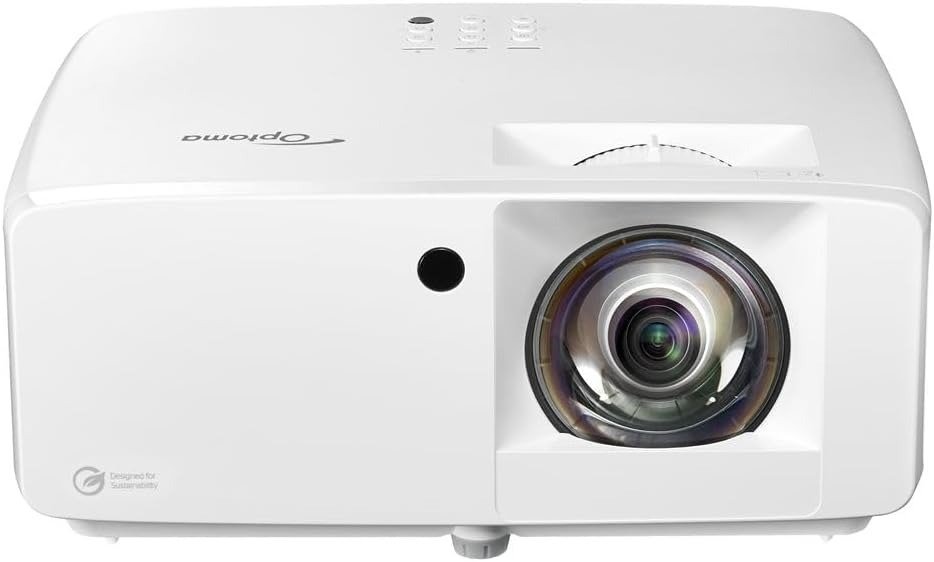
Optoma GT2100HDR Review: The Image Gets Big Fast. The Margin for Error Does Too.
PRODUCT NAME: OPTOMA GT2100HDR
A projector can look “impressive” in under ten seconds.
The wall lights up. The picture stretches wide.
The room suddenly feels more expensive than it is.
Then the small truths start arriving.
Blacks flatten. Placement gets picky.
Subtitles remind you this is still 1080p.
And the thing you thought you were buying for freedom starts asking for discipline instead.
That is the real story of the Optoma GT2100HDR.
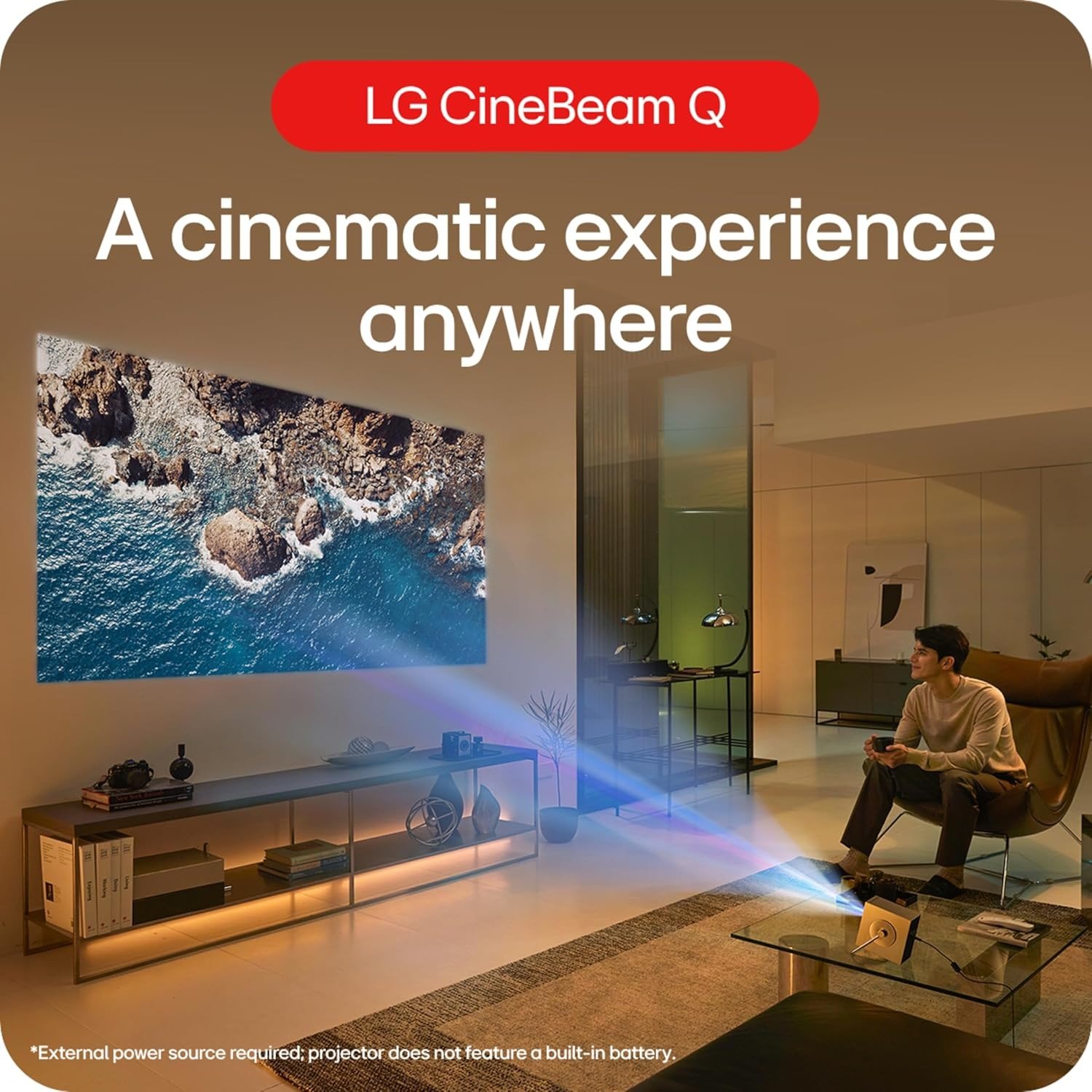
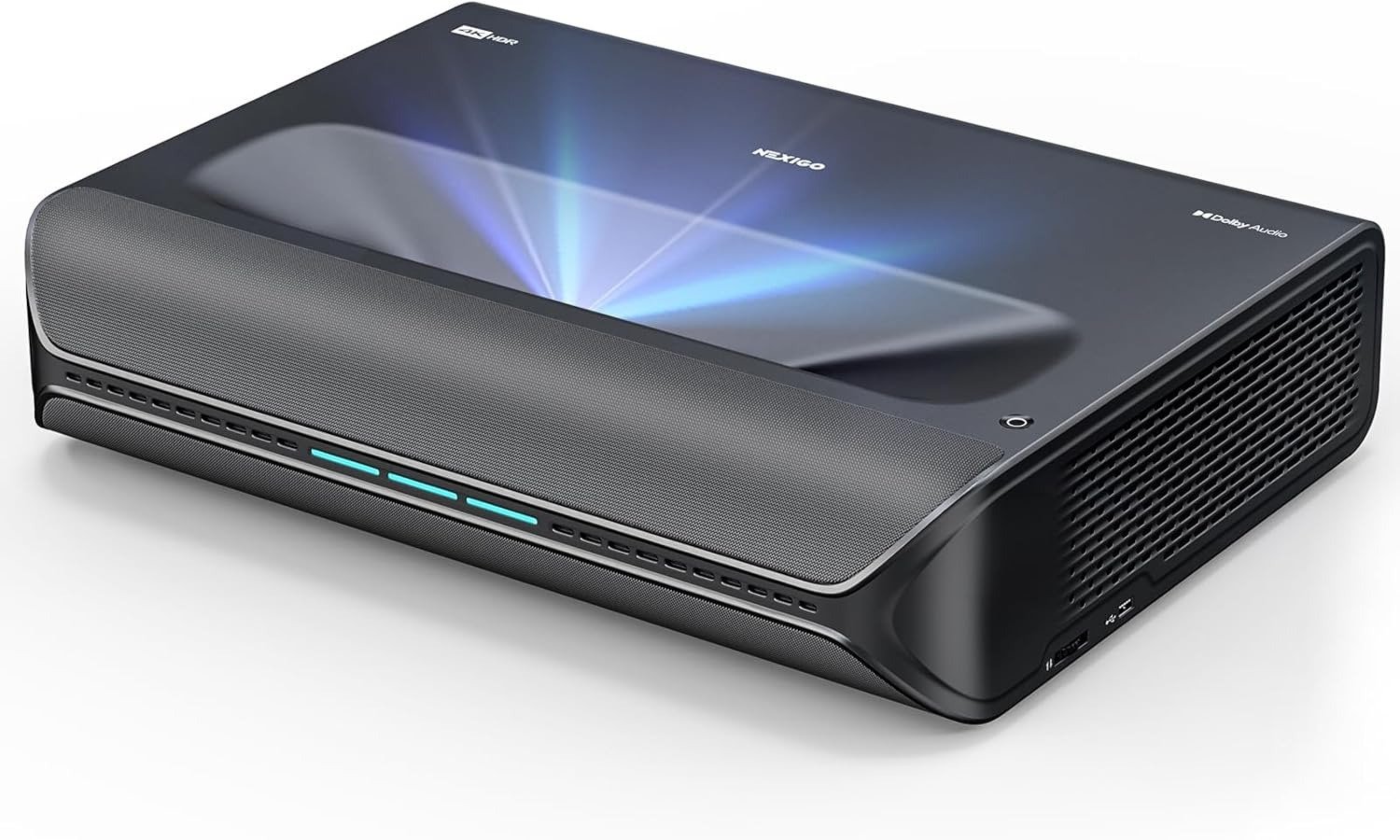
It is bright, compact, short-throw, laser-based, and unusually easy to fit into smaller rooms.
It is also the kind of projector that becomes much better—or much more disappointing—depending on exactly where your threshold begins.
The Result Looks Fine. The Problem Isn’t.
The GT2100HDR sells a very comforting idea: big-screen projection without needing a huge room.
On paper, that idea is real.
Its 0.496:1 throw ratio means you can get a 100-inch image from just over a meter away, and Optoma rates it at 4,200 lumens with a laser light source rated up to 30,000 hours.
Tom’s Guide measured it at about 3,012 ANSI lumens in testing, which is still genuinely bright for this class.
But brightness hides mistakes for only so long.
A projector like this can look convincing on first setup because light output is the easiest thing to notice.
What takes longer to notice is whether the image still feels settled once you stop admiring the size and start living with the trade-offs: fixed optics, no zoom flexibility, modest black depth by dedicated theater standards, occasional rainbow artifacts for sensitive viewers, and the simple fact that 1080p looks sharper at sane screen sizes than it does when you ask it to impersonate 4K.
Tom’s Guide called the image satisfyingly sharp overall, but also noted that the rainbow effect shows up from time to time.
That is not a side note. For some buyers, that is the threshold.
What You’re Actually Feeling but Not Naming
Most people do not say, “I am crossing the projector fit threshold.”
They say something messier.
They say the image feels washed in daytime even though the specs looked strong.
They say setup took longer than expected.
They say gaming felt good, but movies did not feel as deep as they hoped.
They say the projector seemed perfect for a small room, right until placement started dictating the room back to them.
That cluster of annoyances is not random.
It comes from buying the GT2100HDR for the headline promise—short throw and brightness—without asking what happens after the first week.
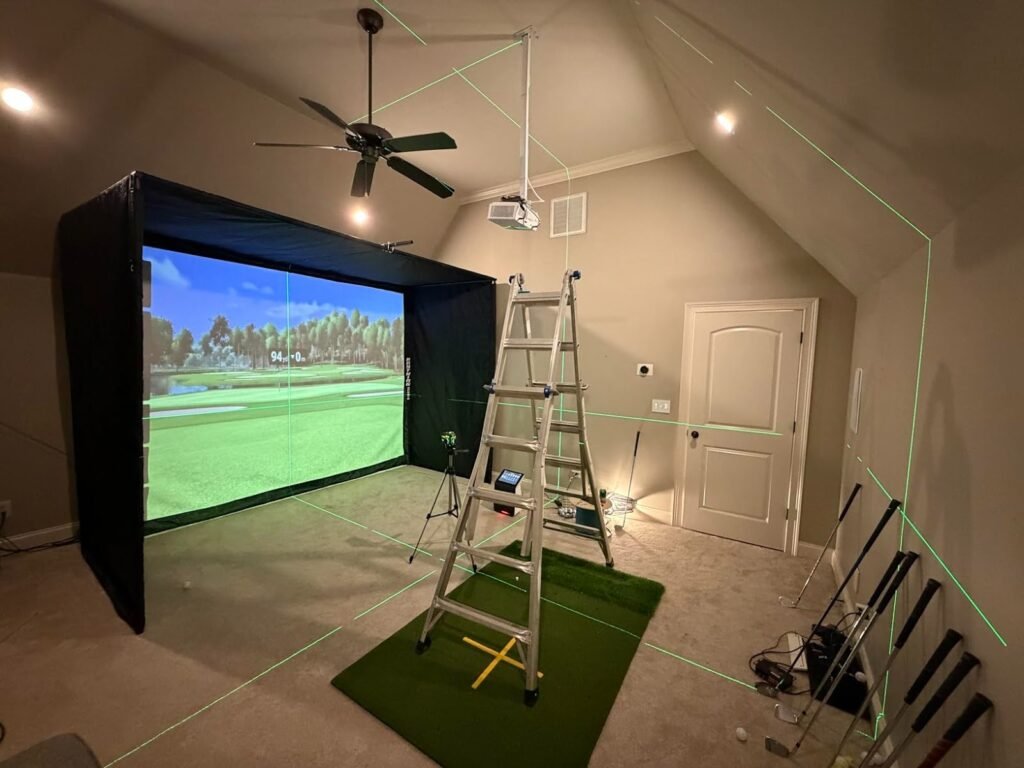
Best Buy owners consistently praise the short throw convenience, brightness, and low-maintenance laser light source, especially in tight spaces and golf simulator setups, but they also mention that alignment takes patience and that those wanting true 4K detail may notice the limit.
Even positive owners describe it as a projector that rewards the right room and the right expectations, not blind enthusiasm.
The Hidden Mechanism Behind the Miss
The miss usually starts with a simple misunderstanding: people treat brightness as the master metric when the real mechanism is brightness plus placement discipline plus resolution tolerance.
The GT2100HDR is strong on the first variable.
It is respectable on the second only if your room cooperates.
It is conditionally strong on the third.
Here is the mechanism in plain language:
| Technical factor | What it sounds like on paper | What it becomes in real use |
|---|---|---|
| 4,200-lumen claim | “This should handle ambient light easily” | It helps a lot, but bright mode is not the same thing as naturally balanced image quality |
| 0.496:1 short throw | “I can use this anywhere” | You gain placement closeness, but you lose some forgiveness in setup and image geometry |
| 1080p native resolution | “Still enough for most people” | True at normal seating and sensible sizes; less true when your eyes expect 4K crispness on very large images |
| Fixed lens / fixed zoom | “Simple” | Simple until your room dimensions are slightly wrong |
| Laser light source | “Set it and forget it” | Great for maintenance, but not a substitute for better room control or deeper native cinema performance |
Those are not pros and cons.
They are linked behaviors.
The GT2100HDR is not weak because it is short throw.
It becomes demanding because it is short throw.
It is not disappointing because it is 1080p.
It becomes revealing when the screen size, seating distance, and buyer expectation drift upward together.
The Threshold Where the Outcome Quietly Breaks
This projector has one threshold that matters more than the others.
I would name it the forgiveness threshold.
Below that threshold, the GT2100HDR feels smart.
Above it, it starts feeling exposed.
You stay below the threshold when:
- Your room is small or awkward enough that short throw solves a real placement problem.
- You care more about brightness, speed, and convenience than absolute black depth.
- Your screen size is ambitious but not absurd.
- You are comfortable spending extra attention on positioning.
You cross the threshold when:
- You want the room-light resilience of a bright projector and the cinematic depth of a darker-room specialist.
- You expect 1080p to keep looking premium at every scale.
- Or you buy short throw thinking it means effortless rather than constrained.
The numbers support this split.
Tom’s Guide measured roughly 3,012 ANSI lumens and a 2,370:1 contrast result, which is healthy enough for mixed-use viewing, but not the kind of contrast performance that turns dark scenes into a luxury experience.
Optoma’s own feature set makes the trade clear: high brightness, gaming support up to 1080p/120Hz at 8.6ms, fixed short-throw optics, and laser longevity.
This is a projector built to stay bright, stay responsive, and stay practical—not to disappear into a blacked-out theater fantasy.
| Threshold signal | Still inside fit | Starting to break |
|---|---|---|
| Ambient light | Some daylight / living-room spill | Bright room expectations approaching “TV replacement” |
| Image size expectation | Big image, normal viewing distance | Very large image plus high detail expectations |
| Placement flexibility | You can mount carefully and live with fixed optics | You need zoom/lens shift forgiveness |
| Usage priority | Sports, gaming, mixed use, simulator | Dedicated cinema-first black-level obsession |
| Buyer mindset | “I need bright and practical” | “I want bright, practical, and premium-dark-scene depth” |
Why Most Buyers Misread This Too Early
Because the wrong metric is seductive.
A lot of people buy projectors the way they buy spec sheets.
More lumens, lower lag, laser instead of lamp, short throw instead of standard throw.
On that reading, the GT2100HDR looks clean and decisive.
That early comparison trap misses two uncomfortable truths.
First, brightness is easiest to market and easiest to misunderstand.
ProjectorCentral even attaches a warning note to the listed brightness spec, saying the manufacturer-cited brightness either does not clearly cite an accepted industry unit or appears unlikely by their calculation, despite the listing using ANSI language.
That does not mean the projector is dim.
It means published brightness numbers are not the same thing as lived image balance.
Second, short throw is not a universal upgrade.
It is a special tool.
It gives you a huge image from close range, but it also means the room, mount position, image geometry, and setup precision matter more.
Positive owner feedback on Best Buy repeatedly circles back to that same point in softer language: once mounted correctly, it works very well; getting there may take patience.
That is why so many buyers misread it too early.
They think they are choosing a projector.
In reality, they are choosing a room behavior.
Who Is Actually Inside This Problem
The GT2100HDR makes the most sense for a very specific person.
Not the person chasing prestige specs.
Not the person trying to replace a premium 4K TV with no compromises.
Not the person who wants the projector to solve a badly planned room.
It fits the buyer who keeps running into one practical wall:
“I need a large image in a space that does not forgive long throw.”
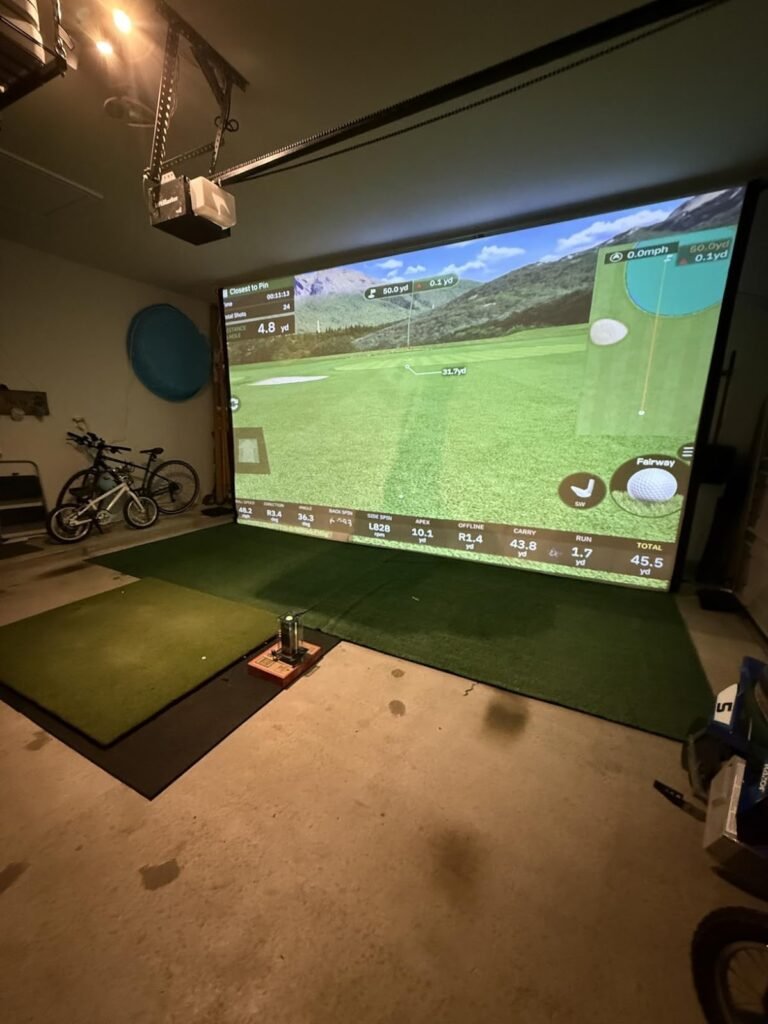
That includes mixed-use living rooms, multi-purpose media spaces, sports viewing with some lights on, console gaming where response matters, and simulator-style setups where close placement is not optional but structural.
Optoma’s spec sheet leans directly into that identity with 1080p/120Hz support at 8.6ms, dual HDMI 2.0 inputs, USB power for a streaming stick, and a compact chassis around 6.6 pounds.
Owners using it for simulator and stage-style projection also reinforce the pattern: it is valued when distance is tight and brightness has real work to do.
| Need | Fit |
|---|---|
| Small room, large image | Strong |
| Bright mixed-use viewing | Strong |
| Fast casual gaming | Strong |
| Golf simulator / impact-screen style use | Strong |
| Dedicated dark-room movie purist | Borderline |
| True 4K detail expectations | Weak |
| Flexible lens placement needs | Weak |
Where Wrong-Fit Begins
Wrong fit begins the moment the buyer says, “I just want one projector that does everything.”
This is not for the person who is sensitive to rainbow artifacts.
This is not for the person who wants lens shift and generous zoom freedom.
This is not for the person who treats HDR support as proof of premium HDR performance.
This is not for the person who hears “4200 lumens” and imagines the same kind of casual daytime freedom a large TV gives.
The GT2100HDR has a built-in 15W speaker, low-ish operating noise rated at 29 to 36 dB, dual HDMI, USB power, and laser longevity.
Those are useful.
They are not magic.
The internal speaker is convenience, not theater sound.
The low-latency mode is real, but it does not erase resolution limits.
The compact body is a strength, but the fixed throw behavior means your room either welcomes it or resists it.
This is the part many reviews soften.
I would not.
The GT2100HDR is easiest to like when it is solving a placement problem.
It is harder to love when it is being asked to perform as a universal cinema statement.
The One Situation Where This Product Becomes Logical
The GT2100HDR becomes logical when distance is the real enemy, not brightness.
That is the line.
If your room cannot comfortably support a longer throw projector, and you still want a large image that stays bright enough for gaming, sports, and mixed-use viewing, this model snaps into focus.
Its short throw is not a bonus at that point.
It is the reason the setup works at all.
Add the laser light source, low maintenance profile, respectable measured brightness, and fast gaming response, and the value proposition becomes coherent instead of noisy.
That is where I stop treating it like a broad recommendation and start treating it like a clean answer to a narrow problem.
What It Solves, What It Reduces, and What It Still Leaves to You
What it solves is straightforward.
It solves limited throw distance better than many conventional home projectors.
It reduces maintenance anxiety through laser illumination.
It reduces input-lag concerns enough to make gaming feel natural.
It reduces the need for total darkness more than many dimmer lifestyle units.
What it still leaves to you is the adult part of the decision:
- You still need to control expectations around black level and depth.
- You still need to place it carefully because fixed optics do not negotiate.
- You still need external audio if you care about real movie sound.
- You still need honesty about whether 1080p at your intended screen size feels sufficient.
| You gain | You trade off |
|---|---|
| Large image from very short distance | Less setup forgiveness |
| Bright picture for mixed-use spaces | Brightness does not equal perfect daytime contrast |
| Low-maintenance laser engine | Higher expectations for longevity do not fix fit mistakes |
| Low-latency gaming support | Resolution ceiling remains 1080p |
| Compact body and simple connectivity | Fewer premium home-theater refinements |
There is also a trust question here.
On Amazon, the projector currently sits at 4.2 out of 5 stars from 177 reviews, which is strong enough to show broad satisfaction without pretending away the fact that this is still a fit-sensitive product.
The pattern across expert measurements and owner feedback is consistent: people who bought it for bright, close-range, practical projection tend to sound pleased; people expecting it to erase category trade-offs start pushing against its edges.
Final Compression
The Optoma GT2100HDR is not hard to explain once the noise is removed.
It is a bright, compact, low-maintenance short-throw laser projector that works best when room distance is tight, image size matters, and the buyer cares more about practical brightness and responsiveness than about premium black-level drama.
It starts losing its shape when the expectation shifts toward true 4K refinement, easy placement forgiveness, or cinema-first depth.
That is the decision.
If your break point starts at “I do not have the throw distance for the image I want,” the GT2100HDR stops looking like a compromise and starts looking properly chosen.
If your break point starts at “I want the most luxurious picture quality this budget can imply,” this is where I would slow down.
And if this is the condition you are actually dealing with, the logical next step is simple: check the Optoma GT2100HDR itself here
Transparency Note:
This analysis is not based on quick personal impressions.
It is derived from documented system behavior, verified user patterns, and the physical constraints of storage capacity.
The goal is to translate complex technical behavior into a realistic performance model that helps you make a clear decision.
“A quick note: Don’t believe the star ratings, but trust personal experience. This article is a compilation of collected experiences”