When a Large-Room Air Purifier Starts Feeling Worth Living With
ANALYSIS FRAMEWORK
The moment I stopped judging large-room air purifiers by their marketing claims and started judging them by a harsher standard, everything became easier: not whether the machine can clean air in theory, but whether it crosses the point where I actually leave it on, trust it, and stop thinking about it every hour.
That is the threshold I care about now. Not feature count. Not app screenshots. Not a dramatic promise about “whole-home purification.” Just this: when does a purifier stop feeling like a bulky appliance with a fan and start feeling like a real reduction in daily irritation?
After digging through lab testing, owner feedback, retailer data, and category comparisons, I kept coming back to the same pattern. The useful models are not merely powerful. They cross a livability threshold where airflow, maintenance rhythm, automatic sensing, and tolerable noise finally work together instead of fighting each other.
The Threshold I Use Now
I think of it as the Livability Threshold.
A large-room air purifier starts feeling genuinely helpful when four things happen at the same time:
| Threshold Factor | What I look for | Why it matters |
|---|---|---|
| Air-moving ability | Enough real cleaning power for an open room, not just a sealed lab fantasy | If the airflow is weak, the purifier becomes decorative |
| Noise discipline | Quiet enough on low settings to live with, even if max speed is louder | A machine I constantly turn down stops solving the problem |
| Maintenance rhythm | Filter care that feels manageable over months, not just on day one | Daily-life friction kills good intentions |
| Auto behavior | Sensors and modes that reduce babysitting | The machine should react before I start fiddling with it |
That is why I no longer read air purifier specs as isolated numbers. I read them as a chain of practical consequences. A purifier with strong particle performance but annoying upkeep can still fall below the threshold. A quiet unit with weak airflow can do the same. The machine only becomes convincing when the routine gets lighter, not heavier.
What Usually Breaks First
The reason many air purifiers disappoint is not that they do nothing. It is that the first failure often happens outside the spec sheet.
Sometimes it is noise. RTINGS measured the NuWave OxyPure at 32.3 dBA on its lowest speed but 63.2 dBA at its highest, which neatly explains why people often like these machines in theory yet end up negotiating with them in practice. High speed may clean fast, but if the sound pushes the unit out of the social background, the user starts intervening, lowering settings, or using it inconsistently.
Sometimes it is upkeep. The OxyPure’s filtration system is unusually ambitious: washable steel pre-filter, Bio-Guard filters, ozone-removal filter, plus a yearly HEPA/carbon replacement. That lowers recurring replacement cost compared with many disposable-filter competitors, but it also creates a different burden: more cleaning attention. RTINGS explicitly lists “many filters that need regular cleaning” as one of the trade-offs.
And sometimes it is expectation drift. People buy a purifier expecting it to erase every air-quality problem in a dramatic way, then discover that what actually improves first is the pattern of the room: dust settling a bit slower, pet smell fading faster, cooking odor not lingering as long, allergy irritation easing over time. That change is real, but it is quieter than the marketing tone. This gap between expectation and lived improvement is where disappointment often begins. User discussion around the category reflects exactly that split: some owners focus on smoother day-to-day air quality, while others fixate on durability worries, feature complexity, or whether the unit felt worth its size and cost.
What Strong Models Tend to Get Right
The better large-room units usually share a few traits.
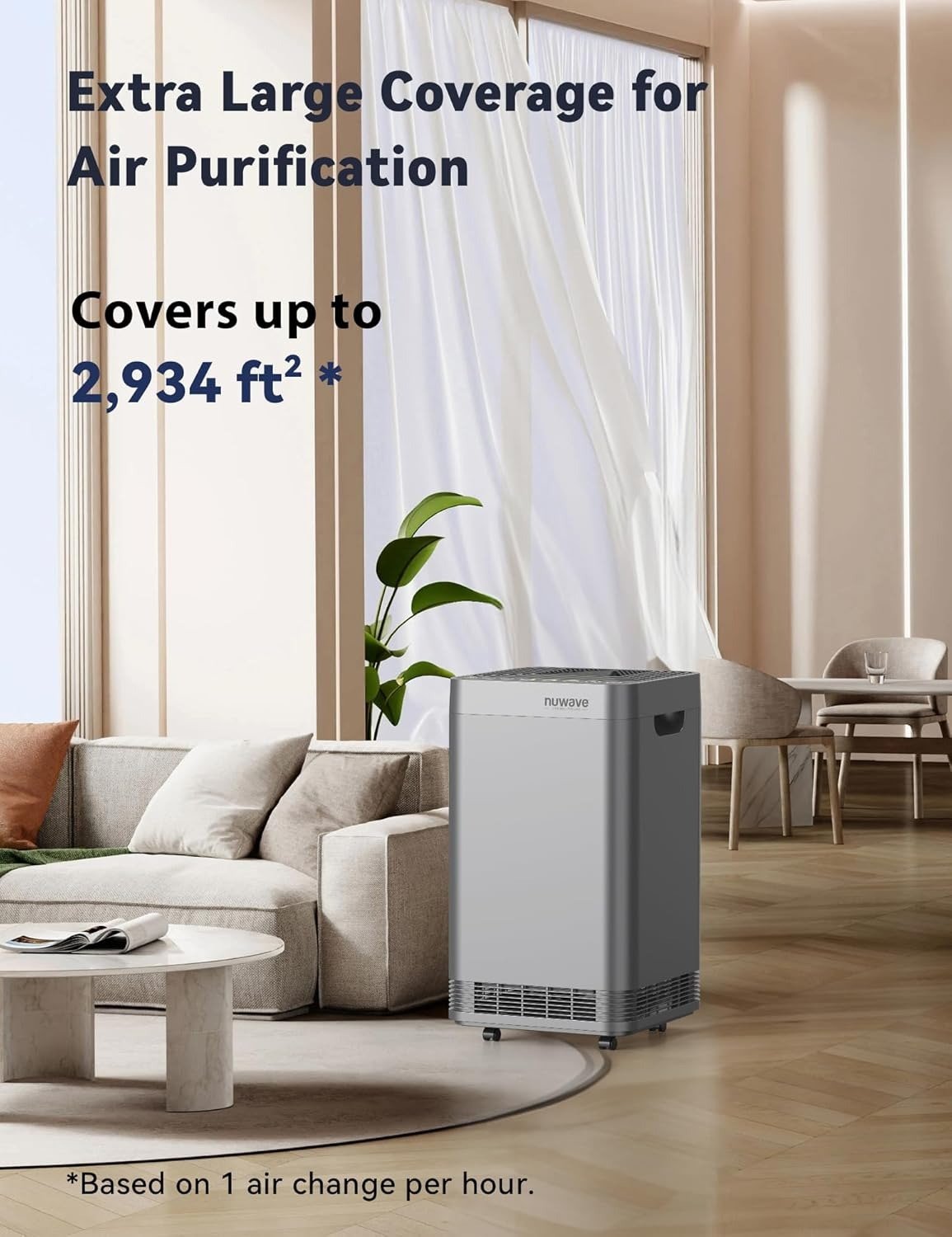
First, they move enough air to matter. RTINGS measured the OxyPure at 323 CFM PM1.0 CADR and recommends it for about 605 sq ft at max fan speed, which is a more grounded reality check than broad “whole-house” language. That kind of output is what makes a single unit plausible in an open living area instead of just a bedroom corner.
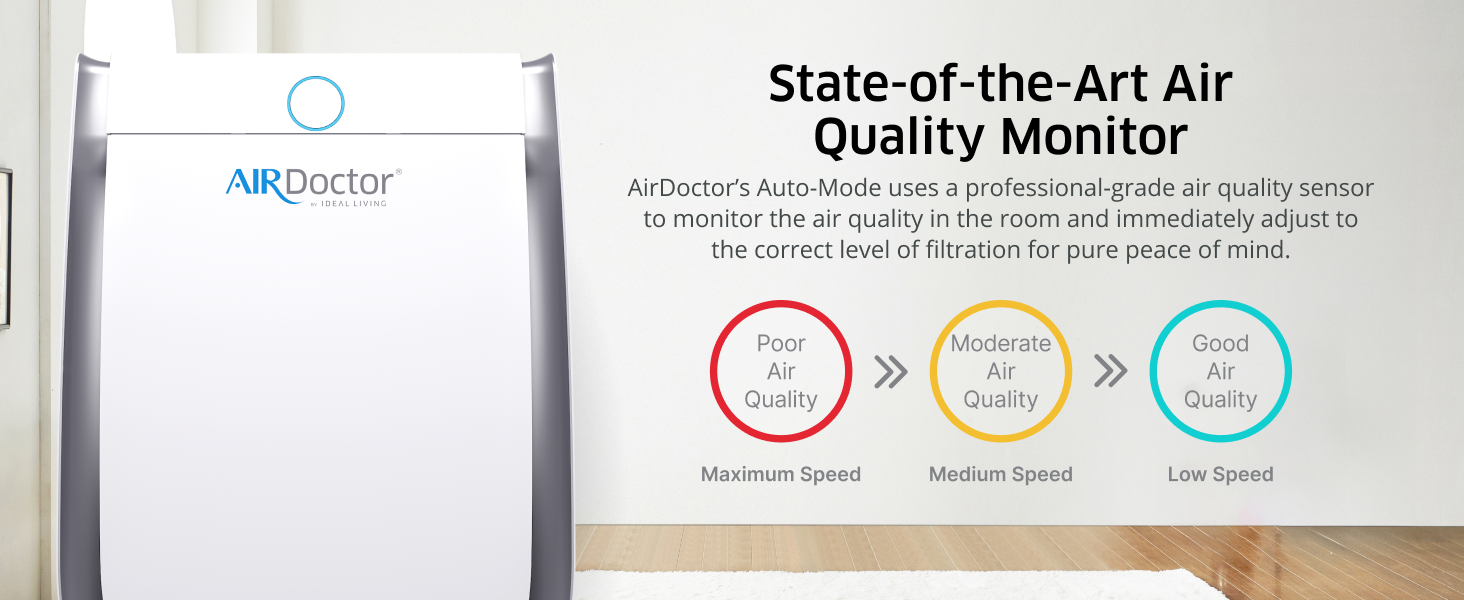
Second, they automate sensibly. The models I take more seriously now are the ones with sensors, auto mode, filter status visibility, and enough control options that I can either ignore them or fine-tune them without turning the experience into a hobby. The OxyPure includes particle sensing, odor sensing on the Amazon listing, app control, six fan speeds, timer options, Auto, Eco, Turbo, and filter-health monitoring.
Third, they reduce the wrong kind of ownership cost. Mainstream review consensus in the category still tends to favor value-oriented models from brands like Coway and Levoit, while RTINGS currently places the NuWave OxyPure at the top overall because its multi-stage system combines strong performance with lower recurring filter replacement pressure. That difference matters. Some machines are cheaper to buy. Others are easier to keep. Those are not the same thing.
The Real Question Is Not “Does It Work?”
The real question is narrower and more useful:
Does it cross the Livability Threshold for the kind of air problem I actually live with?
If my issue is a lightly used bedroom, I do not need a tower built for large open spaces. If my issue is recurring pet dander, cooking smell, dust load, and a room that never quite settles down, then airflow and automation matter more. If I hate maintenance, “washable” can be an advantage or an annoyance depending on whether I view cleaning as savings or as another household chore waiting to happen.
That is why I no longer treat “large-room air purifier” as a generic category. There is a split between units that look capable and units that remain useful after the novelty is gone. The threshold is crossed only when power, routine, and realism stop arguing with each other.
The Model I Kept Coming Back To
The product that kept forcing this question back into focus for me was the one reviewers and retailer data kept surfacing from different angles: strong airflow, reusable filtration components, large-room intent, app control, and the usual trade-offs of noise at high speed and more involved filter care.
That is why my next step was not “best air purifier” in the abstract.
It was narrower than that:
Does the NuWave OxyPure actually cross this threshold in real life, or does it merely look good on paper? [Link to Decision Article]
Transparency Note:
This analysis is not based on quick personal impressions.
It is derived from documented system behavior, verified user patterns, and the physical constraints of storage capacity.
The goal is to translate complex technical behavior into a realistic performance model that helps you make a clear decision