Netgear Orbi 770 Review: Your WiFi Looks Strong — Until the House Starts Leaning on It
NETGEAR ORBI 770
You usually do not notice a weak network when you are standing next to the router.
You notice it when the call turns brittle in the back room. When the camera feed stalls for two seconds at the wrong time. When the smart lock responds, but not on the first try. When the house says it is connected, yet the routine itself starts feeling heavier.
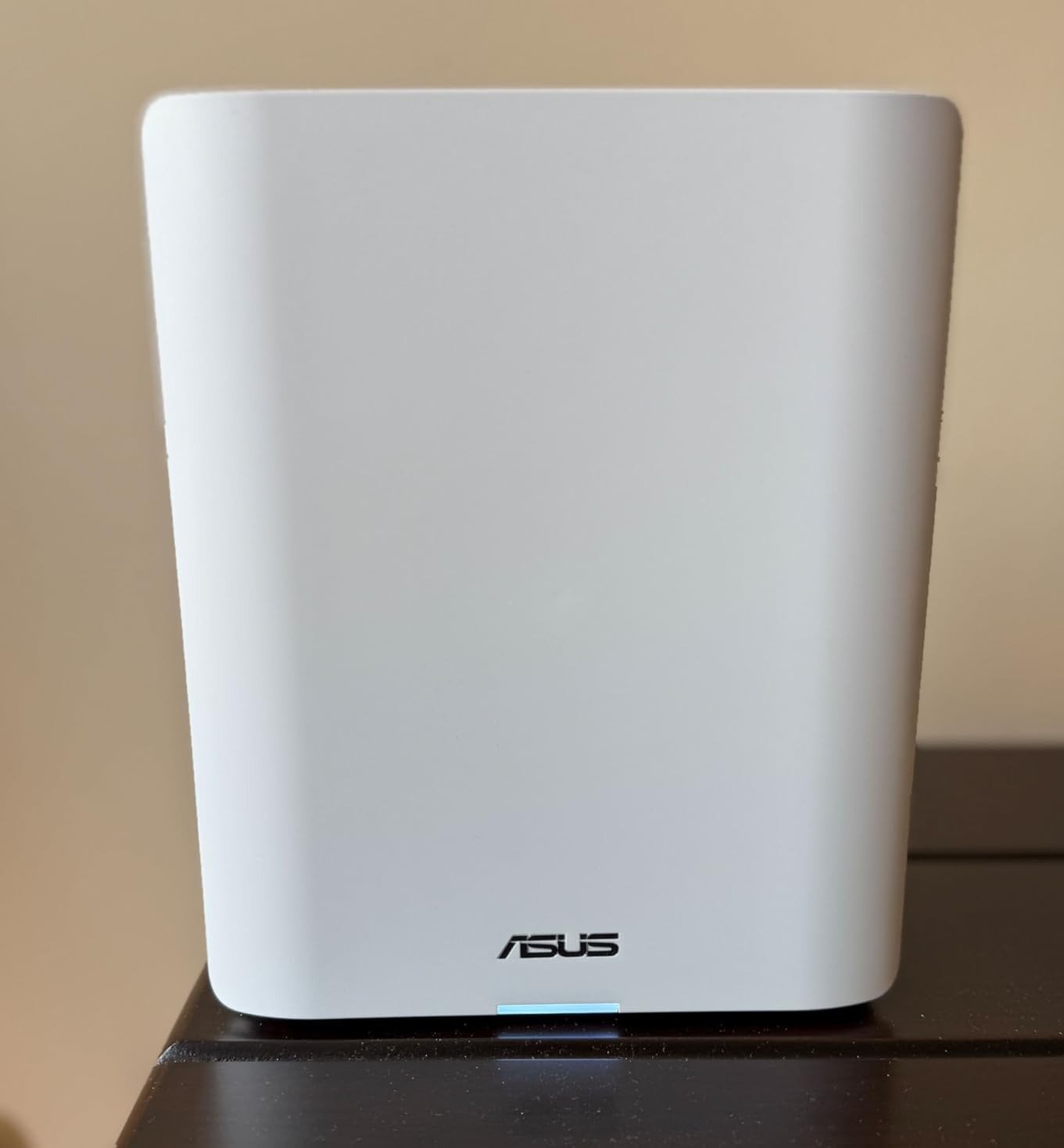
That is the frame I kept returning to while studying the NETGEAR Orbi 770. On paper, it is easy to admire: tri-band Wi-Fi 7, up to 11Gbps, up to 8,000 square feet in the 3-pack, support for up to 100 concurrent devices, a 2.5Gbps WAN port, and 2.5Gbps LAN on both router and satellites. Independent testing also shows it can deliver strong real-world throughput for its class, especially in homes that need reach more than tinkering.
But that is not the whole story.
The Orbi 770 does not usually fail at the headline. It starts to strain at the threshold where “good coverage” is no longer the same thing as “cleanly handled complexity.” That threshold is the entire point of this product.
The Result Looks Fine. The Problem Isn’t.
A lot of people buy mesh systems because they think they have a speed problem.
Often, they have a consistency problem.
Those are not the same purchase.
If your internet plan is already decent and the house is the real enemy—distance, floors, corners, concrete, doors, camera-heavy edges of the property—then a mesh kit makes sense. NETGEAR positions the Orbi 770 exactly there: broad, elegant coverage for work, streaming, gaming, and dense household use. Independent reviewers also found that the 770’s strength is not empty marketing language; it does push high sustained speeds for a mid-tier Wi-Fi 7 mesh, and its range is legitimately strong for the class.
The catch is subtle.
A network can look fixed because the dead zones shrink, while the deeper friction remains: roaming hesitation, device compatibility friction, lag on wireless satellites, and the feeling that the house is connected but not effortless. That is where people misread this system too quickly. Some owner reports describe exactly that pattern: things feel fine at first, then random drops, odd device behavior, or VPN trouble start surfacing after longer use. Those are anecdotal reports, not lab verdicts, but they matter because they reveal the shape of the risk.
What You’re Actually Feeling but Not Naming
Most buyers do not say, “I need better backhaul behavior and cleaner client handling under movement.”
They say something messier.
“My WiFi is weird in certain rooms.”
“My smart home is connected, but it feels fragile.”
“I still don’t trust the house network.”
That emotional residue usually comes from one of four things:
| What you feel | What is often happening underneath |
|---|---|
| Strong signal, inconsistent experience | Coverage improved, but device handling is uneven |
| Good speed near the router, weaker confidence elsewhere | Satellite placement or roaming is carrying hidden cost |
| Smart devices connect, then behave strangely | Older or fussier devices are colliding with newer security/network behavior |
| The network seems premium, but feels rigid | The system is optimized for simplicity, not for deep user control |
That last line matters more than it looks. The Orbi 770 is built to be clean and straightforward. That is part of its appeal. It is also part of its limit. Reviewer analysis points to limited Wi-Fi customization, no user-facing way to split out a pure 6GHz SSID, and an MLO-centered primary SSID that brings security and compatibility consequences with it.
The Hidden Mechanism Behind the Miss
Here is the variable most buyers never isolate early enough:
The Orbi 770 is not mainly constrained by raw wireless ambition. It is constrained by how much control you are willing to give up for clean whole-home simplicity.
That is the mechanism behind the miss.
NETGEAR gives you tri-band Wi-Fi 7 with enhanced backhaul, 2.5Gbps wired options, separate main/IoT/guest networks, WPA3, automatic firmware updates, VPN support, and app-led management. That creates a system that is easy to deploy and clean to live with for a certain kind of household.
But deeper review work reveals the flip side. Dong Knows notes that on the Orbi 770, MLO is enabled by default on the main SSID, cannot be disabled, and the 6GHz band is not available as a separately customizable network. That same analysis warns that older devices without WPA2-or-higher support may simply be left behind on the main network, which is exactly the kind of hidden compatibility tax many buyers do not price in early.
That is the quiet truth:
The Orbi 770 is less about “Can it be fast?” and more about “Does your house qualify for its kind of fast?”

The Threshold Where the Outcome Quietly Breaks
This is the threshold I would use to judge the Orbi 770:
It makes the most sense when your home is large, your device mix is relatively modern, your internet plan is at or below 2.5Gbps, and your priority is broad, polished coverage with low setup friction.
It starts losing shape when one or more of these become true:
- you rely on older or finicky Wi-Fi clients,
- you want tight manual control over bands and SSIDs,
- you care about minimizing added lag through wireless satellites,
- you need more than 2.5GbE wired ambition,
- or you expect premium pricing to include premium features without subscription layers.
That 2.5GbE ceiling is not a small footnote. The official specs show a 2.5Gbps WAN and 2.5Gbps LAN, and independent testing found the wired side lands around the practical ceiling you would expect from that class—excellent for sub-2.5Gbps homes, but not a machine built around 10GbE-style expansion. RTINGS’ current top-end router guidance also underscores why that distinction matters: once a home has true multi-gigabit wired needs, richer 10Gbps port layouts become a real differentiator, not a spec-sheet ornament.
I would name that break point like this:
The Modern-Home Threshold — the point where the Orbi 770 feels logical only if the house is new enough in device behavior and modest enough in wired ambition to benefit from its simplicity more than it suffers from its rigidity.
Why Most Buyers Misread This Too Early
They compare the wrong thing first.
They compare “Wi-Fi 7” to “Wi-Fi 6E.”
They compare “11Gbps” to “21Gbps.”
They compare “three units” to “three units.”
Those are not useless comparisons. They are just early comparisons.
The better early question is this:
What kind of friction is actually making the network feel expensive?
Because the Orbi 770 is not trying to win every contest.
It does not have 10Gbps ports. It does not offer the kind of deep configuration that network hobbyists love. Some features around security and parental controls are tied to subscription logic or trials, which weakens the value story for buyers who thought the premium price would cover the full experience. PC Guide calls out both the good setup experience and the irritation of feature paywalls, and Dong Knows is more blunt about limited Wi-Fi options and thin free networking features.
That is why lazy comparison traps people here.
The Orbi 770 is not a bad buy because it lacks flagship extremes. It becomes a bad buy when the house needs flexibility more than polish.
Who Is Actually Inside This Problem
This product has a real reader.
I would put that reader here:
| Need | Fit |
|---|---|
| Large home with dead zones | Strong |
| Many modern phones, TVs, laptops, and smart devices | Strong |
| Want simple app-led setup | Strong |
| Internet plan up to 2.5Gbps | Strong |
| Want wired multi-gig on satellites | Strong |
| Need extensive manual Wi-Fi control | Weak |
| Depend on older legacy Wi-Fi clients | Weak |
| Need 10Gbps-class wired ecosystem | Weak |
| Care about ultra-clean gaming behavior over wireless satellite hops | Borderline |
| Want premium features without subscription friction | Borderline |
This is not for everyone. It is for the household that is tired of signal collapse more than it is excited by networking knobs.
If your house is wide, busy, and full of fairly recent devices, the Orbi 770 reads as a clean answer. If your house is a museum of stubborn printers, older phones, weird IoT gear, and custom network preferences, this starts to feel less like relief and more like negotiation.
Where Wrong-Fit Begins
Wrong-fit begins earlier than most people think.
Not at checkout.
At assumption.
If your assumption is, “This is expensive, so it will adapt to everything,” that is wrong-fit.
If your assumption is, “Wi-Fi 7 means all my older hardware will behave better,” that is wrong-fit.
If your assumption is, “A satellite system automatically means no performance trade-off,” that is wrong-fit.
Independent testing is useful here because it gives the product dignity without turning it into myth. Dong Knows found the Orbi 770 fast and stable enough to pass a 3-day stress test, with excellent wired and wireless backhaul numbers for its class. The same review also notes that devices connected through a wireless satellite pick up extra lag, and explicitly says this is not the system for gamers. That is not a contradiction. That is the trade.
I would frame the trade-offs like this:
| You gain | You trade off |
|---|---|
| Clean whole-home Wi-Fi 7 coverage | Deep band-level control |
| Strong sub-2.5Gbps performance | 10GbE growth headroom |
| Easy deployment and simple network segmentation | Fine-tuned configurability |
| Good fit for modern households | Grace with older legacy clients |
| Attractive, low-clutter hardware | Full-value feeling if you dislike subscriptions |
That is the part many reviews soften too much.
The weakness here is not incompetence. It is design philosophy.
The One Situation Where This Product Becomes Logical
This is the one situation where I think the Orbi 770 becomes genuinely logical:
You have a large home, a modern device mix, enough traffic to expose weak coverage, and a strong preference for polished whole-home stability over enthusiast-level network control.
That is the exact lane.
In that lane, the Orbi 770 starts making sense fast. The official hardware package is serious enough: tri-band Wi-Fi 7, enhanced backhaul, 2.5Gbps WAN, 2.5Gbps LAN on router and satellites, three separate network types, and a coverage claim designed for large properties. Independent reviews broadly support the idea that range and throughput are the real selling points here.
That is also the point where the emotional burden changes.
You stop thinking, “Do I want a premium mesh?” You start thinking, “Am I already paying for weak coverage every day in attention, retries, and low-grade distrust?”
If yes, this product stops looking like a luxury and starts looking like network cleanup.
What It Solves, What It Reduces, and What It Still Leaves to You
What it solves:
- broad whole-home coverage,
- strong modern wireless throughput for its class,
- cleaner satellite-based expansion than a single router can usually manage in larger homes,
- practical multi-gig wiring at 2.5Gbps,
- a simpler path for households that want fewer networking decisions.
What it reduces:
- dead-zone anxiety,
- room-to-room speed collapse,
- setup friction compared with more enthusiast-oriented systems,
- the ugly mental overhead of wondering whether the house or the ISP is the problem.
What it still leaves to you:
- proper satellite placement,
- realism about legacy devices,
- realism about subscriptions,
- realism about the 2.5GbE ceiling,
- realism about gaming or latency-sensitive traffic over wireless satellite links,
- realism about the fact that premium mesh does not remove every networking compromise.
That last column is not a flaw in the review. It is the review.
Final Compression
The Netgear Orbi 770 is not the mesh system I would describe as universally impressive.
It is the one I would describe as structurally correct for a specific threshold.
If your house is large, your devices are mostly modern, your broadband world tops out at 2.5Gbps, and your real problem is that WiFi keeps looking better than it behaves, the Orbi 770 lands in the right place. Official specs and third-party testing support that case.
If, on the other hand, your environment leans older, fussier, more latency-sensitive, or more wired than wireless, then the same product starts to show its seams: less control, more rigidity, more sensitivity to compatibility edges, and a weaker value story once paid extras and anecdotal stability complaints enter the frame.
That is the clean read.
Not “best.”
Not “must-have.”
Not “perfect.”
Just this:
When the problem is wide-house instability inside a mostly modern home, the Orbi 770 becomes logical. When the problem is complexity, legacy drag, or higher-end wired ambition, it stops being the clean answer.
If this is the condition you are actually dealing with, this is the logical next step:
Transparency Note:
This analysis is not based on quick personal impressions.
It is derived from documented system behavior, verified user patterns, and the physical constraints of storage capacity.
The goal is to translate complex technical behavior into a realistic performance model that helps you make a clear decision.
“A quick note: Don’t believe the star ratings, but trust personal experience. This article is a compilation of collected experiences”