MENGQI-CONTROL 4-Door Access Control Review: The Fit Threshold That Decides Whether It’s Worth Buying
DECISION ANALYSIS
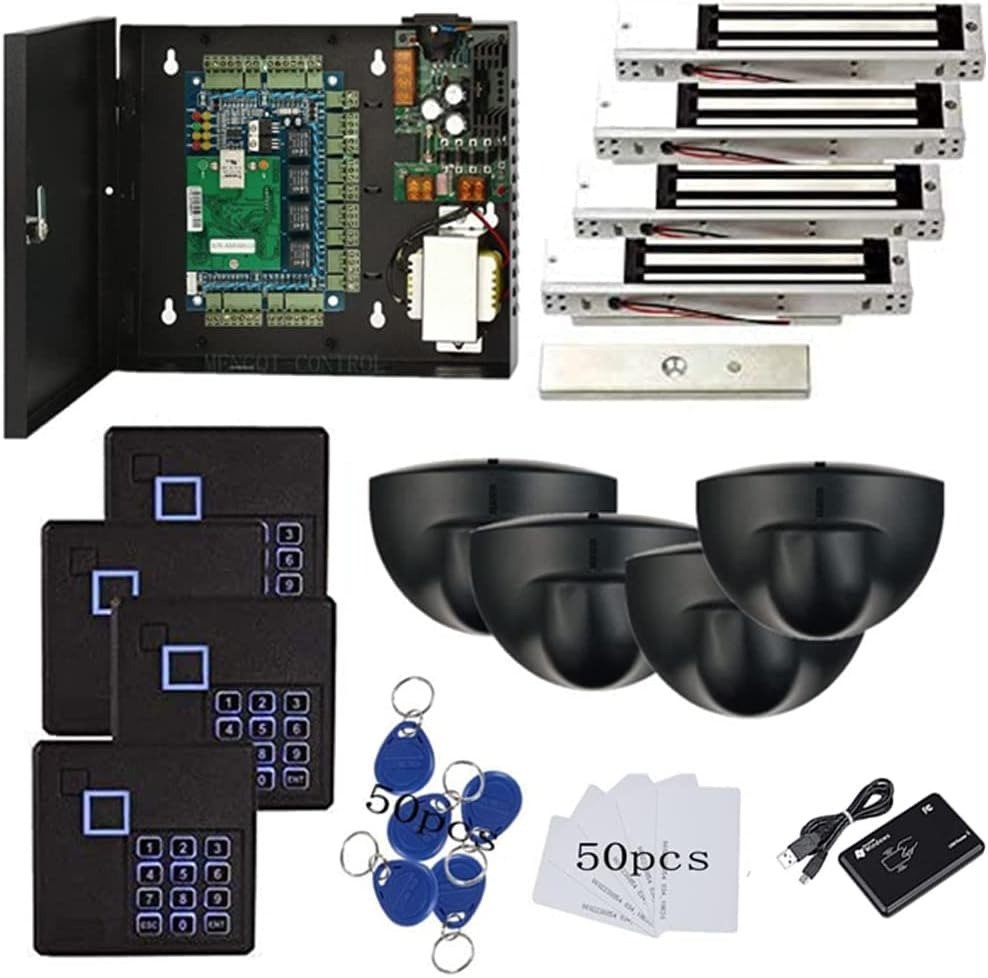
The thing I would not ask first with this MENGQI-CONTROL kit is whether it looks feature-rich. It does. Four-door control, RFID entry, PIR exit sensing, phone-app remote opening, 600-lb electromagnetic locks, and support for up to 20,000 users and 100,000 records is a serious-looking spec sheet for the money bracket this product lives in. The real question is narrower and more useful: does this system fit the operational weight of your building?
My Governing Model — Fit Threshold
My decision model here is a single one: Fit Threshold.
This product is worth buying when your needs are heavy enough to justify centralized four-door control, but not so heavy that you actually need enterprise access control architecture, deep integrations, certified channel support, and long-horizon hardware confidence.
That distinction is not theoretical. Installers discussing MENGQI in public are very clear: it may be perfectly serviceable for a house, hobby environment, or small site with only a few doors, but it is not the same class as Mercury-, Avigilon-, Lenel-, or Genetec-type systems used across multi-site or large-cardholder environments.
What I Like About It
What I like first is that the product is trying to solve a real small-site problem in one shot. One kit, four doors, multiple entry methods, remote release, and a defined exit path. That is cleaner than stacking separate “smart lock” gadgets and hoping the result behaves like a system. The official brand site repeatedly positions its four-door kits around app control, RFID, keypad use, and remote management, which matches the product listing rather than contradicting it.
I also like that the strongest positive feedback is not vague hype about “security.” It is operational feedback. Users on the brand site describe clear wiring diagrams, workable documentation, easy credential programming once the logic is understood, and support that replies quickly with PDFs and short tutorial videos. For this category, responsive support is not a bonus. It is part of the product value because installation and configuration are where a budget system either earns trust or destroys it.
What Makes Me Cautious
My caution starts with the lock architecture itself. This kit uses electromagnetic locks, and electromagnetic locks are fail-safe by design. That means if power is removed, the secure side unlocks. Allegion states this directly, and other code-focused resources emphasize that maglock applications depend on life-safety and egress requirements. So I would never read “600-lb maglock” as “problem solved.” I would read it as “strong while powered, but only appropriate if the site understands power-loss behavior and plans for it.”
My second caution is installation drift. The brand’s own customer commentary says there are no printed manuals in the box, setup can take an afternoon or two, extra cables may be needed, and the software is functional rather than polished. None of that scares me for a hands-on owner or technician. But it does immediately narrow the buyer profile.
Compatibility Split 3.0
Here is exactly how I’d split the fit.
| Fit band | My read |
|---|---|
| Excellent fit | Small offices, back-of-house retail, workshops, mixed-use buildings, or multi-entry sites that want centralized access without enterprise cost |
| Good fit | Hands-on owners or tech-savvy managers who can tolerate setup work and want app control, RFID, and basic multi-door history |
| Acceptable fit | Residential edge cases or light-commercial sites where convenience matters, but only if fail-safe behavior is fully understood |
| Borderline fit | Sites with frequent outages, low tolerance for troubleshooting, or staff who need polished admin UX |
| Wrong fit | Enterprise campuses, compliance-heavy institutions, high-integration environments, and sites where downtime or improper egress behavior is unacceptable |
That split is exactly where the public feedback points. Even the Reddit discussion that was relatively fair to MENGQI still framed it as possibly fine for small needs, while clearly separating it from large-scale professional systems built for massive uptime, integrations, and lifecycle reliability.
The Drift Problem Over Time
The reason I would not buy this impulsively is that access control failure often shows up as behavioral drift, not dramatic collapse.
The first week may feel impressive.
The third month is where the truth starts showing:
- Does the staff trust the exit sensor behavior?
- Does the admin remember how to change permissions?
- Does a power interruption create a security conversation nobody planned for?
- Does the system save interruptions, or create new ones?
That pattern is already visible in the feedback I found. The product is not described as plug-and-forget. It is described as capable, but dependent on careful installation, usable documentation, and good support. That actually makes me trust the positive comments more, because the praise is not detached from the work.
The Numbers That Matter to Me More Than the Listing Copy
These are the numbers and facts I’d keep in view while deciding:
| Metric / fact | Why it matters |
|---|---|
| 4-door control | Tells me this is meant to be a site-level tool, not a single-door toy |
| 20,000 users / 100,000 records | More than enough for small-site credential management |
| 600-lb electromagnetic lock | Strong enough on paper, but still power-dependent |
| 110–240V power support | Flexible for varied installations |
| #564 in Amazon Home Security Systems | Suggests some market visibility |
| 5.0/5 on Amazon UK from 2 reviews | Too small a sample to overtrust, but directionally positive |
Those facts make the product look substantial for a small-site buyer, but they do not override the bigger fit question. They only tell me the system has real bones.
My Verdict
If my site had a few doors, I wanted centralized credential control, I was price-conscious, and I was comfortable treating installation and support as part of the purchase, I would call this a serious small-site candidate.
If I wanted enterprise confidence, minimal setup friction, certified ecosystem support, or hardened expectations around uptime and integration, I would move on immediately.
That is why my decision is simple:
This is not a universal recommendation.
It is a strong recommendation for the buyer who sits inside the right fit boundary.
Final Decision
I would buy the MENGQI-CONTROL four-door kit only if all of the following were true for me:
- I needed to manage up to four doors from one system.
- I was comfortable with wiring, setup, and documentation that lives online.
- I understood that maglocks unlock on power loss and had a backup plan if that mattered.
- I cared more about practical control-per-dollar than enterprise polish.
- I wanted remote opening and credential management without stepping into full institutional access-control pricing.
If those conditions are true, this product looks like one of those rare budget systems that can be genuinely useful instead of merely attractive on a listing. If those conditions are false, it is the wrong tool.
Transparency Note:
This analysis is not based on quick personal impressions.
It is derived from documented system behavior, verified user patterns, and the physical constraints of storage capacity.
The goal is to translate complex technical behavior into a realistic performance model that helps you make a clear decision