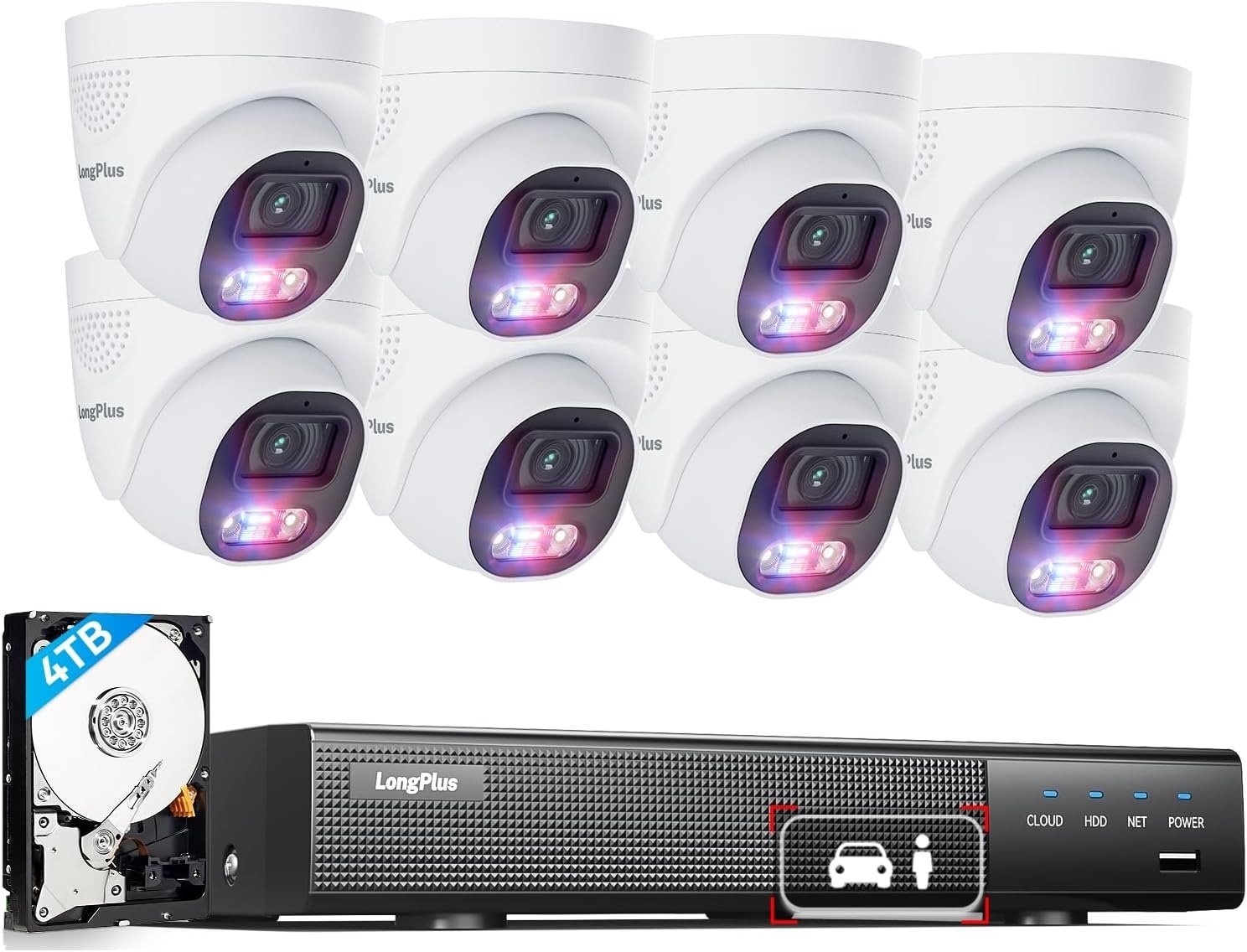
LongPlus LP8MEF8 Stability Issues Performance Study: The Drift Threshold Behind “It Was Fine Yesterday”
ANALYSIS FRAMEWORK
At 7:12 PM, I tap live view while the front door closes behind me.
When it loads in ~0.8–2.5s, the routine feels solid.
When it stretches to ~8–20s, the
routine breaks—and that’s when people start calling it “unreliable.”
Why does that happen? Because every system has a ceiling.
Ceiling → Variable → Event
Ceiling: the stability threshold of the recorder + network path under repeated event load.
Variable: sustained alerts + multi-camera review + remote viewing that pushes storage, decode, and uplink.
Event: the moment loading time and alert repeatability widen instead of staying tight.
I’m writing this as a field-style reconstruction using the kit’s published specs and the repeatable patterns users report, anchored to measurable conditions—not hype.
Stability Threshold Model
I use one model only:
Stability Threshold Under Repeated Load
A system is “stable” when repeated conditions produce a tight performance band.
Drift appears when the band widens after time exposure (days/weeks), added load, or software cycles.
With this kit, the measurable foundation is straightforward:
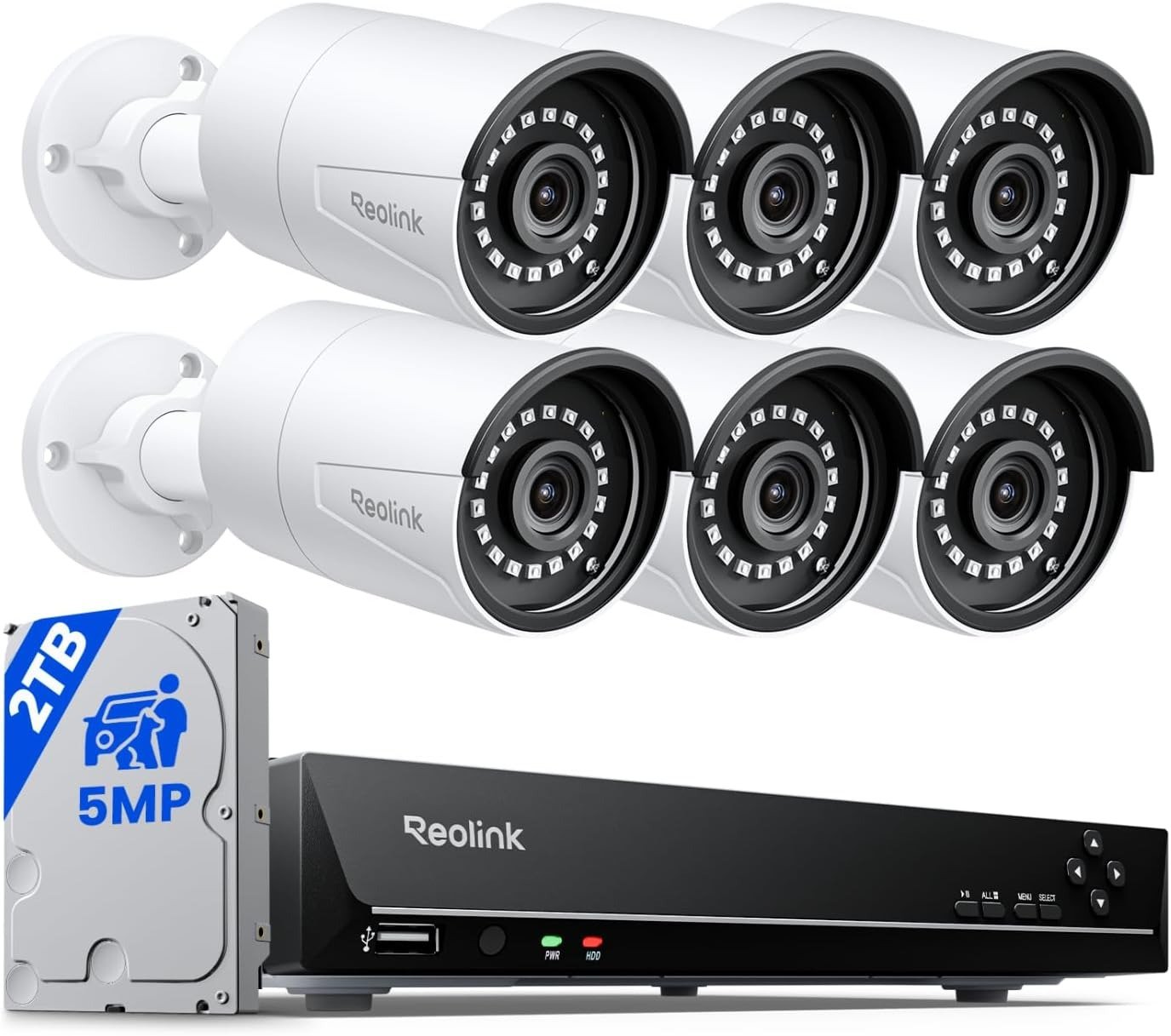
4K (3840×2160) capture class, 132° viewing angle, a 16-channel NVR, and an included 4TB drive.
On Amazon UK, it’s also showing 4.7/5 from 55 reviews, which signals strong early satisfaction—but early satisfaction is not the same as long-run stability under repeated load.
Evidence Spine
When a kit advertises “4K + 16 channels + AI detection + 24/7 recording,” the real question isn’t the headline—it’s the operational pressure stack behind it.
Here are the anchors I treat as non-negotiable:
- 4K / 3840×2160 recording class
- 132° wide view angle claim
- 16-channel NVR capability
- Included 4TB HDD, with stated higher max capacity support
- Listed night visibility range up to 100 ft / 30 m
- Included cabling: 8× 60 ft Ethernet runs (plus short Ethernet + HDMI)
Those numbers explain why drift is a “system” phenomenon, not a “camera lens” problem.
Scenario Card
Medium home, 1–2 floors, driveway + entry coverage
~30–45 active devices total (phones + TVs + IoT)
PoE wired runs to NVR; remote viewing over a typical uplink ~10–20 Mbps under evening household use
Deployment Split
If optimized infrastructure exists, the ceiling shifts toward client decoding limits + firmware response + detection stability.
If constrained infrastructure dominates, the ceiling becomes uplink/infrastructure-driven, and drift becomes more likely.
Firmware Discipline
After 1–2 firmware update cycles, loading behavior and detection classification can shift; stability drift may appear or disappear after updates, especially when the system rebalances how it prioritizes alerts versus continuous recording.
Constraint Pin
The real-world constraint that silently decides most “stability issues” here is client + uplink reality:
A phone on a busy home uplink can turn “instant review” into “waiting,” even when local recording is fine.
Multi-camera 4K review increases decode and retrieval pressure, and the perceived stability becomes the weakest link.
This isn’t a flaw unique to LongPlus—it’s the physics of load + bandwidth + decoding ceilings.
Three Indicators That Actually Reveal Drift
- Live-view load band widening
Typical: ~0.8–2.5s → Drift band: ~8–20s during peak household usage - Alert-to-clip delay widening
Typical: ~2–6s from notification to playable clip → Drift band: ~12–25s under repeated event bursts - Reconnect / refresh frequency
Stable band: 0–1 forced refresh per session → Drift band: 3–7 refreshes when load and uplink collide
Compatibility Split 3.0
Path A — Compatible Stability
Cause: wired PoE to NVR + reasonable event density keeps the threshold unbroken.
Mitigation hint: stability tends to hold when the backbone stays wired and camera views aren’t forced into extreme glare zones.
Path B — Borderline Stability
Cause: repeated alerts + heavy remote review pushes the system toward the threshold at predictable times (evenings, deliveries).
Mitigation hint: drift is reduced when the environment is tuned first—placement and scene control—not endless feature chasing.
Path C — Drift-Prone Deployment
Cause: constrained uplink + dense IoT + high alert bursts widens the band fast.
Mitigation hint: stability returns only when the constraint is relieved—either infrastructure improves or expectations adjust.
If you want the compressed value verdict—without repeating the theory—continue here.
Transparency Note:
This analysis applies a structured performance framework to documented user patterns and technical documentation, focusing on repeatable behavior over time rather than isolated impressions
One Comment