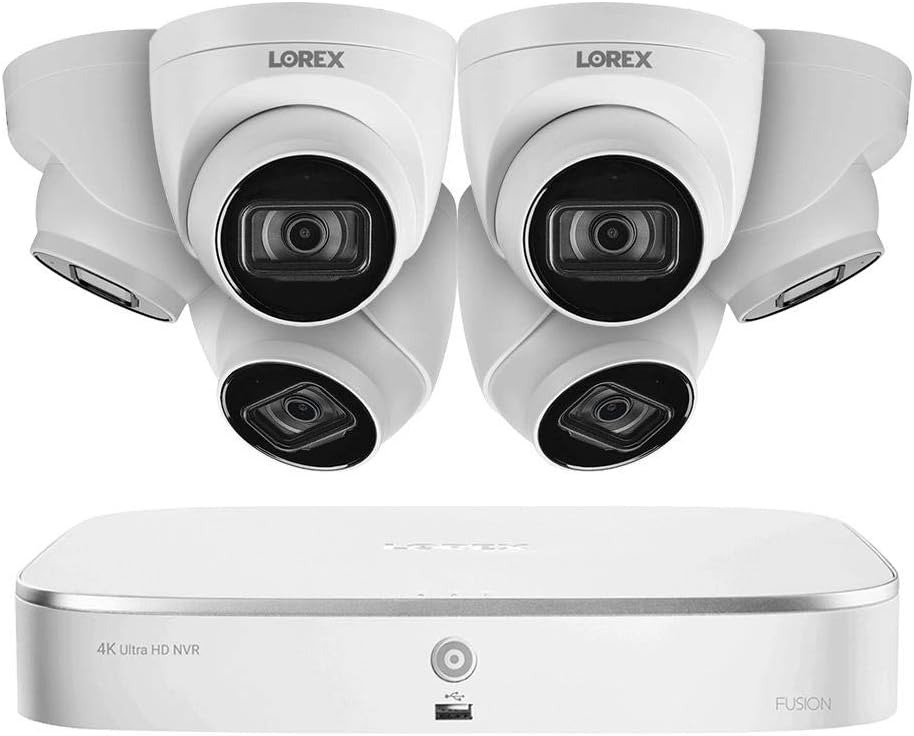
Lorex N4K2-86WD Decision: A Threshold Fit Check
DECISION ANALYSIS
I don’t choose an always-on security system for its spec sheet mood. I choose it for stable behavior after weeks of 24/7 operation.
This kit is 8-channel, records up to 4K/8MP on all channels, and includes 2TB storage with support up to 8TB. The cameras are designed for real outdoor work: IP67, -22°F to 140°F, 105° field of view, and night vision that reaches 130ft in low light and 90ft in total darkness.
The decision is not “Is it 4K?” The decision is whether your environment will keep it below its practical stability threshold.
What I’m Actually Buying Here
| What matters | The real-world benefit |
|---|---|
| 8-channel 4K/8MP recording | Multi-camera clarity without downshifting the whole system |
| Local recording with 2TB included | Recording continues even if the internet blinks |
| Playback discipline | Synchronized playback up to 4 cameras keeps retrieval from becoming a time sink |
| Real operating limits | IP67 + temperature band means the cameras can survive, but stability still depends on your NVR environment |
The Single Threshold Rule
My rule is simple:
If your 24/7 operation stays below the load + time + constraint threshold, the system stays quiet.
If you cross it, you don’t lose “4K.” You lose smoothness and trust.
Here are the drift markers I treat as threshold signals:
- Live view drifting into 2–5 seconds of delay during busy periods
- Remote clients reconnecting every 20–30 seconds in peak windows
- Playback clips starting several seconds late when multiple cameras trigger motion
Compatibility Split 3.0
| Split | You are here if… | Likely outcome |
|---|---|---|
| Split A: Stable fit | NVR has clean airflow, remote viewing is occasional, detection zones are disciplined, retrieval stays fast | The system becomes “background reliable” |
| Split B: Borderline fit | Warm placement, frequent app checks, high motion volume, more scrubbing than searching | Drift shows up as friction and small delays |
| Split C: Mismatch | Blocked/hot NVR placement, constant remote streaming, noisy motion environment, no baseline upkeep | Stability becomes work, and the system feels inconsistent |
A security system rarely fails randomly. It drifts when always-on load meets its real limit.
Transparency Note:
This analysis is not based on quick personal impressions.
It is derived from documented system behavior, verified user patterns, and the physical constraints of storage capacity.
The goal is to translate complex technical behavior into a realistic performance model that helps you make a clear decision

One Comment