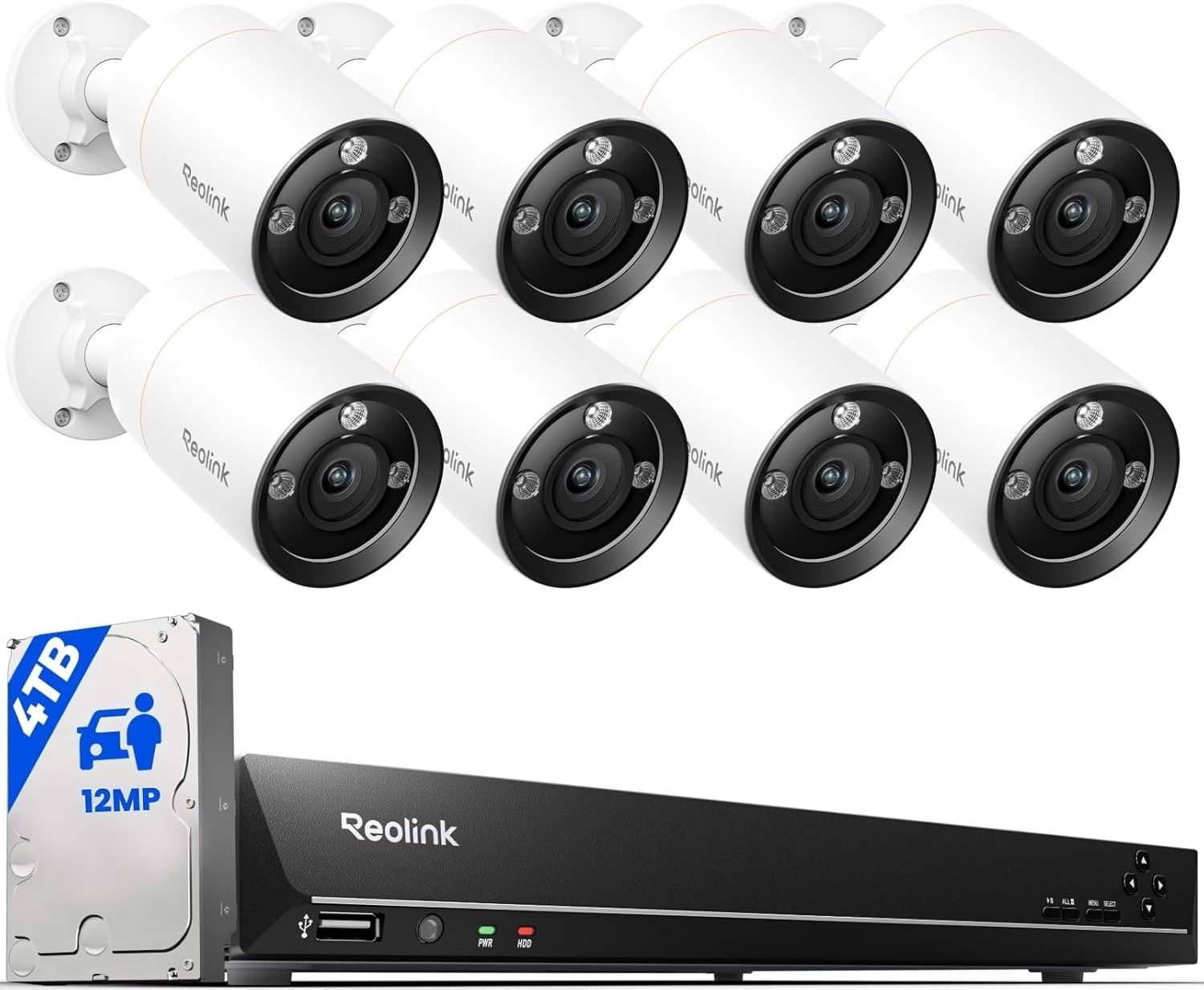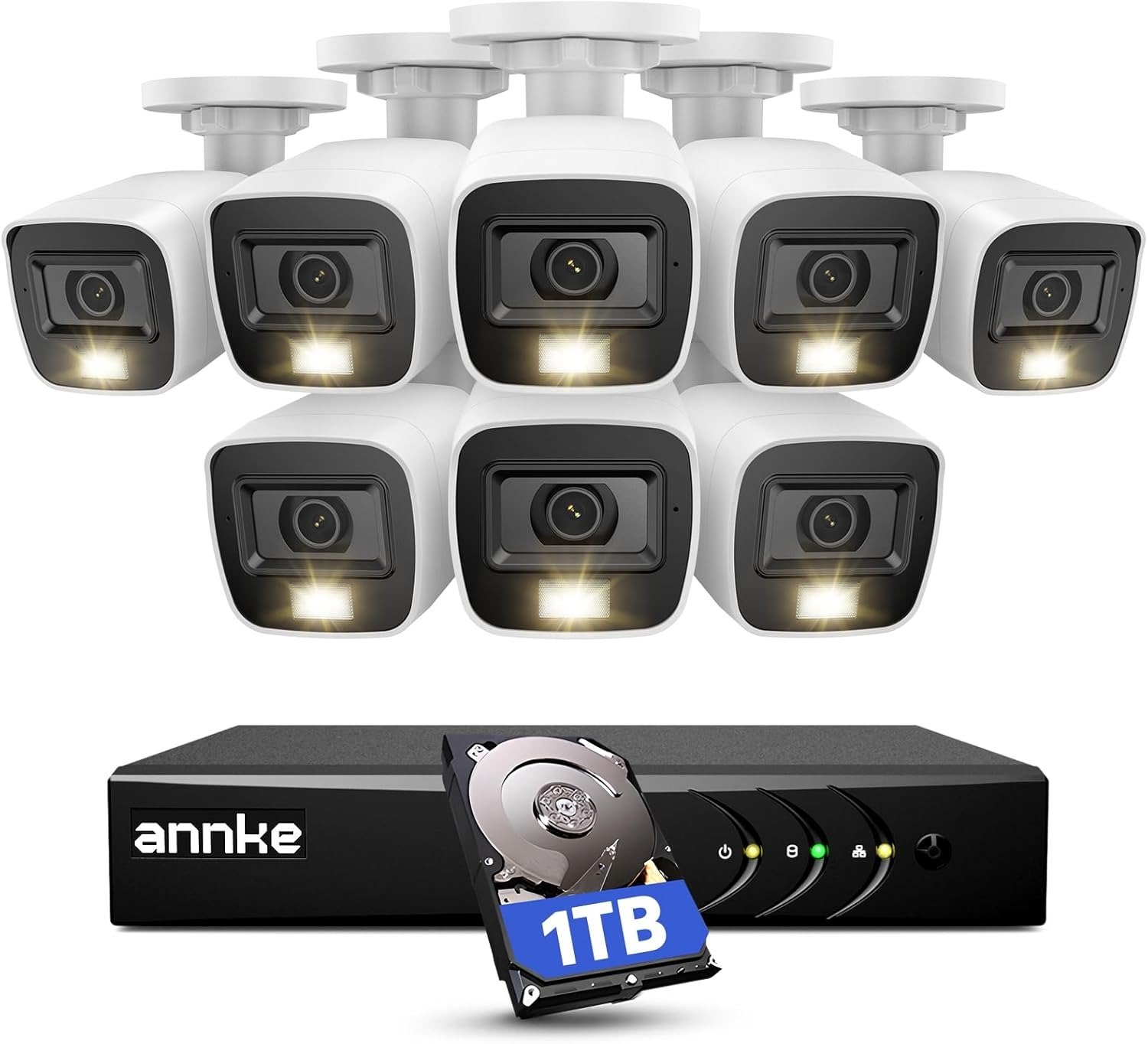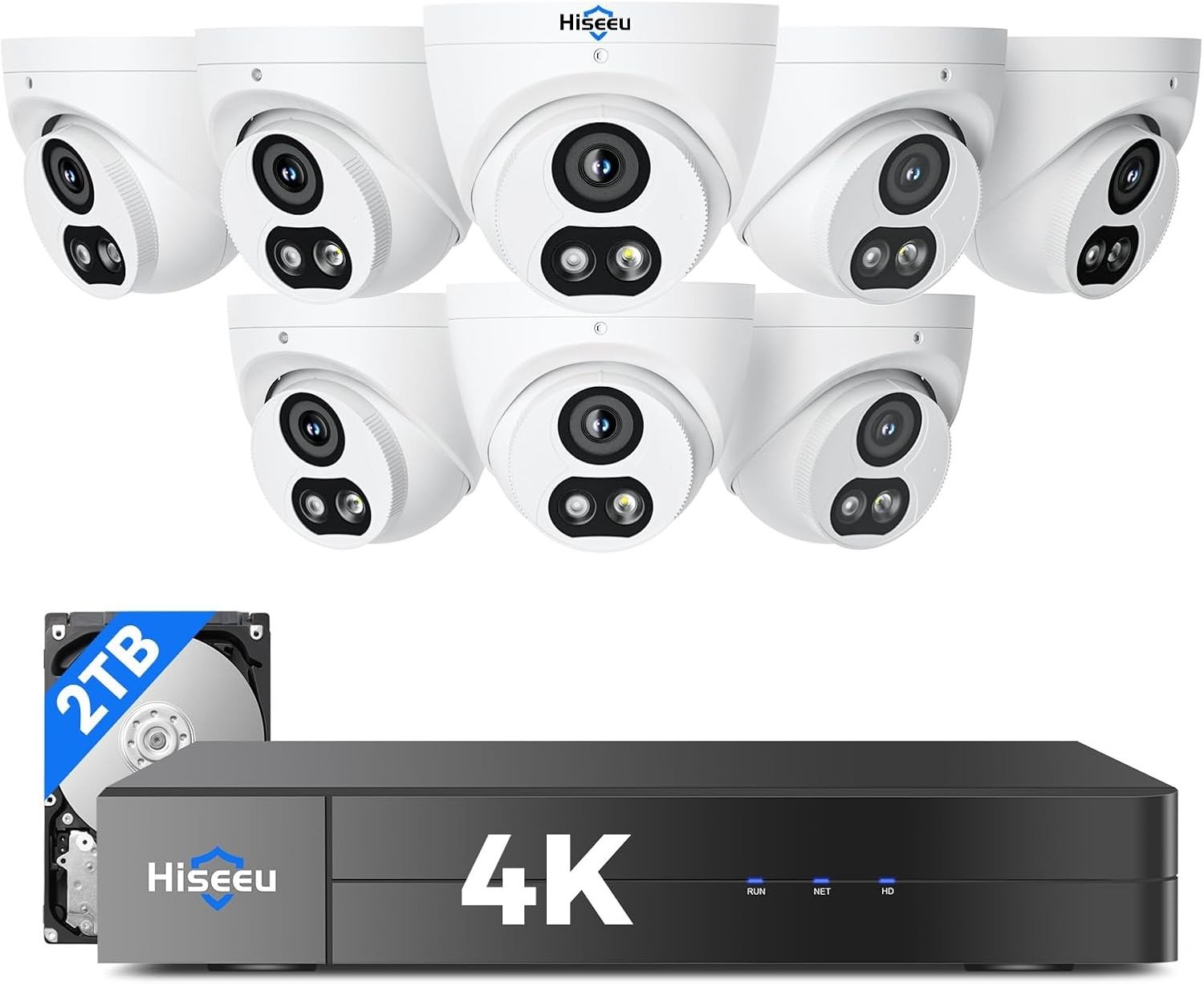
Your Cameras Aren’t Failing — Your Security Threshold Is Higher Than You Think
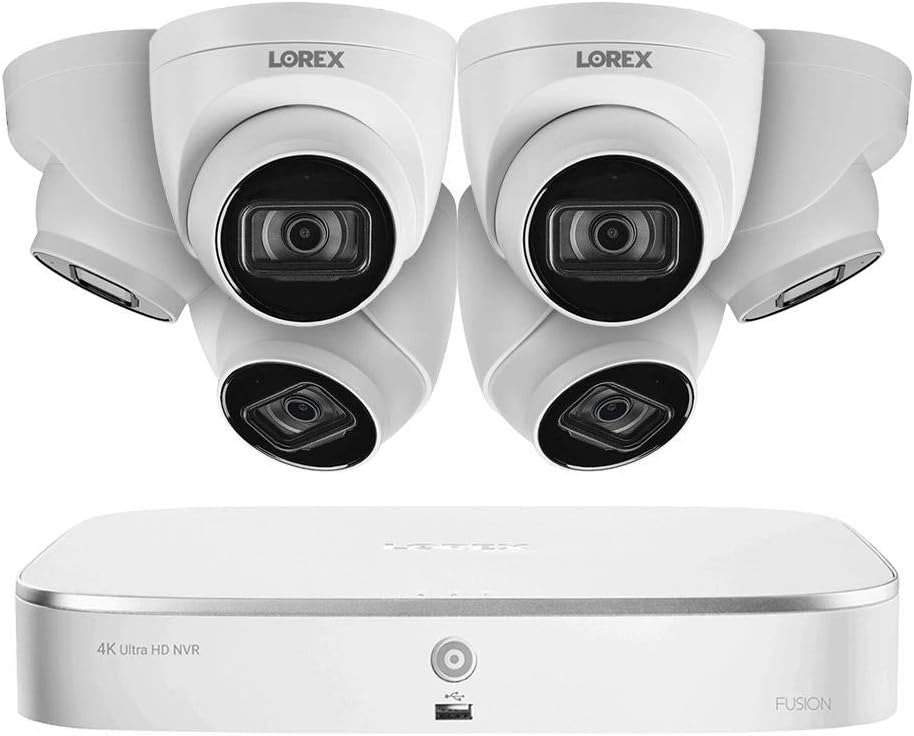
LOREX N4K2-86WD
A lot of homes look covered until something actually happens.
You have footage. You have alerts. You have cameras mounted in the right places. And yet the feeling underneath it is still unsettled. Not because the system is dead. Because the result is too soft exactly where you expected certainty.
That is the break point I kept coming back to with the Lorex N4K2-86WD. On paper, it is easy to summarize: an 8-channel 4K Fusion NVR system with six 4K dome cameras, a 2TB drive in the Amazon listing, 4K/2160p capture, and an Amazon rating of 4.3/5 from 28 reviews. But those numbers are not the real story. The real story is the threshold where “I can see something happened” stops being enough, and “I need usable evidence, stable recording, and fewer weak spots” starts to matter.
The Result Looks Fine. The Problem Isn’t.
The first trap in home surveillance is visual reassurance.
A cheap or mid-tier setup can look acceptable in casual use. You open the app. You see a driveway. You confirm movement. You move on. The weakness only shows up later, when you need detail under bad light, need continuous recording instead of a clipped event, or need to search footage without scrubbing through a mess. That is why so many people think they have a camera problem when they really have a decision-threshold problem. Wired PoE systems exist for exactly this reason: they trade convenience for stability, local recording, and more consistent capture.
What pulled me toward this Lorex kit is that it sits right on that boundary. It is not trying to be a cute plug-and-play smart cam. It is trying to be a more serious local-recording system: up to 4K on all channels, expansion to eight PoE cameras, local storage on a security-grade hard drive, and support for two compatible Lorex Wi-Fi devices through Fusion. That changes the job description from “watch a few live feeds” to “maintain a proper recording environment.”
What You’re Actually Feeling but Not Naming
Most buyers do not say, “My system lacks evidence density.”
They say smaller things.
They say the footage looks okay until they zoom in.
They say alerts become background noise.
They say installation was annoying, so now they are emotionally committed to a system that still leaves doubt.
They say they are covered, but they still check twice.
That hidden friction matters more than spec sheets do. Independent testing of Lorex systems has repeatedly landed in the same place: the video quality is strong, the lack of mandatory monthly fees is a real advantage, and the hardware feels closer to commercial gear than casual consumer cams. The trade-off is equally consistent: setup is left to the user, running cables is part of the deal, and full systems can be excessive for very small properties.
That is the emotional truth under the technical one: this category is not bought for entertainment. It is bought to remove repeat uncertainty. If your current setup still leaves you interpreting shadows, replaying clips, and guessing whether that movement mattered, then the annoyance is already telling you something useful.
The Hidden Mechanism Behind the Miss
The hidden variable is not resolution alone.
It is resolution plus recording architecture plus searchability plus installation discipline.
The N4K2-86WD package sits inside Lorex’s Fusion/NVR logic. The recorder can handle up to eight IP cameras, record in up to 4K, use Smart Search for person/vehicle events, and pair with up to two compatible Wi-Fi devices. The related Lorex product pages for this generation also point to local hard-drive recording, continuous backup options for supported Wi-Fi devices, voice assistant access, and weather-resistant aluminum IP67 dome cameras with a 105° field of view and HDR.
That bundle matters because security regret usually starts in one of four places:
| Failure Point | What people think it is | What it usually is |
|---|---|---|
| Weak night detail | “The camera is bad” | The scene is underlit, the expectation is too high, or motion/detail demands exceed the setup |
| Missed events | “Motion detection failed” | The system design relied too much on notifications instead of robust continuous recording/search |
| Hard-to-review footage | “The app is clunky” | The footage volume is high and the workflow was never built for fast filtering |
| Ongoing doubt | “I need more cameras” | The real gap is evidence quality, camera placement, and threshold mismatch |
Lorex’s own documentation and product pages emphasize Smart Search, person/vehicle detection, face-related search features on this NVR family, area search, privacy masking, and continuous local recording. Those are not decorative features. They are attempts to reduce review friction after the fact, when the moment has already passed and the only thing left is footage.
The Threshold Where the Outcome Quietly Breaks
Here is the threshold I would name:
The Evidence Threshold — the point where a camera system stops being about awareness and starts being about usable verification.
Below that threshold, almost any decent camera can feel acceptable.
Above it, weak systems start leaking value fast.
The Lorex N4K2-86WD becomes more relevant when your requirement includes several of these at once:
| Requirement | Below Threshold | At/Above Threshold |
|---|---|---|
| You only need occasional visual checks | Fine with lighter systems | Overbuilt |
| You want continuous local recording | Not necessary | Strong reason to move up |
| You care about zooming into detail later | Nice bonus | Core requirement |
| You dislike subscription dependence | Optional preference | Major factor |
| You are covering multiple fixed outdoor zones | Simple cams can work | NVR architecture starts making sense |
| You are willing to run cables once for stability | Avoid it | Worth it |
The reason this threshold matters is simple: 4K systems ask more from storage and network handling. Security.org notes that 4K video can demand much higher bandwidth and storage, citing rough figures of about 40 GB per hour for 4K footage in one test context, versus far less for 1080p. They also found that a 1TB drive could be consumed surprisingly quickly under continuous multi-camera 4K use. That does not make 4K a mistake. It means 4K punishes vague planning.
And that is the uncomfortable truth buyers often skip: when image quality goes up, sloppy system thinking gets exposed.
Why Most Buyers Misread This Too Early
Most buyers compare camera systems the wrong way.
They compare features like a storefront list:
4K.
Night vision.
Audio.
AI detection.
App access.
That is lazy comparison. It hides the operating question: what breaks first in real use?
With Lorex, the pattern from product pages, manuals, and third-party reviews is consistent. The upside is strong video quality, durable outdoor hardware, local storage, and the reliability advantages of PoE-style wired systems. The downside is that setup is not frictionless, cable runs are real work, and full systems can feel like too much if your property is small or your actual problem is only occasional visibility at a front door. Even some user commentary lands in that middle lane: not terrible, not perfect, but meaningful when used for the right job.
That is why early comparisons fail. They ask, “Which one has more features?”
They should ask, “Which one survives my use case without creating a new burden?”
Who Is Actually Inside This Problem
This system fits a specific kind of buyer.
Not the person who wants the easiest first hour.
The person who is tired of soft certainty.
You are probably inside this problem if the property has several fixed outdoor zones, if you care about recorded detail more than aesthetic minimalism, if you want local NVR storage instead of living inside a subscription loop, and if you are willing to accept a more involved install to get a steadier result. Lorex’s strength in third-party testing is exactly there: dependable hardware, strong image quality, and commercial-leaning capability without mandatory monthly fees.
You are even more inside it if your camera job is not just “let me know something moved,” but “let me verify what happened, search it later, and retain it locally.”
That is where an 8-channel 4K recorder with six dome cameras begins to feel less like excess and more like structure.
Where Wrong-Fit Begins
This is not for everyone.
If your priority is the fastest install with the least cable work, this is not the clean answer. Third-party reviewers repeatedly flag installation effort as part of the Lorex trade-off, and PoE systems in general are more deliberate to deploy than casual Wi-Fi cams.
If your property is tiny and your real need is one or two convenience cameras, a six-camera NVR kit can become structural overkill. Security.org says that full Lorex systems may be too much for a small property.
If you want security outsourced to a monitoring service, Lorex is also the wrong lane. Reviewers note there is no professional monitoring and no built-in rescue team behind the alert. The system records; you still interpret and act.
If your network, storage expectations, and patience are thin, 4K can become a burden you paid to create. That is not a Lorex-only issue. It is a category issue. But this product lives inside that category, so it inherits the cost of seriousness.
The One Situation Where This Product Becomes Logical
The Lorex N4K2-86WD becomes logical when your problem is no longer “I need cameras,” but “I need stable, local, multi-zone evidence with better detail and fewer blind compromises.”
That is the moment the system’s shape finally matches the problem:
| System Trait | Why it matters in that situation |
|---|---|
| 8-channel NVR architecture | Lets the system behave like a real fixed surveillance setup, not a scattered gadget collection |
| Six included 4K dome cameras | Gives immediate coverage density without forcing an all-at-once expansion later |
| Local hard-drive recording | Reduces subscription dependence and keeps footage under your control |
| Smart Search / detection features | Cuts review time when you need to find actual moments, not scrub endlessly |
| PoE-style wired reliability | Helps avoid the dropout anxiety common in more casual wireless setups |
| Weather-resistant dome housing | Makes more sense for long-term outdoor duty than flimsy indoor-first hardware |
The product listing positions it as a six-camera 4K system with 2TB storage, 130-foot night vision, color night vision, and listen-in audio. Related Lorex materials for this hardware family add the wider framework: 4K recording across channels, Smart Search, expansion to eight cameras, Fusion support, HDR on the dome cameras, IP67 weather resistance, and local storage without mandatory cloud fees. That combination is the point. Not one headline feature. The stack.
If this is the condition you are actually dealing with, this is where the decision stops being vague: [Link].
What It Solves, What It Reduces, and What It Still Leaves to You
What it solves is not “security” in the abstract.
It solves a narrower thing: the gap between visible coverage and usable footage.
It reduces:
| It reduces | Why that matters |
|---|---|
| Soft detail regret | 4K and better zoom tolerance matter when you revisit footage later |
| Subscription pressure | Local recording lowers ongoing cost dependence |
| Weak multi-zone coverage logic | One recorder-centered system is cleaner than a pile of disconnected cameras |
| Review friction | Smart Search and event filtering help when time matters |
| Wireless reliability anxiety | Wired architecture is usually steadier for permanent coverage |
It still leaves you with real responsibilities:
| It still leaves to you | Why it matters |
|---|---|
| Installation effort | Cable routing and placement still decide whether the system feels smart or frustrating |
| Storage planning | 4K footage is heavy, and weak planning creates fast disappointment |
| Scene design | Night vision claims never replace lighting, angle, and distance reality |
| Response duty | The recorder captures events; it does not call for help for you |
| Fit discipline | Buying more system than your property needs is still a form of bad purchasing |
That last line is important. The camera is not the whole decision. The threshold is.
Final Compression
Here is the clean rule I would keep:
Do not buy this because it is 4K. Buy it only if your property and your tolerance for uncertainty have already crossed the Evidence Threshold.
Below that line, this can feel heavy.
Above it, lighter systems start feeling false.
The Lorex N4K2-86WD is strongest when you want a wired, local, recorder-based structure with six cameras already in the box, 4K capture, search tools that reduce footage friction, and no mandatory monthly fee logic hanging over the system. It is weakest when you want convenience first, minimal setup effort, or a tiny-property solution that does not need this much architecture.
That is the real split.
Not good versus bad.
Not premium versus cheap.
Not feature-rich versus basic.
Just this:
If your break point starts where vague footage, missed context, and soft verification become unacceptable, this is a logical next step. If it does not, the smartest move is not to force a heavier system into a lighter problem.
Transparency Note:
This analysis is not based on quick personal impressions.
It is derived from documented system behavior, verified user patterns, and the physical constraints of storage capacity.
The goal is to translate complex technical behavior into a realistic performance model that helps you make a clear decision.