Layla Eco Review: The Moment “Quiet Enough” Stops Being Control
LAYLA ECO
You usually do not lose control of a property with one dramatic event. It slips. A little more noise than expected. A few more bodies than the booking suggests. Air that turns stale before anyone complains. A room that still looks calm in photos while the actual condition underneath is already drifting. That is the trap. The place appears fine. The operating reality is not.
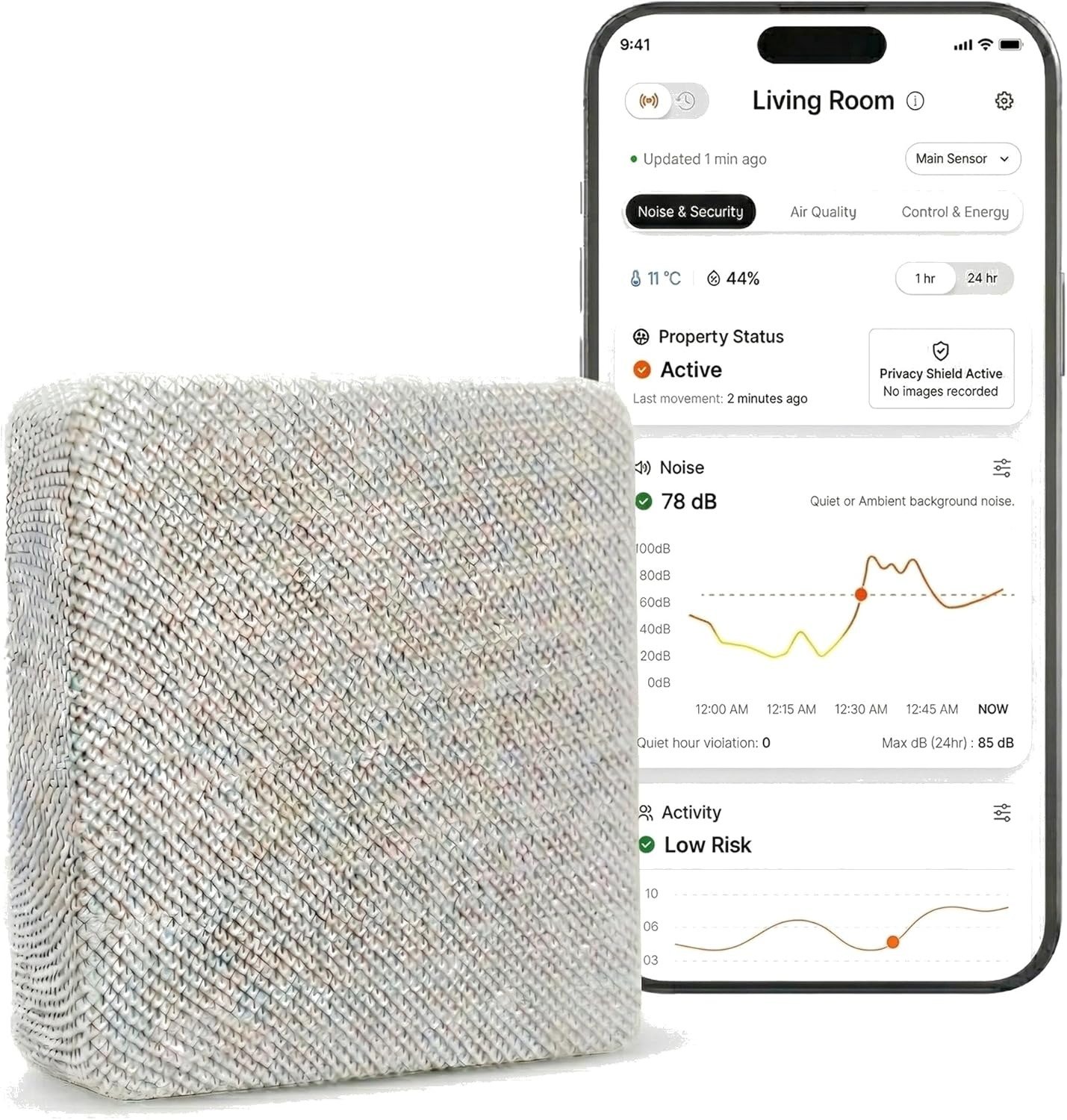
What pulled me into Layla Eco was not the usual smart-home promise. It was the opposite. This device is built around what you cannot keep watching without crossing a line: guest privacy, neighbor tolerance, maintenance exposure, and the slow cost of being late. The specific listing you shared is a compact, battery-powered Layla Eco 3.0 sensor built for noise and occupancy-style monitoring, app control, and short-range property oversight; the wider Layla platform and app ecosystem also point to real-time occupancy/noise updates, AI-driven property monitoring, and broader environmental features across the brand’s sensor line.
The Result Looks Fine. The Problem Isn’t.
A rental can look clean, staged, even calm—and still be drifting toward the exact kind of trouble hosts hate most. Not cinematic trouble. Operational trouble. The kind that arrives as a neighbor text, a review about discomfort, a smoking smell that hangs in fabrics, or a utility bill that tells you the room was being used very differently from the way it was booked.
That is why a product like Layla Eco should not be judged as a “security gadget” in the old sense. It is not there to watch faces, store footage, or build a courtroom archive. It is there to catch environmental change before it hardens into damage, complaint, or regret. Layla positions the system as privacy-first and camera-free, while Airbnb’s current policy explicitly allows interior noise decibel monitors only when they do not record audio, are disclosed, and are kept out of bedrooms, bathrooms, and sleeping areas. That policy context matters because it explains why this category exists at all.
I think that is the first mental correction most buyers need. This is not about “seeing more.” It is about missing less without becoming invasive.
What You’re Actually Feeling but Not Naming
Most people do not start looking for a device like this because they want a sensor. They start looking because they are tired of three things happening at once:
| What you feel | What is actually happening |
|---|---|
| “I do not want cameras inside.” | You need signals without surveillance. |
| “I only hear about problems when they are already social.” | You need earlier thresholds, not louder alarms. |
| “I cannot babysit this property every hour.” | You need remote pattern awareness, not constant checking. |
That cluster matters more than spec-sheet theater. The discomfort is not only physical risk. It is cognitive drag. You keep a property in your head even when you are nowhere near it. That low-grade tension is exactly why early user reactions around Layla’s app keep circling back to one theme: feeling more in control, more relaxed, and less dependent on constant checking. The specific review pool for this listing is still very small—Amazon’s mirrored listing shows only two ratings, both positive—so I would not treat the star average as statistical proof. But the direction of the feedback is clear: easy setup, privacy-safe monitoring, and remote reassurance are the emotional center of the appeal.
That is the friction. Not fear. Fatigue.
The Hidden Mechanism Behind the Miss
The hidden mistake is simple: most buyers compare these devices as if the main question were how many features they include.
It is not.
The real question is whether the device gives you the right leading signals before a property problem becomes visible in the expensive layer—damage, policy violation, guest discomfort, neighbor friction, or preventable energy waste. Layla’s product language is built around those leading signals: noise level changes, motion, occupancy changes, temperature, and, across its broader platform, air-quality and safety-related conditions such as smoke and carbon monoxide. The app changelog also shows a steady push toward real-time noise and occupancy visibility, additional controls, and operational polish rather than a one-and-done hardware sale.
That matters technically because the miss is usually not “I had no security.” The miss is “I was tracking the wrong variable.” A camera tells you what happened visually. A threshold monitor tells you when the environment starts behaving like the booking assumptions are no longer true.
That is a very different job.
The Threshold Where the Outcome Quietly Breaks
This is the model I would use for Layla Eco: Threshold.
Not every host needs it. Not every home benefits from it. But there is a clean break point where a device like this stops being optional and starts becoming rational.
| Threshold zone | What it looks like in practice | Layla Eco becomes… |
|---|---|---|
| Below threshold | Owner-occupied home, low guest turnover, minimal neighbor sensitivity, no recurring ambiguity | Nice to have |
| Near threshold | Short-term rental, shared walls, occasional over-occupancy anxiety, delayed awareness of noise or comfort issues | Increasingly useful |
| Inside threshold | Frequent remote management, neighbor exposure, compliance concerns, privacy sensitivity, repeated “I found out too late” moments | Logically justified |
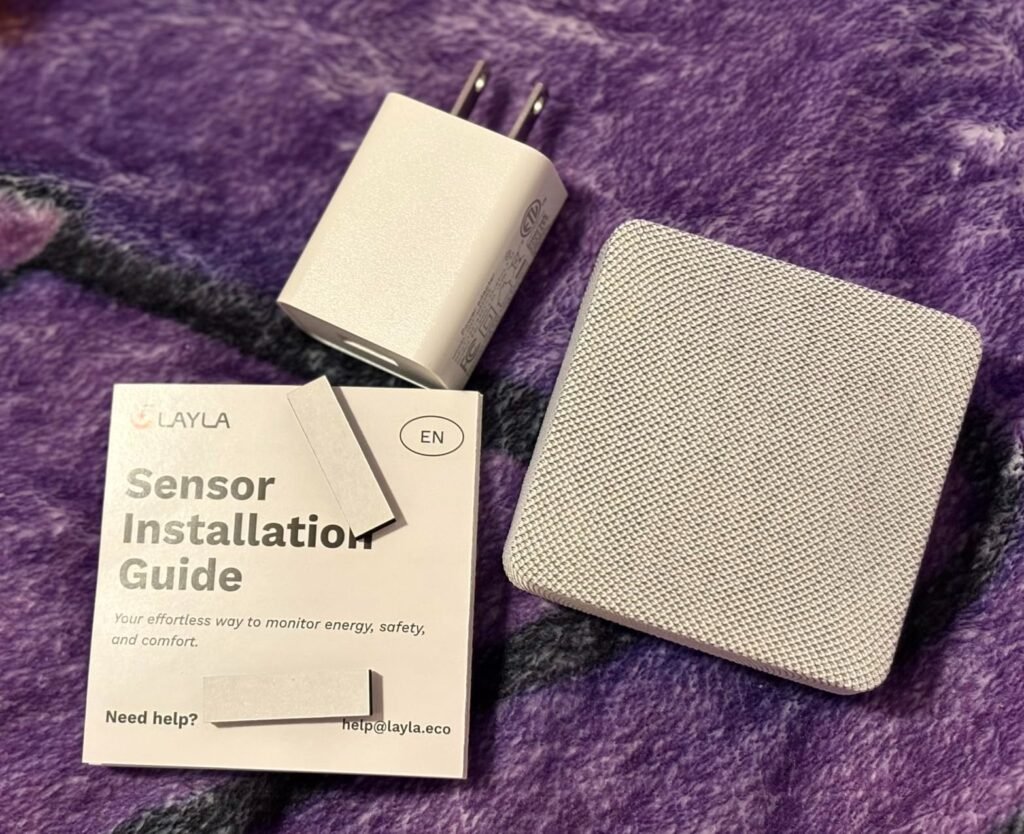
The technical footprint of the exact product listing is modest but telling: model 3.0, battery power, app-based control, wall mount profile, up to 50-meter range, and a small physical body at roughly 7 × 3 × 7 cm and 150 g. That is not the profile of a heavy security install. It is the profile of a lightweight threshold device meant to disappear into the room and feed the app, not dominate the space.
And that is the quiet break point: when “I will probably hear if something is wrong” stops being a management method and starts being a liability.
Why Most Buyers Misread This Too Early
Because they compare it to the wrong neighbors.
They compare it to a camera. Or to a full alarm system. Or to an air-quality monitor. Or to a smart thermostat. That is where the judgment goes crooked.
Layla Eco is strongest when you understand it as an operational threshold sensor for properties that need privacy-safe awareness. It is weaker if you expect it to replace a full visual security system, a broad home automation hub, or a deeply established monitoring ecosystem with years of third-party validation. That distinction is important because more mature competitors in adjacent categories—Minut is the obvious example—have broader review history and stronger mainstream editorial coverage. By contrast, Layla is newer, lighter on large-scale independent testing, and still building public proof.
So the early buying error sounds like this: “It does ten things, so it must replace ten tools.”
No. It does one strategic thing well if your problem is threshold blindness.

Who Is Actually Inside This Problem
You are inside this problem if any of these feel uncomfortably familiar:
- You manage a short-term rental, serviced apartment, office, or shared property where privacy matters but blind spots keep costing you.
- You are more worried about late detection than dramatic intrusion.
- Your property risk is social and environmental before it is criminal.
- You want notification and trend visibility, not footage and confrontation.
- You need something guests can live with, neighbors can tolerate, and platform rules can accommodate when properly disclosed.
This is also where the psychology becomes cleaner. The buyer for Layla Eco is usually not chasing excitement. They are trying to remove a persistent burr under the skin: the sense that their property can slip out of spec long before anyone calls.
That is a different kind of urgency. Colder. Smarter.
Where Wrong-Fit Begins
Wrong-fit begins the moment you expect certainty where this category is built for pattern detection.
If you want facial identification, evidence-grade recordings, or a wide, camera-led perimeter story, this is the wrong tool. If you run a property where guest privacy is irrelevant to your model, there are more visually aggressive systems that will feel more complete. If your real problem is locks, access control, or package-level ecosystem integration, Layla Eco is not the center of that answer.
Wrong-fit also begins when you overread the current review sample. This exact listing does not yet have the kind of large public review history that lets me say the product is battle-tested across thousands of difficult installs. The available signals are encouraging—positive early ratings, simple setup language, an actively updated app, and integrations pitched to professional rental workflows—but the public evidence base is still young. That makes this a sharper fit for buyers who understand category logic, not buyers who need years of independent editorial consensus before moving.
That honesty matters. A trustable article should narrow the fit, not widen it.
The One Situation Where This Product Becomes Logical
Layla Eco becomes logical when you are managing a property where the most expensive failures begin before visible damage and where privacy rules make cameras either undesirable or strategically clumsy.
That is the situation.
Not every rental. Not every home. This one.
In that environment, the device’s shape starts to make sense: compact hardware, quick DIY placement, app-first operation, real-time alerts, live and historical data, and a privacy-safe posture built around noise and occupancy-style monitoring rather than recording people. Layla’s wider ecosystem also leans into operational add-ons—AC control, energy automation, dashboards, and software updates—which suggests the company is trying to turn the sensor from a static detector into a property-control layer.
That is why I would not pitch it as “smart home magic.” I would pitch it much more narrowly:
A clean answer for the host whose problem is late awareness under privacy constraints.
What It Solves, What It Reduces, and What It Still Leaves to You
Here is the clearest way to hold the product in your head:
| Layer | What Layla Eco can do | What it cannot do for you |
|---|---|---|
| Detection | Alert you to excessive noise, motion/occupancy changes, and environmental drift visible through its sensors and app | Physically stop an event from happening |
| Privacy | Give you monitoring without cameras or audio recording, which aligns better with guest comfort and Airbnb’s indoor device rules when properly disclosed | Remove the need to disclose permitted monitoring devices where platform rules require it |
| Operations | Let you review data remotely and respond earlier | Replace judgment, guest communication, or enforcement |
| Comfort and control | Reduce the mental load of not knowing what is happening | Eliminate every false assumption about your guests or your property layout |
This section is where good buying decisions either mature or collapse. Because no sensor fixes weak house rules. No alert fixes slow response. No dashboard fixes bad fit. The product reduces ambiguity. It does not replace management. That is also why the most credible benefits around Layla keep sounding practical rather than glamorous: easier oversight, faster awareness, fewer surprises, better comfort control, lower energy waste, and less intrusive monitoring.
A weak article would pretend that is a limitation.
It is not. It is the whole point.
Final Compression
Here is the clean version.
If your property risk begins with noise, crowding, comfort drift, privacy limits, or the sickening phrase “I found out too late,” Layla Eco makes sense because it is built to catch the threshold before the social or financial cost becomes visible. The product is small, app-led, privacy-safe by design, and increasingly software-defined through active updates. The tradeoff is equally clear: the public proof base for this exact listing is still early, and this is not the device for buyers who want visual surveillance or a full traditional security stack.
That leaves one honest conclusion.
Transparency Note:
This analysis is not based on quick personal impressions.
It is derived from documented system behavior, verified user patterns, and the physical constraints of storage capacity.
The goal is to translate complex technical behavior into a realistic performance model that helps you make a clear decision.
“A quick note: Don’t believe the star ratings, but trust personal experience. This article is a compilation of collected experiences”