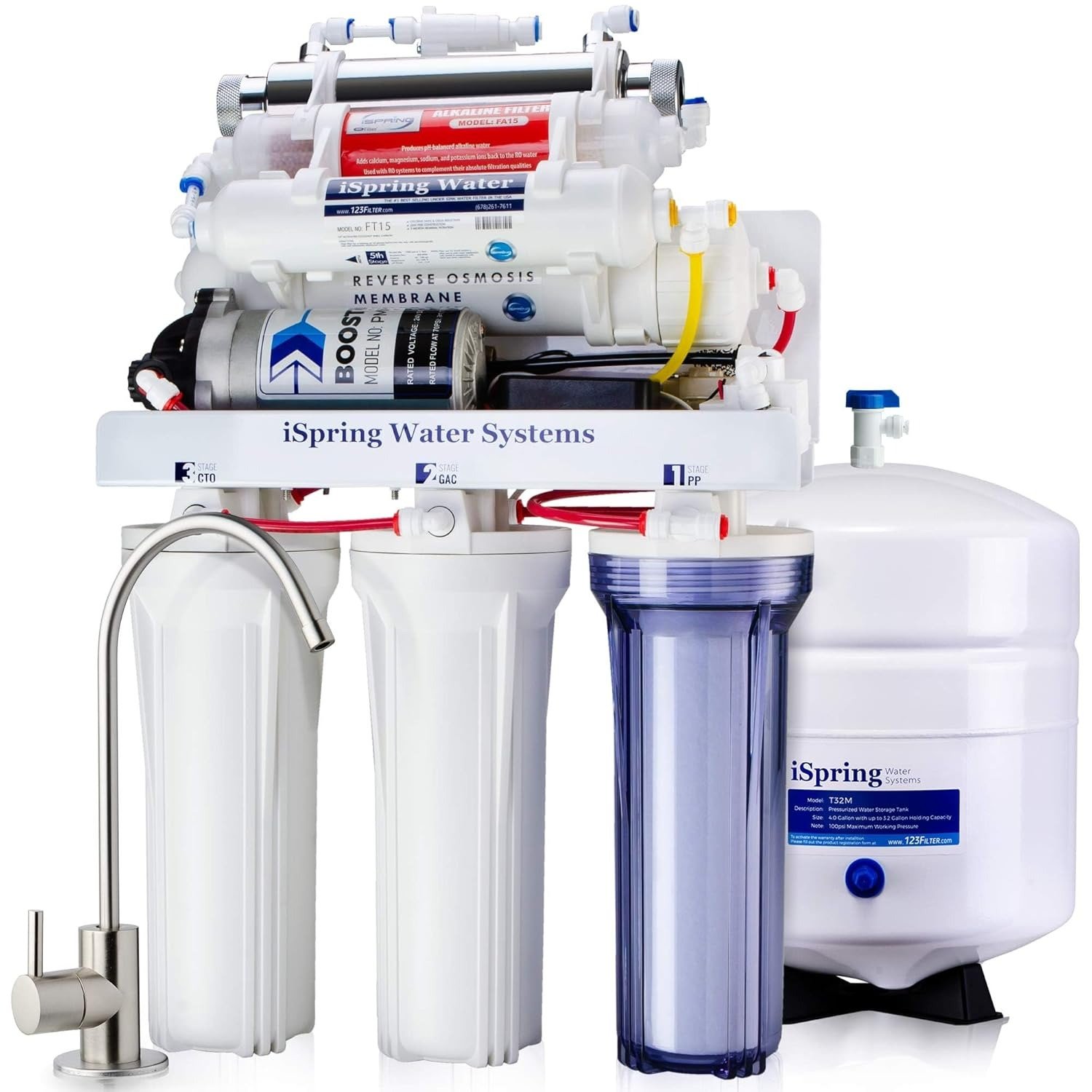
iSpring RCC1UP-AK Review: The Best Choice Only If Your Water Problem Is Really a Threshold Problem
DECISION ANALYSIS
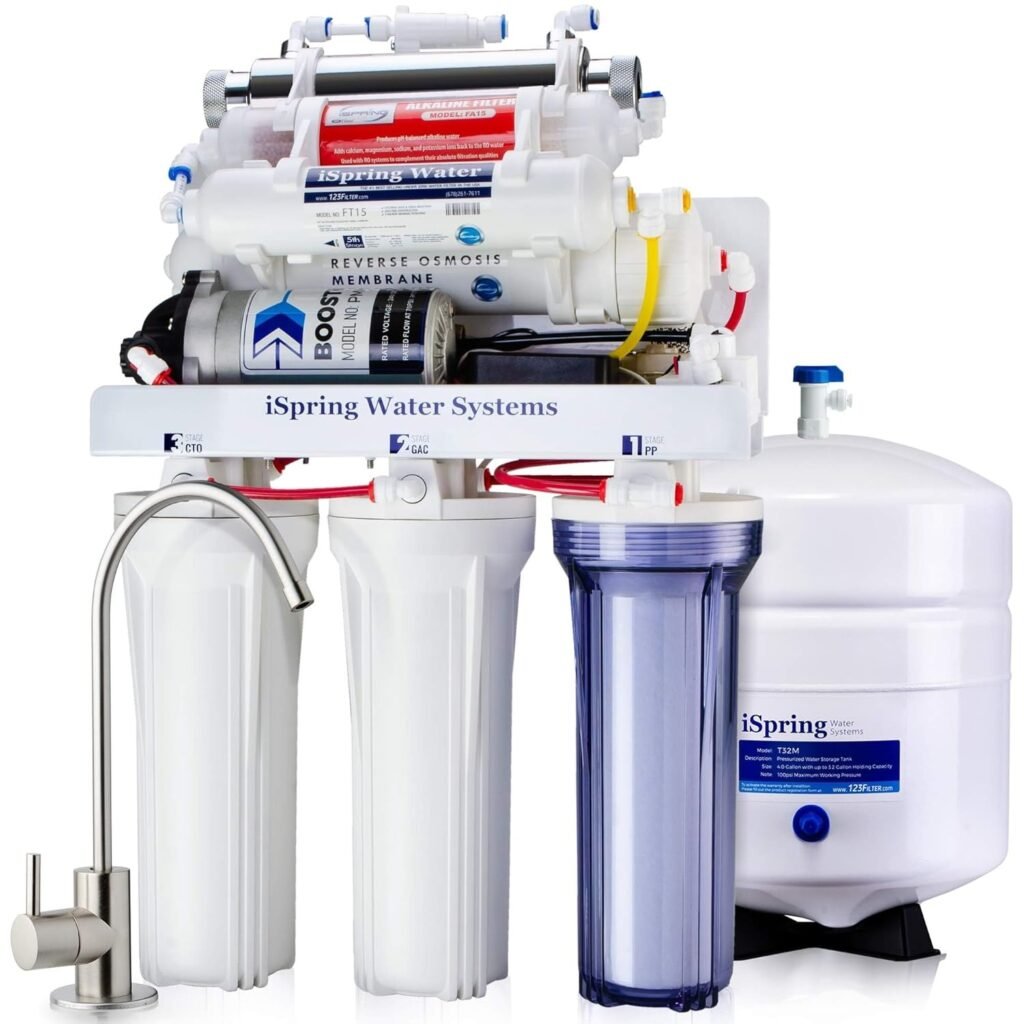
When I looked at the iSpring RCC1UP-AK closely, what stood out to me was not just the filtration stack.
It was the logic of the stack. This is a 7-stage, 100 GPD under-sink reverse osmosis system with a booster pump, alkaline remineralization stage, and UV stage.
That tells me immediately that it is not designed for someone who merely wants “filtered water.” It is built for someone trying to control multiple thresholds at once: pressure, contaminant reduction, taste recovery, and post-filtration confidence.
My Decision in One Sentence
I would treat the RCC1UP-AK as a strong buy only when the real household problem is operational instability rather than simple filtration.
If pressure is inconsistent, taste matters, and you are willing to maintain the system on schedule, this model makes sense.
If you want the fewest parts, the fewest variables, and the least upkeep, I would not pretend this is the calmest option.
What Convinced Me Technically
The technical case is stronger than the average Amazon listing suggests.
The official product information states that the system removes up to 99% of over 1,000 contaminants, including PFAS, chlorine, fluoride, and lead up to 98%, while the membrane is rated at 0.0001 microns.
The booster pump is there to stabilize RO performance under pressure variation, and the manual explains that the pump brings pressure to about 80 PSI entering the membrane housing.
The UV stage also uses a flow sensor with delay logic so it is not simply on all the time.
Why It Feels Better Than Basic RO When It Fits
What makes this unit more persuasive to me than a bare-bones RO system is that it tries to solve the emotional complaint people usually have without turning into marketing theater.
Most people do not describe their problem as “insufficient membrane separation.”
They say the water tastes flat, the flow is annoying, the setup feels fragile, or they still do not fully trust it.
This model answers those points with a pump for pressure stability, remineralization for taste balance, and UV for added reassurance at the tail end of the line.
That does not make it magical. It makes it more complete.
What Real Owner Feedback Seems to Confirm
The review pattern is not random.
Customers consistently praise water quality, taste, and support, and some long-term owners say the system kept performing well with periodic filter changes.
At the same time, Amazon’s review summary shows mixed experiences with leakage and noise, and at least one recent Reddit report describes a rubber smell traced to the storage tank rather than the filtered faucet line.
For me, that creates a believable profile: strong core performance, but more components means more points where setup quality and time can shape the experience.
The Threshold Model I Would Use for This Product
I would not analyze this system through a pure “best vs worst” lens.
I would use a threshold model.
Below threshold:
If your home pressure is unstable, your water tastes rough, and you are tired of basic filtration that still feels unfinished, this system can create a noticeable step up.
Inside threshold:
If you keep pre-filters, post-carbon, alkaline stage, and membrane on schedule, the system is likely to feel reliable and worth the footprint.
Beyond threshold:
If you neglect maintenance, install it into the wrong water conditions, or expect a complex RO stack to behave like a zero-maintenance pitcher, the product will probably feel harder than it should.
Compatibility Split 3.0
Type 1: Strong match
I see this as a strong match for households with low or variable pressure, buyers who care about coffee, tea, and drinking taste, and people who want a more confidence-heavy RO package without moving into far more expensive tankless or specialty systems.
The 100 GPD rating and pump support that use case well.
Type 2: Conditional match
I see it as a conditional match for buyers on hard municipal water or well-connected point-of-use setups who understand that RO is not a whole-house fix.
The manual is also very clear that feed water must remain inside specific limits, including TDS, temperature, pH, and the absence of iron, manganese, or hydrogen sulfide.
Type 3: Wrong match
I would call it a wrong match for anyone who wants ultra-simple ownership, hates periodic cartridge changes, or is likely to resent troubleshooting tank, tubing, pump, or leak-related variables.
This is also the wrong emotional buy for people who want invisible maintenance. The filter schedule alone tells you that.
What I Like Without Stretching the Truth
I like that the design shows operational intent.
The transparent first-stage housing makes inspection easier.
The pump is not cosmetic; it solves a real RO weakness.
The UV stage is not just there for label inflation; it is tied to flow logic.
The remineralization stage addresses the familiar complaint that RO water can feel stripped.
And the support reputation appears repeatedly in third-party owner comments, which matters more to me on a multi-stage system than it does on a simple filter.
What Keeps Me From Calling It Universal
I would never call this universal because the complexity is real.
More stages and more hardware widen the performance ceiling, but they also widen the setup burden.
The manual’s operating limits are specific, the replacement schedule is real, and owner feedback shows that leakage, installation friction, and tank-related issues can shape the long-term feel of the product.
In other words, this is a serious under-sink RO system, not a casual appliance.
Final Verdict
My verdict is clear: the iSpring RCC1UP-AK is a high-confidence buy for the buyer who has correctly identified a threshold problem, not just a water problem.
If what bothers you is weak pressure behavior, unfinished taste, and low trust in basic filtration, this system has the right architecture to feel like a real upgrade.
If what you want is the simplest path to cleaner water with the least maintenance burden, I would step back, because this model earns its strengths through added system complexity, not through simplicity.
Transparency Note:
This analysis is not based on quick personal impressions.
It is derived from documented system behavior, verified user patterns, and the physical constraints of storage capacity.
The goal is to translate complex technical behavior into a realistic performance model that helps you make a clear decision
One Comment