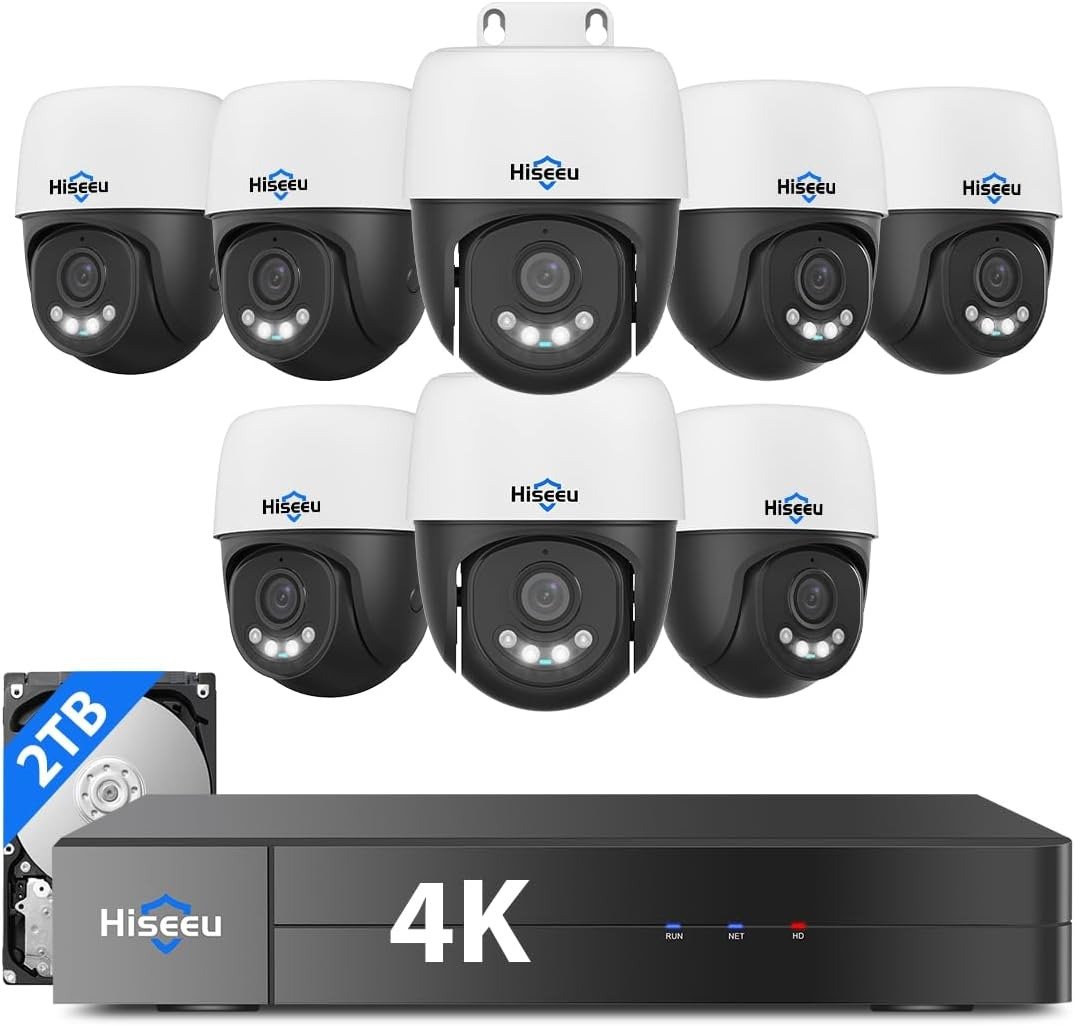
stability shifts when simultaneous demand exceeds the recorder’s processing window.
DECISION ANALYSIS
What Matters Before Buying
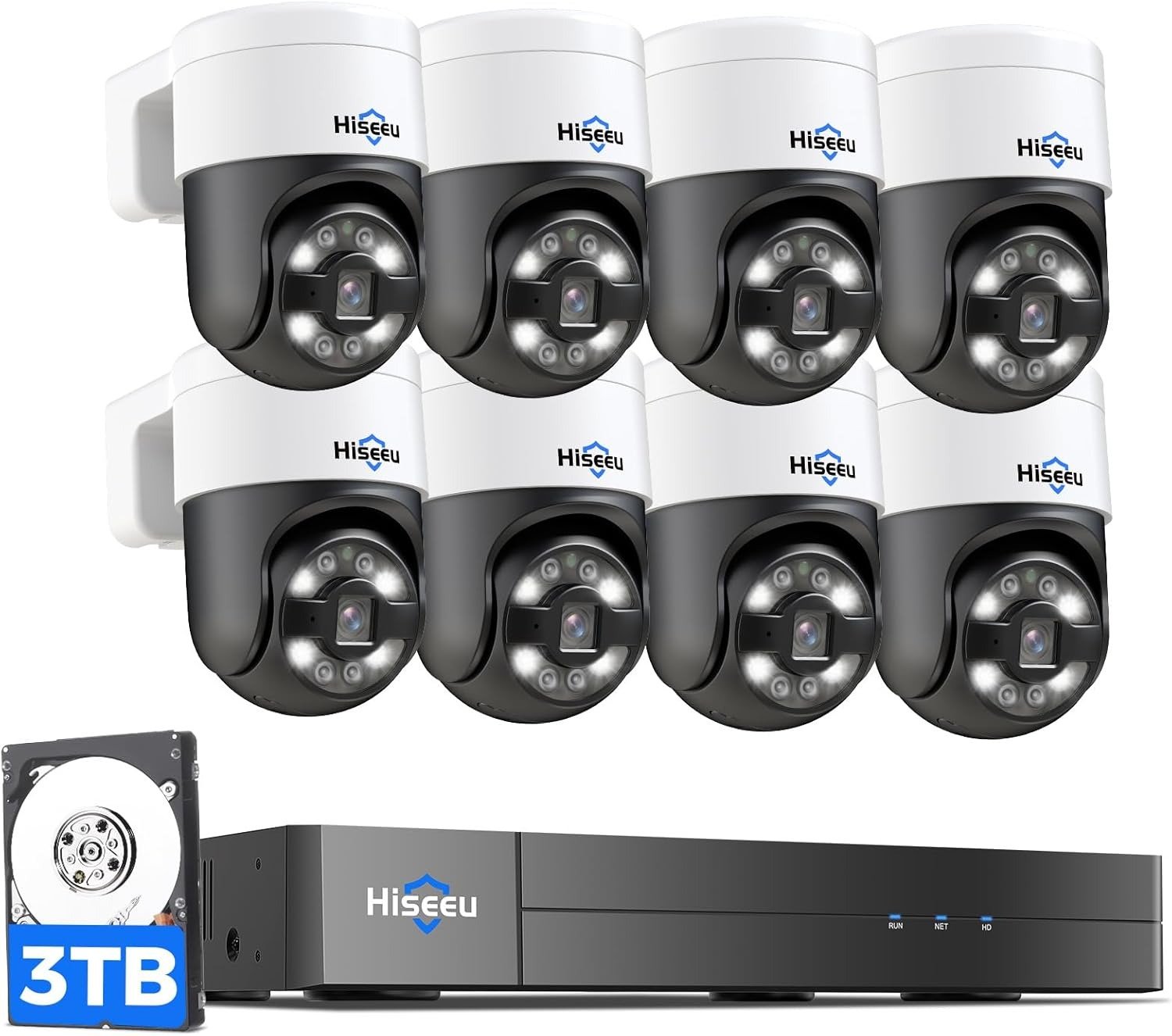
• Resolution: 8MP cameras produce detailed 4K footage.
• Recording: the system includes a 2TB drive for
continuous recording.
• Architecture: the recorder provides 8 PoE ports with support for up to 16 channels through expansion.
These specifications are important.
But the real question is simpler:
How does the system behave when activity suddenly increases?
Why Peak Behavior Matters More Than Specs
At noon most security systems appear perfect.
Motion is low.
Streams are stable.
The real test arrives when motion overlaps.
Driveways become active.
Multiple cameras begin tracking simultaneously.
If the system stays predictable during those hours, it will remain reliable the rest of the day.
The Exact Moment Stability Changes
Failure Signature:
When several cameras detect motion at once, playback clips may begin a few seconds late, and live viewing can briefly hesitate.
This does not indicate a malfunction.
It simply shows the system has reached its load saturation threshold.
Compatibility Split 3.0
Split A — Best Fit
This system works well if:
• you want wired PoE reliability instead of wireless cameras
• your environment contains predictable motion zones such as driveways or entrances
• your camera count remains within the stable load window
In these conditions the system remains stable and easy to manage.
Split B — Conditional Fit
The system can still work well if:
• you plan to expand beyond eight cameras
• you install an external PoE switch for additional cameras
• you understand that peak-hour playback may require limiting simultaneous viewing
This environment requires a little planning but remains stable when configured correctly.
Split C — Poor Fit
This system may not be ideal if:
• your environment generates constant motion across many cameras simultaneously
• you require completely uninterrupted live viewing during those peaks
• you prefer a plug-and-forget installation without infrastructure planning
In these environments, load saturation appears more frequently.
Constraints That Shape Real Performance
| Constraint | What It Means in Practice |
|---|---|
| 8MP 4K video streams | Higher detail increases processing demand |
| 8 PoE ports | Direct camera connections are limited to eight |
| 16 total channels | Expansion requires external switching |
| 2TB storage | Supports continuous local recording |
None of these constraints are flaws.
They are simply the boundaries that determine system stability.
3 Ways to Keep the System Stable
- Avoid stacking multiple heavy tasks at once.
Opening many live feeds while reviewing recordings increases load quickly. - Treat expansion as infrastructure.
Adding cameras beyond the eight PoE ports requires proper switching capacity. - Observe peak-hour behavior first.
Testing during the busiest time of day reveals the system’s true stability range.
The Line I Remember
Buy the system for how it behaves during peak motion, not how sharp the image looks when nothing moves.
Channel capacity alone does not determine performance.
Stability depends on how motion events, streams, and playback overlap under load.
Transparency Note
This analysis applies a structured performance framework to documented user behavior patterns, technical documentation, and repeatable system constraints.
The evaluation focuses on observable behavior over time rather than isolated impressions.
2 Comments