Why Security Coverage Starts to Feel Unreliable Over Time
ANALYSIS FRAMEWORK
The more I looked at modern home security systems, the less I thought the real problem was raw resolution.
What kept standing out to me was something quieter: coverage drift.
A setup can look impressive on paper, show a sharp live view, and still become less dependable once movement, routine, weather, and time start interfering with how the cameras actually behave.
That is where trust begins to split.
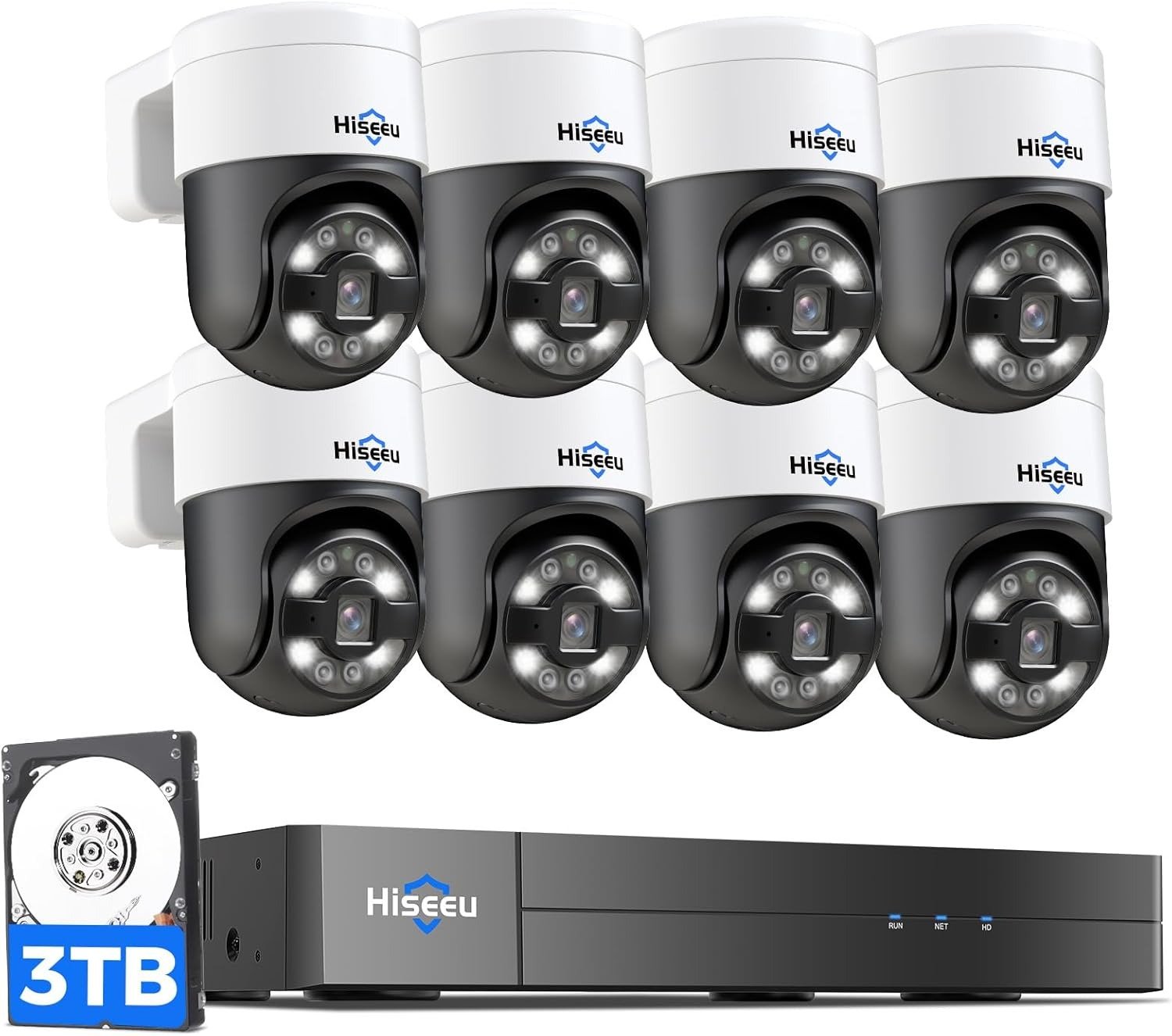
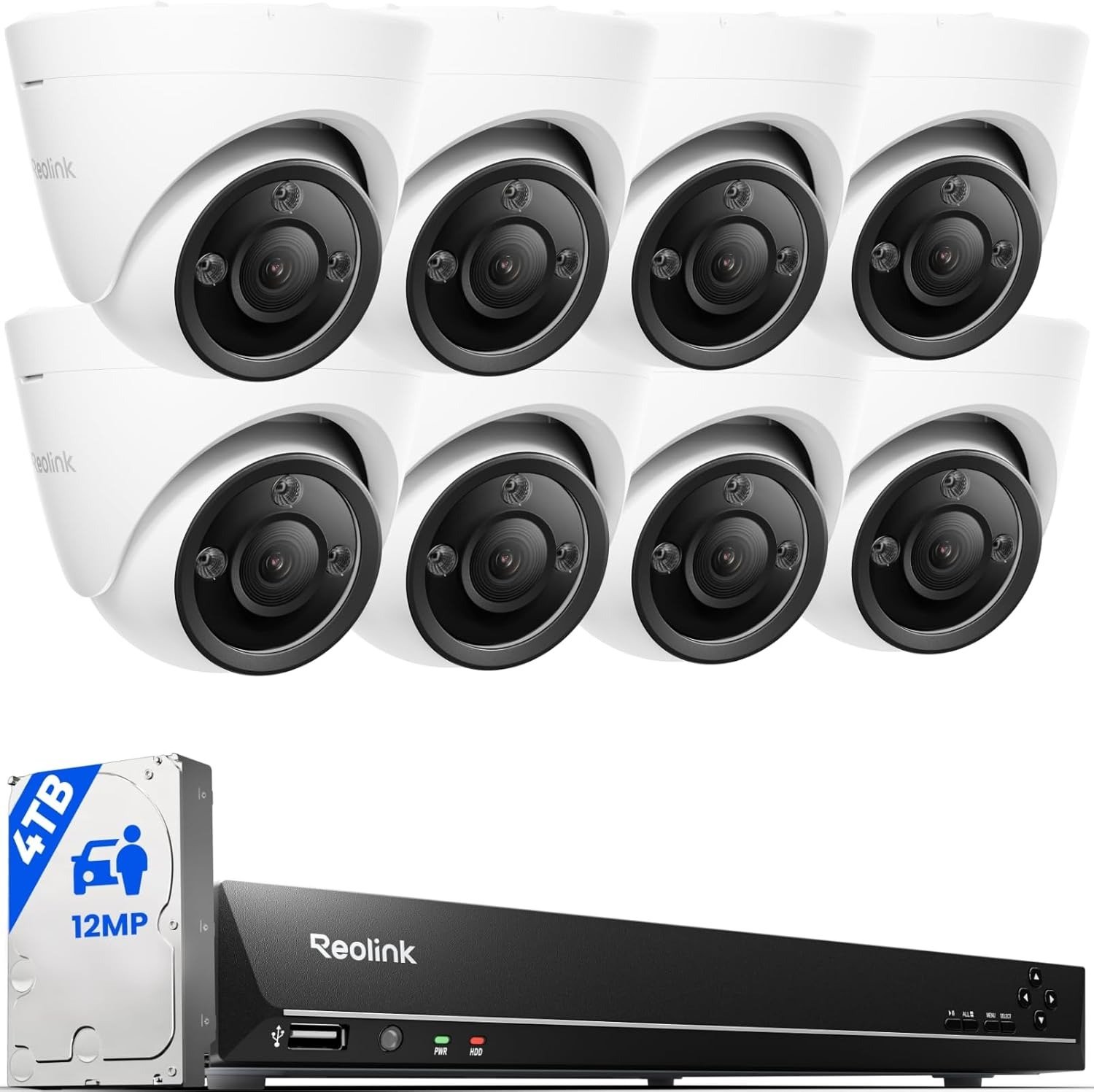
This Hiseeu kit is built around eight 5MP PoE PTZ cameras, a 4K 8-port NVR, 3TB of storage, 300° pan, 90° tilt, human auto-tracking, two-way audio, and color night vision, so the promise is clearly wide coverage with constant recording rather than a minimalist snapshot system.
The First Problem Is Not Clarity. It Is False Coverage
What I kept coming back to is how easy it is to confuse visible reach with stable reach.
A camera that pans and tilts sounds like the end of blind spots.
In practice, it changes the nature of the blind spot. A fixed camera misses what is outside its frame.
A moving camera can miss what happens while it is turning, tracking, or settling back into position.
That is a different kind of failure, and it matters more than people think when they assume wider movement automatically means stronger protection.
Hiseeu’s own positioning leans hard on 300° pan, 90° tilt, and human auto-tracking, which tells me this system is designed to solve static-angle anxiety first.
When Performance Starts to Decline
The pattern I see with systems like this is that drift usually begins after the initial installation excitement wears off.
Day one is about setup. Week three is about habit.
Month three is about whether the system still behaves the way the owner assumes it behaves.
That is the real threshold.
Once a PTZ camera becomes part of a daily environment, the question stops being, “Can it move?” and becomes, “Does it return to the right place, react consistently, and preserve context when motion happens at awkward times?”
That concern is not theoretical.
Public feedback around Hiseeu as a brand is mixed: some users praise image quality and value, while others complain about support quality, reconnection behavior on Wi-Fi models, camera position issues, or flaky long-term reliability.
Why PTZ Changes the Psychology of Security
A moving camera changes what the homeowner expects from surveillance.
A fixed lens asks for acceptance: this is the angle, live with it.
A PTZ camera invites a stronger emotional contract.
It implies pursuit. It suggests that the system will not just record an event, but follow it.
That promise increases perceived control, which is good when the tracking works and dangerous when it does not.
The disappointment feels bigger because the expectation is bigger.
When buyers talk positively about Hiseeu, they often mention clear image quality, especially at night, and a strong price-to-feature ratio.
When they talk negatively, the complaints tend to cluster around software polish, support, app behavior, or reliability rather than the basic idea of getting lots of features for the money.
The Real Split: Coverage Convenience vs Operational Stability
This is where the compatibility split becomes obvious to me.
One group wants security coverage to feel active.
They want motion, tracking, remote access, broad visual sweep, and a sense that the system is doing more than passively staring at a wall.
For them, a PTZ-based kit is psychologically satisfying because it makes surveillance feel responsive.
The other group wants boring stability.
They want cameras that hold position, record continuously, stay predictable, and ask for as little interpretation as possible.
For them, extra movement can feel like extra uncertainty.
That split matters because this Hiseeu system clearly belongs to the first camp in design language.
It is not shy about tracking, pan-tilt range, app access, and feature density.
It also records 24/7 and supports event recording and playback with audio, which helps anchor it back toward operational seriousness instead of pure gadget appeal.
Why Wired PoE Still Matters More Than Marketing
One thing I do trust more here is the wired PoE foundation.
Compared with cheaper all-wireless kits, PoE reduces a lot of the instability that makes people lose faith in security hardware.
One cable carrying power and data is simpler, more robust, and usually more appropriate for a system meant to record continuously.
The included NVR, built-in storage, Ethernet cabling, and Linux-based recorder architecture all point to a setup that is trying to be infrastructure rather than just a collection of convenient gadgets.
That matters because local recording and wired transport reduce the number of ways a system can quietly fail.
What Actually Builds Trust in a System Like This
After reviewing the product information and broader user sentiment, I do not think trust here comes from “4K” language or from the PTZ headline alone.
Trust comes from whether the system reduces uncertainty when something unusual happens: a late-night movement, a delivery at the edge of the driveway, a person crossing from one camera zone to another, or a check-in when nobody is home.
If the system gives clean playback, stable alerts, intelligible night footage, and consistent camera behavior, it earns its place.
If it introduces doubt through drift, weak software behavior, or support friction, the feature list starts to feel decorative instead of protective.
Hiseeu markets this system with human/vehicle alerts, color night vision, smart playback, and 24/7 recording; community commentary suggests the hardware value is often seen as good, but confidence in long-term polish is less uniform.
Quiet Resolution
The conclusion I reached is simple.
The weak point in many home surveillance systems is not whether they can see.
It is whether they stay trustworthy after routine, time, and motion expose the gap between feature promise and operational stability.
PTZ coverage can reduce fixed blind spots, but it also introduces behavioral drift as the real thing to watch.
That is why I now read systems like this less as camera bundles and more as trust machines.
The question is never just how much they show me.
It is how reliably they keep showing the right thing when the moment stops being convenient.
Where the next step naturally goes
If someone has already identified coverage drift as the real issue, the next logical move is not a general guide.
It is a product-level decision on whether this exact Hiseeu kit resolves that drift well enough to justify living with its software and support trade-offs.
Transparency Note:
This analysis is not based on quick personal impressions.
It is derived from documented system behavior, verified user patterns, and the physical constraints of storage capacity.
The goal is to translate complex technical behavior into a realistic performance model that helps you make a clear decision
One Comment