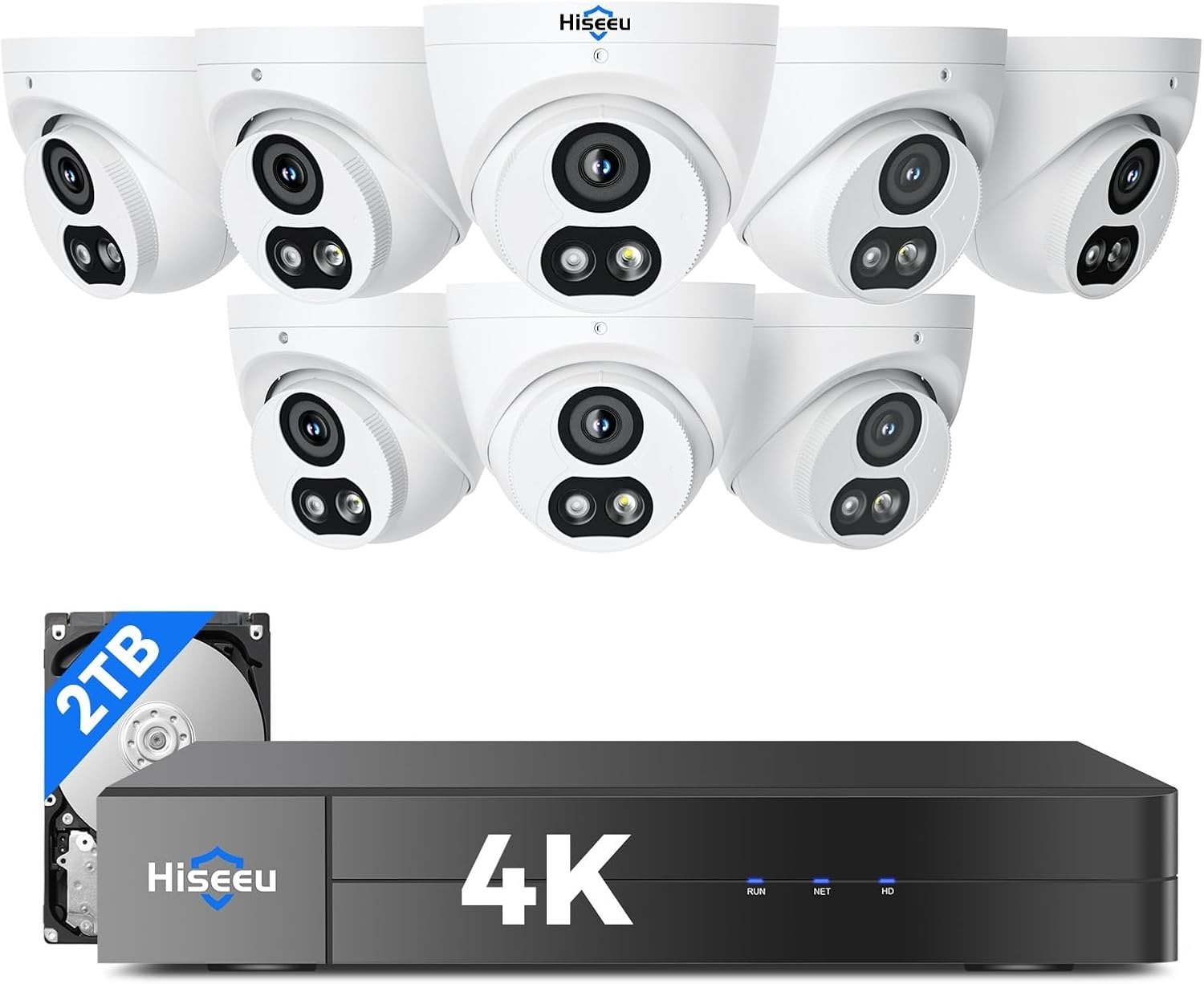
Hiseeu 121° Wide 4K PoE Security System Review: Where the Reliability Threshold Actually Sits
DECISION ANALYSIS
After digging through the listing, the manual, seller materials, and public discussion around Hiseeu and PoE security setups, my conclusion is fairly clear: this system makes the most sense when the main problem is not “I need cameras,” but “I need a wired system that stays behaviorally usable over time.” That distinction matters. I do not look at this kit as a gadget. I look at it as a threshold-control tool. Its value rises when a household wants broad coverage, continuous local recording, fewer nuisance alerts, and easier evidence retrieval without paying a monthly fee.
The Core Strength Is Coverage Before It Is Resolution
The headline spec is 4K, but the part that mattered more to me in this analysis was the 121° viewing angle with a 2.8mm lens. That is what changes placement math. A wider angle reduces the chance that a walkway, driveway edge, gate path, or porch approach slips into awkward partial visibility. Hiseeu explicitly frames this as 1.5 times wider than a typical 78° view, and that matters because home surveillance often fails at the edges, not the center. If your frustration with older cameras is that they “sort of” cover an area but still leave behavioral blind spots, this is the feature that most directly addresses that pain.
Why the System Feels More Serious Than Cheap Wi-Fi Kits
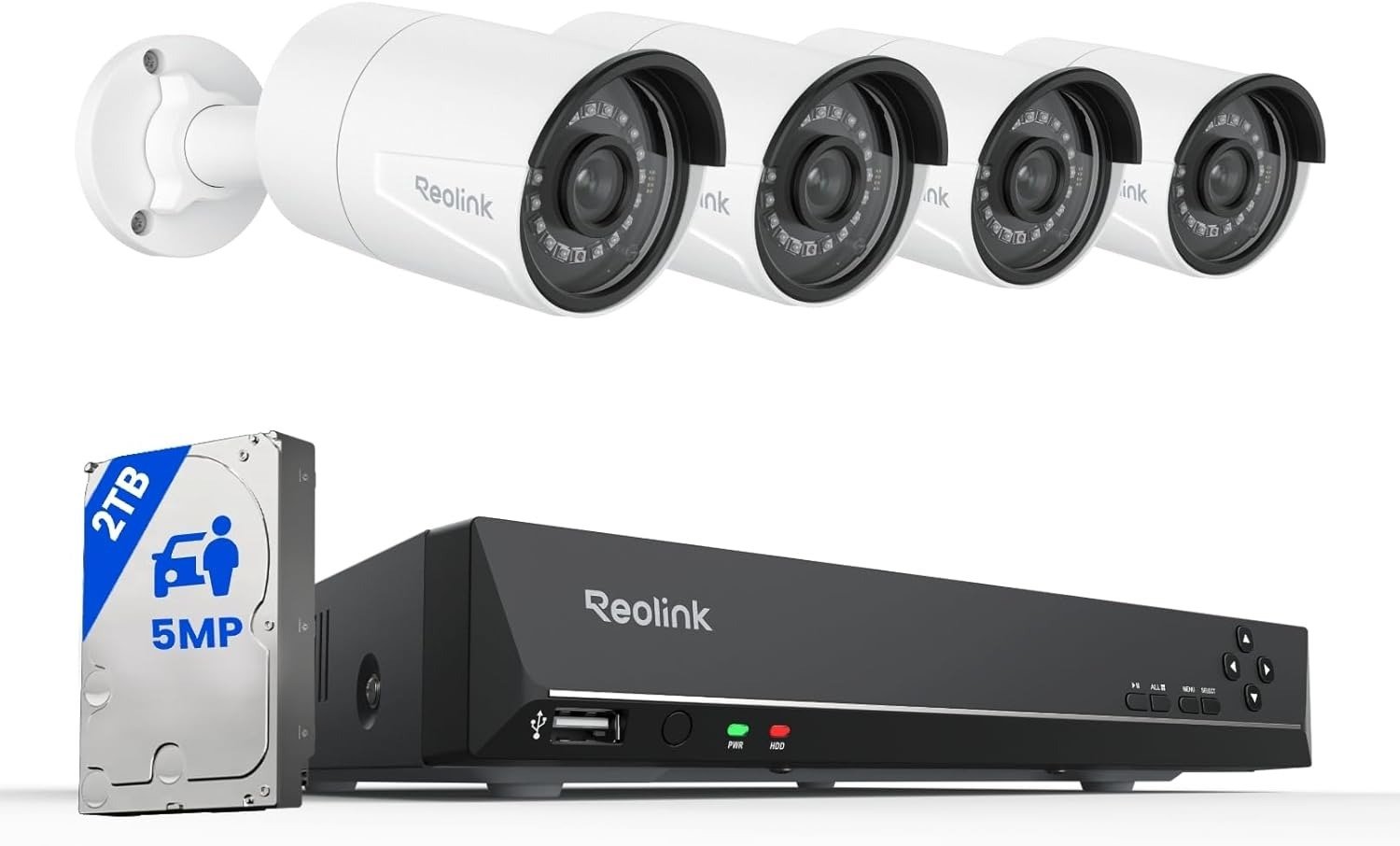
What gave this kit more credibility for me is the architecture. It is a wired PoE NVR system, not a battery-first convenience camera set. One Ethernet run handles power and data to each camera, the NVR records continuously to a pre-installed 2TB drive, and the system can still function locally through a monitor even without internet. That operating model is exactly why many experienced users steer people toward wired PoE when reliability matters more than quick installation. It reduces the number of failure points that usually create everyday trust drift in consumer camera systems.
What I Liked Most in the Technical Stack
From a practical standpoint, the feature stack makes sense together instead of feeling randomly assembled. The system combines 4K/8MP recording, 121° coverage, AI human/vehicle detection, color night vision, 24/7 recording, smart playback, app access, and 16-channel expandability with an extra PoE switch. That combination tells me the product is trying to solve a complete surveillance workflow rather than just sell image resolution.
I especially like that playback is treated as a real feature, because that is where many systems quietly become annoying to live with. Here, Hiseeu documents synchronized playback, motion playback, common playback, and access from monitor, app, or PC client.
Where the Threshold Advantage Becomes Real in Daily Use
The daily advantage is not abstract. It shows up when I imagine ordinary home events: a package drop, a car entering a driveway, someone crossing the outer edge of the porch, or a late-night movement alert that I need to verify quickly.
In those cases, wider coverage reduces missed context, 4K detail improves evidence value, person/vehicle filtering reduces alert fatigue, and smart playback shortens the path from suspicion to answer. That is the exact chain that keeps a system below the frustration threshold. Public snippets around related Hiseeu systems also repeatedly point to clear image quality and easier-than-expected setup as reasons people were satisfied, even when they still noted trade-offs like average audio output or the need for proper installation planning.
The Real Weakness Is Not Hidden, It Is Structural
The main downside is also straightforward: this is still a wired multi-camera PoE system. That means installation effort is part of the product, whether buyers want to admit it or not. Running Ethernet to the right camera positions is what unlocks the benefit, and poor cabling can become its own reliability issue.
Public troubleshooting discussion around Hiseeu systems shows exactly that pattern: when people run into problems, cabling, drive configuration, ports, and setup details often matter as much as the cameras themselves. So I would not treat this as a casual plug-it-anywhere purchase. I would treat it as a semi-permanent home surveillance setup that rewards correct installation.
My Psychological Read on the Product
Psychologically, this kit appeals to a very specific buyer type. It is for someone who wants surveillance to become quieter, not louder. No subscription. Local storage. Continuous recording. Fewer irrelevant alerts. Better playback discipline. Wider view with fewer blind spots.
That buyer is usually tired of the soft anxiety created by weaker camera systems — the feeling that the camera exists, but may not help much when something actually happens. This Hiseeu system is strongest when it replaces that uncertainty with a more stable routine. It is not exciting in the flashy sense. It is reassuring in the operational sense.
Compatibility Split 3.0
| Fit Level | Buyer Type | Why |
|---|---|---|
| Strong Fit | Homeowners who want full-time perimeter or entry-point coverage | Wide 121° view, local 24/7 NVR recording, AI human/vehicle detection, and no monthly fee align well with fixed-property surveillance. |
| Strong Fit | Buyers moving away from Wi-Fi instability | Wired PoE architecture matches the broader preference for reliability-first setups. |
| Moderate Fit | Small business or larger-property users who may expand later | The NVR is documented as 16-channel expandable with an added PoE switch. |
| Weak Fit | Renters, temporary setups, or people who do not want cable runs | The product’s value depends heavily on proper physical installation. |
| Weak Fit | Buyers expecting premium-brand polish in every interface detail | Hiseeu is usually discussed more as a value-oriented brand than a top-tier ecosystem benchmark. |
What I Would Watch Over Time
If I were monitoring long-term performance, I would watch four things: detection-zone tuning, HDD health, cable integrity, and whether I still respond to alerts after the first few months. That last one matters most.
A surveillance system earns its place when it stays behaviorally relevant, not just technically active. Hiseeu’s manual itself points to those maintenance areas — firmware, cables, false alarms, storage, network settings — which is exactly what I would expect from a system whose long-term value depends on keeping operational drift under control.
Final Decision
My decision is simple: this [Image Placeholder] Hiseeu kit looks strongest as a value-leaning wired 4K surveillance system for people who want to stay below the reliability threshold without stepping into a much more expensive ecosystem.
The wide-angle coverage is the real anchor, the local NVR model is the stabilizer, and the AI filtering plus playback options are what keep daily usage from turning into noise.
I would not choose it for a casual renter setup or for someone unwilling to plan installation. I would choose it for a property owner who wants broad, always-on coverage that feels calmer and more dependable than typical convenience-camera systems.
Transparency Note:
This analysis is not based on quick personal impressions.
It is derived from documented system behavior, verified user patterns, and the physical constraints of storage capacity.
The goal is to translate complex technical behavior into a realistic performance model that helps you make a clear decision
One Comment