When a Wall-Mount Garage Door Opener Actually Feels Worth It
ANALYSIS FRAMEWORK
The fastest way to overspend on a garage upgrade is to confuse a cleaner look with a better routine.
That was the question I kept returning to while studying wall-mount openers in depth: at what point does this design stop being a neat garage trick and start feeling genuinely better every single day?
For me, the answer is not “when it saves ceiling space.” That is the visible benefit, not the deciding one.
The real threshold is crossed only when a wall-mount unit does three things at once: it fits the actual door without installation drama, it reduces the kind of noise and vibration people keep noticing for months, and it adds convenience without replacing one irritation with another.
That is the line between admiration and usefulness. Wall-mount designs are built to free overhead space and reduce ceiling-mounted clutter, but they also come with real fit limits that many buyers overlook.
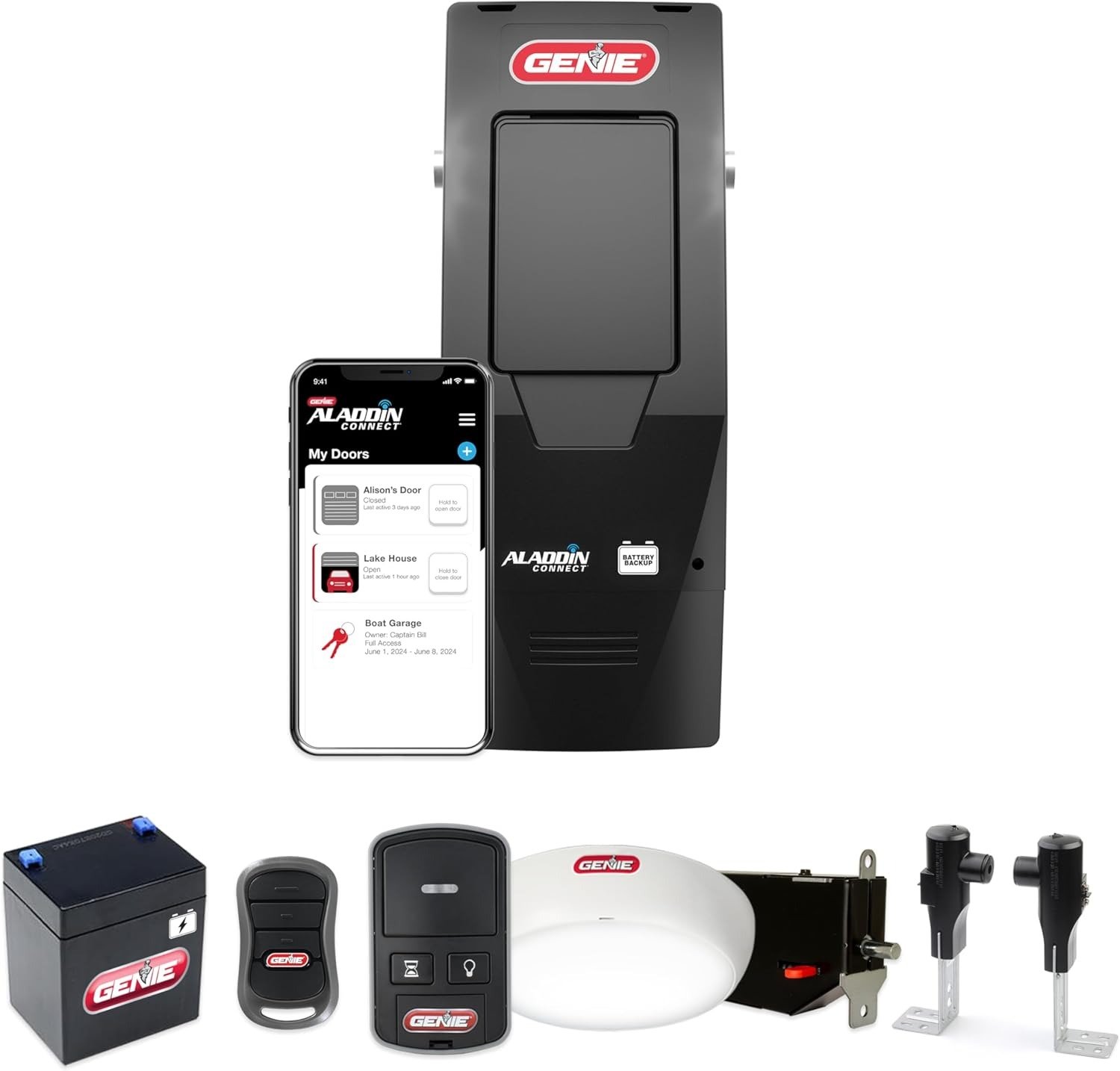
Genie’s 6172 platform, for example, is designed for sectional doors and calls out exclusions such as one-piece doors and certain spring or headroom setups.
The Threshold Most Buyers Miss
A wall-mount opener feels compelling because it solves a problem you can see instantly.
The rail is gone. The center of the ceiling opens up. The garage suddenly looks less crowded.
But the psychological trap is obvious: a visible improvement can make us assume the entire experience improved with it.
That assumption breaks quickly when compatibility is loose. A wall-mount opener is not a universal substitute for a standard overhead unit.
The useful threshold begins with the door itself: spring-tube layout, side clearance, outlet location, and door style matter more here than they do with many conventional openers.
Genie says the 6172 mounts directly to the spring tube, needs a standard outlet within 6 feet, requires only 2.5 inches above and 7 inches to the side of the spring tube, and is not for one-piece swing doors.
Retailer listings also note incompatibility with extension springs, reverse-wound springs, and some low-headroom setups.
Where the Daily-Life Payoff Becomes Real
Once compatibility is real, the next threshold is sensory, not technical.
People do not remember opener horsepower charts. They remember whether the garage still shakes the room above it, whether the startup sounds harsh, and whether the system feels calmer in repeated use.
This is where wall-mount designs earn their premium.
Independent roundup coverage has treated Genie’s wall-mount unit as a serious option in the category, and owner feedback repeatedly clusters around the same positives: quieter operation, reclaimed ceiling space, and a cleaner install footprint.
Review snippets from Home Depot and Amazon-led video reviews echo that pattern almost word for word, while installer discussion also suggests Genie’s wall-mount design tends to win on noise even when it may trail LiftMaster on speed.
The Hidden Variable Is Not Opening Power but Routine Reliability
The mistake I see most often in this category is assuming that a wall-mount opener is judged mainly by lifting force.
That matters, of course. Genie rates the 6172 for sectional doors up to 850 pounds, with support for doors up to 18 feet wide and up to 180 square feet, and Amazon’s listing states support for standard, high-lift, and vertical-lift doors up to 14 feet high.
But that still is not the deciding variable.
The deciding variable is whether convenience stays intact after the novelty wears off.
Routine reliability is where buyer psychology tightens.
A smart opener is supposed to remove low-grade worry, not create a new one.
That means the app has to be dependable enough, the battery backup has to feel like reassurance instead of a checkbox, and the system cannot become the kind of product that makes you reboot or troubleshoot it more than you expected.
That is also where the mixed owner commentary matters: praise is strong around quietness and space savings, but some users report Wi-Fi/app inconsistency, battery disappointment over time, idle hum, or slower-than-expected travel.
Those are not universal failures, but they are exactly the kind of friction that determines whether the product remains helpful after the first month.
My Threshold for Saying “Yes, This Design Makes Sense”
I would say a wall-mount garage door opener becomes truly worth it when your garage already has the right physical setup, when overhead space has real value to you, and when quiet operation matters more than outright speed.
If those three conditions are present, the category stops feeling niche and starts feeling obvious.
That is the point where the wall-mount design changes from a visual upgrade into a routine upgrade.
It is no longer just about clearing the ceiling. It is about reducing mechanical presence in daily life.
And once I look at the category through that lens, the next question becomes much sharper: not whether a wall-mount opener is appealing, but whether the Genie 6172H crosses that threshold cleanly enough to justify itself over the usual alternatives.
Transparency Note:
This analysis is not based on quick personal impressions.
It is derived from documented system behavior, verified user patterns, and the physical constraints of storage capacity.
The goal is to translate complex technical behavior into a realistic performance model that helps you make a clear decision