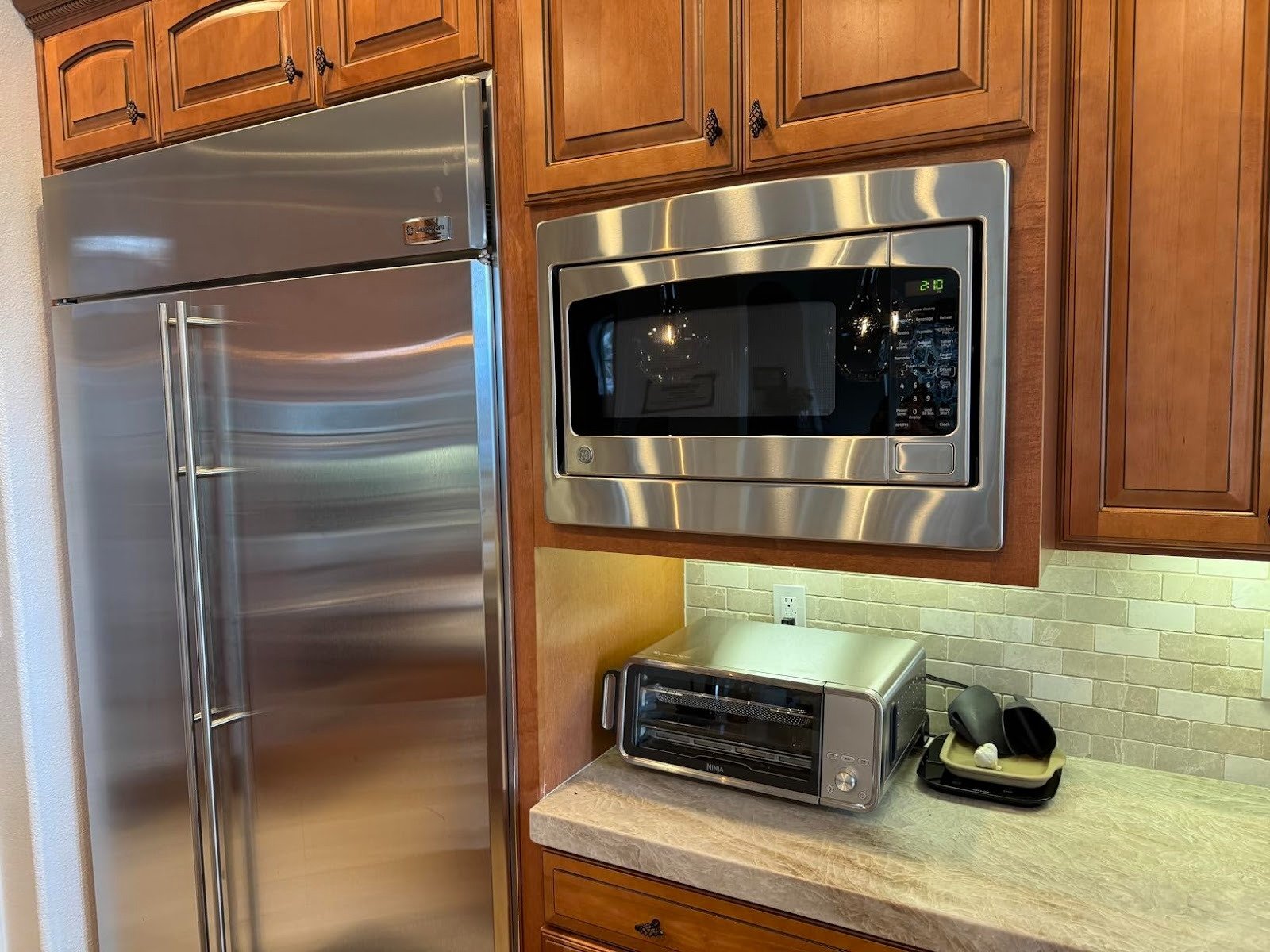
GE GCST20S1WSS Countertop Microwave: A Variance-Based Decision
DECISION ANALYSIS
Rather than judging a microwave by its feature list alone, I approached the GE GCST20S1WSS by reconstructing how it behaves inside real kitchen routines.
That reconstruction combines official specifications with recurring user patterns observed across appliance retailers and consumer feedback.
The result is not a marketing description.
It is a variance decision.
The key question is simple:
Does this microwave reduce heating variance enough that you stop managing reheats manually?
The Core Specification Profile
The GE GCST20S1WSS belongs to the larger-capacity class of countertop microwaves.
| Specification | Value |
|---|---|
| Capacity | 2.0 cubic feet |
| Power | 1200 watts |
| Type | Countertop microwave |
| Safety | Two-step child lock |
| Programs | Sensor cooking presets |
Large capacity and higher wattage place this model among microwaves designed for family kitchens rather than compact spaces.
Where This Microwave Performs Consistently Well
Across repeated user observations, several positive patterns appear frequently.
Large interior capacity makes daily reheating easier for full dinner plates and larger bowls.
Heating power feels strong for standard reheats, reducing the number of cycles needed.
Controls remain relatively straightforward for quick operations like adding extra time or starting standard reheats.
Interior visibility is strong, allowing users to monitor food during operation.
These characteristics collectively reduce daily friction for households that regularly reheat larger meals.
Where Routine Friction Appears Over Time
A smaller cluster of recurring complaints appears in long-term feedback.
Some users report the door mechanism feeling lighter or less substantial than expected.
Noise levels during operation occasionally receive criticism from users sensitive to appliance sound.
In certain routines, unexpected behavior related to sound settings or start timing creates confusion during early use.
The two-step child lock provides a useful safety function but can add an extra step to the routine if the household does not require constant lock protection.
None of these issues represent mechanical failure.
However, repeated daily interactions can amplify their perception.
This is an example of behavioral drift—small operational friction becoming noticeable through repetition.
Features That Actually Affect Heating Variance
| Feature | Practical Effect | Variance Impact |
|---|---|---|
| 2.0 cu. ft. cavity | Accommodates wider containers | Can reduce heating variance |
| 1200W power | Faster heat injection | Does not guarantee even heat |
| Sensor cooking | Automated cooking estimation | Works best inside sensor boundary |
| Child lock | Prevents unintended use | Adds routine friction if unnecessary |
| Large footprint | Requires more counter depth | Compatibility depends on kitchen layout |
Power alone does not eliminate heating variance.
Container shape and food density still determine the final distribution of heat.
Compatibility Split
Understanding compatibility is more useful than reading a feature list.
The GE GCST20S1WSS fits different households in different ways.
Split A — Large Plates and Family Meals
This microwave fits best when daily reheating involves wide dinner plates, large bowls, and family-size portions.
The larger cavity allows food to rotate comfortably without contacting the interior walls.
In this environment, heating variance tends to stay relatively controlled.
Split B — Mixed Meals and Sensor Convenience
Households that rely heavily on sensor presets may find the microwave convenient for common tasks such as popcorn, beverages, and reheating standard meals.
Sensor cooking works well when food produces a predictable steam pattern.
For dense leftovers, occasional stirring mid-cycle can maintain more even heating.
Split C — Dense Meal Prep and Tight Counter Space
Users who frequently reheat dense meal-prep containers or tall bowls may encounter higher heating variance.
Additionally, kitchens with shallow counters or limited space may find the physical footprint less convenient.
In these scenarios, routine adjustments become more common.
Final Decision
The GE GCST20S1WSS is best suited for households that prioritize capacity and strong everyday reheating performance.
For wide plates, standard leftovers, and family meals, the microwave tends to feel stable and powerful.
For dense containers or tightly packed kitchens, heating variance and daily friction become more noticeable.
Understanding which routine describes your kitchen makes the decision significantly clearer.
Read the product details here:
Transparency Note:
This analysis is not based on quick personal impressions.
It is derived from documented system behavior, verified user patterns, and the physical constraints of storage capacity.
The goal is to translate complex technical behavior into a realistic performance model that helps you make a clear decision
One Comment