YOU DO NOT HAVE A SECURITY PROBLEM WHEN THE IMAGE LOOKS GOOD. YOU HAVE ONE WHEN THE MOMENT MOVES AND YOUR SYSTEM STOPS UNDERSTANDING IT.
THE RESULT LOOKS FINE. THE PROBLEM ISN’T.
A lot of home security footage fails in a strangely polite way. The picture is sharp. The app says everything is recording. The driveway looks covered. Then a person crosses the edge of one camera, turns behind a car, slips past the corner of a walkway, and the system gives you what feels like evidence but behaves more like a postcard.
Frozen context. Broken continuity. Just enough detail to make the miss feel harder to forgive. That is the surface problem the eufy S4 Max is trying to solve with its fixed 4K overview lens, lower PTZ section, local AI, and camera-to-camera handoff. It is not selling “more camera.” It is selling continuity under motion.
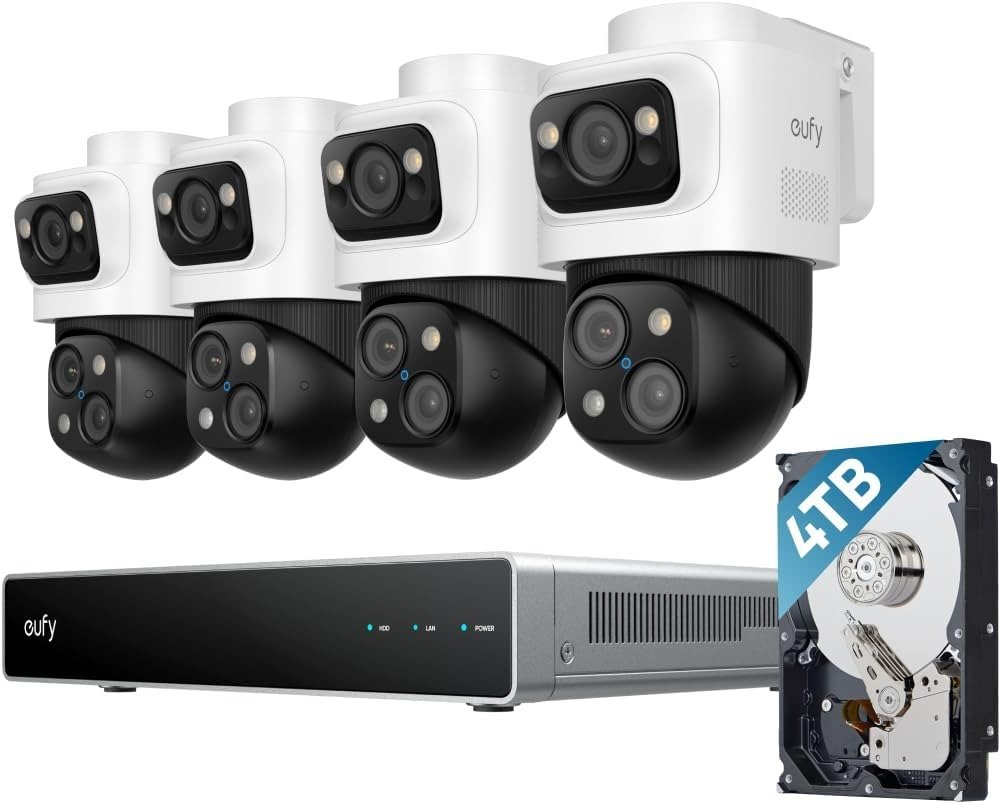
What changed my view of this system was not the raw spec sheet. It was the structure behind it. Each bundled PoE Cam S4 uses a fixed 4K wide view and a lower dual-2K PTZ assembly, while the NVR records continuously to a 4TB hard drive, expandable to 16TB, with support for up to 16 channels. In plain English: one part watches the whole zone, another part chases the detail, and the recorder keeps everything local instead of turning basic search and storage into a monthly tax.
WHAT YOU’RE ACTUALLY FEELING BUT NOT NAMING
The irritation is not “I need a sharper camera.” It is usually three things at once:
You are tired of overview without identity.
You are tired of alerts without follow-through.
You are tired of footage that shows presence but not behavior.
That is why normal spec shopping goes wrong here. Resolution calms the buyer, but continuity convicts the system. A 4K frame can still fail if the subject leaves that frame at the exact second you need context. A motorized camera can still fail if it is pointed the wrong way when motion starts. The S4 Max architecture is built around that split: one lens keeps the scene anchored at 122 degrees, the PTZ lens swings through 360 degrees, and the NVR tries to keep the event searchable and intact instead of making you scrub dead hours by hand.
THE HIDDEN MECHANISM BEHIND THE MISS
Most misses happen at the handoff point between seeing and understanding. That is the hidden mechanism.
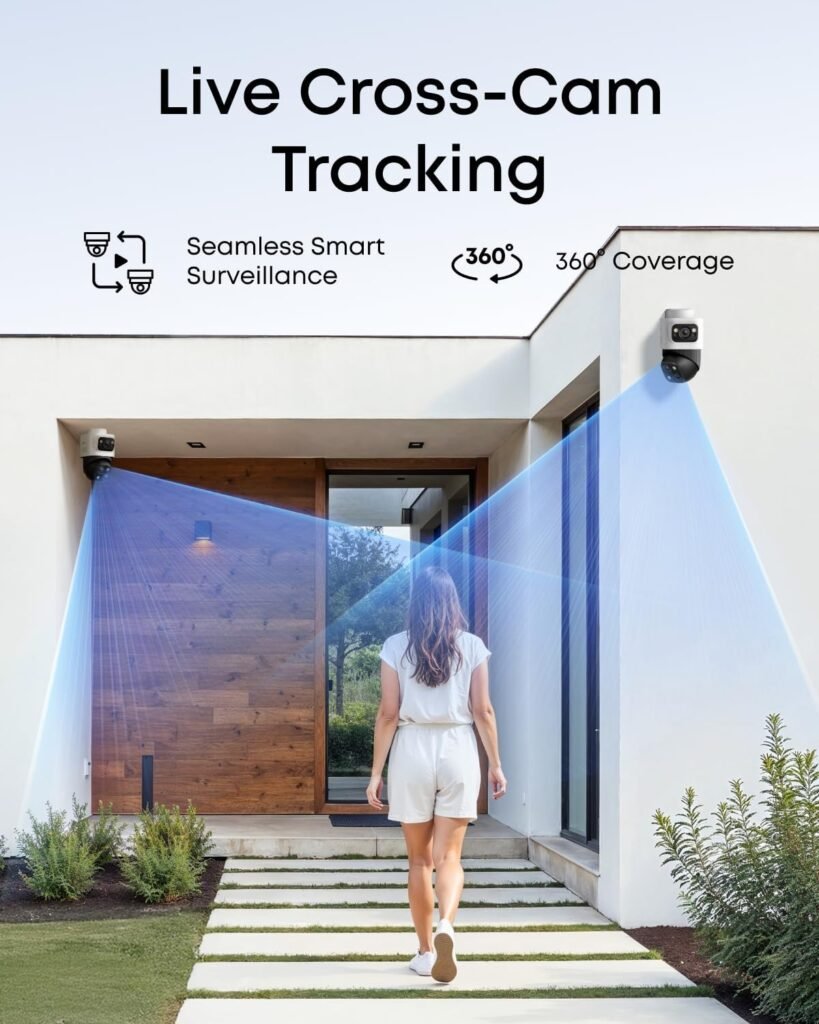
A fixed camera is good at permanence. It does not lose the zone. But it can lose identity once a person becomes a moving shape near the edge of a large frame. A PTZ camera is good at pursuit. But a PTZ can be looking somewhere else when the event starts. The S4 Max solves that by stacking the two jobs inside one camera head, then extending the handoff across multiple cameras with Live Cross-Cam Tracking when a subject leaves one tracking limit and enters another zone. That is the real design idea here. Not novelty. Not theater. Coordination.
The system’s useful numbers all sit under that mechanism:
| Layer | What it does | Why it matters |
|---|---|---|
| Fixed upper lens | 4K wide-angle, 122° scene view | Keeps the area anchored so the system does not “forget” the whole picture |
| Lower PTZ section | Dual 2K PTZ, 360° coverage, up to 8× hybrid zoom | Follows motion and pulls identity closer |
| Auto-framing | Tracks subjects up to 164 ft | Helps preserve detail once motion begins |
| NVR core | 24/7 recording, 4TB included, up to 16TB | Keeps the event searchable and locally stored |
| System logic | Live Cross-Cam Tracking, keyword video search | Reduces the dead space between one camera’s limit and the next camera’s responsibility |
The structure above reflects eufy’s official S4 Max materials, Amazon’s product listing, and PCWorld’s review coverage.
THE THRESHOLD WHERE THE OUTCOME QUIETLY BREAKS
I would name the governing threshold here the continuity threshold.
Below that threshold, a conventional camera is enough. You only need to know that something happened. A package arrived. A car pulled in. A dog crossed the yard. Presence is enough.
Above that threshold, the system must hold three things together at once: scene, subject, and transfer. The scene must stay visible. The subject must stay legible. The transition between one view and the next must not collapse. That is where cheaper logic starts to fray and where the S4 Max starts making structural sense.
The awkward truth is that many buyers cross this threshold before they realize it. Long driveways. Multi-angle front yards. Side passages. Shared access lanes. Gates with approach and exit paths. The footage can look “fine” for months right up until the one night it needs to preserve continuity instead of just existence.
WHY MOST BUYERS MISREAD THIS TOO EARLY
Because they shop security like they shop screens.
They compare resolution. They compare night mode labels. They compare storage numbers. Then they stop just before the only comparison that matters: what happens when motion leaves the first clean frame. The S4 Max is expensive, installation is more involved than a battery cam, and it only works with eufy’s own PoE camera ecosystem. PCWorld explicitly flags drilling and Ethernet runs as part of the real setup cost, and also notes the platform does not support HomeKit or third-party PoE cameras. That is not a small footnote. It is part of the fit equation.
There is another layer, too. Early sentiment is not uniformly glowing. Amazon shows the S4 family moving units, and several reviewers praise image quality, tracking, and subscription-free local storage, but user threads also surface less flattering friction: cold-weather charging limits on the battery S4, complaints about missed events or unstable live view on some units, and bridge-priority connection quirks in certain HomeBase setups. Those reports do not invalidate the product, but they do narrow where confidence should come from: the wired NVR version is easier to trust than the softer promise of battery convenience.
WHO IS ACTUALLY INSIDE THIS PROBLEM
This system makes the most sense for a buyer who is dealing with at least two of the following:
| You are inside the problem if… | Why the S4 Max fits |
|---|---|
| You need 24/7 recording, not event-only clips | The bundled NVR records continuously to local storage |
| Your property has movement across zones, not one flat viewing angle | Cross-cam tracking and PTZ handoff are built around moving subjects |
| You want local AI and local search without a subscription | Search, recognition, and storage are positioned as local features |
| You are comfortable with cable runs and permanent mounting | PoE is cleaner once installed, but installation is not casual |
| You care more about continuity than minimal upfront spend | The premium is in the tracking-and-recording structure, not just raw image quality |
The fit above is drawn from the official eufy product page, the Amazon listing, and PCWorld’s hands-on review of the system.
WHERE WRONG-FIT BEGINS
Wrong-fit begins the minute you want pro-style continuity but hate pro-style installation.
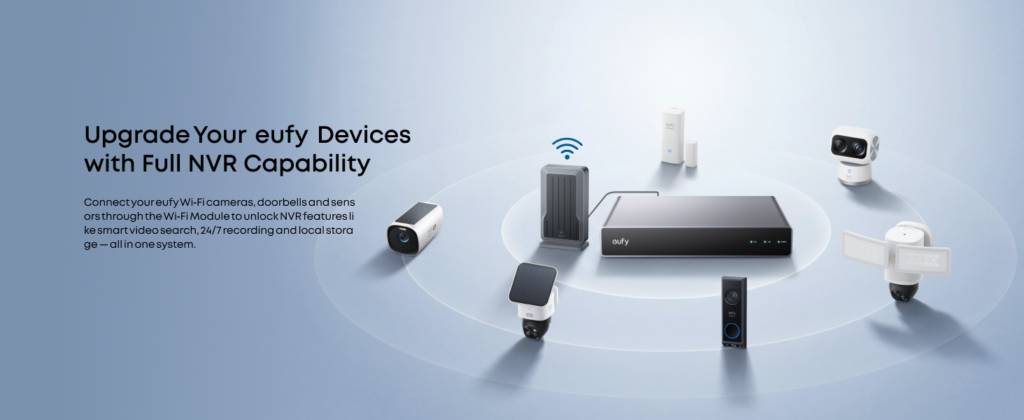
This is not the clean answer for renters, quick DIY buyers, or anyone who wants broad platform freedom. It is also the wrong answer if your real need is simple deterrence at a single doorway, because then you are paying for structural depth you may never use. And if Apple HomeKit is a hard requirement, the door closes here. PCWorld calls out the lack of HomeKit and third-party camera support, and eufy’s own documentation keeps this system inside its ecosystem, with wireless-device expansion requiring a separate Wi-Fi module.
I would add one more boundary. If what you really want is effortless installation more than uninterrupted continuity, this is not your product. The S4 Max earns its logic after the cables are in the wall, not before.
THE ONE SITUATION WHERE THIS PRODUCT BECOMES LOGICAL
The S4 Max becomes logical when your problem is no longer “How do I watch this area?” and has quietly become “How do I stop losing the event as it moves?”
That is the one situation.
If you need a system that keeps an overview, locks onto a subject, follows motion across coverage limits, records continuously, and lets you search the footage later without handing core functions to a subscription wall, the S4 Max has a coherent argument. Its strongest case is not one camera watching one spot. Its strongest case is a property where motion travels and a normal single-view setup starts telling the truth too late.
WHAT IT SOLVES, WHAT IT REDUCES, AND WHAT IT STILL LEAVES TO YOU
It solves the blind spot between overview and pursuit. It reduces the drag of hunting through footage, because the NVR is built around local recording and keyword search. It also reduces the usual subscription pressure that shadows a lot of “smart” surveillance. Reviewers at PCWorld and Expert Reviews both treat local storage and the lack of recurring fees as a real advantage, while independent testing on related S4 hardware consistently praises the tracking concept and image quality.
What it still leaves to you is the adult part of security: placement, drilling, cable routing, boundary setup, and the patience to tune zones correctly. No three-lens design rescues careless placement. No AI agent can fix a bad sightline. No premium NVR can undo a system installed where the subject is always half-hidden by fences, cars, or glare.
FINAL COMPRESSION
The eufy S4 Max is not compelling because it is louder. It is compelling because it is built around a more honest definition of failure.
Failure is not “the camera missed everything.” That would be obvious.
Failure is “the system looked complete, but continuity broke when the person moved.”
That is the fracture this product is trying to close.
So the clean decision is this: if your property only needs visibility, this system is excess. If your property needs continuity under motion, local recording, cross-zone tracking, and searchable evidence without a subscription, the S4 Max stops looking expensive and starts looking structurally correct. And once you see that threshold clearly, it becomes very hard to go back to a camera that only watches well while nothing important is moving.
Transparency Note:
This analysis is not based on quick personal impressions.
It is derived from documented system behavior, verified user patterns, and the physical constraints of storage capacity.
The goal is to translate complex technical behavior into a realistic performance model that helps you make a clear decision.
“A quick note: Don’t believe the star ratings, but trust personal experience. This article is a compilation of collected experiences”