The Door Still Closes Fine. The Access Problem Doesn’t.
PRODUCT NAME: EUFY C32
A normal interior door can look perfectly harmless right up to the point it starts draining attention. Not with one dramatic failure. With repetition. Someone forgets the key. Someone needs temporary access. Someone wants privacy without turning a bedroom, office, storage room, or garage entry into a daily nuisance. That is the exact zone where the eufy C32 starts to make sense—and also the exact zone where many buyers misread it. They think they are buying “a smart lock.” What they are really buying is relief from small, repeated access friction inside the house, not a hard-security front-door upgrade.
The Result Looks Fine. The Problem Isn’t.
I keep seeing the same mistake with indoor locks: the door works, so people assume the system works. But the real cost is not whether the latch turns. It is how often the routine around that latch interrupts the day. A key that needs to be shared. A room that should stay private but stay accessible. A home office that gets opened by the wrong person at the wrong time. A garage entry that becomes one more thing to check before leaving. That kind of friction is quiet, which is why it gets tolerated longer than it should.
The C32 is built exactly for that quieter category. eufy positions it for bedrooms, offices, storerooms, garages, basements, rental privacy, and office security, and explicitly says it is for indoor use and not recommended for front doors or rain-exposed doors. That single boundary matters more than most of the marketing language around it.
What You’re Actually Feeling but Not Naming
What most people call a “lock upgrade” is often something narrower and more practical:
You want the room to stay private without hiding a key.
You want access to be reversible without changing hardware again.
You want the door to stop depending on memory, spare keys, and little interruptions.
You want control without turning the space into a project.
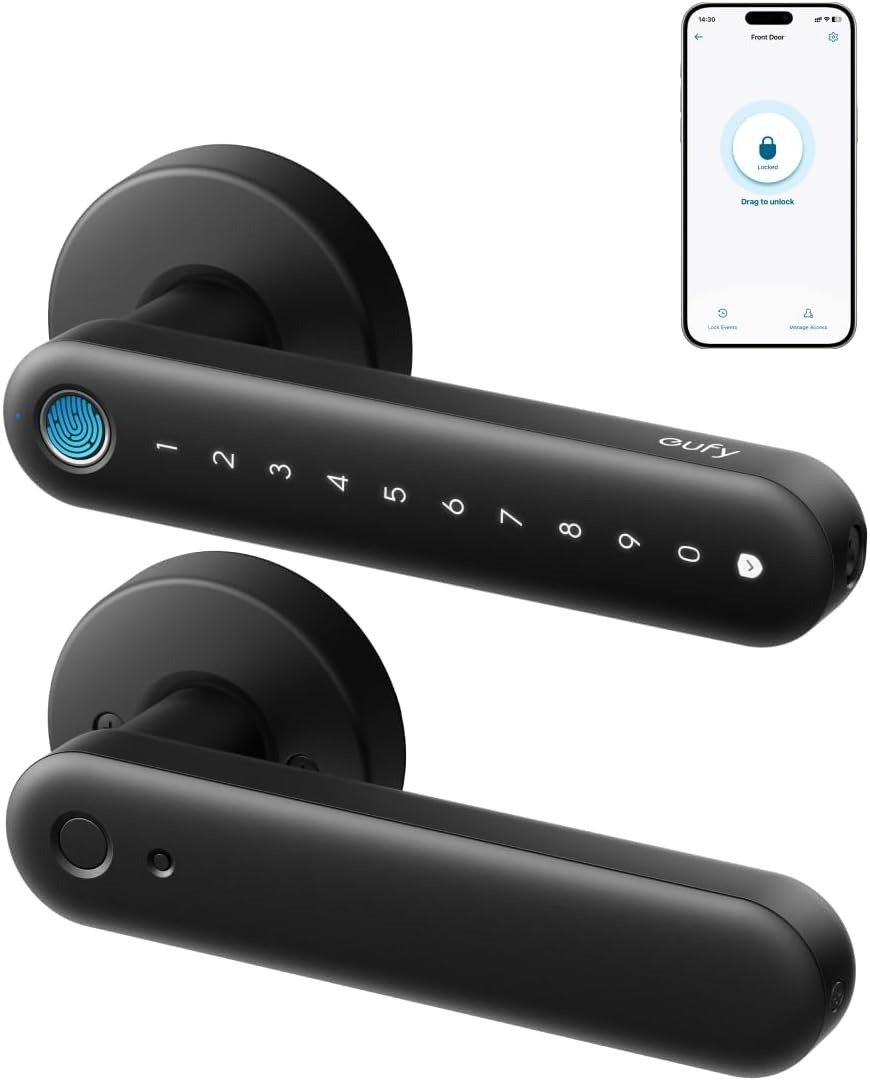
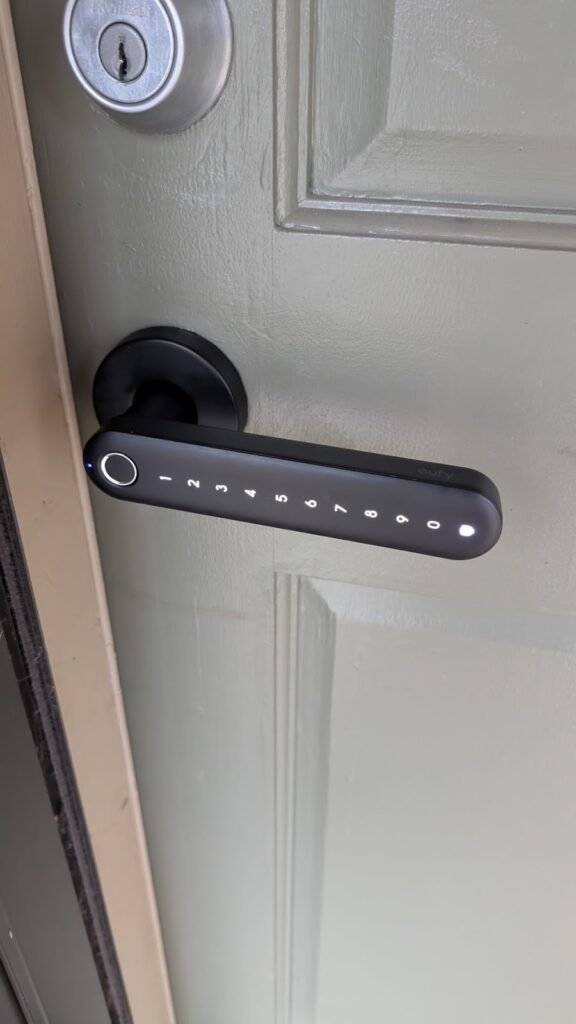
That is the appeal here. Not prestige. Not fortress-grade security theater. Just lower routine burden. The C32 gives you fingerprint unlock, app control, passcodes, a physical key, auto-lock, and remote management over built-in 2.4GHz Wi-Fi, which is unusually convenient at this price. But convenience is not the same thing as universal fit.
The Hidden Mechanism Behind the Miss
The hidden variable is not fingerprint speed. It is access administration.
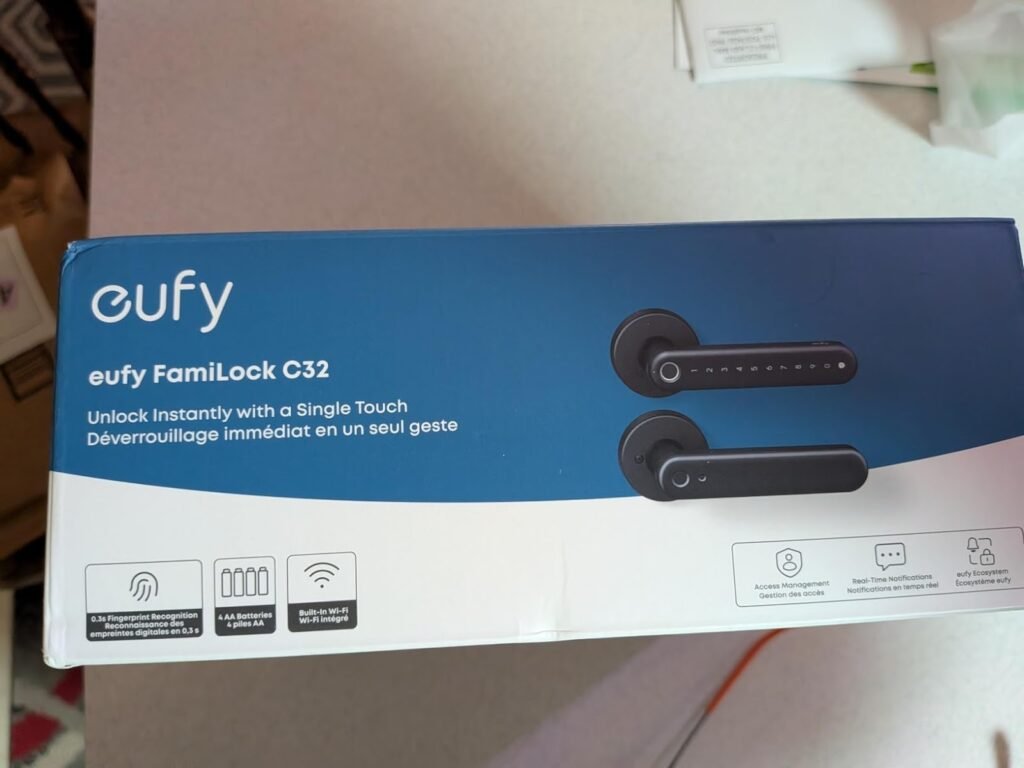
Most buyers look at a lock and ask, “How fast does it unlock?” The C32 answers that cleanly: eufy claims 0.3-second fingerprint unlocking, 360-degree fingerprint recognition, and a self-learning fingerprint system that improves over time, while the lock can store up to 50 fingerprints and 100 passcodes. Those are useful specs. But they are not the whole mechanism.
The real mechanism is this: once a door has more than one legitimate user, or the right user changes over time, the problem stops being mechanical and becomes administrative. Who gets in? For how long? From where do I control it? What happens when I am not standing there? Built-in Wi-Fi matters because it removes the need for a separate bridge and lets you authorize, monitor, and manage remotely through the app. That is where this lock earns its place.
At the same time, that same convenience carries a trade-off the industry keeps proving: direct Wi-Fi is usually simpler to set up, but it is rarely the most battery-efficient architecture. A Home Assistant discussion about smart locks favored lower-power protocols over Wi-Fi for battery reasons, and The Verge noted that Eufy’s newer E30 uses Matter over Thread partly to improve responsiveness and battery life. That does not automatically make the C32 bad. It tells you what kind of compromise you are accepting.
The Threshold Where the Outcome Quietly Breaks
The threshold is not “when you want a smart home.”
The threshold is when one interior door starts generating repeated access decisions.
That is the break point.
Before that threshold, a normal privacy lock is cheaper, simpler, and easier to ignore. After that threshold, the cost of staying manual starts showing up in interruptions, workarounds, and low-grade annoyance.
Here is the cleanest way I can frame it:
| Condition | What Happens |
|---|---|
| One user, rare locking, low privacy sensitivity | The C32 is probably unnecessary |
| Shared room access, recurring lock/unlock cycles, changing permissions | The C32 starts becoming logical |
| You need remote control or temporary access from outside the room | The value rises quickly |
| You need front-door strength, weather exposure, or certified exterior durability | This is the wrong lock |
The reason that last row matters is simple: eufy does not recommend this model for front doors, and its own comparison table lists no ANSI/BHMA grade for the C32, while its exterior-oriented C33 and C220 are listed as Grade 3, and the flagship FamiLock S3 Max is Grade 1. That is not a minor detail. It is the category line.
Why Most Buyers Misread This Too Early
Most people misread this product in one of three ways.
First, they compare it upward. They hold a $79.99 indoor lock against exterior smart locks that have weatherproofing, higher battery capacity, more ecosystem support, or BHMA grading. That comparison flatters the spec sheet of the more expensive device, but it misses the assignment. The C32 is not trying to be a front-door deadbolt replacement.
Second, they compare it downward. They see an interior handle and assume the only question is whether a normal keyed knob is cheaper. Of course it is. But that ignores the value of remote management, fingerprint access, auto-lock, and multi-user administration. If the problem is recurring access friction, a cheap handle is not solving the right problem.
Third, they compare features instead of failure. They ask whether it has HomeKit, Matter, or some premium ecosystem credential. On that front, the answer is narrower than many buyers want: the C32 works with Alexa and Google Assistant, but eufy says it is not compatible with Apple HomeKit, IFTTT, or Matter. If that ecosystem boundary matters more to you than simple direct Wi-Fi control, the lock is already telling you to walk away.
Who Is Actually Inside This Problem
This lock fits a very specific person.
| Need | Fit |
|---|---|
| Bedroom or office privacy with fast entry | Strong |
| Shared indoor room access for family or staff | Strong |
| Remote lock control without buying a separate hub | Strong |
| Temporary PINs and multiple fingerprints | Strong |
| Full Apple Home / Matter workflow | Weak |
| Exterior front-door duty | Weak |
| Certified higher-grade entry security | Weak |
| Minimal battery maintenance under heavy wireless use | Borderline |
I would put the true-fit user in one of these buckets: a homeowner who wants cleaner control over one indoor space; a family that wants fingerprint access for a private room; a small office that needs simple permission control; or a landlord or manager trying to reduce key handoff friction on an interior access point. eufy itself highlights bedrooms, offices, garages, basements, and storerooms, and the capacity for 50 fingerprints and 100 passcodes supports exactly that kind of multi-user light-management scenario.
Early sentiment is encouraging but still thin. Amazon shows the C32 at 4.4 out of 5 stars from 15 ratings, which is not enough for me to treat as settled durability proof. It is enough to say the first wave is favorable, not enough to pretend the long-term field history is mature.
Where Wrong-Fit Begins
This is not for someone trying to smarten the main entry and call it done.
This is not for someone who needs rain exposure tolerance or a front-door recommendation.
This is not for someone building around HomeKit or Matter.
This is not for someone who hears “built-in Wi-Fi” and expects the battery profile of Thread, Z-Wave, or a less connected lock.
This is not for someone who wants exterior certification cues and expects them to be implicit.
Wrong-fit begins the moment you ask this model to solve a perimeter-security problem instead of an interior-access problem. That is where buyer regret starts. Not because the lock underdelivers on its own brief, but because the brief was misunderstood from the start. eufy’s own page is unusually explicit here: indoor use, standard doors, not recommended for front doors, not suitable for rain-exposed installations, Alexa/Google support only, and no HomeKit/IFTTT/Matter. The boundaries are right there if you let them matter.
The One Situation Where This Product Becomes Logical
The C32 becomes logical when one interior door in your home or workplace starts behaving like a small access system rather than a simple room divider.
That is the one situation.
Not luxury. Not novelty. Not “I want my house to feel more futuristic.” Just repeated indoor access friction with a real privacy or routine cost behind it.
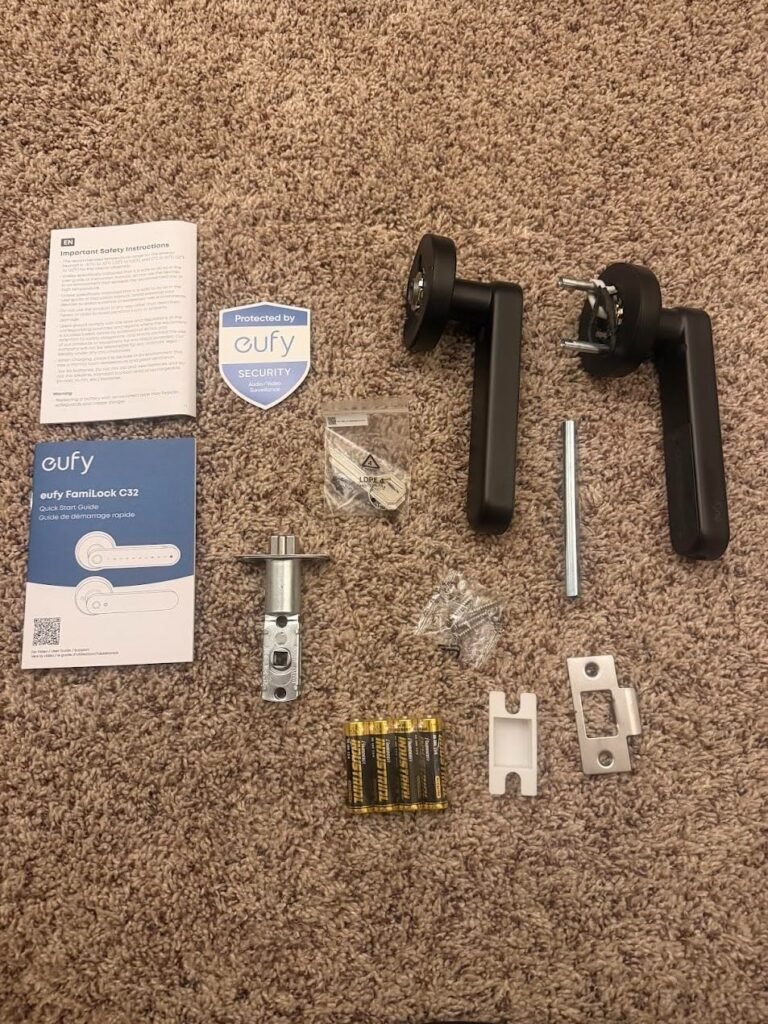
In that narrow lane, the product is coherent. You get fast fingerprint entry, remote management without a separate bridge, app control, passcodes, auto-lock, physical-key backup, and emergency USB-C power if the AAs die. The install is framed as a screwdriver job that can be done in about 15 minutes, and the fit specs are conventional enough for many standard wood or metal interior doors.
That makes the forward step clean rather than dramatic: if that is the condition you are actually dealing with, this becomes the logical next step
What It Solves, What It Reduces, and What It Still Leaves to You
What it solves is straightforward. It removes key-sharing dependency for an interior door. It reduces the tiny but constant friction of manual access management. It gives you cleaner control over who enters a room and when. It also lowers the odds that privacy depends on one forgotten key or one inconsistent routine.
What it reduces is just as important. It reduces intervention burden. Fewer handoffs. Fewer lock checks. Fewer “can you open this for me?” moments. Fewer awkward workarounds when access changes. That is where the product feels more useful than flashy.
What it still leaves to you is the adult part of the decision. You still need to decide whether indoor-only placement is acceptable, whether built-in Wi-Fi convenience is worth the battery trade-off, whether Alexa/Google is enough for your ecosystem, and whether a model without listed ANSI/BHMA grading belongs on the door you have in mind. The battery claim—over five months on four AAs—is also tied to a defined usage pattern of 20 unlocks per day, so heavy real-world variation is not a side note here; it is part of the ownership math.
A final practical summary helps:
| You gain | You trade off |
|---|---|
| Direct Wi-Fi remote control | Higher battery burden than lower-power protocols can offer |
| Fast fingerprint access | No Matter or HomeKit path |
| Good multi-user capacity | No stated ANSI/BHMA grade |
| Low entry price for a connected lock | A narrower job description |
| Clean fit for interior privacy/access control | Wrong-fit risk if treated like a front-door upgrade |
Final Compression
After going through the official specs, the boundaries, the comparison data inside eufy’s own lineup, the early buyer signal, and the broader reality of how Wi-Fi locks behave, the conclusion is not complicated.
The eufy C32 is not impressive because it tries to do everything.
It is useful because it does one job clearly.
That job is taking an interior door that has started creating repeated access friction and turning it into a managed entry point without requiring a separate hub, a complex install, or a premium budget.
If your door is outside, exposed, ecosystem-heavy, or expected to carry front-entry security weight, stop here. This is the wrong category. If your problem is inside the house, repeated, mildly annoying, privacy-sensitive, and becoming operational instead of occasional, the decision stops being vague. The C32 is not the universal answer. It is the clean answer for that narrower threshold.
Transparency Note:
This analysis is not based on quick personal impressions.
It is derived from documented system behavior, verified user patterns, and the physical constraints of storage capacity.
The goal is to translate complex technical behavior into a realistic performance model that helps you make a clear decision.