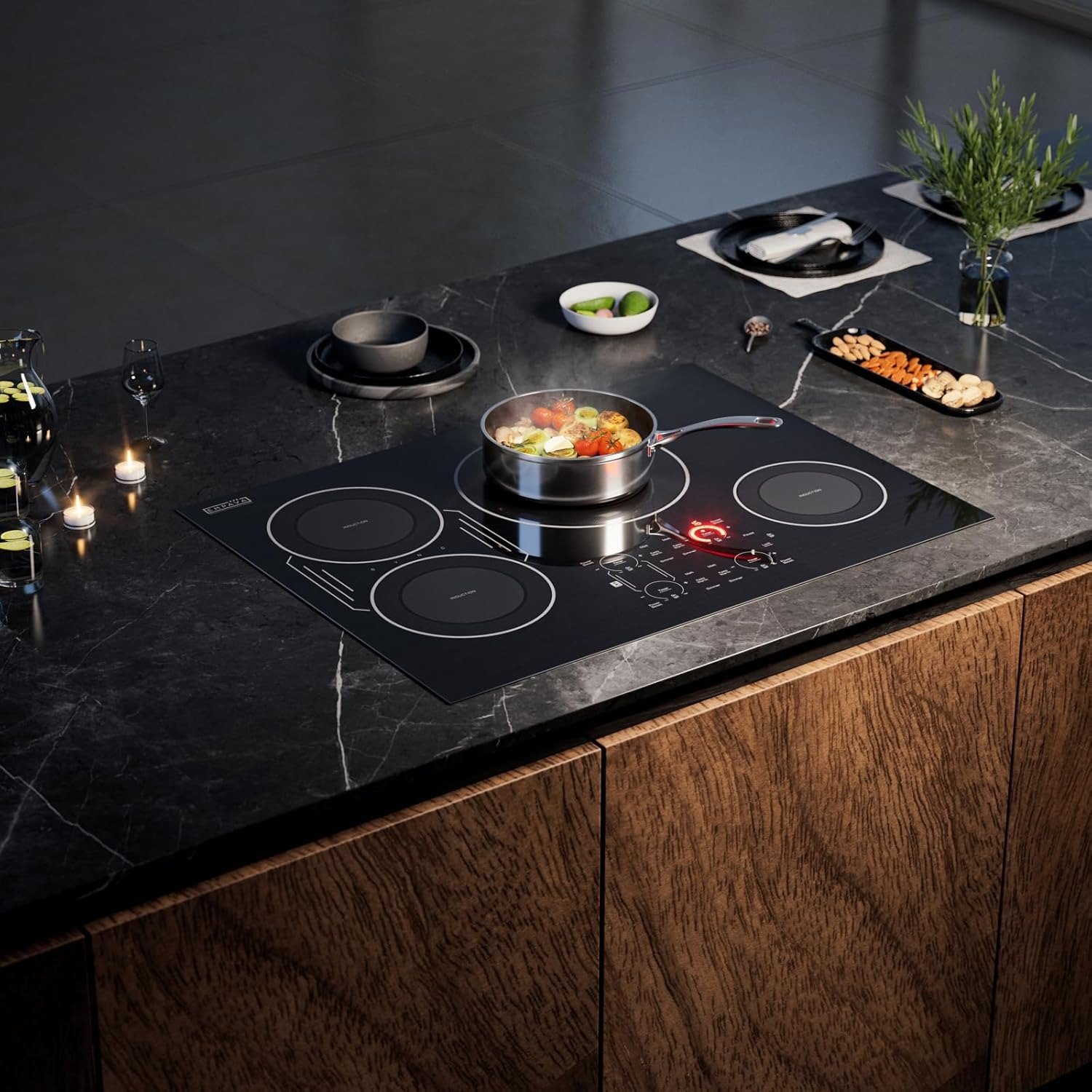
Empava EMPV-30EC82H Review: The Threshold Where Everyday Induction Starts Making Sense
DECISION ANALYSIS
After evaluating the Empava EMPV-30EC82H closely, I do not think its strongest argument is simply that it is modern, sleek, or fast. Its real argument is that it seems designed to cross a daily-use threshold: enough power to feel quick, enough control to feel usable, and enough safety and convenience functions to reduce friction instead of adding more of it.
This is a 30-inch hardwired induction cooktop with 4 cooking elements, bridge functionality, 17 power levels plus boost, 240V/208V operation, and up to 8700W total power at 240V.
My Decision in One Sentence
If my goal is to replace an older electric setup with something cleaner, faster, and more controlled without jumping straight into premium-brand pricing, this model clears the threshold for a serious yes.
If I want luxury-brand confidence, deep long-term review history, or a surface that hides mess better, I would pause before buying.
What Makes This Model Convincing to Me
The first thing that makes sense here is the cooking layout.
The left-side bridge provides a practical answer for larger pans and griddles, while the 10-inch right rear zone can reach 4.0kW on boost, which is the kind of zone I would actually rely on for a stockpot or aggressive boil.
The product also includes melt, keep warm, and simmer presets, which tells me Empava is trying to solve not only the “get hot fast” problem but also the “stay controlled after that” problem.
The glide-touch interface and pan sensor reinforce that same idea.
What Gives Me Some Confidence
I trust specific praise more than general excitement, and the early feedback I found is fairly grounded.
On Lowe’s, buyers highlighted easy installation, easy cleaning, and smooth controls, with one reviewer explicitly noting that it worked well as a replacement for old coil cooking.
Amazon also places the model high in the cooktops category, which at minimum suggests early traction and visibility.
None of that proves long-term durability by itself, but it does support the case that the product is landing well with its first wave of buyers.
What I Would Watch Carefully
The same feedback also reveals the kind of compromise I would expect with a glass induction surface at this price level: it looks sharp, but it shows everything.
One reviewer called out the need for constant cleaning to keep it looking good.
I also cannot ignore that the review base for this exact model is still thin, because the product appears to have launched in September 2025.
So my caution here is not about obvious red flags in the available feedback. It is about limited long-term evidence so far.
Compatibility Split
| Buyer Type | Fit Level | Why |
|---|---|---|
| Replacing old coil electric | High | Faster response, cleaner surface, familiar built-in format |
| Uses griddles or larger cookware | High | Left bridge zone makes the layout more flexible |
| Wants better simmer behavior | High | 17 levels plus melt/warm/simmer presets support lower-heat control |
| Wants proven long-term track record | Medium | Exact model is still new, so review depth is limited |
| Hates visible smudges and constant wiping | Lower | Glass surface looks premium but shows residue quickly |
| Needs plug-in simplicity | Low | This is a hardwired 240V/40A install, not casual drop-and-go |
The Threshold Model I Keep Coming Back To
For me, the decision turns on one threshold only: does this cooktop reduce enough daily friction to feel better than the system it replaces?
In this case, the answer looks like yes for the right kitchen. Fast heat, a bridge-capable layout, pan sensing, safety lock, and controllable low-heat modes all push the product over that line.
The limitations are also clear and manageable: hardwired installation, induction-ready cookware, a surface that shows mess easily, and limited long-term review history because the model is still new.
My Final Verdict
I would classify the Empava EMPV-30EC82H as a strong practical buy, not because it tries to overwhelm me with prestige, but because it appears to solve the right problems at the right threshold.
It looks especially sensible for someone who wants a 30-inch induction cooktop with real bridge functionality, meaningful power, and better-than-basic control logic without wandering into a much higher price tier.
If that matches my kitchen, this is the point where I would move from evaluation to the product page.
Transparency Note:
This analysis is not based on quick personal impressions.
It is derived from documented system behavior, verified user patterns, and the physical constraints of storage capacity.
The goal is to translate complex technical behavior into a realistic performance model that helps you make a clear decision
One Comment