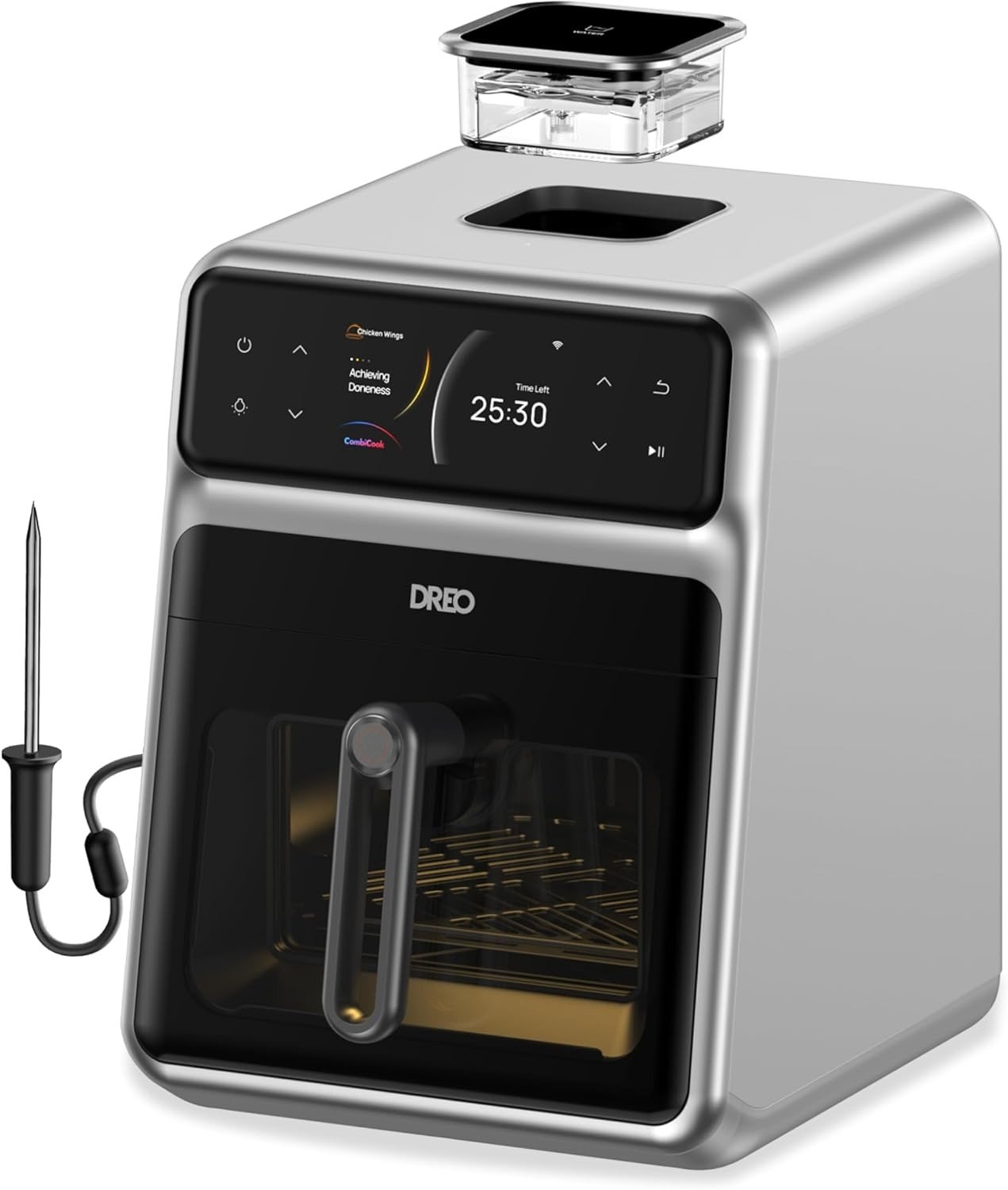
Why Air-Fried Meat Turns Dry Before It Feels Done
ANALYSIS FRAMEWORK
I remember the first time I bit into a perfectly browned chicken breast that felt disappointingly dry inside: the outside told me the cook was finished, but the inside had already crossed an invisible line.
That pattern kept showing up in tests and owner reports. The outside looked done, the color looked right, the timer felt reasonable—yet the bite went from slightly firm to dry in a heartbeat. I call that moment the Moisture-Loss Threshold: the point where surface progress outpaces interior protection.
Air fryers excel at fast surface browning, which is part of their appeal. The problem is that speed can quietly push delicate proteins beyond their best window. Across testing and user feedback for modern smart fryers, a recurring theme emerges: precision matters most right before food looks done. The machines that succeed are the ones that either extend that finish window or shift how you approach the last few minutes of a cook.
The Real Problem Is Not Heat Alone
People instinctively blame temperature when meat dries out. But more often the culprit is timing under accelerating surface exposure.
Once hot moving air starts drying the exterior, the food can still be technically cooking “correctly” while already losing texture. That’s why two chicken breasts cooked at the same listed temperature can feel completely different on the plate: one lands in the sweet spot, the other crosses the threshold where moisture retention collapses.
Nominal settings are not always identical to real cooking behavior. Some units run hotter than their panels indicate; others concentrate heat differently. The consequence is the same: visual and timer cues can mislead you into thinking doneness and tenderness are aligned, when actually the surface is outrunning the interior.
What the Threshold Looks Like in Real Food
With steak, the threshold shows when the exterior looks beautifully advanced while the center is still climbing toward target doneness.
With salmon, the surface firms early and flakes attractively for a minute—then the satin texture inside fades.
With chicken, the skin can be exactly where you want it while the meat underneath is only minutes away from going from juicy to merely acceptable.
Proteins punish timing drift far more than fries or frozen snacks, which explains why so many reviewers and users single out protein-focused results as the real test for precision fryers.
Why Regular Air Fryer Logic Misses It
Traditional air fryer logic—set heat, wait, flip, hope visual cues match reality—works for foods with broad success windows.
It fails for narrow windows. The narrower the ideal window, the more cooking results depend on whether the machine can recognize the stage the food is actually in, not just how long it’s been exposed to heat.
That’s why probe-guided systems and staged cooking modes are more than luxury features: they’re attempts to delay the moment exterior progress outruns interior control.
The Quiet Split Most Buyers Actually Need
I don’t think the useful split is “good fryer vs bad fryer.”
The more honest split is this:
| User Type | What Usually Matters Most | What Fails First |
|---|---|---|
| Frozen-food routine user | Speed and crisping | Little, because tolerance is wide |
| General family air-fry user | Capacity and convenience | Uneven batches and crowding |
| Protein-focused buyer | Doneness control near the finish line | Moisture-loss threshold |
That last group is where the real tension lives. If fries are your main goal, many basket fryers suffice. If steak, salmon, pork chops, or chicken breasts are the target, the appliance becomes a timing machine.
Reviews consistently praised models built around probe cooking and staged programs for protecting proteins—evidence that the emotional value of such devices is risk reduction on expensive or easily ruined foods.
The Measurement That Matters More Than Marketing
Wattage and basket size are part of the story—1800W, 6 quarts—yet they don’t answer the core question.
The number that matters is whether the cooking system has enough awareness to protect tenderness as the finish line approaches.
Once you look at the category that way, mixed user reactions start to make sense: buyers who wanted a premium frozen-food machine cared about price; those who wanted precise protein cooking sounded relieved to be offloading the trickiest final stretch.
What This Means for Your Buying Question
The wrong question is, “Is this fryer powerful?” Most decent fryers already are.
The better question is, “What happens in the five minutes where my food usually goes from promising to disappointing?”
That’s where the Moisture-Loss Threshold lives. If that small window causes most of your kitchen heartbreak, you should focus on machines that extend or protect it—probe guidance, staged cooking, and moisture support.
If not, a cheaper crisping-focused machine will likely do.
Transparency Note:
This analysis is not based on quick personal impressions.
It is derived from documented system behavior, verified user patterns, and the physical constraints of storage capacity.
The goal is to translate complex technical behavior into a realistic performance model that helps you make a clear decision
One Comment