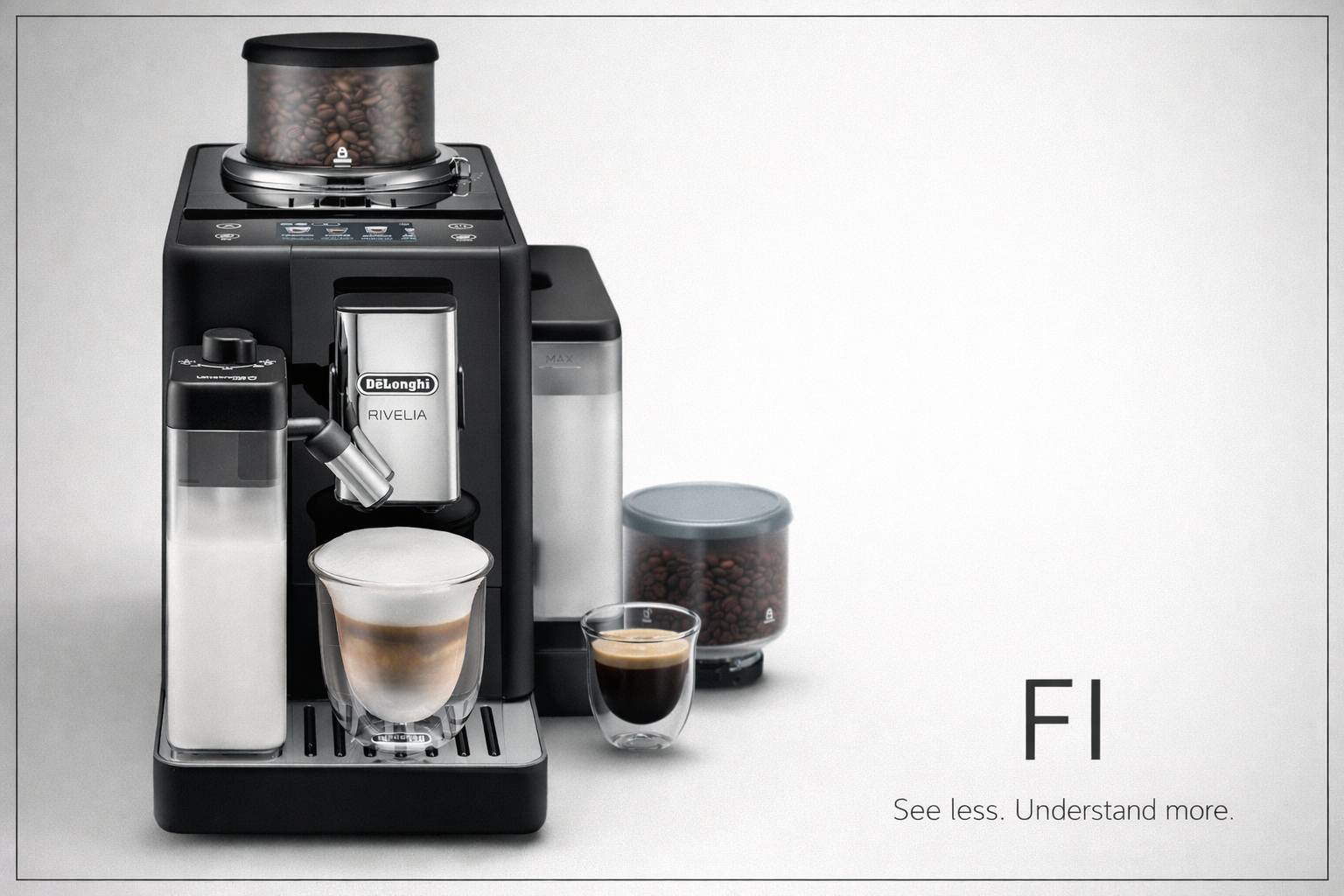
DeLonghi Rivelia Espresso Machine — A Constraint-Based Buying Decision
DECISION ANALYSIS
When someone asks whether the DeLonghi Rivelia espresso machine is “worth it,” I don’t answer with enthusiasm or skepticism.
I answer with structure.
This machine is not
a flavor gamble.
It is a system commitment.
If the system aligns with your real-life constraints, it becomes a daily stabilizer.
If it doesn’t, it becomes an expensive negotiation on your countertop.
This article exists to determine which side you will fall on.
Step One — Counter Reality and Daily Flow
Before performance, consider physical integration.
The DeLonghi Rivelia espresso machine is compact for a super automatic, but it is still a fully integrated grinder + brewer + milk system.
You need:
- Stable counter space
- Vertical clearance for bean hopper access
- Front clearance for cup placement
- Access to water tank removal
If you reposition appliances frequently or operate in a tight shared kitchen, friction will accumulate.
Friction reduces usage frequency.
Usage frequency determines perceived value.
Step Two — Beverage Pattern Mapping
Ask yourself honestly:
How many distinct drinks do you consume weekly?
If your pattern includes:
- Morning espresso
- Afternoon decaf
- Regular milk-based drinks
- Shared usage with different preferences
Then the dual hopper Bean Switch System and four user profiles are not luxury features—they are structural stabilizers.
If your pattern is:
- One straight espresso daily
- No milk
- No decaf
- No preference switching
Then a simpler system may deliver equal satisfaction with less mechanical complexity.
This is not about better or worse.
It is about alignment.
Step Three — Milk Discipline Threshold
The LatteCrema system removes skill dependency.
But it introduces responsibility.
Automatic milk systems require:
- Rinse cycles
- Regular deep cleaning
- Consistent hygiene
If milk drinks are weekly indulgences, maintenance feels light.
If milk drinks are daily rituals for multiple users, cleaning compliance becomes non-negotiable.
Ignore it, and reliability perception drops.
Maintain it, and performance remains stable.
Automation compresses effort during use—but expands responsibility afterward.
That is the trade-off.
Step Four — Calibration Tolerance
The DeLonghi Rivelia espresso machine includes Bean Adapt Technology.
This is a guided calibration system designed to reduce extraction mismatch.
But calibration requires:
- Initial attention
- Willingness to adjust grind
- Minor experimentation
If you enjoy structured guidance and want predictable output without manual obsession, this is ideal.
If you prefer zero interaction beyond a single button, you may underutilize its strongest feature.
Unused capability is not a flaw.
But it affects perceived value.
Step Five — Maintenance Psychology
All super automatic espresso machines share one truth:
Maintenance discipline determines long-term satisfaction.
With Rivelia, that includes:
- Descaling cycles
- Water filter awareness
- Drip tray emptying
- Internal cleaning prompts
If you respect machine prompts, reliability stabilizes.
If you dismiss them, small warnings escalate into perceived failure.
Most “it broke” narratives begin with ignored maintenance signals.
Ownership is partnership.
Worst-Case Simulation — The Misaligned Buyer
The wrong buyer looks like this:
- Buys it for café aesthetics
- Drinks occasional coffee
- Rarely cleans milk system
- Ignores descaling
- Expects zero maintenance
Within months, the system feels “sensitive.”
Trust erodes.
Usage declines.
The machine becomes decorative.
This outcome is avoidable—but only through behavioral alignment.
The Right Buyer Profile
The DeLonghi Rivelia espresso machine is structurally optimal for:
- Households with 2–4 users
- Mixed caffeine and decaf consumption
- Regular milk beverage drinkers
- Individuals who value guided precision
- Buyers seeking routine stability over ritual performance
It is not designed for:
- Manual espresso purists
- Single-drink minimalists
- Maintenance-averse users
This is constraint clarity—not persuasion.
Financial Logic — When the Price Makes Sense
The cost of the DeLonghi Rivelia espresso machine only justifies itself under one condition:
High usage frequency.
If you consume multiple café-style drinks per day, automation amortizes cost over time.
If you drink sporadically, ROI declines.
Consistency justifies automation.
Inconsistency amplifies expense.
You can review the full specifications and current pricing here 🔗
Final Resolution — The Stability Equation
The buying equation reduces to this:
High beverage variability
- Multi-user environment
- Willingness to maintain
- Desire for guided calibration
= Long-term stability satisfaction.
If all four variables are present, the DeLonghi Rivelia espresso machine becomes a system that reduces cognitive friction daily.
If two or fewer are present, complexity may outweigh benefit.
This is not a hype product.
It is a stability instrument.
Choose it only if your routine demands stability.
Otherwise, choose simplicity.
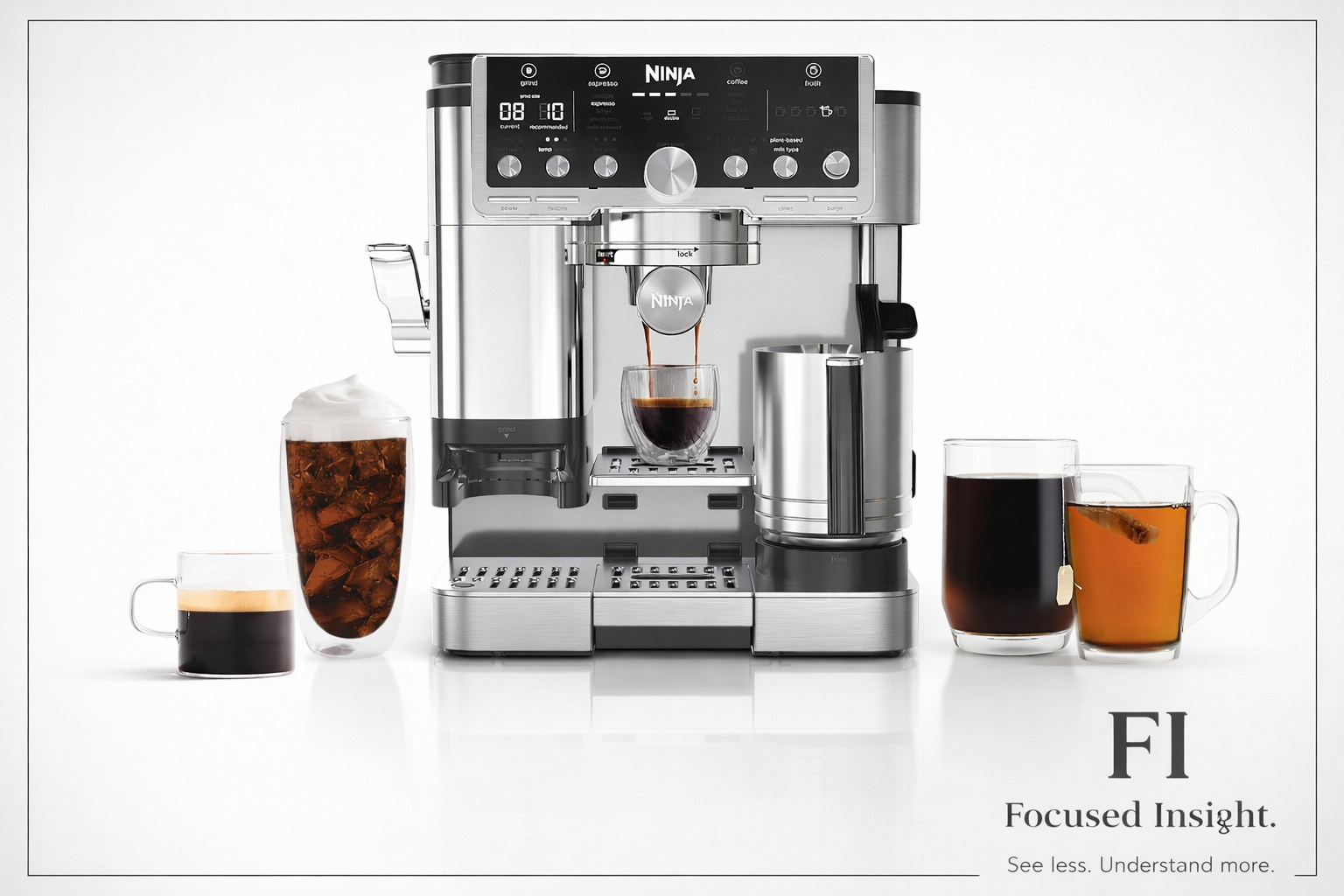
![The Hands-Free Espresso Problem: When Convenience Breaks Consistency ([شاركنينجا][1])](https://focusedinsight.net/wp-content/uploads/2026/02/image-26.png)
One Comment