CANEST FC-001MAX Review: Does This Smart Toilet Cross the Real Usefulness Threshold?
decision analysis
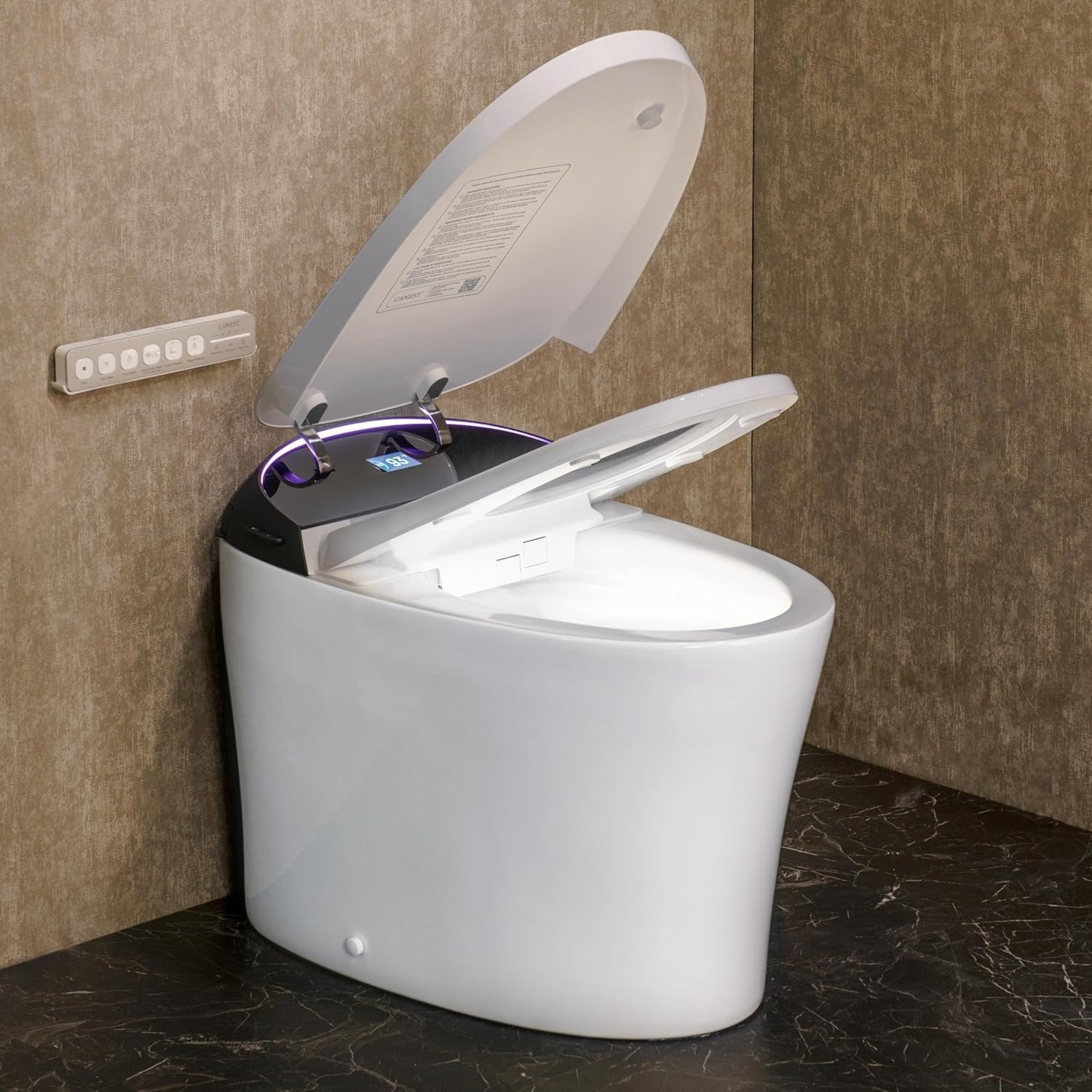
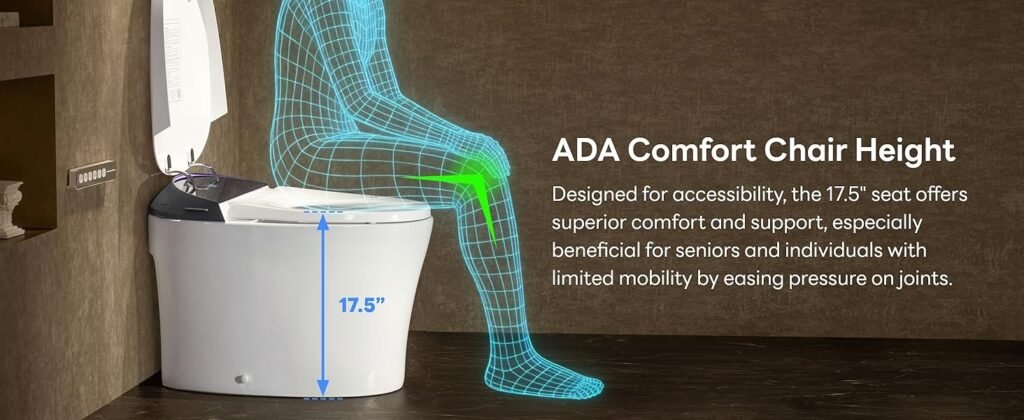
What made me take the CANEST FC-001MAX seriously was not the foam feature, the automatic lid, or the fact that it looks like every showroom upgrade people impulse-buy after one too many renovation videos. It was the spec pattern. This model stacks the things that actually decide whether a smart toilet survives daily life: ADA-height seating, a built-in tank and jet-siphon style flush, dual flush, warm-water bidet functions, warm-air drying, deodorization, pre-wet behavior, foot activation, blackout flush backup, and a more advanced hygiene package than the lower FC-001 versions, including UV nozzle sterilization and UV waterway sterilization.
On CANEST’s own lineup page, the FC-001MAX sits above the FC-001 and FC-001PRO specifically because it adds Foam Shield plus the extra UV water-path treatment. Amazon’s listing also positions it as the hygiene-focused flagship in this branch of the range.
The One-Table Read Before Anything Else
| Area | What the FC-001MAX offers | Why it matters |
|---|---|---|
| Flush architecture | Built-in tank, jet siphon, dual flush, blackout flush backup | Better fit for homes where pressure confidence matters |
| Comfort | ADA chair height, heated seat, warm water, warm dryer | Daily-use value, especially in colder mornings or mobility-sensitive homes |
| Hygiene layer | Self-cleaning nozzle, UV nozzle sterilization, UV water sterilization, deodorizer, pre-wet, Foam Shield | This is the product’s real identity, not just “smart toilet” branding |
| Control | Auto open/close, foot sensor, off-seat flush, remote, LED display | Lower hand contact and easier routine use |
| Cost of ownership | Foam liquid sold separately, appliance-style complexity, 1-year warranty with lifetime technical guidance | The gains are real, but this is not a zero-maintenance fixture |
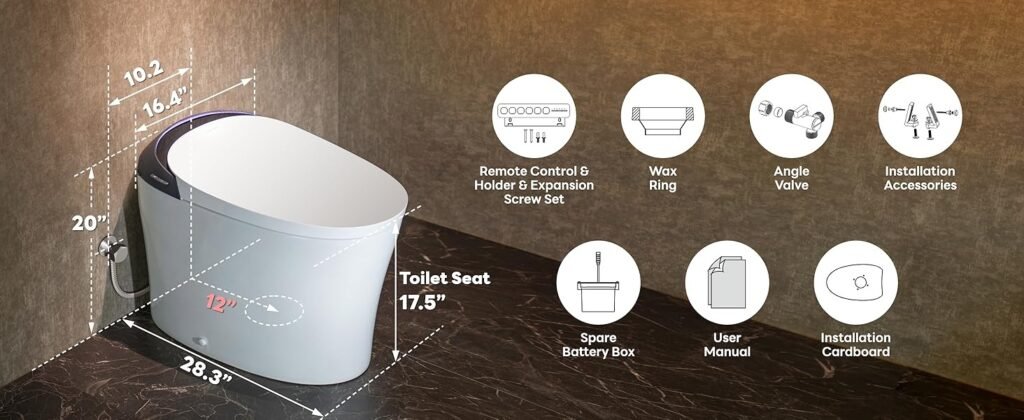
The exact published specifications vary slightly between surfaces, but the manufacturer page lists the FC-001MAX at roughly 28.3 x 16.4 x 20 inches with a 12-inch rough-in, 16.5-inch bowl height, 17.5-inch overall seat height, 110–120V power, dual flush rated at 1.45/1.08 GPF, and certifications including ETL, cUPC, and CEC.
Amazon’s listing also emphasizes a backup battery for flushing during outages, 6-level seat heating, multiple wash modes, warm drying, and a deodorizer.
Where I Think This Toilet Is Strongest
The FC-001MAX makes the most sense when the buyer’s real problem is not “I want a cool bathroom,” but “I want the bathroom routine to feel cleaner, easier, and less manual every day.” That sounds small, but it is a real category.
Good Housekeeping’s smart-toilet testing highlights hands-free hygiene, seat comfort, drying, and installation reality as core criteria, while broader bidet testing from Business Insider and WIRED shows people consistently value warm water, seat heat, intuitive controls, and a dependable cleaning experience more than theatrical extras. On that axis, the FC-001MAX is aimed in the right direction.
I also think the hygiene stack is the strongest differentiator here. Plenty of sub-$1,500 integrated toilets now offer heat, wash, dryer, and auto lid behavior. Fewer build their whole identity around layered hygiene: foam barrier, pre-wet, deodorization, self-cleaning nozzle, and an added UV water-path claim.
CANEST’s own comparison chart makes that hierarchy obvious: the plain FC-001 gives you the base comfort package, the FC-001PRO adds Foam Shield and UV nozzle sterilization, and the FC-001MAX adds UV water sterilization on top. In other words, this is not just “the more expensive one”; it is the version for buyers who care most about sanitation theater becoming sanitation routine.
What the Numbers and Market Signals Say
A 1000-gram MaP-style flush claim matters because independent MaP guidance treats 600 to 1,000 grams as highly recommended and uses that range to indicate stronger waste-removal performance in a single flush. I could not independently verify the FC-001MAX in the public MaP database from the sources I checked, so I treat the 1000-gram claim as a manufacturer claim rather than a separately confirmed listing.
Still, if the real-world flush performance is even close to what this architecture suggests, it clears the first threshold I care about: not wondering whether the toilet itself is the weak point.
There are also early market signals that the product has found interest quickly. Amazon shows it launched on January 29, 2026, and the product page currently places it in the one-piece toilet category rankings, which at minimum tells me this is not an abandoned listing sitting in a vacuum. That is not proof of long-term reliability, but it is better than evaluating a ghost product with no market surface at all.
The Friction I Would Not Pretend Away
This is where I think buyers get sloppy.
First, Foam Shield is useful, but it creates a refill rhythm. The product page explicitly says the foam liquid is sold separately and that users should use only formulas designed for smart-toilet foam systems. That means the bowl-cleaner, splash-reducer, odor-trapping advantage is real only if you are willing to maintain it. If you hate consumable routines, this will eventually irritate you.
Second, integrated smart toilets still carry installation and service risk compared with a standard toilet plus a bidet seat. Good Housekeeping stresses the extra installation complexity, and plumber discussions repeatedly point out that integrated units can be harder to install and service, especially when future parts availability is uncertain. CANEST offers a 1-year warranty plus lifetime technical guidance, which helps, but it does not erase the basic reality that this is more appliance than plain fixture.
Third, the dryer should be treated as reduction, not elimination. Across bidet and smart-toilet user discussions, the dryer is one of the most common expectation traps. People like having it; they just often find it slower or less decisive than they imagined. So I would read the FC-001MAX’s dryer as a paper-reduction feature, not a total paper-replacement promise.
Fourth, motion convenience can become motion noise. Auto-open lids and sensor-driven behavior are pleasant in the right bathroom, but owner discussions around the category regularly mention accidental triggers and overly eager lid movement in tighter spaces. That does not make the feature bad. It just means the feature works best when the room layout cooperates.
Compatibility Split 3.0
| Fit level | Who I think this fits | Why |
|---|---|---|
| Excellent fit | Buyer remodeling a primary bathroom who wants integrated hygiene, hands-free use, odor control, and ADA-height comfort | This is exactly the product’s logic |
| Good fit | Household with older adults, cold-weather seat sensitivity, or strong preference for lower-touch routines | Height, warmth, remote control, and foot interaction all matter here |
| Acceptable fit | Tech-curious buyer upgrading from a regular toilet and willing to maintain foam liquid and learn controls | Strong feature value, but only if the upkeep won’t annoy them |
| Borderline fit | Buyer who mainly wants a bidet and is not committed to replacing the toilet itself | A premium seat may solve most of the problem with less installation risk |
| Wrong fit | Anyone who hates consumables, wants minimal service complexity, or expects perfect auto behavior and dryer performance | This category still asks for patience |
This split is not theoretical. It follows the same fault lines I keep seeing in expert testing and owner talk: people love the warmth, wash, and cleaner-feeling routine, but they get irritated by complicated installs, uncertain serviceability, weaker-than-hoped drying, or overactive sensors. The product is strongest when the buyer values integrated hygiene and reduced contact more than they fear appliance complexity.
My Verdict
I think the CANEST FC-001MAX does cross the real usefulness threshold—but only for the right kind of buyer.
It crosses it because the feature stack is not random. It is tightly organized around one outcome: making the bathroom feel cleaner, quieter, and less manually irritating day after day. The built-in tank and low-pressure-friendly flush logic matter. The ADA height matters. The deodorizer, pre-wet, and foam barrier matter. The extra UV hygiene layer is what separates this model from lower variants in the same series. And the blackout flush backup is exactly the kind of detail I like seeing in a product that understands it is still, at the end of the day, a toilet.
Where I would stay disciplined is expectation control. This is not a magic object. It is a high-friction reduction tool. You still have an install. You still have maintenance. You still have consumables if you want the foam function to keep earning its place. And you still have the usual category realities around sensors and drying. But if your real goal is to reduce bathroom friction rather than buy a novelty, this model is built around the right problem.
Transparency Note:
This analysis is not based on quick personal impressions.
It is derived from documented system behavior, verified user patterns, and the physical constraints of storage capacity.
The goal is to translate complex technical behavior into a realistic performance model that helps you make a clear decision