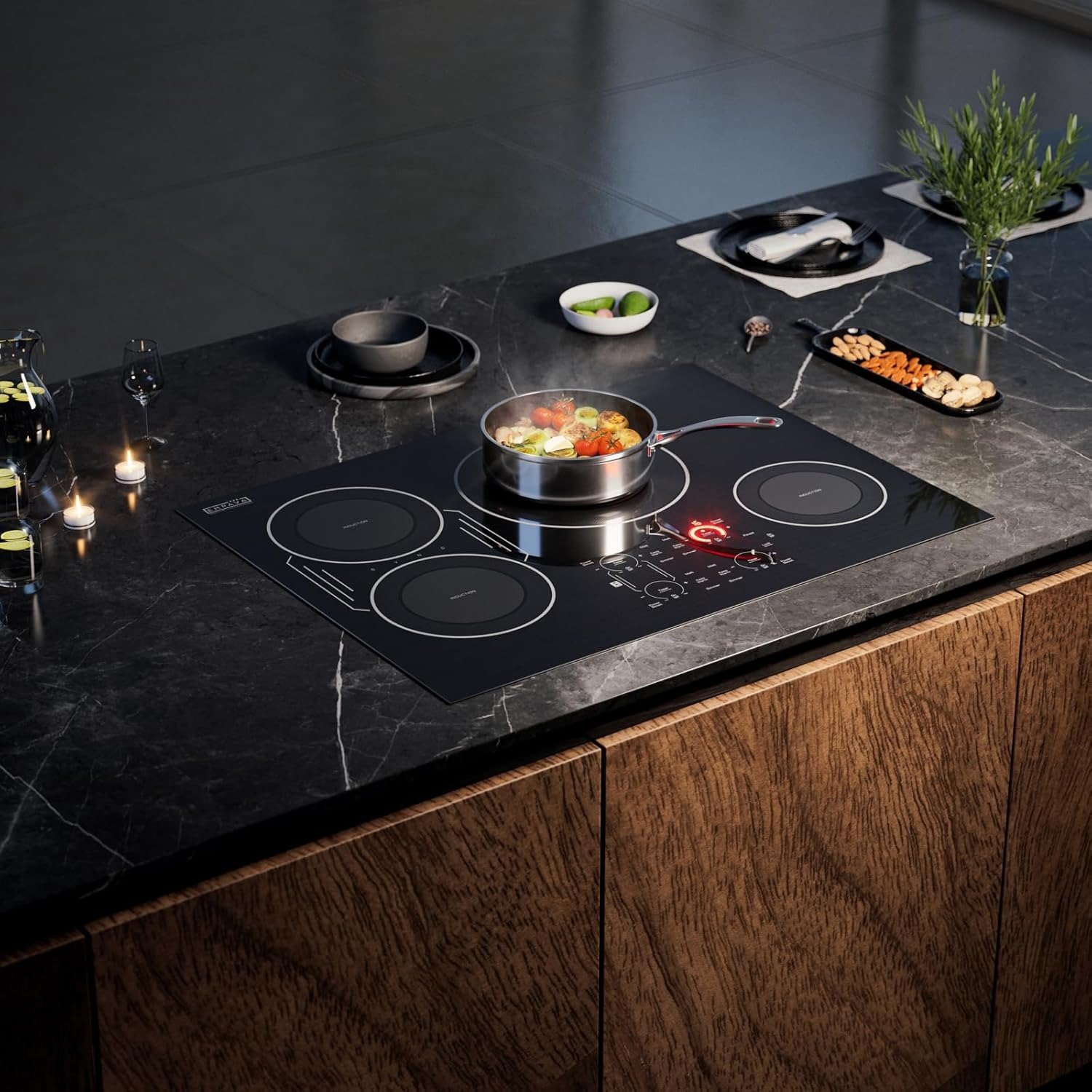
Bosch PVJ631HC1E: Where Induction Stability Works… and Where Variance Appears
DECISION ANALYSIS
After studying induction cooking behavior for months, I stopped evaluating cooktops based on brand reputation or feature lists.
Instead, I began using one simple measurement:
How stable does the heat feel once real cooking begins?
The Bosch PVJ631HC1E is a modern induction cooktop designed around controlled heat management rather than brute power.
It includes several features intended to improve cooking stability, including PerfectFry Plus temperature control, DirectSelect touch controls, and the ability to combine zones for larger cookware.
On paper, the system is designed for precision.
But the real test happens during everyday cooking.
What the Cooktop Is Actually Built to Do
The PVJ631HC1E is a 60-centimeter induction cooktop with multiple heating zones designed for flexible cooking patterns.
Key functional elements include:
| Feature | Purpose |
|---|---|
| PerfectFry Plus temperature control | Helps maintain stable frying temperatures |
| DirectSelect control panel | Allows immediate selection of power levels |
| CombiInduction zone linking | Enables larger cookware to use combined zones |
| Large 280 mm cooking zone | Designed for bigger pans and higher heat demand |
| Home Connect integration | Allows remote diagnostics and system monitoring |
These elements are intended to reduce cooking variability and make temperature behavior more predictable.
However, real cooking introduces variables that specifications cannot fully describe.
The Stability Threshold I Observed
When cooking with only one pan, the PVJ631HC1E feels extremely responsive.
Heat adjustments occur quickly, and frying temperatures remain stable thanks to the PerfectFry temperature assistance.
But once cooking becomes more complex—two pans running simultaneously, extended cooking sessions, or large cookware—the system begins managing energy distribution across zones.
This is where the concept of heat variance becomes visible.
Users sometimes notice that maintaining the same cooking intensity requires slightly higher heat levels when multiple zones are active.
The cooktop is still functioning correctly.
But the relationship between heat level and cooking result begins to shift slightly.
That shift is the variance threshold.
Where the Cooktop Feels Most Stable
The PVJ631HC1E performs best under cooking conditions where the system can concentrate its energy efficiently.
Typical examples include:
- Single-pan frying
- Sequential cooking
- Moderate cookware sizes
- Controlled temperature cooking such as sautéing or shallow frying
Under these conditions, the cooktop feels smooth, fast, and highly responsive.
The temperature assistance system helps prevent overheating, which many cooks find reassuring.
Where Variance Can Appear
Certain cooking patterns introduce conditions where the cooktop begins balancing multiple demands.
These include:
- Multi-Pan Cooking: Running multiple burners simultaneously requires the system to distribute electrical capacity between zones. Maintaining identical cooking intensity may require small adjustments.
- Extended Cooking Sessions: During longer cooking cycles, thermal management systems regulate heat output to maintain safe operating conditions.
- Large Cookware Geometry: Oversized cookware may interact differently with the induction coil layout beneath the glass surface, which can affect perceived heating consistency.
None of these behaviors represent a malfunction.
They simply reveal how the system behaves when cooking becomes complex.
Compatibility Split: Who Will Enjoy This Cooktop Most
Different cooking styles interact with the PVJ631HC1E in different ways.
Ideal Match
Cooks who frequently fry, sauté, or prepare meals using one primary pan will experience the cooktop at its most stable and responsive.
Conditional Fit
Households that cook with several pots simultaneously may notice occasional heat adjustments during complex cooking sessions.
Less Suitable Scenario
Cooks who frequently use very large cookware combinations may prefer cooktops with wider zone spacing or larger combined heating areas.
What I Remember After Using It
The most important insight from using this cooktop is simple.
The PVJ631HC1E is not designed to impress with explosive power.
It is designed to deliver controlled, assisted cooking stability.
If your cooking style aligns with that philosophy, the experience feels calm and precise.
If your cooking style demands constant multi-zone intensity, the small heat adjustments required may become noticeable over time.
Final Decision
The Bosch PVJ631HC1E is best understood as a precision-focused induction cooktop.
It performs exceptionally well for cooks who prioritize controlled frying temperatures and responsive heat adjustments.
Its behavior becomes more nuanced when cooking patterns involve multiple pans or extended cooking sessions.
For many kitchens, that balance between precision and power management will feel natural.
For others, the variance threshold may appear sooner.
The difference lies not in the cooktop itself—but in the way the kitchen is used.
Transparency Note:
This analysis is not based on quick personal impressions.
It is derived from documented system behavior, verified user patterns, and the physical constraints of storage capacity.
The goal is to translate complex technical behavior into a realistic performance model that helps you make a clear decision


One Comment