Your Door Still Works — So Why Does Access Feel Worse Than It Should?
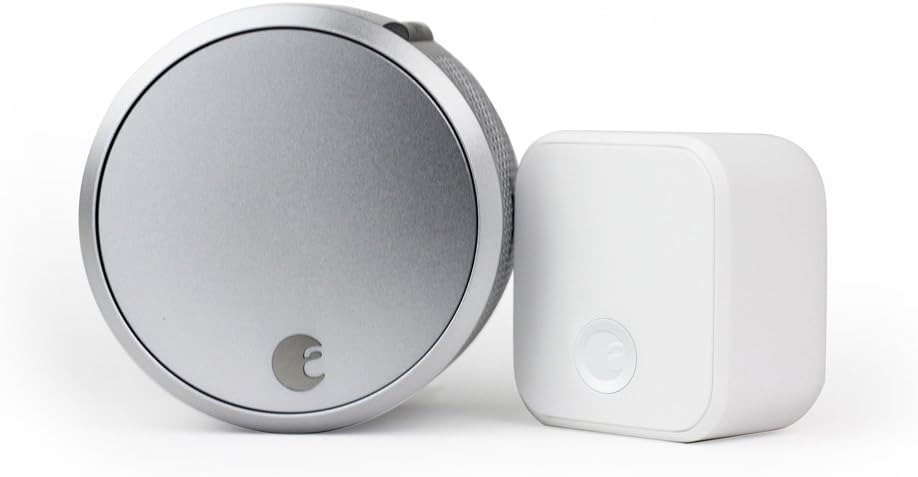
AUGUST SMART LOCK PRO + CONNECT
The lock usually isn’t the first thing that feels broken.
It starts earlier than that. You come home with full hands. Someone else needs access while you are out. A cleaner, guest, parent, dog walker, or contractor arrives, and the whole system quietly falls back to texts, copied keys, hidden spares, or that familiar sentence: “I’ll be there in ten minutes.” The door still locks. The routine does not. That is the difference that matters. A smart lock becomes logical when the failure is no longer mechanical. It is operational.
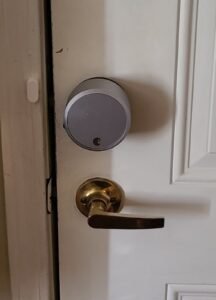
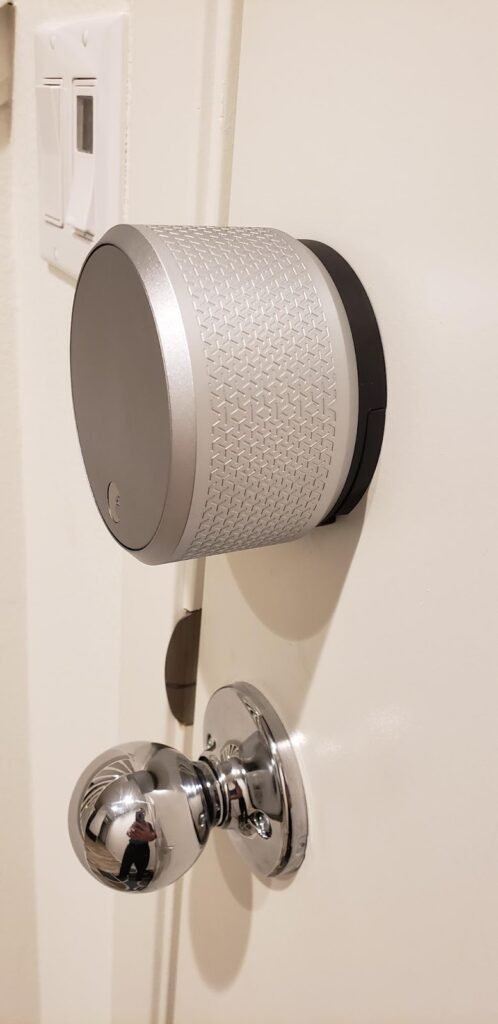
The August Smart Lock Pro + Connect is not trying to reinvent your front door from the outside. Its whole pitch is narrower than that: it mounts on the inside, keeps your existing exterior deadbolt and keys, adds remote access through the Connect bridge, and layers in auto-lock, auto-unlock, app control, and broad smart-home integration. That design choice is why it still has a real audience even now.
The Result Looks Fine. The Problem Isn’t.
A normal deadbolt can look perfectly adequate right up until life becomes slightly irregular.
Not dramatic. Just repetitive. One person arrives early. Another forgets a key. You want to confirm the door locked without walking back. You want access to exist without physically handing over metal. This is where older “good enough” locks begin to leak effort. The outcome still looks secure from the outside, but the system depends too much on your presence, memory, and interruption tolerance. That is the hidden annoyance this category is really solving.
Tom’s Guide praised the Pro for exactly the things that matter when the pain is routine rather than theatrical: easy installation, a solid app, and wide smart-home compatibility. Customer summaries at Best Buy echo the same pattern from the user side: people consistently like ease of use, setup, auto-unlock, and remote access, while complaints cluster around compatibility edge cases, battery behavior, and some operational noise. That split tells you what this lock is and what it is not. It is a friction-reduction tool first. It is not a universal magic layer over every door and every household habit.
| What still looks “fine” | What is actually costing you |
|---|---|
| Your deadbolt works | Access still depends on being there |
| Your keys exist | Sharing access is still clumsy |
| Your door is secure | Verification still steals attention |
| Your routine mostly holds | Exceptions keep creating interruptions |
These are not marketing problems. They are small recurring operational taxes, and smart locks only earn their price when those taxes become frequent enough.
What You’re Actually Feeling but Not Naming
Most people do not say, “I need a remote-capable retrofit deadbolt controller with guest access logic.”
They say things like:
I’m tired of coordinating keys.
I want to know the door is locked.
I do not want to replace the whole exterior hardware.
I want entry to be easier without making the house feel gimmicky.
That is the real search intent underneath this product. Not “smart lock features.” Not “Bluetooth deadbolt.” The deeper query is usually closer to this: how do I make access cleaner without rebuilding the door or locking myself into a worse routine? The August approach fits that intent because it preserves the outside hardware and upgrades the inside behavior.
What makes this category tricky is that buyers often think they are buying convenience in the abstract. They are not. They are buying a reduction in access friction under repeated use. If that friction is weak, the product feels optional. If it is constant, the product stops feeling optional very quickly.
The Hidden Mechanism Behind the Miss
The mistake is simple: people evaluate smart locks like locks.
They should evaluate them like access systems. A purely mechanical lock is judged by durability, key function, and basic security. A smart lock adds a second layer of value: who gets in, when, how cleanly, and how much supervision that requires from you. August built the Pro around that layer. The lock itself communicates locally, while the Connect bridge adds internet access for remote control and smart-assistant integrations. August’s official materials also position the bridge-based model as the route to remote access while preserving battery life better than all-in-one Wi-Fi designs.
That matters more than many buyers realize.
Built-in Wi-Fi sounds cleaner on paper, but it often comes with a battery tradeoff. August’s own current Wi-Fi lock is rated for up to three months of battery life, while the company separately markets the bridge-based setup as the option for extended battery life plus remote access. Even when looking at newer alternatives, reviewers keep returning to the same ecosystem truth: connection method changes the feel of ownership over time. Better radios and more stable protocols reduce the small, maddening failures that make a smart device feel less smart.
| Decision lens | Bad question | Better question |
|---|---|---|
| Locking | “Can it lock?” | “Can it reduce access friction every week?” |
| Remote control | “Does it have an app?” | “Can I solve entry problems without being home?” |
| Installation | “Is it powerful?” | “Can I keep my current deadbolt and keys?” |
| Smart home fit | “Is it smart?” | “Does it integrate with the system I actually use?” |
That shift in lens changes the whole judgment.
The Threshold Where the Outcome Quietly Breaks
Here is the threshold.
The August Smart Lock Pro + Connect becomes rational when access coordination costs more than deadbolt simplicity saves.
That is the break point. Not before.
If you live alone, rarely share entry, almost never need remote confirmation, and do not mind carrying keys, this lock can feel like an elegant extra. But once your day starts involving shared access, timed entry, remote verification, or repeated lock-state uncertainty, the old arrangement begins to consume more attention than it deserves. At that point, the product stops being “tech.” It becomes routine compression.
A second threshold matters too: door replacement tolerance.
Because August installs on the inside and leaves the outside lock alone, it is unusually strong for renters, cautious homeowners, and anyone who does not want the visual or mechanical commitment of a full deadbolt swap. That retrofit logic remains one of its clearest structural advantages.
| Threshold signal | Below threshold | Past threshold |
|---|---|---|
| Shared entry | Rare | Frequent |
| Need to verify lock status | Occasional | Repetitive |
| Tolerance for key logistics | High | Low |
| Willingness to replace exterior hardware | High | Low |
| Smart-home integration need | Minimal | Meaningful |
When two or more of the right-side conditions are already part of your week, the category starts making sense. When three or more are stable, it usually becomes easier to justify than people expect.
Why Most Buyers Misread This Too Early
Because they compare the wrong things.
They compare smart locks by feature count, not by failure removal. They compare brands by surface convenience, not by installation consequence. They compare “supports HomeKit” with “works the way my household actually wants to enter.”
That last part matters.
The August Smart Lock Pro works with Siri / HomeKit, Alexa, and Google Assistant when the required Wi-Fi path is in place. That is real compatibility. But compatibility is not the same thing as the most seamless access style available in 2026. Newer locks now compete on faster standards, keypad inclusion, Thread stability, and tap-to-unlock ecosystems like Apple Home Key. The Verge’s current guidance makes clear that Home Key and Thread-based locks can feel more direct and more stable, especially for households deeply committed to Apple Home.
So the counterintuitive truth is this:
The August Pro is often a better buy for the person who wants to keep the door than for the person who wants to upgrade the whole access ritual.
That is why some buyers love it and others feel underwhelmed. They are not buying the same outcome.
Who Is Actually Inside This Problem
This product fits a very specific reader.
| Need | Fit |
|---|---|
| Keep existing exterior deadbolt and keys | Strong |
| Add remote lock control without replacing the whole lockset | Strong |
| Use HomeKit / Alexa / Google Assistant with a retrofit lock | Strong |
| Want Z-Wave-era flexibility in an older smart-home stack | Strong |
| Want the simplest possible installation path | Strong |
| Need built-in keypad out of the box | Weak |
| Want Apple Home Key tap-to-unlock | Weak |
| Want the newest Matter / Thread-style future path | Weak |
| Want the quietest, most invisible hardware aesthetic | Borderline |
That is the split.
Reviews.org highlights the same core fit: easy install, keep your existing keys, strong automation support, and optional keypad if you need code entry. Tom’s Guide arrives at nearly the same conclusion from the editorial side. Amazon’s product page and August’s own product language reinforce the same identity: retrofit convenience, app control, auto-locking, and remote access.
If your problem is coordination, not aesthetics, this lock is still in the conversation.
Where Wrong-Fit Begins
Wrong-fit begins the moment you expect this lock to solve a different problem than the one it was built for.
This is not for the buyer who wants the newest protocol story. This is not for the buyer who wants keypad access included without extra hardware. This is not for the buyer who wants Apple Home Key convenience from the lock itself. This is not for the buyer who wants every family member and visitor to interact with the door without depending on apps, codes, or setup habits.
It is also not ideal for doors with compatibility edge cases. August is clear that its retrofit design is meant for most single-cylinder deadbolts, not every lock situation. Customer feedback also shows that while many users find setup smooth, some run into door-specific fit issues, battery complaints, or dislike the operational sound profile.
| If your priority is… | Then this product is… |
|---|---|
| Preserve existing hardware | Logical |
| Remote control with minimal exterior change | Logical |
| Heavy Apple Wallet-style tap entry | Wrong fit |
| Built-in keypad-first family access | Weak fit |
| Latest open-standard futureproofing | Weak fit |
| Low-disruption smart upgrade | Strong fit |
That table is more useful than a generic pros-and-cons list because it shows where regret really starts.
The One Situation Where This Product Becomes Logical
It becomes logical when your front-door problem is shared access friction on a door you do not want to rebuild.
That is the cleanest version of the case.
In that situation, the August Smart Lock Pro + Connect solves the right layer of the problem. It gives you remote control, app-based access management, auto-lock / auto-unlock behavior, and voice-assistant compatibility while preserving your existing keys and outside deadbolt. It is compact in decision scope even if not physically tiny. You are not paying for a full exterior identity change. You are paying to reduce the number of times the door drags you back into the loop.
I would not frame it as the most advanced front-door answer today. I would frame it as a disciplined answer to a narrower problem that still exists in a lot of homes: I want smarter access without replacing the face of the lock or retraining the whole household around a radically different entry method.
That is a smaller promise. It is also a more believable one.
What It Solves, What It Reduces, and What It Still Leaves to You
What it solves is not security anxiety in the abstract. It solves access management drag.
It reduces the need to copy keys, wait in person, second-guess lock status, or treat every temporary visitor like a manual coordination event. It also lowers the barrier for people who want smart-lock behavior without committing to a full lock replacement. Those are tangible wins, and they explain why this older design still holds a 4.4-star average on Amazon across more than 9,500 ratings and why professional reviewers kept rating it highly for installation and ecosystem support.
What it still leaves to you is equally important.
You still need to confirm compatibility with your door. You still need to decide whether an optional keypad is necessary for your household. You still need to accept that this is a bridge-based, older-ecosystem product, not the cleanest expression of where smart-lock standards are heading. And if your household wants the fastest guest-friendly entry experience with minimal app dependence, a newer keypad- or Home-Key-oriented lock may fit better.
| Category | What August Pro + Connect gives you | What it does not erase |
|---|---|---|
| Installation | Retrofit over existing deadbolt | Need to verify compatibility |
| Access | Remote control and shared access logic | Need to manage users and setup |
| Convenience | Auto-lock / auto-unlock options | Some households still need a keypad |
| Ecosystem | Siri, Alexa, Google Assistant support | Not the newest entry standard path |
| Ownership | Keep keys and exterior hardware | Battery and door-specific realities remain |
That is the honest trade.
Final Compression
The August Smart Lock Pro + Connect is not most convincing when you think of it as a lock.
It is most convincing when you think of it as a retrofit access correction.
If your current deadbolt is mechanically fine but operationally annoying, if you share entry often enough to resent the old routine, and if you do not want to replace the exterior lock hardware just to fix that, this is where the decision stops being vague. The threshold is not “Do I want a smart home gadget?” The threshold is “Has access friction become a repeating cost?” Once the answer is yes, this product becomes much easier to justify.
Transparency Note:
This analysis is not based on quick personal impressions.
It is derived from documented system behavior, verified user patterns, and the physical constraints of storage capacity.
The goal is to translate complex technical behavior into a realistic performance model that helps you make a clear decision.