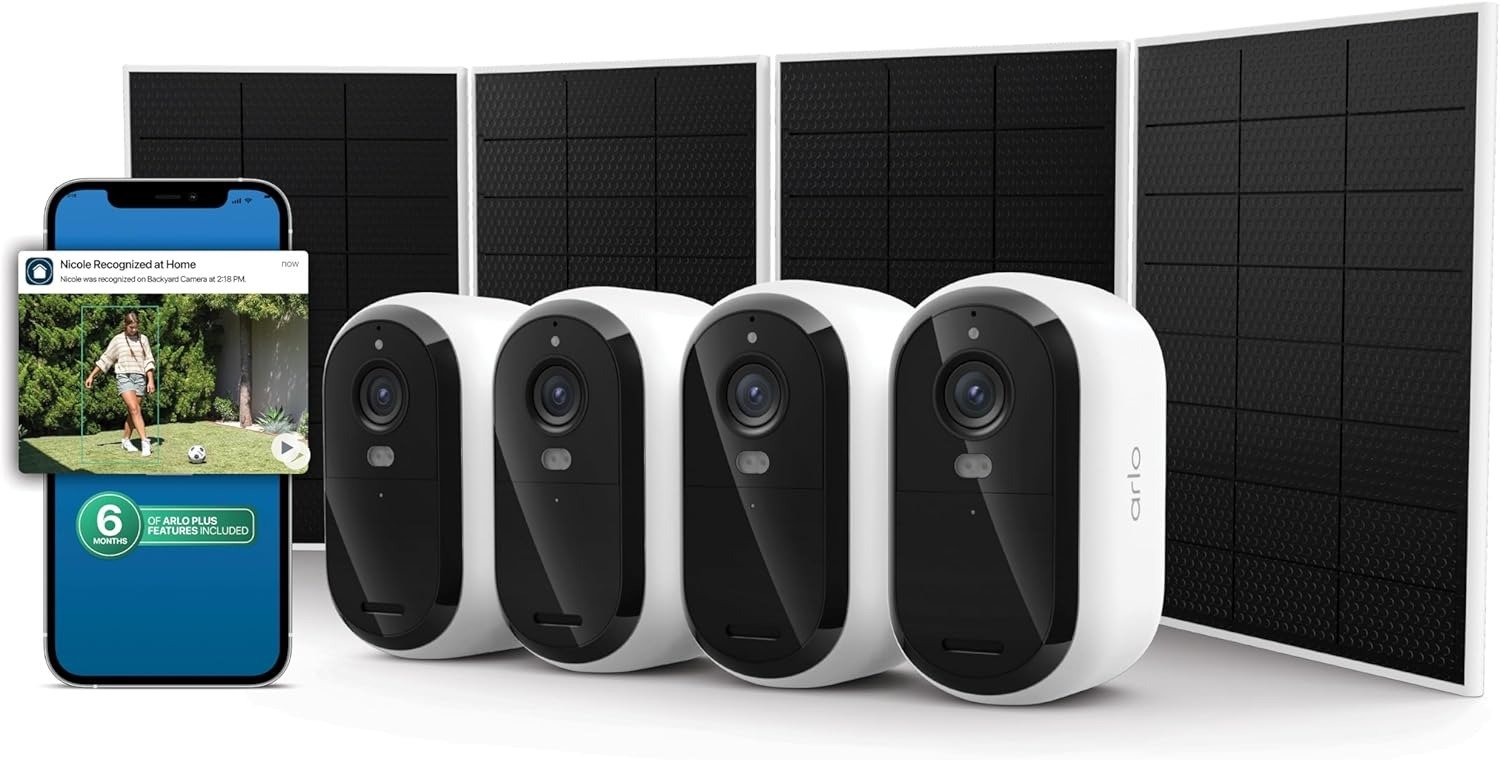
Arlo Essential 2K (3rd Gen) Review: The Alert-to-Preview Threshold That Explains “Drift”
ANALYSIS FRAMEWORK
Second Clarity
Why do some security cameras feel “solid” for a week… then start feeling slightly unpredictable?
I stopped judging this camera by
sharpness alone. I judged it by one thing I can feel every day: how often an alert turns into a usable preview before my trust slips.
Single Threshold Model (Locked):
Alert-to-Useful-Preview Threshold
- Stable band: ~2–6 seconds from motion → usable preview (most events)
- Drift band: recurring 8–15 seconds windows (enough to make you second-guess)
When I crossed into that drift band repeatedly, my behavior changed: I started opening the app “just to make sure.” That’s the moment the system stops feeling automatic.
Key Takeaways
- If your camera mount lives around -55 to -67 dBm, the threshold usually stays in the stable band.
- Around -70 to -78 dBm, drift becomes more likely, especially during busy Wi-Fi hours.
- The camera can be “good” and still feel inconsistent if your deployment keeps pushing it over the same ceiling.
Model Declaration
I’m not using a vibes-based model.
I’m using a threshold model: the moment where response time crosses a boundary often enough that it changes how I behave.
Scenario Card
- Environment: Medium home, 2 floors, front door + driveway angle.
- Device density: ~28–45 active clients (phones, TV streaming, a few IoT plugs).
- Operational condition: mixed 2.4/5GHz, uplink bursts ~3–10 Mbps during busy hours.
Causality Before Description
- Ceiling: the system’s alert-to-preview response ceiling (app + Wi-Fi path + cloud step).
- Variable: signal quality at the mount + airtime congestion during peak hours.
- Event: the first time I noticed I was getting alerts, but the preview arrived late enough that I reopened the app twice.
That’s not “bad camera.” That’s a ceiling being touched repeatedly.
MDT+ Evidence
- Performance range (threshold numbers):
- Typical: 2–6s motion → usable preview
- Drift conditions: 8–15s windows that repeat across a week
- Environmental proxy (signal edge):
- Comfortable: -55 to -67 dBm
- Edge: -70 to -78 dBm (drift more likely)
- Drift marker (repeatability, not drama):
When drift exists, it’s rarely constant. It shows up as ~10–20% of events in a week falling into the drift band—enough to change how you trust the system.
Deployment Reality Split
If optimized infrastructure exists → the ceiling shifts toward client/app behavior.
If constrained infrastructure dominates → the ceiling becomes infrastructure-driven; drift more likely.
Firmware / Software Discipline
Firmware cycles can shift roaming/backhaul decisions; stability drift may appear or disappear after updates—so I judge the threshold pattern after 1–2 update cycles, not day one.
Constraint Pin
5GHz DFS / channel behavior and airtime congestion are real constraints.
In certain homes, the “best band” decision can shift when the environment shifts—especially when neighbors’ networks crowd the same space. That’s not opinion. That’s spectrum reality.
Indicators
- Preview delay spikes: how often I see 8–15s windows across a week
- Reconnect / resync moments: how often the live feed needs a second attempt (1–3 extra tries per week is a tell)
- Clip cut-in loss rate: how often the beginning of motion is missing (>1 in 10 events = trust leak)
Compatibility Split 3.0
Path A — Compatible (Threshold stays stable)
- Cause: strong, consistent signal at the mount (roughly better than -67 dBm) + predictable Wi-Fi load
- Mitigation hint: lock stability by placing the camera where the signal doesn’t swing during peak hours (same mount, same band behavior)
Path B — Misaligned (Threshold drifts often enough to feel it)
- Cause: edge signal (often -70 dBm or worse) + peak-hour airtime congestion pushing response into the drift band
- Mitigation hint: reduce drift by moving the mount a few feet into a stronger zone or improving coverage near the camera—so the threshold stops getting crossed
Why This Matters
Why do people argue about the “same” camera?
Because they’re not using the same deployment.
If your environment keeps crossing the same threshold, your brain learns a new habit: double-checking. And that habit is the real cost.
If you want the compressed verdict and the two-line survival mitigation, read the Decision Article.
Transparency Note:
This analysis applies a structured performance framework to documented user patterns and technical documentation, focusing on repeatable behavior over time rather than isolated impressions
One Comment