The AquaTru Classic Smart Alkaline Makes Sense Only After One Daily-Life Threshold Is Clear
DECISION ANALYSIS
The AquaTru Classic Smart Alkaline becomes easy to misunderstand when it is framed as a premium countertop filter.
That description is too soft. What I see instead is a compact reverse-osmosis system for people whose buying psychology is dominated by contaminant anxiety, not by minimalism, speed, or zero-maintenance convenience.
Once I looked at it that way, the product became much easier to judge.
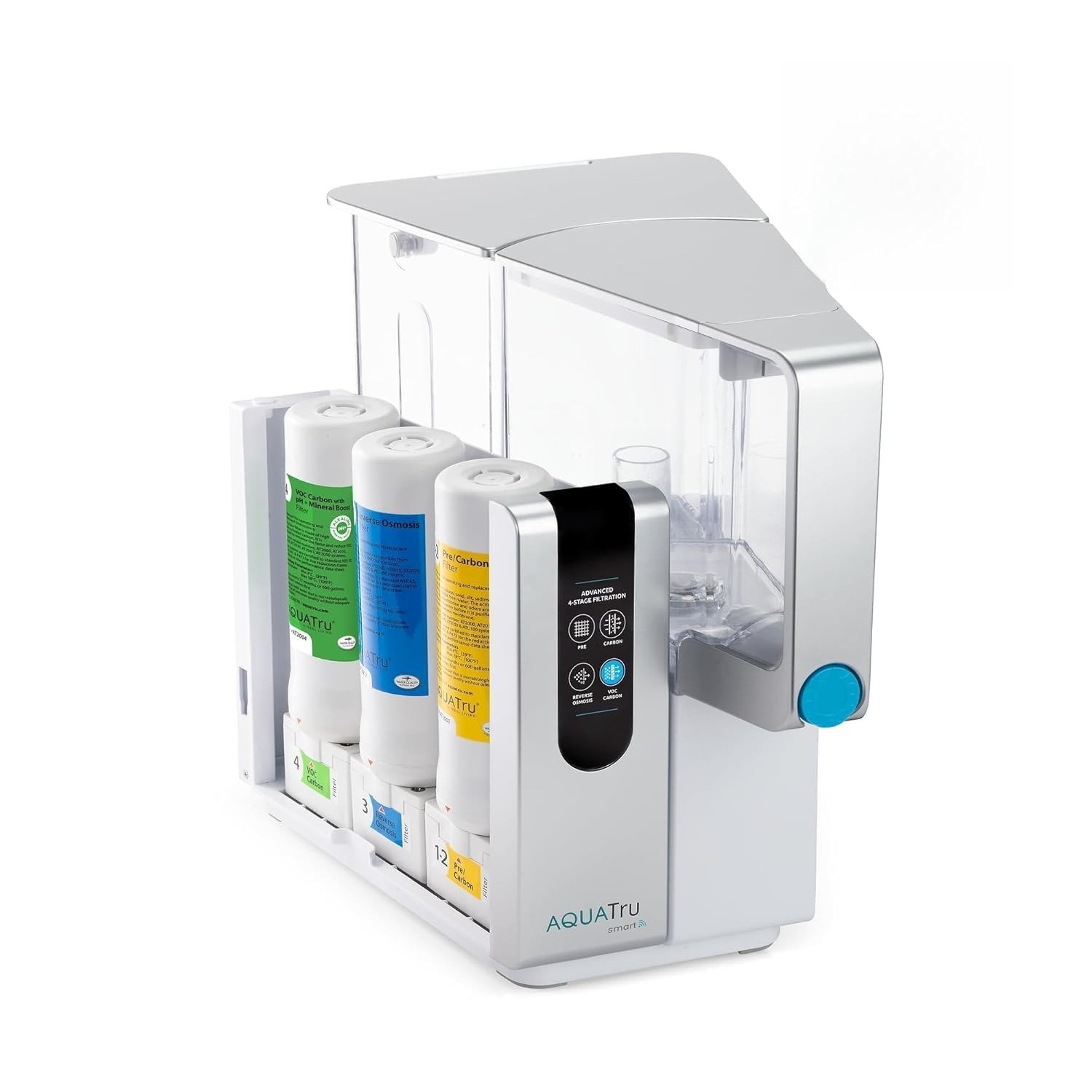
Its core strengths are legitimate. AquaTru says the system is certified to remove 84 contaminants, the Smart variant uses the same filtration hardware as the regular Classic while adding app connectivity and TDS sensing, and independent review data for the Classic line shows especially high performance for contaminant reduction, setup, and maintenance structure.
The weak spot is not filtration credibility. It is that this level of purification still comes with a daily rhythm: filling, waiting, emptying, cleaning, and eventually descaling.
My Decision Model — The Daily Friction Threshold
I would not buy this product based on “smart,” “alkaline,” or even “great taste” alone.
I would buy it only if my personal threshold looked like this:
I care enough about verified contaminant reduction that I am willing to live with visible maintenance and slower water production.
That is the decision line. Not everyone is on the same side of it.
AquaTru’s own help content makes the boundary clear.
A normal tank should filter in about 10 to 15 minutes; if it drifts past 25 minutes, descaling is recommended. Weekly cleaning is advised in hard-water regions.
The system’s performance documentation also warns that water hardness above 10 gpg can build scale rapidly and make the system ineffective unless the water is softened first.
In other words, the product works best when your daily environment does not constantly push it into maintenance stress.
Who It Fits Best, Who It Only Sort of Fits, and Who Should Walk Away
The table below reflects the fit boundary I came away with after reading the specs, support documents, review testing, and user complaints together.
| Fit Level | Buyer Profile | My read |
|---|---|---|
| Excellent fit | Small household, high concern about PFAS/lead/fluoride, willing to manage a tank system | This is where AquaTru looks strongest |
| Good fit | Apartment or rental user who wants real RO without plumbing changes | Strong case if counter space is acceptable |
| Acceptable fit | Health-conscious buyer who values app visibility and filter reminders | Fine, but the app itself is not a reason to buy by itself |
| Borderline fit | Larger household expecting high-volume convenience | Refill rhythm may get old fast |
| Poor fit | Hard-water home without softening or willingness to descale | Drift risk is too high |
| Wrong fit | Anyone who wants invisible, fast, low-contact filtration | This product asks for too much interaction |
The Technical Reasons I Would Trust It
What I like here is that the product does not rely on vague reassurance.
The filtration stack is explicit, the maintenance schedule is explicit, and the Smart model adds visibility to tap-water and purified-water TDS rather than leaving performance entirely abstract.
The app also tracks filter life, water use, and bottled-water savings, with a searchable contaminant database by ZIP code.
Even though I am not impressed by the app’s public rating quality, the underlying idea is useful: it turns purification from a black box into something you can monitor.
The strongest technical case, though, still comes from the filtration side rather than the software side.
WaterFilterGuru’s review scored the AquaTru Classic line at 9.54 overall, with 9.91 for contaminant reduction and only 7.00 for filtration rate.
That split matches the broader pattern almost perfectly. The machine’s value is strongest when purity matters more than speed.
The Reasons I Would Hesitate
My hesitation would start with three things.
First, the routine can become more noticeable than people expect.
Even a favorable Reddit comment from a two-person household mentioned needing to refill the tank two to three times a day when using it for drinking and cooking.
That is not failure. But it is a lifestyle shape.
Second, hard water changes the story.
A product that looks simple in a clean demo becomes less carefree when scale enters the pump and membrane picture.
AquaTru’s own support language on slowdown and descaling is too specific to ignore, and that is exactly the kind of long-term friction many buyers underestimate at checkout.
Third, the Smart premium is not fully justified if you are buying mainly for app pleasure.
The public App Store sample is small, but it is poor, and complaints about logins and password resets suggest that the connected layer is best treated as a monitoring bonus, not the emotional center of the purchase.
My Quiet Verdict
If I were buying strictly for taste improvement, I would not land here first.
If I were buying because I wanted a no-plumbing system with a more serious purification case than most countertop or pitcher-style alternatives, AquaTru becomes much more compelling.
Its strongest buyers are not casual upgraders.
They are people who want documented contaminant reduction badly enough to accept a recurring routine without resenting it.
That is the compatibility split that matters most.
So my decision is simple:
I would consider the AquaTru Classic Smart Alkaline a strong buy for a small household that prioritizes verified purification over frictionless convenience, has manageable water hardness, and wants to watch performance rather than merely assume it.
I would not recommend it to someone who wants high-volume ease, negligible maintenance, or a smart experience polished enough to carry the purchase on its own.
That is why the final move here should stay quiet and precise.
Transparency Note:
This analysis is not based on quick personal impressions.
It is derived from documented system behavior, verified user patterns, and the physical constraints of storage capacity.
The goal is to translate complex technical behavior into a realistic performance model that helps you make a clear decision