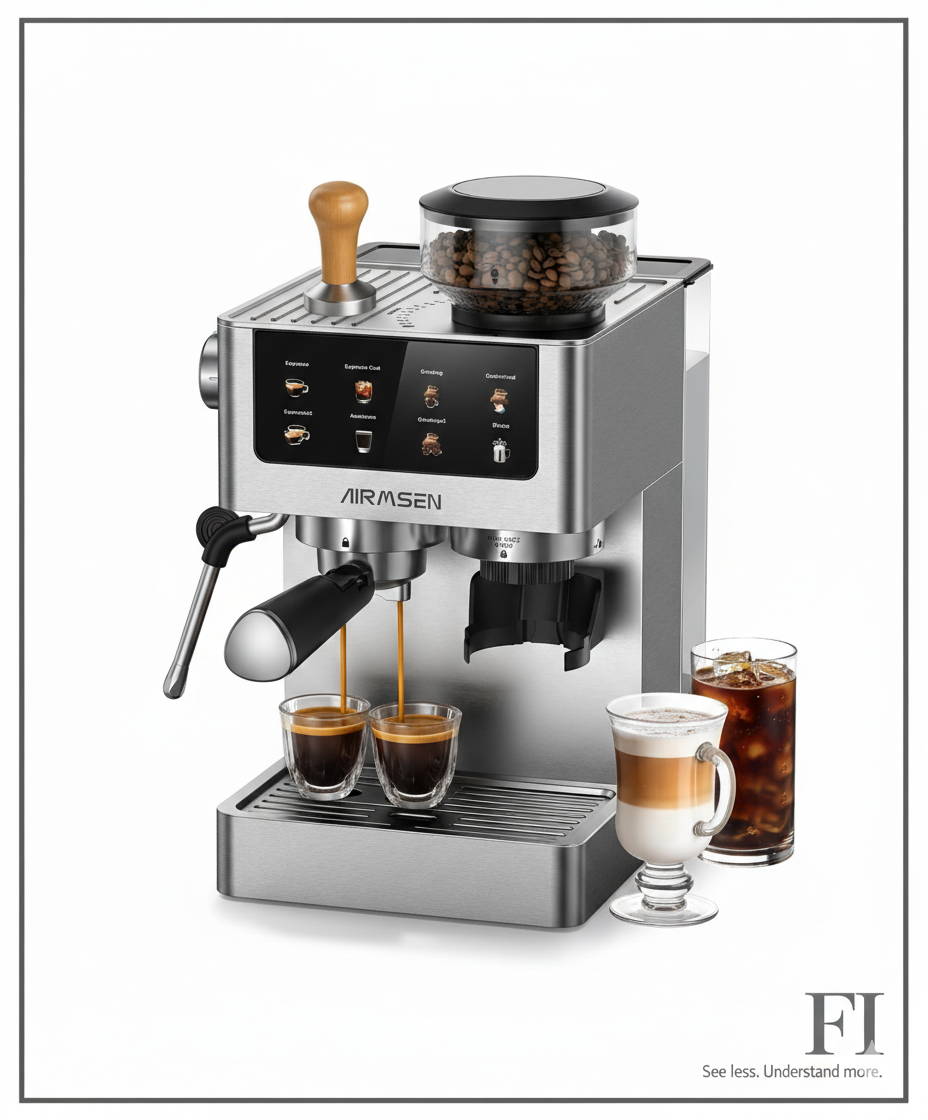
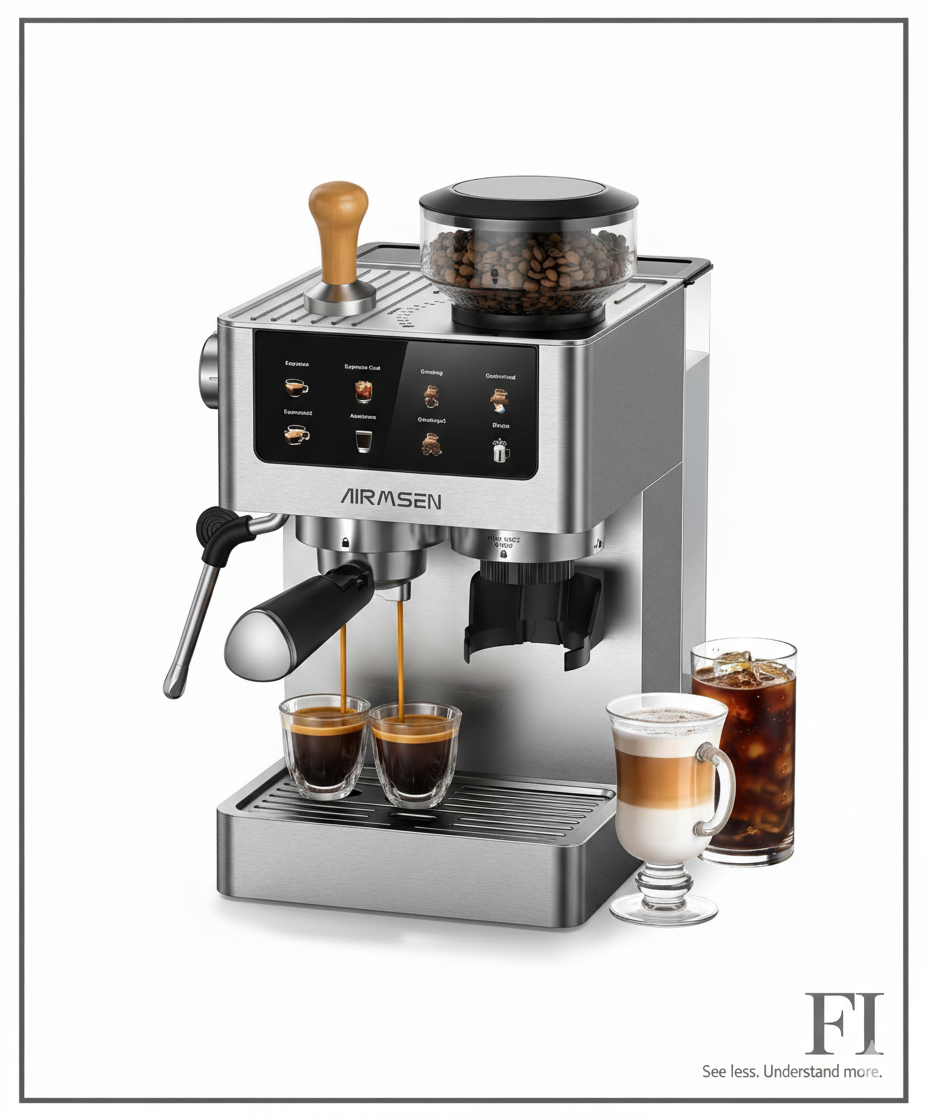
AIRMSEN Integrated Espresso System — Where Stability Is Won or Lost
DECISION ANALYSIS
The first morning I used this machine, I did not ask whether the coffee tasted good.
I asked something simpler.
Why did the process feel calmer?
Because espresso failure rarely announces itself loudly . It drifts.
And what I was looking for was not flavor. It was mechanical obedience.
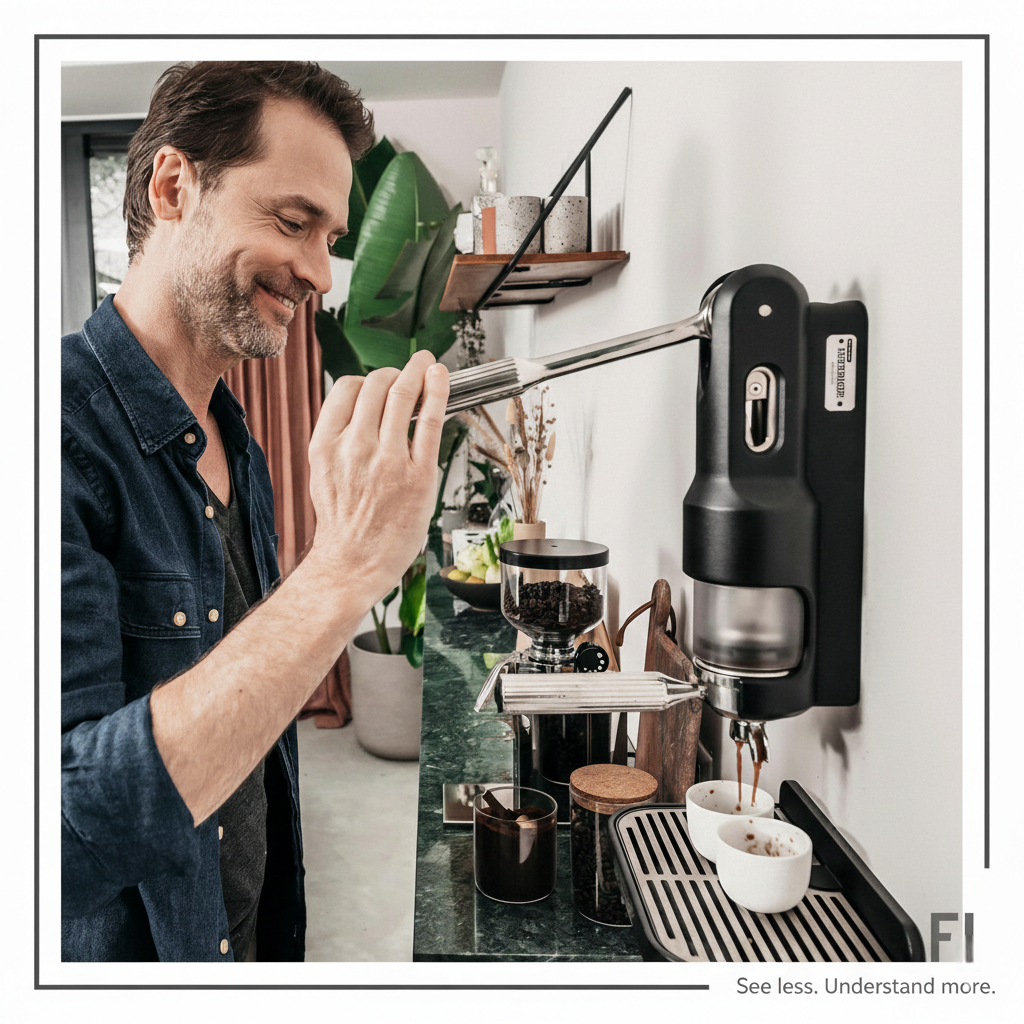
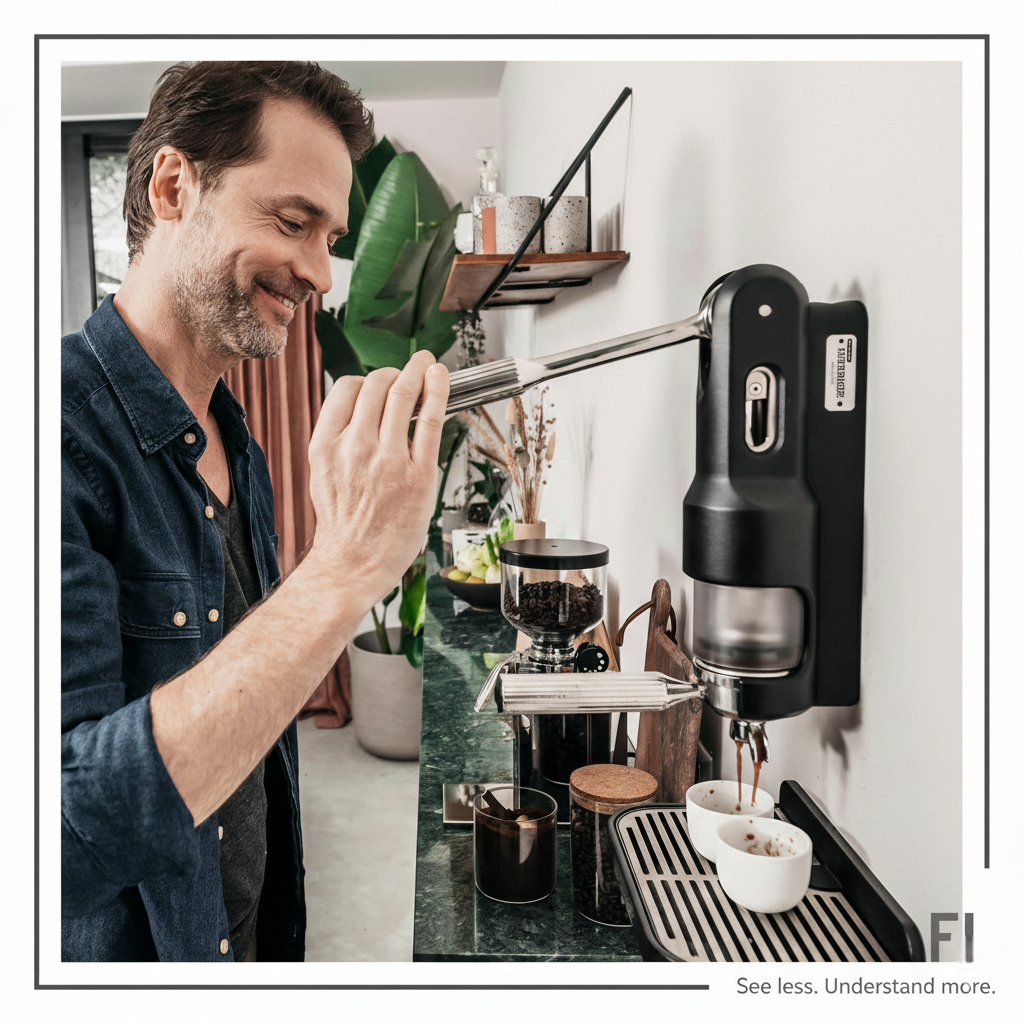
This system integrates grinding, extraction, and steaming into one body. That changes the behavioral equation immediately. Fewer devices. Fewer handoffs. Fewer opportunities for error.
But integration alone does not guarantee stability.
So I listened.
The Grinder — Where Variance Usually Begins
10-Level Burr Grinder
Mechanical Variable
- Stepped burr grinding
- I hear a steady mid-range motor tone without pitch fluctuation
- Grounds fall evenly instead of clumping into dense pockets
When the sound is stable, I do not adjust mid-routine.
That matters.
If grind distribution shifts:
- Water finds weak channels
- Extraction accelerates
- I start compensating emotionally instead of mechanically.
The stepped system is not micro-precision. The jumps between settings are noticeable. But in daily life, the stability of repetition outweighs the obsession with micro-calibration.
Why chase microscopic adjustments if consistency is what we are missing?
Pre-Infusion and Pressure — The Moment Truth Begins
20-Bar Pump With Pre-Infusion
Mechanical Variable
- Initial low-pressure saturation before full pressure
- First drops form slowly, centered, and darker
- Less visible channeling at the start of extraction
This is where I pay attention.
If the first drops spray or blond early:
- I know the puck is uneven
- I start doubting the grind
- I overcorrect next time.
But when the stream thickens gradually and narrows into a centered flow, something psychological happens.
We stop interfering.
And interference is one of the biggest sources of variance at home.
Touchscreen Workflow — Friction Reduction Is Underrated
Mechanical Variable
- Programmed shot behavior
- Identical response every morning
- Reduced decision fatigue
Why does that matter?
Because mornings are not laboratories.
If the interface behaves predictably:
- We repeat identical motions
- Routine forms
- Stability improves without effort.
This machine reduces friction, not by intelligence, but by repetition.
That is a subtle strength.
Steam Wand — The Honest Trade-Off
Manual Steam Control
Mechanical Variable
- Direct steam release
- Audible steady hiss and gradual pitcher warming
- Texture depends on hand stability and timing
The first week, milk expanded too quickly.
Too much air. Too loud.
I adjusted position. Lowered the tip slightly. Waited for that soft paper-tearing sound.
Once the sound stabilized:
- Texture stabilized
- My hands stopped rushing.
This is not automatic milk.
It is learned milk.
And that is the trade-off.
Skill variance remains a factor here. The system does not eliminate it. It exposes it.
Constraint Mapping — Where Drift Can Still Enter
Mechanical Constraints
- Stepped grinder adjustments
- Fine calibration requires dose awareness
Environmental Constraints
- Integrated body requires counter commitment
- Less modular rearrangement
User Skill Constraints
- Manual steaming demands sensory learning
- Inconsistent microfoam in early use
Maintenance Constraints
- Grinder retention over time
- Residue alters flow if neglected
Financial Constraints
- Integrated design reduces separate grinder cost
- Limits future modular upgrades
None of these are dramatic failures.
But they define the long-term behavior curve.
Why ignore constraints and then blame the machine?
Worst-Case Simulation — Six Months Later
Let us imagine reality.
Busy mornings. Irregular cleaning. Occasional grind changes.
Grinder not cleaned:
- Retained fines accumulate
- Flow slows subtly
- I grind coarser to compensate
- Extraction thins
- Flavor flattens
Steam tip not wiped consistently:
- Pressure becomes unstable
- Milk texture inflates unevenly
- I think the beans changed.
Nothing breaks.
It drifts.
Drift is more dangerous than failure because it hides inside habit.
But with consistent cleaning and fixed grind discipline:
Retention controlled:
- Flow stabilizes
- Shot timing becomes predictable
- Daily adjustment disappears
The machine rewards routine.
Sensory Signals That Tell the Truth
Stable System Feels Like:
- Grinder tone consistent
- Extraction thickens gradually
- Cup warmth steady
- Steam sound controlled and smooth
Unstable System Feels Like:
- Grinding pitch fluctuates
- First drops spit or blond early
- Steam sputters sharply
- Milk expands too aggressively
The machine communicates.
The question is whether we listen.
Structural Self-Filtration Frame
Structurally Fits If:
- We want integration over modular experimentation
- We value repeatable workflow over micro-adjustment obsession
- We accept manual milk learning
- We prioritize daily stability over technical perfection
Structurally Misaligned If:
- We demand infinite grind micro-control
- We frequently rotate beans requiring delicate recalibration
- We want automated milk texturing
- We plan long-term component upgrades
This is not about excitement.
It is about alignment.
Final Structural Resolution
So why does this system feel calmer in daily use?
Because it reduces fragmentation.
Grinding, extraction, and steaming occur within one behavioral loop. Fewer transitions. Fewer corrections. Fewer emotional reactions.
Does it eliminate variance entirely?
No machine does.
But it compresses it.
للاطلاع على المواصفات الكاملة وتوافر المنتج حاليًا، تفضل بزيارة صفحة المنتج الرسمية من هنا → 🔗
للاطلاع على مدى توفر المنتج والمواصفات المحدثة في منطقتك عبر أمازون، يمكنك المتابعة من هنا.
One integrated workflow.
One stability model.
And one decision based on alignment, not hype.
One Comment