When a Large Air Purifier Stops Looking Powerful on Paper and Starts Stabilizing the Room
ANALYSIS FRAMEWORK
The first thing I realized while working through this category was that the biggest number on the box is usually the least useful one. “Cleans 3,975 square feet in an hour” sounds huge, but that is not the number that tells me whether a purifier will make my living room feel steadily cleaner by week three.
The number that matters is the one tied to repeated air exchanges, usable noise, and whether I can leave the machine running long enough to keep the room from slipping backward.
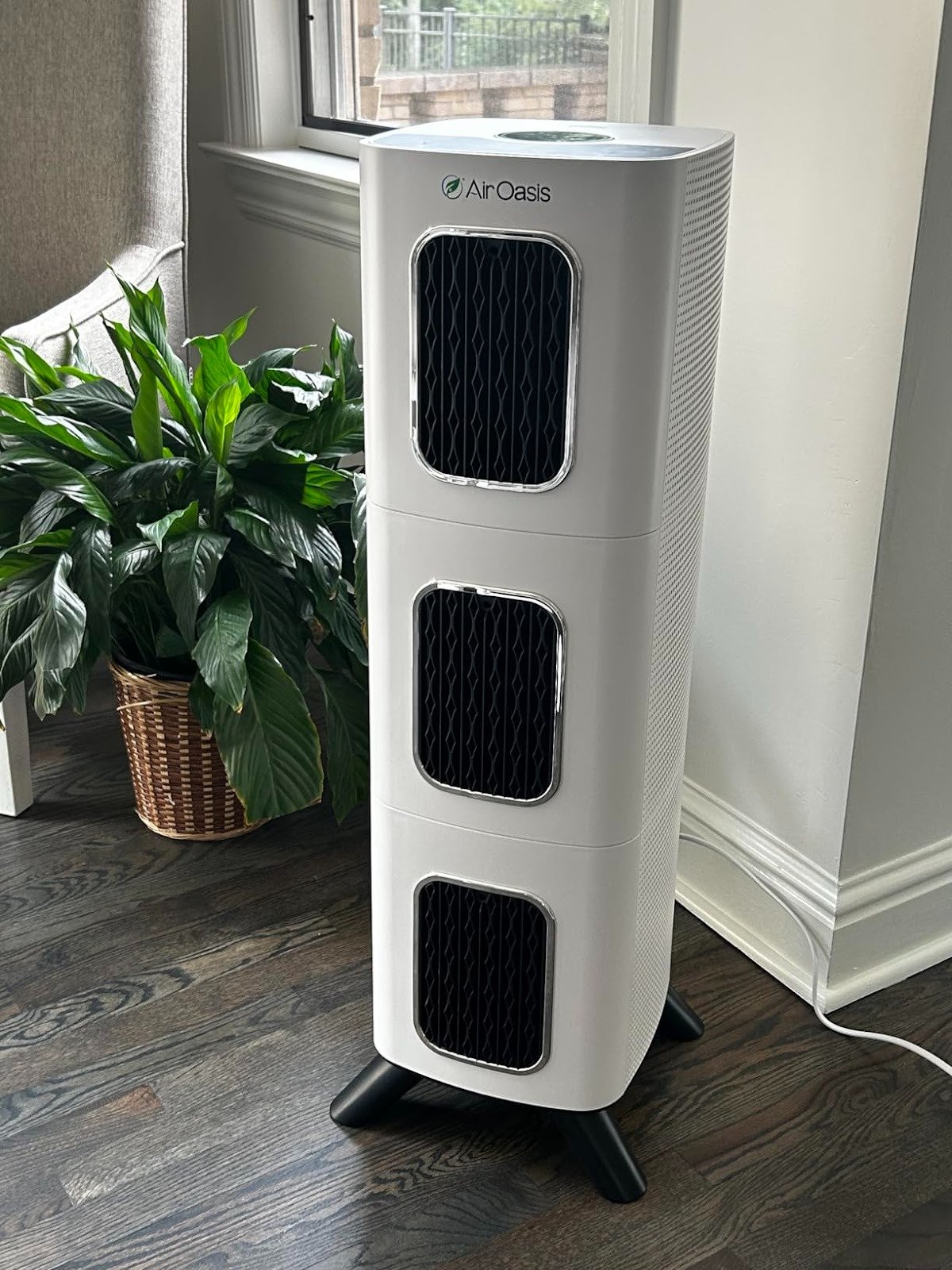
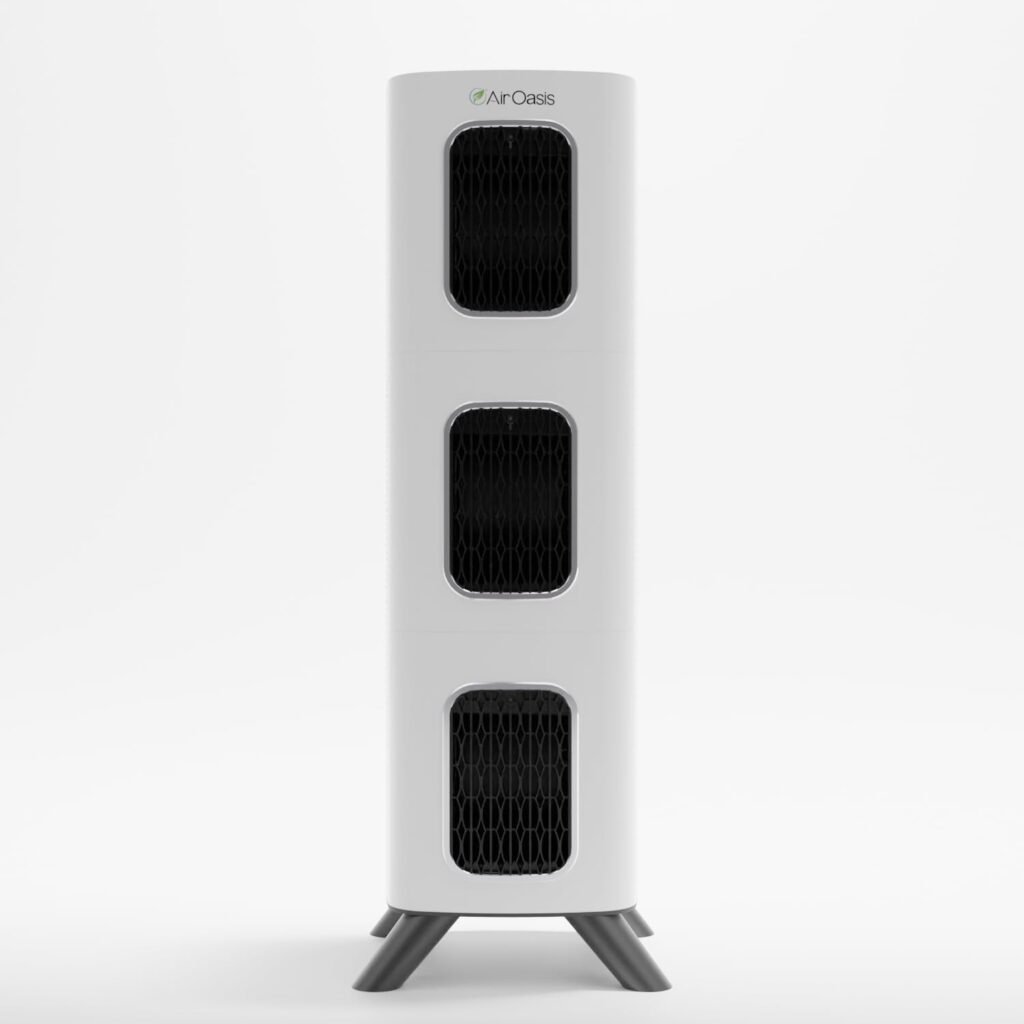
Air Oasis itself lists the iAdaptAir 2.0 Large at 530 CFM, 795 square feet at five air changes per hour, 25 to 53 dB, a 440 g carbon stage, auto mode, app control, and up to two years between filter changes; AHAM’s sizing guidance also makes the same basic point from a different direction: CADR has to match the room, not just impress on a spec card.
The Threshold I Actually Care About
For a large-room purifier, my threshold is simple: it has to be strong enough to clean the room without forcing me into an exhausting routine around it.
That means four things at once. First, the airflow has to be real.
Second, the quieter settings have to be good enough that I will actually leave it on.
Third, the maintenance cycle cannot become its own form of household friction.
Fourth, the “extra” technologies cannot be the whole reason the product exists, because the moment I become hesitant about those extras, the purifier’s value collapses.
EPA guidance is a useful reality check here: ionizers can charge particles so they land on nearby surfaces, and EPA notes they can be less effective than high-efficiency particle filters for removing dust, smoke, pollen, or fungal spores.
CARB certification matters, but CARB itself is explicit that certification is about ozone-emission limits, not proof of pollutant-removal effectiveness or a blanket safety endorsement.
Why the iAdaptAir 2.0 Large Is Interesting
What caught my attention with the iAdaptAir 2.0 Large is that it does cross the first technical threshold on paper in a way many “premium” purifiers do not.
The useful coverage number is not the one-hour headline but the five-air-changes figure: 795 square feet. That is the number that makes it feel like a living-room machine rather than a dressed-up bedroom model.
Air Oasis also publishes unusually detailed operating data for this size: CADR 530 CFM, low/medium/high/max airflow steps, low noise at 25 dB, max at 53 dB, H13 HEPA, 440 g activated carbon, UV-C LEDs, bipolar ionization, an air-quality sensor, and a removable Wi-Fi chip.
On paper, that is a very serious combination of airflow, automation, and convenience.
Where the Real Separation Happens
The real separation in this category is not “basic purifier” versus “smart purifier.”
It is “machine I can live with every day” versus “machine I admire for two days and then run less than I should.”
RTINGS’ large-room benchmarks keep returning to the same tension in competing models: the Levoit Core 600S has excellent filtration and a measured PM1 CADR of 363 CFM, but it reaches 61.2 dBA on high; the NuWave OxyPure has excellent clean-air delivery and lower ownership costs thanks to washable filters, but it also asks for more regular filter cleaning; the Winix 5500-2 is praised for quiet operation and good automatic adjustment, but RTINGS says it is not the right standalone answer for very large open spaces;
Wirecutter’s long-running mainstream favorite remains the Coway AP-1512HH Mighty, a strong, durable, more affordable pick, but it is fundamentally a medium-room reference point rather than a true high-airflow large-room anchor.
The Hidden Variable Most People Miss
The hidden variable is not power. It is habit survival.
A purifier only stabilizes a room when I still like owning it after the novelty wears off.
That is where the iAdaptAir’s profile gets more interesting and more complicated.
The company’s own replacement guidance ranges from 6 to 24 months depending on usage and environment, which is much more honest than pretending every home will get the same filter life.
At the same time, owner and community reactions split in a revealing way: positive summaries repeatedly mention quieter operation, smart controls, easier breathing, and solid build quality, while skeptical buyers keep circling the same hesitation point—price, plus distrust of ionization-heavy marketing.
That split tells me the threshold here is not raw airflow alone; it is whether I see the product primarily as a strong HEPA-and-carbon purifier with optional extras, or as an expensive bundle whose value depends on believing in every extra layer equally.
My Working Read on the Threshold
After going through the specs, the category tests, the standards, and the user reactions, my read is that the threshold for a purifier like this is crossed when three conditions are true at the same time:
| Threshold Condition | What I Look For | Why It Matters |
|---|---|---|
| Room-size honesty | ~795 sq. ft. at 5 ACH, not the one-hour headline | Prevents inflated expectations |
| Routine survivability | Quiet enough on lower settings, auto mode, sensor, manageable filter cycle | Determines whether the unit stays on |
| Trust without hype | Strong HEPA + carbon value even if I treat ionization/UV as secondary | Keeps the decision stable over time |
Those are exactly the conditions that make me take the iAdaptAir 2.0 Large more seriously than a generic “big room” purifier, while still stopping short of calling it the obvious universal answer.
The strongest part of its case is airflow plus daily-life usability.
The weakest part of its case is that its premium story leans into electronic purification layers that a meaningful slice of informed buyers still treats cautiously.
Where I’d Send the Reader Next
If I were narrowing this category down calmly, I would not move from this article to a giant roundup or a noisy comparison hub.
I would move to one precise question: does the Air Oasis iAdaptAir 2.0 Large cross the large-room stability threshold for the kind of room, routine, and risk tolerance I actually have?
Transparency Note:
This analysis is not based on quick personal impressions.
It is derived from documented system behavior, verified user patterns, and the physical constraints of storage capacity.
The goal is to translate complex technical behavior into a realistic performance model that helps you make a clear decision