SONOFF MINIR4 REVIEW: THE WIRE MOST BUYERS NEVER CHECK BEFORE THEY ORDER
Sonoff MINIR4 Installation Problems: The Result Looks Fine, The Problem Isn’t
You order ten of them. Ten little white modules that promise to turn ten dumb toggle switches into a real smart home in an afternoon. The math looks clean on paper: one box per switch, one app, done by dinner.
Then you get to switch number six — the hallway one, or the one some electrician wired back in the ’90s — and there’s no neutral wire waiting behind the plate. The switch doesn’t power on. It doesn’t blink. It doesn’t pair. It just sits there, dead, in a box that already cost you money.
I went through the installer forums, the Home Assistant threads, and the complaint patterns on this one, and that’s the story behind most of the frustration — not a defective unit. The Sonoff MINIR4, sold under the name “Mini Extreme,” is genuinely one of the more dependable small relays at this price point. Installers who’ve put in dozens report boring, stable, uneventful operation, which is exactly what you want from something buried inside a wall. The real failure point isn’t the hardware. It’s buyers not knowing, before they clicked “buy,” which of their switches even qualify.
Sonoff MINIR4 Setup Frustration: What You’re Actually Feeling but Not Naming
If a smart switch has burned you before, you probably blame the WiFi, or the app, or “smart home stuff is just finicky.” Fair — but that’s not the first wall most people hit. The first wall is wiring, and it’s invisible until you’re standing there with a screwdriver.
Named plainly, this is what’s actually going on:
- The switch needs constant low-voltage power to stay online, even while the light is off — and only a neutral wire supplies that.
- eWeLink, the app that runs it, is genuinely capable but not built for someone in a hurry; setup friction shows up again and again in its own user reviews, not as a rare complaint.
- There are at least three Sonoff “Mini Extreme”-style modules that look nearly identical in photos and behave completely differently once wired in.
None of that shows up in a five-star product photo. All of it shows up in the fifteen minutes after you open the box.
Sonoff MINIR4 ESP32 Chip: The Hidden Mechanism Behind the Miss
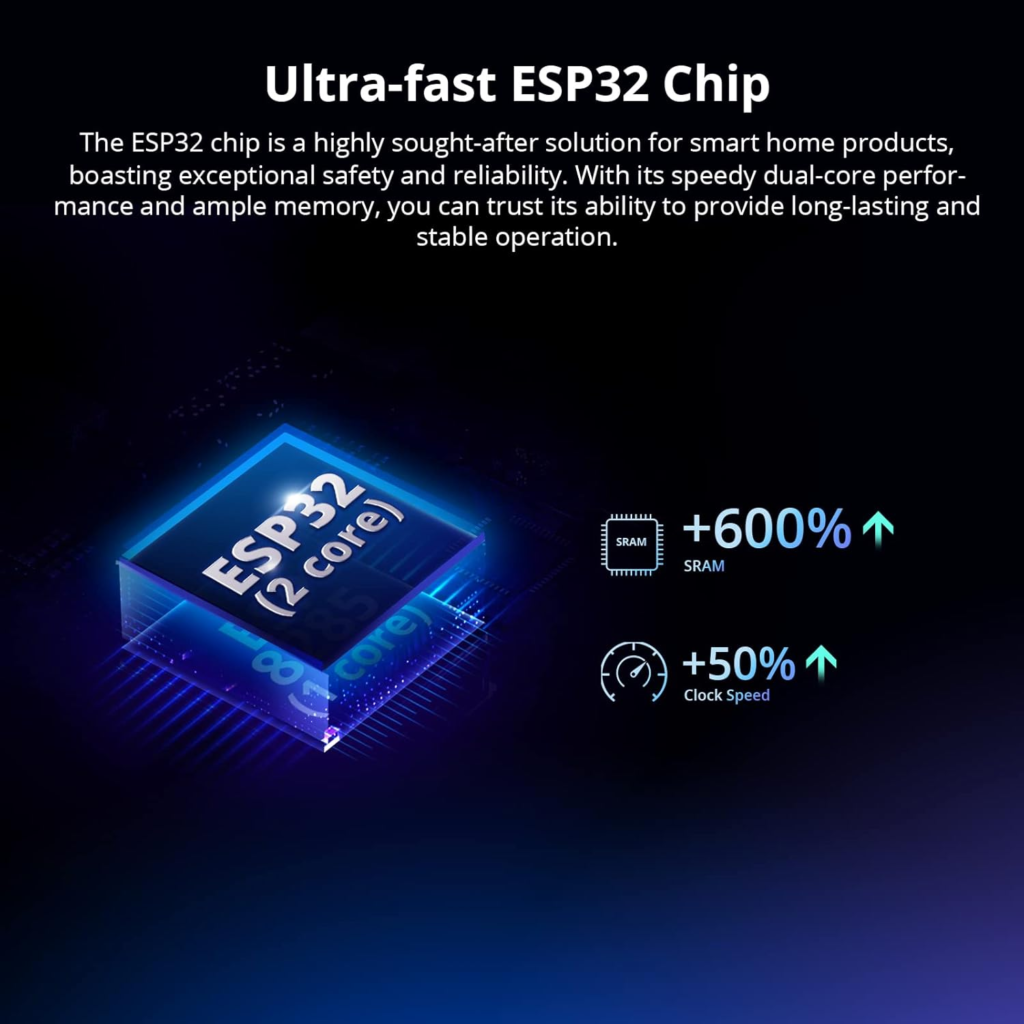
Open the case and there isn’t much to see — a small board, a relay, and an ESP32 chip doing the thinking. That chip is the real upgrade over the older Mini R2: a proper dual-core processor with Bluetooth for pairing, and enough headroom to keep the connection steady, which is why independent testers clock its response time at under half a second between tapping the app and the light actually switching.
Why does something this small need a live wire, a neutral wire, and a wire to the bulb, when the old mechanical switch it’s replacing only ever touched one wire? Because the old switch was dumb — it just made or broke a connection and needed no power of its own. This one is a tiny computer that has to stay awake and listening at 2 a.m. as reliably as at 2 p.m. That constant wakefulness needs a constant power source, and neutral is where it comes from. It isn’t a design flaw. It’s the actual price of “smart.”
| Spec | Sonoff MINIR4 (Mini Extreme) |
|---|---|
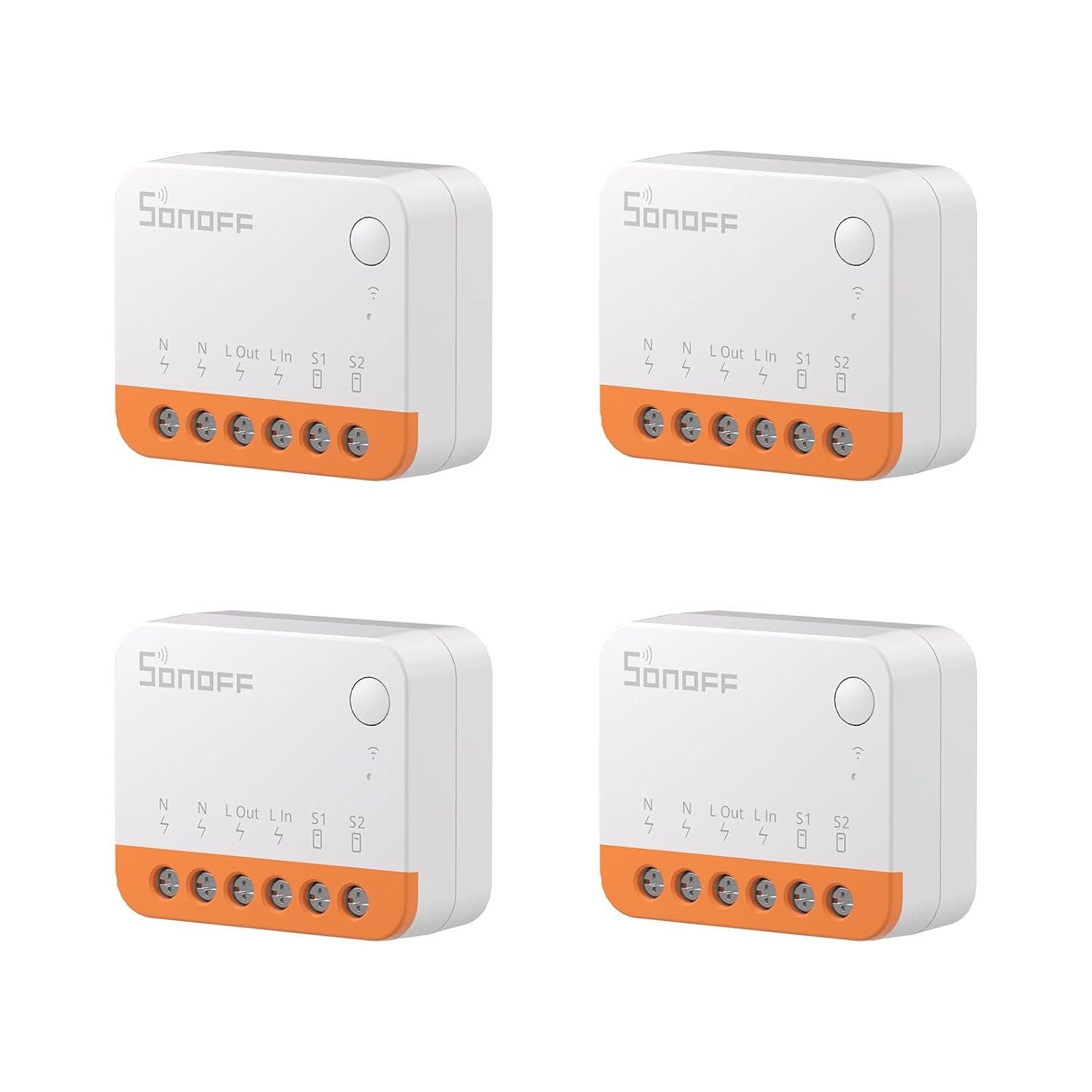
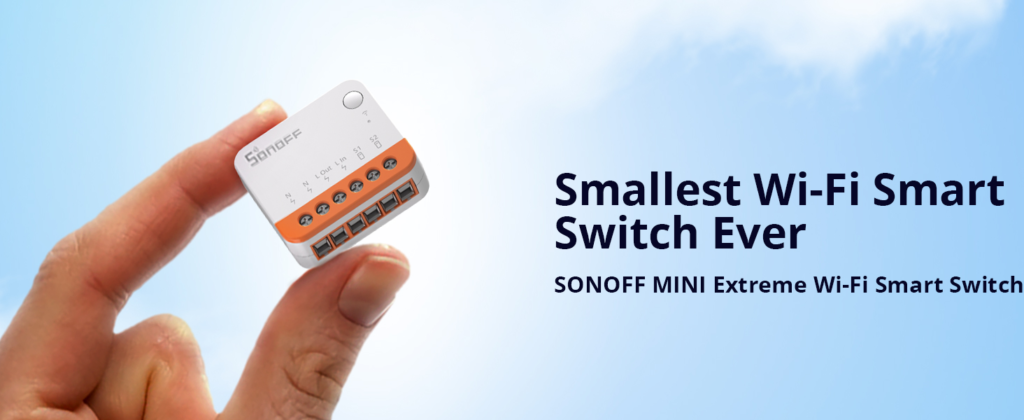
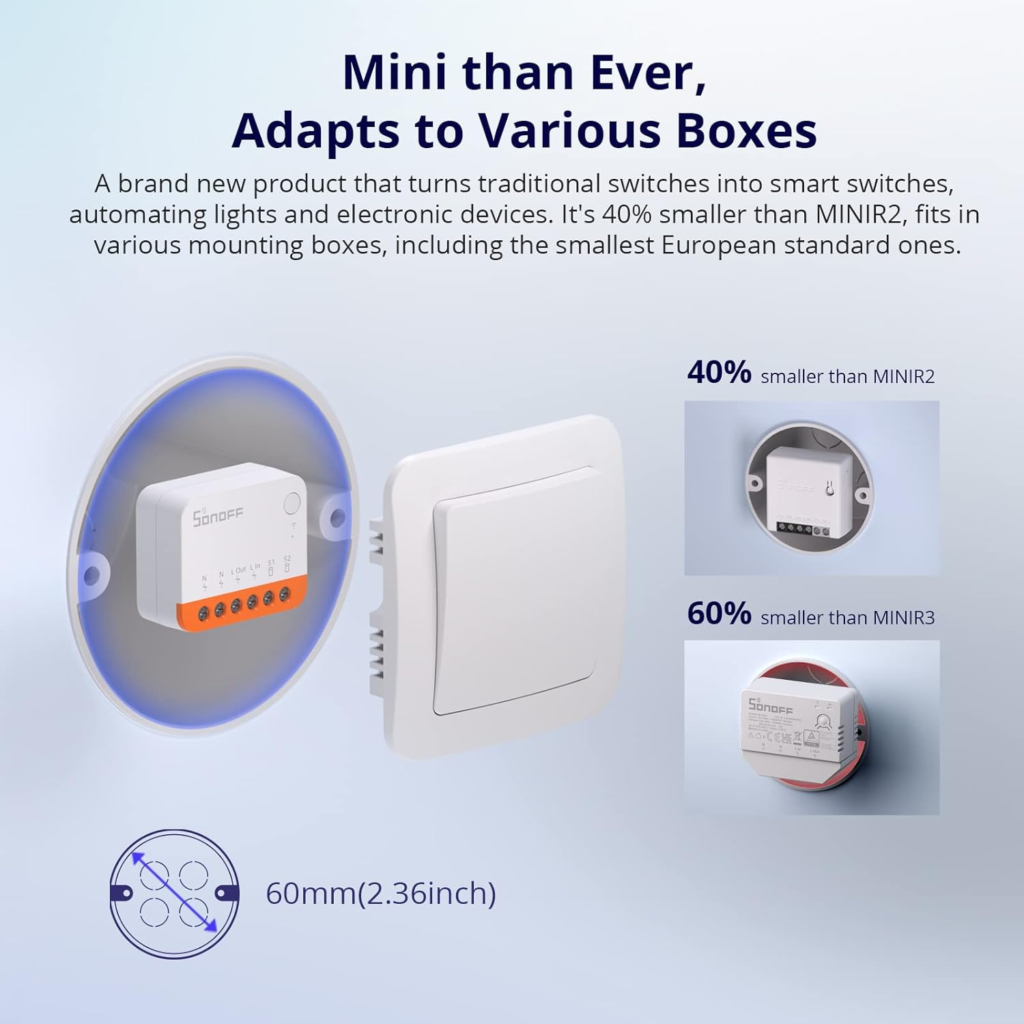
| Size | ~40 × 33 × 17 mm — fits the smallest EU 86-type and standard US boxes |
| Processor | ESP32 dual-core, Bluetooth for setup |
| Wireless | 2.4GHz WiFi only — no 5GHz |
| Wiring required | Line, Neutral, and Load — neutral is mandatory |
| Max load | 10A resistive (~2,400W at 240V); not rated for motors near that ceiling |
| Control app | eWeLink (iOS, Android, web) |
| Voice control | Amazon Alexa, Google Home |
| Hub required | No |
| Notable feature | Detach Relay mode; external switch input (momentary, SPDT, latching, dry-contact) |
| Certifications | TÜV, CE, FCC |
| Typical price | ~$9–13 per unit standalone; sold in 1-, 4-, and 10-packs |
Sonoff MINIR4 Neutral Wire Requirement: The Threshold Where the Outcome Quietly Breaks
Here’s the one line that outweighs every other spec: if there’s no neutral wire in your switch box, this switch will not work. Not “work less well” — it will not power on, no matter how strong your WiFi is.
That’s the threshold. Above it — neutral present — installation is close to plug-and-play. Below it, the right move isn’t a workaround, it’s a different product: Sonoff’s Zigbee cousin, the ZBMINIL2, built specifically for no-neutral boxes, at the cost of a lower 6–8A rating and a required hub.
A second, softer threshold lives inside the app itself: basic on/off keeps working over your local network even if the internet drops, but changing settings, schedules, or firmware still needs the eWeLink cloud. For most households this never matters. For anyone building a fully offline setup, it’s worth knowing before install day, not after.
Sonoff MINIR4 vs MINIR4M vs ZBMINIL2: Why Most Buyers Misread This Too Early
The mistake here isn’t carelessness — it’s speed. Three Sonoff modules share almost the same tiny shell and the word “Extreme,” and people grab whichever one search results push first.
The plain MINIR4 talks over WiFi through eWeLink, and its firmware can — carefully, unofficially, and with a soldering iron — be swapped for ESPHome or Tasmota. The MINIR4M looks nearly identical but runs a different chip, speaks Matter, and has its bootloader locked, so no custom firmware, ever. The ZBMINIL2 drops WiFi for Zigbee, needs a hub, but is the only one of the three that skips the neutral requirement entirely.
Comparing them on price alone is how a $10 switch turns into a returned box and a one-star review that was never really about the hardware.
| MINIR4 (this review) | MINIR4M | ZBMINIL2 | |
|---|---|---|---|
| Protocol | WiFi (eWeLink) | WiFi + Matter | Zigbee |
| Neutral wire needed | Yes | Yes | No |
| Hub required | No | Optional (Matter controller) | Yes |
| Custom firmware | Possible, unofficial | Locked | N/A |
| Max load | 10A | 10A | 6–8A |
| Best for | eWeLink users, whole-home retrofits | Apple Home / Matter households | Older wiring, no neutral |
Sonoff MINIR4 10-Pack Buyers: Who Is Actually Inside This Problem
The real buyer for a 10-pack isn’t someone dipping a toe into smart home gadgets with one switch. It’s someone with a list — seven switches, two outlets, one fan, a weekend to get through it. Landlords prepping a rental. Hosts who need every light controllable from one dashboard. Home Assistant users who already know they’ll flash half the units and leave the rest stock. People converting a house they actually live in, switch by switch, who checked for a neutral wire before ordering instead of after.
For that buyer, the multi-pack pricing isn’t a trick. It’s the cheaper, saner way to buy something you were always going to need ten of.
Sonoff MINIR4 Compatibility: Where Wrong-Fit Begins
This isn’t the right box for everyone, and it’s worth saying plainly who should close the tab:
- Anyone who hasn’t confirmed a neutral wire is present — check first, power off, five minutes, or ask an electrician the same question.
- Anyone who wants Matter, Apple Home, or a locked-down setup with zero soldering, ever — that’s the MINIR4M, not this one.
- Anyone running a motor, pump, or continuous load near the 10A ceiling.
- Anyone unwilling to either learn basic wiring or pay an electrician half an hour — this is a mains-voltage device, and the included manual is accurate but small print, easy to skim past.
None of this is a defect. It’s a mismatch that shows up after the sale instead of before it — and it’s the actual reason a small share of these end up back in a box with a return label.
| Good fit | Wrong fit |
|---|---|
| Confirmed neutral wire in the switch box | No neutral, and no interest in a Zigbee alternative |
| Converting 4–10+ switches at once | Testing one switch with no bigger plan |
| Comfortable with eWeLink, or ready to flash ESPHome/Tasmota | Wants Matter/Apple Home out of the box |
| Lighting, fans, small appliances under 10A | Motors, pumps, high-draw inductive loads |
| Willing to do, or hire, basic mains wiring | Uncomfortable with any electrical work |
Sonoff MINIR4 Review: The One Situation Where It Becomes the Logical Choice
Put all of that together and one situation falls out cleanly: you’ve confirmed neutral wires are present, you’re converting a real number of switches, you want the physical switches to keep working exactly as they do now, and you’re fine using eWeLink as your daily driver — with Home Assistant as an option later, not a requirement on day one.
That’s who this 10-pack was actually built for. Not “everyone with a smart home.” That one, specific, wiring-confirmed, multi-switch buyer.
Sonoff MINIR4 Pros and Cons: What It Solves, Reduces, and Still Leaves to You
| Solves | Reduces | Still on you |
|---|---|---|
| Converts existing switches to app and voice control without replacing the wall plate | Cost per switch, versus buying single units one at a time | Confirming the neutral wire before install, not after |
| Keeps the physical switch working normally alongside the app | The clutter of ten separate purchase decisions | Setting up a guest/IoT WiFi network for privacy and stability |
| Detach Relay mode keeps smart bulbs powered even when the wall switch is off | Guesswork on load rating — 10A covers most lighting and small appliances | Reading the wiring diagram carefully; S1/S2 miswiring is a known, avoidable mistake |
| Deciding if and when to flash custom firmware, and accepting the small risk that comes with opening the case |
Sonoff MINIR4 FAQ: Answers Before You Buy
| Question | Answer |
|---|---|
| Does the Sonoff MINIR4 need a neutral wire? | Yes, always. It’s the single biggest reason installs fail. No neutral in the box means look at the ZBMINIL2 instead. |
| What’s the difference between MINIR4 and MINIR4M? | The MINIR4 runs on WiFi through eWeLink and can be flashed with third-party firmware. The MINIR4M adds Matter, uses a different chip, and locks its firmware. They look alike but aren’t interchangeable. |
| Can I use it without the eWeLink cloud? | Basic on/off keeps working over your local network if the internet drops. Settings, schedules, and firmware updates still need the cloud, unless you flash ESPHome or Tasmota yourself. |
| Will it work with a dual-band router? | Only on 2.4GHz. If your router broadcasts one combined network name, you may need to split the bands for setup. |
| Can it control a ceiling fan or motor? | It’s rated for 10A resistive load — fine for lights, most fans, and small appliances. Don’t push it near that ceiling with motors or other inductive loads. |
| Do I need an electrician to install it? | If you can confidently identify line, neutral, and load wires with the power off, most people manage it themselves. If you’re not sure, this is mains voltage — hire someone rather than guess. |
| Does it work with Alexa and Google Home? | Yes, both, through the eWeLink skill, alongside the physical switch and the app. |
Sonoff MINIR4 Review: Final Verdict
Ten switches, one wiring check, one decision. If you already know your boxes have a neutral wire and you’re converting more than one or two switches, the math on this 10-pack works out clean — lower cost per unit, one app, physical switches that still feel completely normal to everyone else in the house.
If you haven’t checked for a neutral wire yet, that’s the only step left before ordering. Not the reviews, not the price, not the box color.
Transparency Note:
This analysis is built on aggregated real-world experience. It extracts what repeatedly holds, what breaks, and what users uncover only after living with the system—then shapes it into a clear model you can use immediately. Think of it as structured experience, refined and presented so you don’t have to learn it the hard way.
“A quick note: Don’t believe the star ratings, but trust personal experience. This article is a compilation of collected experiences.”