Why Dry-Air Control Starts Failing Before Most Homes Notice It
ANALYSIS FRAMEWORK
The pattern that stood out to me was not dramatic at first. It was quiet. A house still felt heated, still looked normal, and still seemed mechanically fine.
But the air kept getting thinner in the ways people actually feel at night: tighter throat, rougher skin, more static, more fragile sleep, and a strange sense that the home was warm but never fully comfortable. That was the threshold I kept coming back to.
Dry-air problems usually do not announce themselves as a failure of heat. They show up as a failure of moisture stability over time.
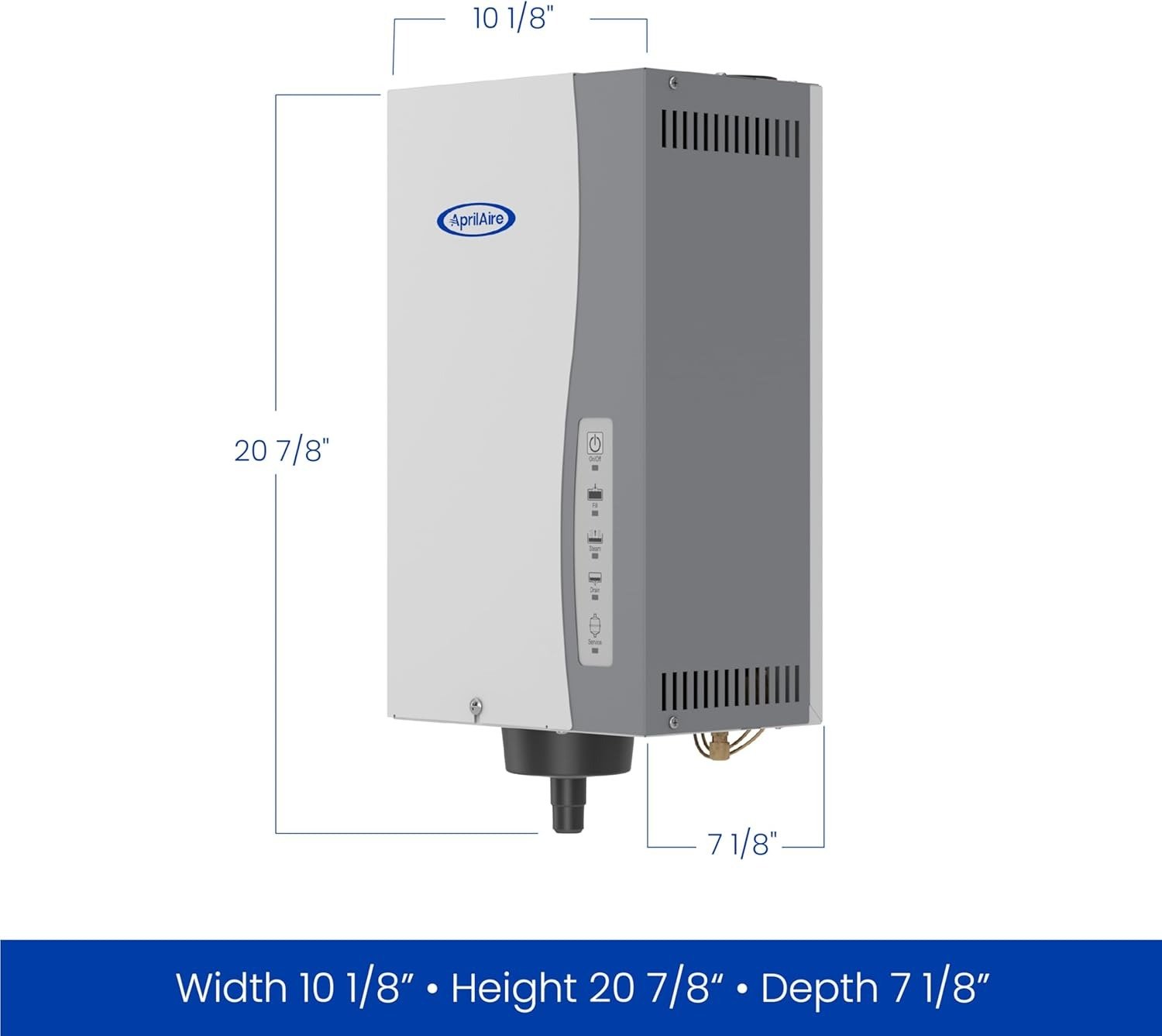
AprilAire positions whole-home humidity around the 40% to 60% range, and the Model 800 is specifically aimed at large homes, short furnace run times, and homes with humidity-sensitive materials such as wood floors and furnishings.
The Real Problem Usually Starts When Run Time Stops Matching Moisture Demand
The more I studied this category, the clearer the mechanism became.
Many standard humidification setups depend heavily on furnace run time. That works acceptably until the house crosses a threshold: tighter construction, larger square footage, milder but dry winter days, or HVAC cycles that are too short to carry enough moisture into the living space.
That is exactly why steam units sit in a different class. The AprilAire 800 is built to generate steam directly in an internal canister and send it through a dispersion tube, rather than waiting for favorable furnace conditions to do most of the work.
It can also call the blower to help maintain humidity even when the HVAC system is otherwise idle.
Dryness Becomes a Time Problem Before It Becomes a Comfort Complaint
What I found psychologically interesting is how people normalize dry air for too long. They adapt to it.
They buy lip balm, use lotion, wake up thirsty, blame the weather, and keep moving.
But behavior over time leaves a trail. The house feels worse in the morning than it does in the afternoon.
Wood starts sounding sharper underfoot. Static becomes routine.
Humidity-sensitive rooms drift first, and then the entire home begins to feel inconsistent.
That “inconsistency” is the hidden variable. It is not just low humidity. It is low humidity that keeps drifting below the comfort line faster than the house can recover.
AprilAire’s own positioning for the 800 emphasizes special humidity requirements, large floor plans, and short furnace run times, which tells you exactly where ordinary approaches begin to lose control.
The Threshold Is Not “Do I Need Humidity?” It Is “Can My Current Method Keep Up Reliably?”
That was the cleaner way to frame it for me.
The real threshold is not whether a home gets dry in winter. Many do.
The real threshold is whether the current humidification method can keep up without turning the whole season into a maintenance ritual or a string of partial fixes.
Steam systems gain their authority here because they are less dependent on ideal furnace timing and more capable of delivering measurable output.
The AprilAire 800 is rated for up to 34.6 gallons per day depending on voltage and setup, with coverage claims reaching up to 10,300 square feet in tightly built homes.
That is not a casual-room humidifier number. That is a “the house itself is the load” number.
Where the Hidden Split Starts Showing Up
This is the split I would trust.
| Compatibility Split | What I would expect |
|---|---|
| Smaller home, ordinary furnace run time, mild dryness | A simpler bypass or fan-powered unit may still feel sufficient |
| Large home, tight envelope, short heating cycles, sensitive wood interiors | Moisture demand starts outrunning simpler systems |
| Heat-pump or mixed-runtime environment where humidity needs persist without long heat calls | Steam begins to make more mechanical sense |
That split matches what AprilAire itself says about the Model 800 being suitable for ducted systems with or without forced-air heat, and it also matches the kind of owner discussions where people move toward steam because portable or lighter whole-home options stop feeling stable enough.
The Detail Most People Miss Is That Water Behavior Becomes Part of Performance
One thing I would never flatten in this category is water chemistry.
The AprilAire 800 uses electrode technology, which means water conductivity is part of how the system makes steam.
It is designed for a broad conductivity range, but the trade-off is real: hard water can give more consistent output with less frequent draining, yet it can shorten canister life due to mineral coating; softened water can extend canister life in some cases, but may drain more often and reduce efficiency and consistency.
That is not marketing language. That is operating behavior.
It also explains why some homeowners report seasons of excellent performance followed by frustration when canister behavior changes sooner than expected.
What Convinced Me This Is a Threshold Category, Not a Luxury Category
The strongest pattern I found was that once a home crosses the moisture-demand threshold, people stop talking about humidification as a nice extra.
They start talking about it as relief, preservation, and stability.
They notice fewer portable units to refill, less constant cleaning, and more predictable winter comfort.
But they also start accepting that stronger output comes with stronger requirements: dedicated electrical service, installation discipline, annual canister replacement, and a system that makes more sense when the house truly needs it.
That is why I do not see steam humidification as a universal upgrade.
I see it as what becomes relevant once ordinary humidity control stops holding the line.
Transparency Note:
This analysis is not based on quick personal impressions.
It is derived from documented system behavior, verified user patterns, and the physical constraints of storage capacity.
The goal is to translate complex technical behavior into a realistic performance model that helps you make a clear decision