iRobot Braava 380t Review: The Floor Looks Clean. That’s the Problem.
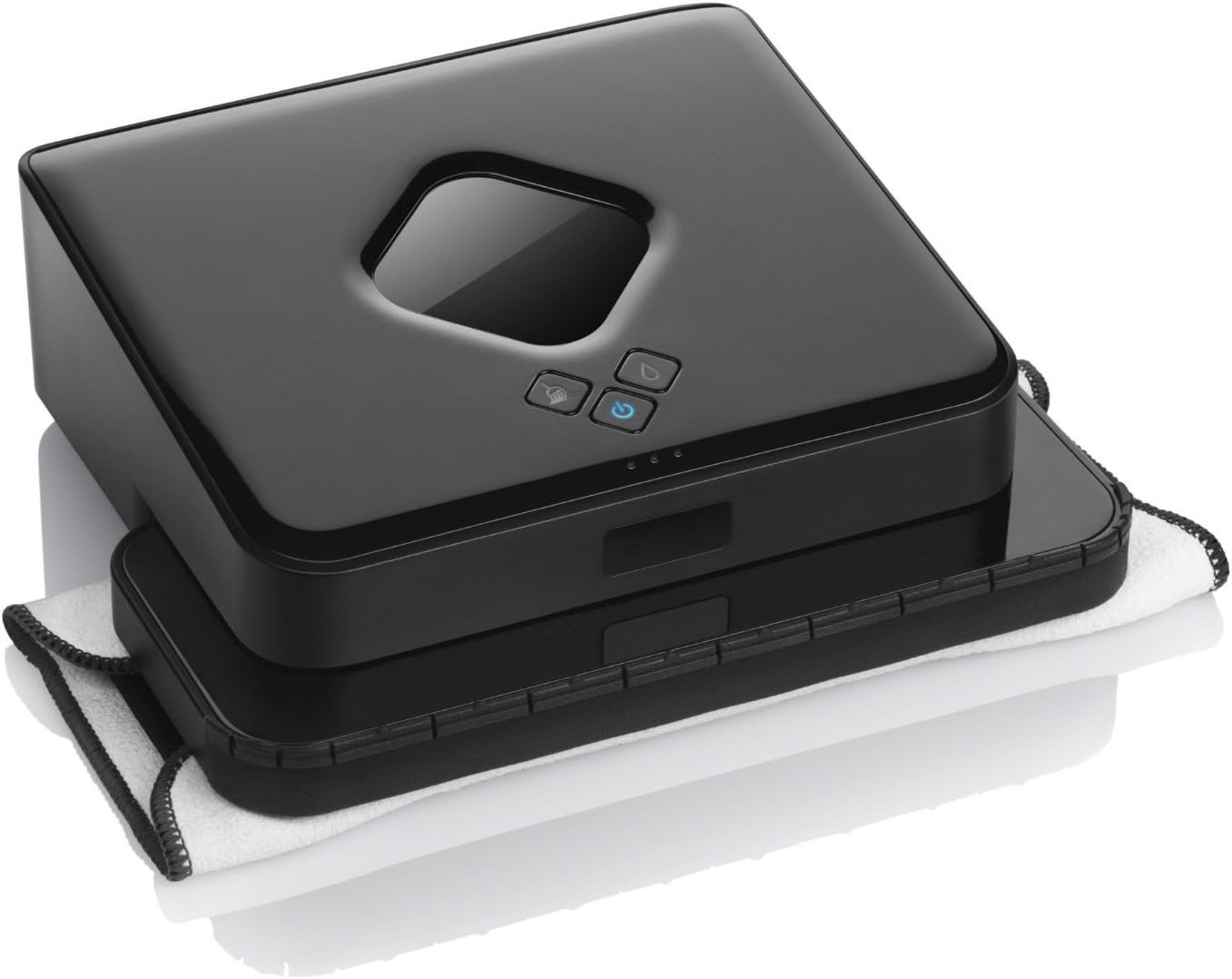
iRobot BRAAVA 380T
Run a bare hand across a floor you swept an hour ago, and it still feels faintly gritty. That small, nagging feeling is usually what sends someone looking for the iRobot Braava 380t in the first place. Not because the floor looks dirty. Because it never quite feels finished.
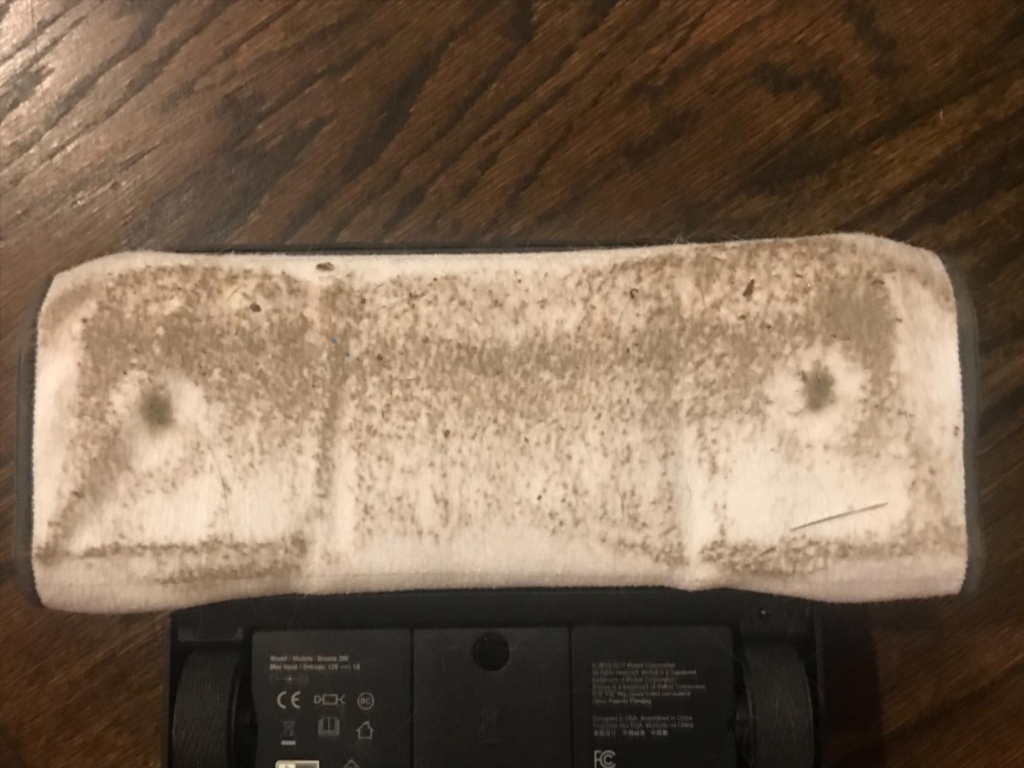
Flip the microfiber pad over after a Braava 380t run across a floor you’d have sworn was already clean, and you’ll usually find a gray smear of dust, hair, and grit you didn’t know was there. That’s not a gimmick. It’s just how much a quick sweep misses at floor level, where dust settles into wood grain, tile grout, and the two inches under the cabinet toe-kick a broom never quite reaches.
The Braava 380t is built to close that specific gap. Not to deep-clean. Not to replace scrubbing. To catch the layer of everyday dust and light grime that keeps a “clean” floor from actually feeling clean underfoot.
Here’s what you’re working with, before anything else:
| Spec | iRobot Braava 380t |
|---|---|
| Cleaning type | Dry sweep + wet mop (no suction) |
| Navigation | iAdapt 2.0 + NorthStar Navigation Cube |
| Modes | Sweep (dry), Mop (wet) — selected manually |
| Battery | NiMH, up to 210 min sweep / 150 min mop |
| Coverage per charge | Up to 1,000 sq ft sweep / 350 sq ft mop |
| Height | 3.1 in — fits under most furniture |
| Pads | Reusable microfiber or disposable |
| App / WiFi | None |
| Auto-recharge | No — manual docking |
| Carpets and rugs | Detected and avoided automatically |
| Warranty | 1 year (robot + battery), 30-day Amazon return |
| First released | 2013 — still sold directly by iRobot today |
That table is the honest version of the spec sheet. The rest of this review is about what those numbers mean once the robot is actually running on your floor.
Sticky Floors and Dull Grout: What You’re Actually Feeling but Not Naming
There’s a specific kind of tired that comes from mopping a floor that was “already clean.” You didn’t need to. You just felt like you should, because the light hitting the tile made it look duller than it should, or because you noticed a faint tackiness near the stove that a paper towel wiped away in one pass.
That’s not dirt in the traditional sense. It’s what accumulates in the days between real cleans: dust that resettles every time a window opens, cooking residue, the fine grit tracked in on socks. None of it registers as “dirty” until you’re standing in it. Owners of the Braava 380t describe this almost identically, whether they’re praising it or criticizing it: floors that “always look clean now,” alongside the same owners admitting it “won’t do well on a filthy floor.”
Both things are true at once, and that’s the whole story of this machine. There’s a line — we’d call it the maintenance threshold — below which the Braava 380t is quietly excellent, and above which no robot mop, this one included, is going to save you. Muddy paw prints tracked in from the yard, for instance, show up repeatedly in owner reviews as marks the Braava genuinely couldn’t fully lift, no matter how many passes it made.
Knowing which side of that line your floor sits on before you buy is the single biggest factor in whether you end up loving this robot or feeling let down by it.
NorthStar Navigation Cube: The Hidden Mechanism Behind the Miss
There’s a specific kind of tired that comes from mopping a floor that was “already clean.” You didn’t need to. You just felt like you should, because the light hitting the tile made it look duller than it should, or because you noticed a faint tackiness near the stove that a paper towel wiped away in one pass.
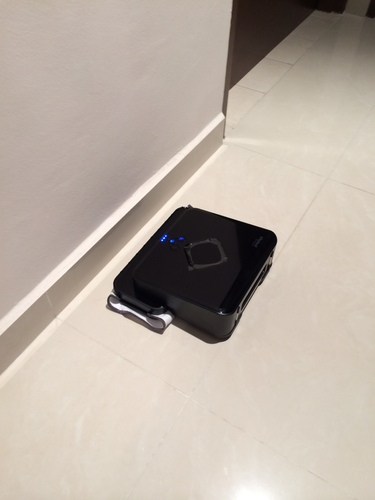
Instead, it relies on a small plastic cube called the NorthStar Navigation Cube. Set it on a shelf or tabletop in the room you want cleaned, and it beams a signal the robot uses like an indoor lighthouse — a fixed point it measures its distance and angle from as it moves. Combined with onboard iAdapt 2.0 sensors that detect walls, furniture legs, and drop-offs, that’s how the 380t “knows” where it’s already been in a session.
It’s a clever solution for its era. It’s also why placement matters more with this robot than with almost anything sold now. Skip the cube, or tuck it somewhere the signal can’t reach, and the Braava won’t fail outright — it’ll just stall every 30 minutes or so after finishing the area it can actually reference, waiting for you to reset it.
The cleaning mechanism is just as analog. There’s no spray nozzle here. A reservoir pad underneath slowly wicks water, or a diluted cleaning solution, into the attached microfiber cloth throughout the run, keeping it steadily damp rather than soaking it all at once.
| Mode | What it does | Best for |
|---|---|---|
| Sweep (dry) | Straight back-and-forth passes onto a dry pad | Daily crumbs, pet hair, light dust |
| Mop (wet) | Triple-pass damp wipe from the reservoir pad | Footprints, light grime, everyday film |
Why does that reservoir detail matter so much? Because it’s the direct cause of the streaking problem almost every long-term owner eventually asks about.
Braava 380t Battery Life and Streaking: The Threshold Where the Clean Quietly Breaks
On paper, the numbers are generous — up to 150 minutes of wet mopping or 210 minutes of dry sweeping per charge, covering as much as 350 square feet damp or 1,000 square feet dry. In a small apartment, that can mean whole-home coverage in one run.
In practice, expect somewhat less, and expect it to hinge almost entirely on cube placement. Owners running a single-cube setup regularly report closer to 45 minutes of effective sweeping per zone before the robot needs a nudge or a better cube position. That’s not the robot underperforming — it’s the ceiling of a navigation system built around one fixed reference point instead of a full map.
Streaking is the other real gap between spec sheet and floor. It happens when the pad gets oversaturated, something iRobot’s own support team has confirmed directly to customers asking about it on polished tile. The mechanism is mechanical, not mysterious: the pad doesn’t rotate. If grit or hardened debris catches against it early in a run, that same debris drags across every square foot the robot covers afterward, leaving a faint trail the whole way. Wringing the pad to damp rather than soaked, and checking it partway through a large room, resolves most cases.
One more threshold worth knowing before you buy: the NiMH battery inside is older nickel-metal-hydride chemistry, not the lithium-ion in newer robots. NiMH cells develop a “memory effect” if repeatedly topped off instead of fully drained and recharged, and they lose capacity sitting unused, which is why more than one buyer has reported a brand-new unit arriving with less runtime than expected.
| Metric | Manufacturer spec | What owners typically report |
|---|---|---|
| Mopping runtime | Up to 150 min | Shorter per session, layout-dependent |
| Sweeping runtime | Up to 210 min | ~45 min per single-cube zone is common |
| Mop coverage | Up to 350 sq ft | Requires a well-placed NorthStar cube |
| Multi-room coverage | Unlimited with extra cubes | Each cube ≈ one effective zone |
None of this makes the Braava unreliable. It makes it a robot that rewards a little attention to setup — a very different thing.
Braava 380t vs Braava Jet 240: Why Most Buyers Misread This Too Early
Search for a Braava online and you’ll almost always be shown both this robot and its smaller sibling, the Braava Jet 240, sometimes on the same results page. It’s an easy mix-up, and a common one — whole comparison articles exist purely to untangle which is which, which tells you how often people land on the wrong listing without realizing it.
The two share a name and a family resemblance, but they solve different problems. The Jet 240 is the small-room specialist: a built-in spray nozzle and a vibrating head give it real agitation power against tough spots in a kitchen or bathroom, but its runtime tops out around 20 minutes and its coverage rarely clears 200 square feet. The 380t trades that spray power for range — no nozzle, no vibration, but a NorthStar cube, a larger battery, and roughly double the mopping coverage.
| Braava 380t | Braava Jet 240 | |
|---|---|---|
| Best for | Multiple rooms, whole floors | One small room at a time |
| Navigation | NorthStar Cube | Internal sensors, no cube |
| Runtime | ~150 min mop | ~20 min |
| Coverage | Up to 350 sq ft | Up to ~150–200 sq ft |
| Tough stains | No spray or agitation | Spray jet + vibrating head |
| Pads | Reusable, low cost | Mostly disposable, ongoing cost |
| Typical price | Mid-range | Budget |
Neither is the “upgraded” version of the other, whatever the search results imply. They’re built for different square footage. Choosing based on price alone, or whichever one shows up first in a search, is exactly how people end up with a robot that’s wrong for their floor plan.
Best Robot Mop for Hard Floors: Who Is Actually Inside This Problem
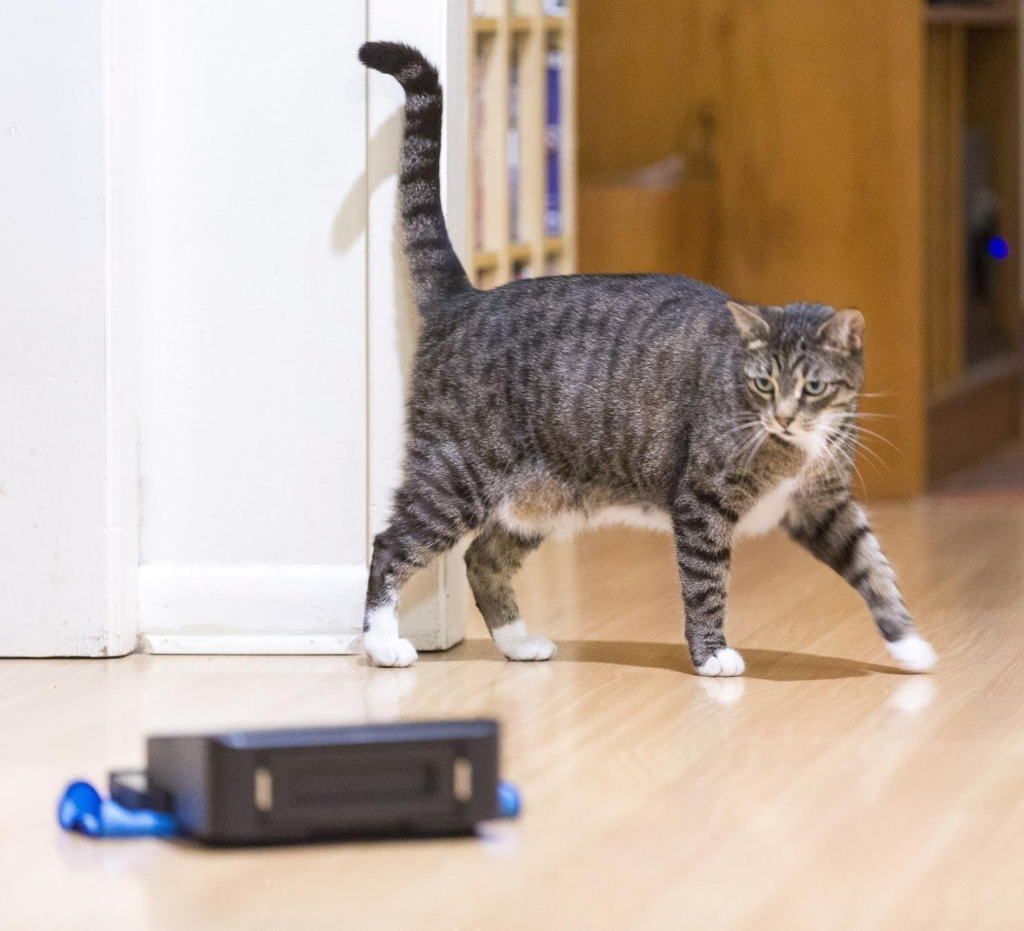
The reviews that read as genuinely happy, not just satisfied, almost all describe the same household: hard floors throughout, or close to it; a vacuum or a Roomba already doing the heavy lifting a few times a week; and one specific desire — not a spotless floor by magic, but one less chore standing between “lived-in” and “presentable” on an ordinary Tuesday.
If that’s your floor and your routine, the Braava 380t is doing exactly the job it was designed for. Set it to Sweep after dinner and it collects the day’s crumbs and pet hair while you’re on the couch. Run Mop every few days and the film of everyday grime that builds up between real cleans never gets the chance to set in. You’re not replacing your cleaning routine — you’re removing the smallest, most repetitive piece of it.
It’s also worth saying plainly: this is a hard-floor tool. It halts automatically at the edge of rugs and carpet rather than climbing on and soaking them, which owners consistently flag as one of its more reassuring behaviors in homes with mixed flooring.
Braava 380t Pros and Cons: Where Wrong-Fit Begins
The one-star reviews tell a consistent story too, and it’s rarely about the robot breaking. It’s about being asked to do a job it was never built for.
If your floor plan leans heavily on grout lines, a damp wipe won’t lift stains sitting down in the texture — that needs an actual scrub, robot or otherwise. If muddy paws or ground-in stains are a regular occurrence, expect visible marks left behind no matter how many passes it runs. And if what you actually want is one machine that vacuums and mops in a single pass, with an app, a self-emptying dock, and zero manual pad-swapping, the 380t was designed a decade before that category existed, and it shows.
| You’ll likely be glad you bought it if… | You’ll likely regret it if… |
|---|---|
| You already vacuum regularly and want hands-off upkeep | You want one robot to vacuum and mop in one pass |
| Your floors are hardwood, tile, laminate, or stone | Your floors have deep grout or dried, ground-in stains |
| You want low running costs (washable pads) | You want app control, scheduling, or auto-resume |
| You want quiet, no-fuss daily maintenance | You expect self-emptying or self-refilling |
None of this is a defect. It’s a boundary. Buying past it is where regret starts, and it’s the single most avoidable reason people end up disappointed with this robot.
iRobot Braava 380t Price: The One Situation Where This Becomes Logical
Here’s the honest comparison nobody selling a robot mop wants to make out loud: 2026’s flagship robot vacuum-mop combos are genuinely impressive. LiDAR mapping, hot-water pad washing, self-emptying docks, mops that lift themselves off your rugs automatically. Some of them run past $1,000, a few well past that.
The Braava 380t does none of that. What it does is stay quiet, stay simple, and stay cheap to keep running. Reusable microfiber pads cost a fraction of a disposable-pad system and wash in a normal laundry load. Plain water works fine for daily maintenance mopping; the optional cleaning solution is for deeper sessions, not a requirement. And because the 380t has stayed in iRobot’s own current lineup for over a decade, sitting well below the $450–500 Braava jet m6 as the entry option, parts and aftermarket batteries are still easy to find once the original one wears out.
| Item | Approximate cost |
|---|---|
| Unit (new) | Mid-range for a mop-only robot, well under iRobot’s flagship pricing |
| Extra NorthStar Cube (per room zone) | ~$100+ |
| Replacement microfiber pads (multi-pack) | ~$10–15, reusable |
| iRobot Cleaning Solution (optional) | ~$50 for a 6-pack |
| Aftermarket replacement battery | ~$20–30 once the original wears out |
Prices shift, so check the current listing before you buy. In our view, that’s the actual situation where the 380t becomes the logical choice — not “the best robot mop money can buy,” but “I already vacuum, my floors are mostly clean already, and I’d rather spend a fraction of a combo robot’s price to remove one small chore instead of adding new technology to manage.” One caution worth repeating: buy from Amazon directly or another authorized reseller. iRobot won’t service units sold through unauthorized channels, and a suspiciously low price is usually why.
What the Braava 380t Solves, Reduces, and Still Leaves to You
Solves: the daily dust and light grime that keeps a floor from feeling truly clean between real cleaning sessions, without you lifting a mop.
Reduces: how often you need to get down and actually scrub, and how long crumbs and pet hair sit around waiting to be noticed.
Still leaves to you: pre-vacuuming on heavy-debris days, since there’s no suction to collect loose crumbs and hair; rinsing the pad partway through larger runs; placing the NorthStar cube with a little care; and accepting that dried, ground-in, or grout-level stains still need a real mop and some elbow grease.
Get those expectations right going in, and the Braava 380t tends to earn better reviews the longer people own it, not worse.
iRobot Braava 380t: Frequently Asked Questions
| Question | Answer |
|---|---|
| Does the iRobot Braava 380t vacuum as well as mop? | No. It sweeps and mops only, with no suction. Loose debris gets pushed or trapped in the pad rather than collected, so it works best paired with a regular vacuum or a Roomba running a few times a week. |
| Why does my Braava 380t leave streaks? | Almost always an oversaturated pad. Since the pad doesn’t rotate, any debris caught against it early in a run drags across the rest of the floor. Wring the pad to damp, not soaked, and check it midway through larger rooms. |
| What’s the real difference between the Braava 380t and the Braava Jet 240? | Size of job. The 380t covers more ground per charge using NorthStar cube navigation; the Jet 240 is built for one small room at a time with a spray nozzle for tougher spots. |
| Will it damage my rugs or carpet? | No. It automatically stops or reroutes at the edge of carpet and rugs rather than driving onto them wet. |
| Does it need WiFi or an app? | No. There’s no app, no scheduling, and no auto-return to the charging dock. You start it with a physical button and place it back on the cradle yourself. |
| Is the iRobot Braava 380t still worth buying in 2026? | For a specific buyer, yes — someone with mostly hard floors who already vacuums separately and wants cheap, quiet, hands-off daily upkeep. If you want one robot to replace both vacuuming and deep mopping, a modern combo robot will serve you better, at several times the price. |
Final Verdict: Is the iRobot Braava 380t Worth It?
Strip away the spec sheet and the decision is simple. If your floors are already close to clean and you just want them to stay that way without it becoming a recurring chore, the Braava 380t quietly does that job better than its age suggests. If your floors need real scrubbing first, or you’re picturing one machine that vacuums, mops, and empties itself, no amount of NorthStar cube placement fixes that mismatch — a newer combo robot is the better fit.
If your floors are already inside that first category, this is where it makes sense to stop reading and go look at it directly: iRobot Braava 380t Advanced Robot Mop – Amazon
Transparency Note:
This analysis is built on aggregated real-world experience.
It extracts what repeatedly holds, what breaks, and what users uncover only after living with the system—then shapes it into a clear model you can use immediately.
Think of it as structured experience, refined and presented so you don’t have to learn it the hard way.
“A quick note: Don’t believe the star ratings, but trust personal experience. This article is a compilation of collected experiences”