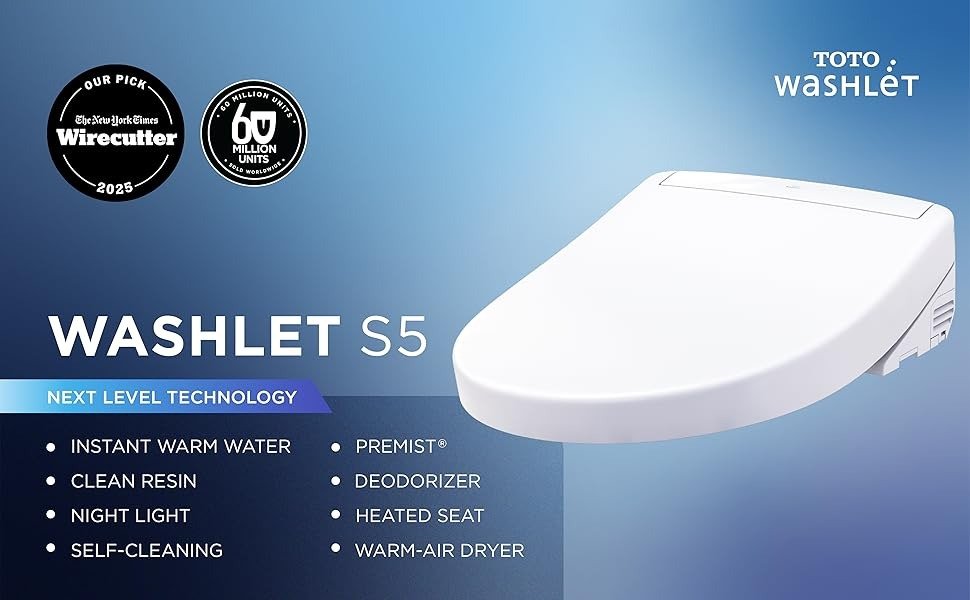
My Decision on the TOTO WASHLET S5 Is About Variance Control
DECISION ANALYSIS
I’m not going to “sell” this seat, and I’m not going to pretend a premium model is immune to bad installs or unstable bathrooms.
I evaluate the TOTO WASHLET S5 as a variance-control system: how reliably it delivers the same outcome when the user intent is the same, week after week, under normal household drift.
Here is the product page I’m anchoring the decision to: TOTO WASHLET S5 Product Page
One Model Only: Response Reliability Variance
Response Reliability Variance is the gap between what the user expects and what the system delivers across repeated use.
Variance looks like:
- “Sometimes it responds instantly, sometimes it doesn’t”
- “The same button press feels different on different days”
- “It works fine, then starts acting weird during certain times”
The core question is not “Does it have features?”
The question is “Does the environment allow those features to behave consistently?”
What People Consistently Praise: Comfort That Stays Predictable
Across retailer review aggregates, the S5 line trends strongly positive, with many reviewers rating the experience highly once installed correctly. Wayfair shows a 4.6/5 rating with a majority of 5-star reviews in its listing snapshot.
The common theme behind positive sentiment is not glamour. It’s stability of the daily routine: warm cleansing, heated seat comfort, and a feature stack that makes hygiene feel automatic when the system conditions are right. Documentation-style sources emphasize instantaneous water heating and hygiene functions like PREMIST and EWATER+ as core components of the S5’s design intent.
The Hard Constraint: Power Stability Is a First-Class Requirement
This is where most “premium disappointment” begins: the bathroom power environment isn’t treated as part of the system until something fails.
Community discussions around electric bidets repeatedly highlight the practical electrical reality: high-draw seats can justify dedicated capacity, and marginal circuits create unpredictable behavior.
And when responsiveness becomes intermittent, community troubleshooting often points toward receiver/control behavior and electrical conditions as plausible culprits, not just “bad luck” or “user error.”
If I can’t satisfy Split C cleanly, I expect variance—no matter how premium the seat is.
Compatibility Split 3.0: The Three Gates I Require Before I Call It a “Good Buy”
Split A: Geometry Gate
This is the elongated SW3446#01 variant. If your toilet is round or your mounting situation is unstable, you’re creating physical-interface variance from day one.
Split B: Water Gate
A bidet seat can’t create stable spray feel from unstable supply. Pressure and flow consistency determine whether the same settings deliver the same sensation every time. Spec-sheet and manual mirrors emphasize defined operating expectations that assume a sane household supply.
Split C: Power Gate
If the seat shares a stressed circuit or the GFCI/wiring environment is borderline, variance shows up as control reliability variance—exactly the type of problem that feels random to the user.
Features Table: Only What Impacts Variance and Daily Stability
| Feature | What it reduces in real life | Why it matters to the model |
|---|---|---|
| Instantaneous water heating | Warm-water drop-off variance | Keeps the “core output” stable across longer sessions |
| PREMIST | Bowl-condition variance | Reduces cleanup friction drift and keeps routine predictable |
| EWATER+ wand cleaning | Hygiene-maintenance variance | Lowers long-term drift from buildup/maintenance cycles |
| User presets | Settings drift between users | Reduces “someone changed it” variance in shared bathrooms |
Drift Coupled to Behavior and Time: The Scenario I Expect Most
If the S5 is installed into a stable bathroom, the experience becomes boring in the best way: it just works, and people rate it like it’s “life-changing.”
If the bathroom drifts—new loads on the same circuit, seasonal pressure swings, or altered household routines—variance can show up later and get misattributed to the product.
That misattribution is why premium models sometimes get harsh reviews: they expose system weakness because expectations are higher.
My Quiet Verdict
I choose the TOTO WASHLET S5 SW3446#01 when I can satisfy Compatibility Split 3.0—especially Split C.
If Split C is strong, the S5’s feature stack is not just comfort; it is variance reduction: stable warmth, stable routine, stable hygiene behavior.
If Split C is weak, I expect intermittent behavior to appear as “randomness,” and I don’t blame the user for feeling frustrated—because variance always feels personal when you can’t see the variable that moved.
Transparency Note:
This analysis is not based on quick personal impressions.
It is derived from documented system behavior, verified user patterns, and the physical constraints of storage capacity.
The goal is to translate complex technical behavior into a realistic performance model that helps you make a clear decision
One Comment