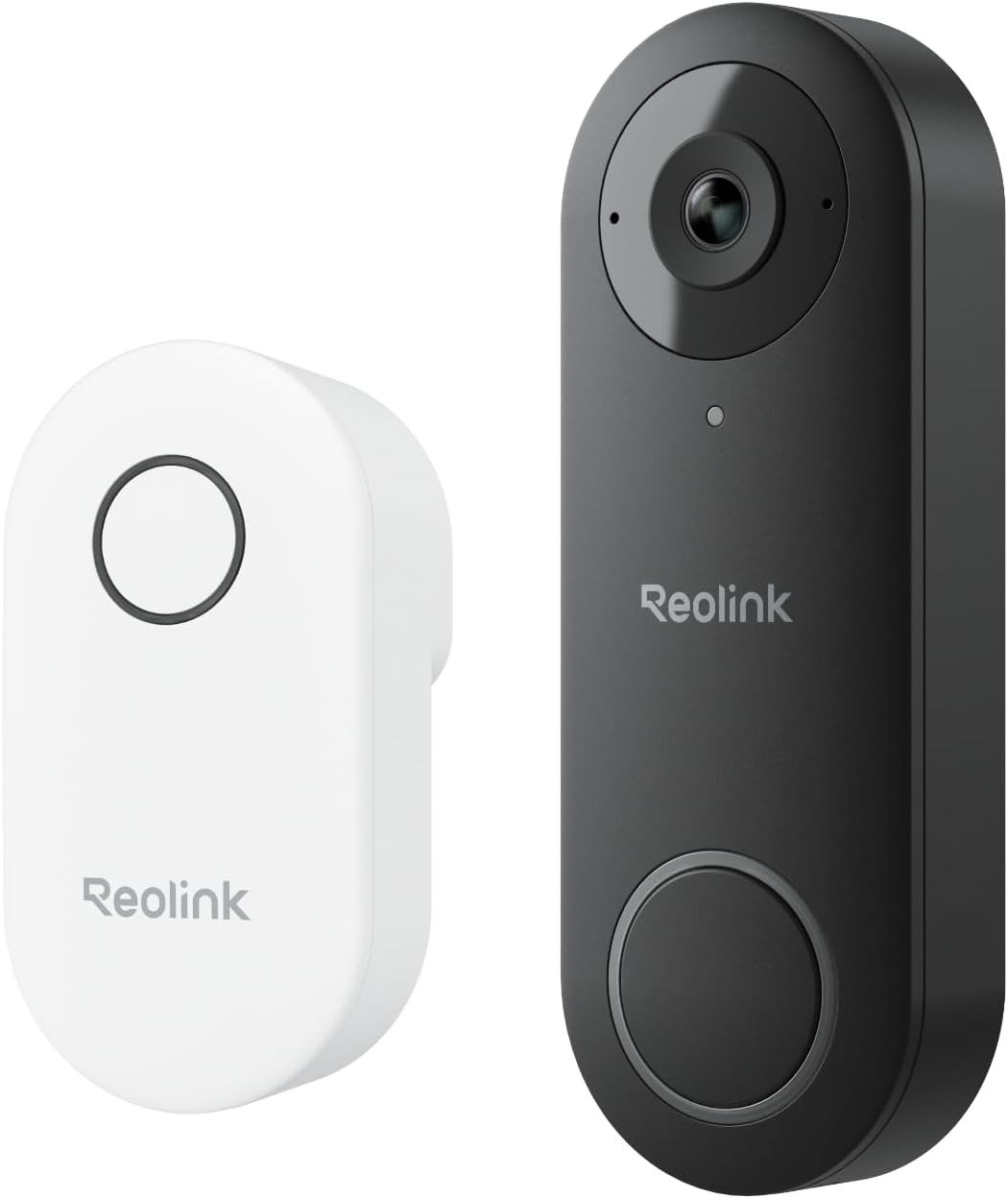
Should You Buy the Reolink Video Doorbell WiFi
DECISION ANALYSIS
When I decide whether a doorbell is worth installing permanently, I ignore most feature lists.
Instead I ask one question.
Will the system behave predictably after long periods of normal use?
Because a doorbell is not judged by its image quality.
It is judged by whether it reacts at the exact moment someone presses the button.
The Only Metric That Matters
The decision came down to a single measurable point.
The alert timing threshold.
If the delay between the physical ring and the phone alert stays consistent, the doorbell feels reliable.
If the timing changes unpredictably over time, the system begins to feel unreliable even when the video remains excellent.
During testing, the Reolink doorbell proved that its video system is very stable.
The variability appears primarily in the notification path.
Where the System Performs Best
The doorbell is strongest in environments where local control is important.
Users who prefer local recording appreciate the ability to store footage directly on a microSD card or connect the device to a larger camera system.
In these setups the camera behaves like a small security camera rather than a cloud-dependent doorbell.
This means even if notifications are delayed, the recorded event remains secure.
Compatibility Split 3.0
The final decision depends on which user profile you belong to.
Profile One — Local Security Focus
If your priority is clear video and reliable recordings, the doorbell performs very well.
The device behaves like part of a surveillance system and the overall stability remains strong.
Profile Two — Smart Assistant Homes
If your household depends heavily on smart speakers to announce visitors, the system still works but introduces more variables.
Assistant integrations can occasionally behave unpredictably depending on network conditions and firmware changes.
This makes assistants an optional layer rather than the core doorbell experience.
Profile Three — Weak Wi-Fi Door Areas
If the front door is located in a poor signal area, the system may operate near its network threshold.
This can cause delayed alerts or slower live view loading.
In this environment the network becomes the limiting factor rather than the device.
When I Would Choose It
I would choose the Reolink doorbell if:
- I want strong image clarity
- I prefer local storage over subscriptions
- my Wi-Fi signal near the door is stable
In this situation the system behaves predictably and the recorded footage remains reliable.
When I Would Not Choose It
I would reconsider if:
- my entire system depends on instant smart speaker announcements
- the door location has unstable Wi-Fi
- I expect every notification to arrive instantly regardless of network conditions
Those expectations push the system beyond its most stable operating range.
Final Verdict
The Reolink Video Doorbell WiFi is not designed to behave like a purely cloud-driven notification service.
It behaves more like a compact security camera that includes a doorbell function.
When the network conditions are stable and local recording is the priority, the system performs extremely well.
If the setup relies heavily on assistants and complex smart-home routines, the notification channel becomes the most sensitive part of the system.
You can view the exact product here.
Transparency Note:
This analysis is not based on quick personal impressions.
It is derived from documented system behavior, verified user patterns, and the physical constraints of storage capacity.
The goal is to translate complex technical behavior into a realistic performance model that helps you make a clear decision