MOEN ARBOR MOTIONSENSE WAVE REVIEW: THE TOUCHLESS FAUCET THAT WON’T RUN WITHOUT POWER
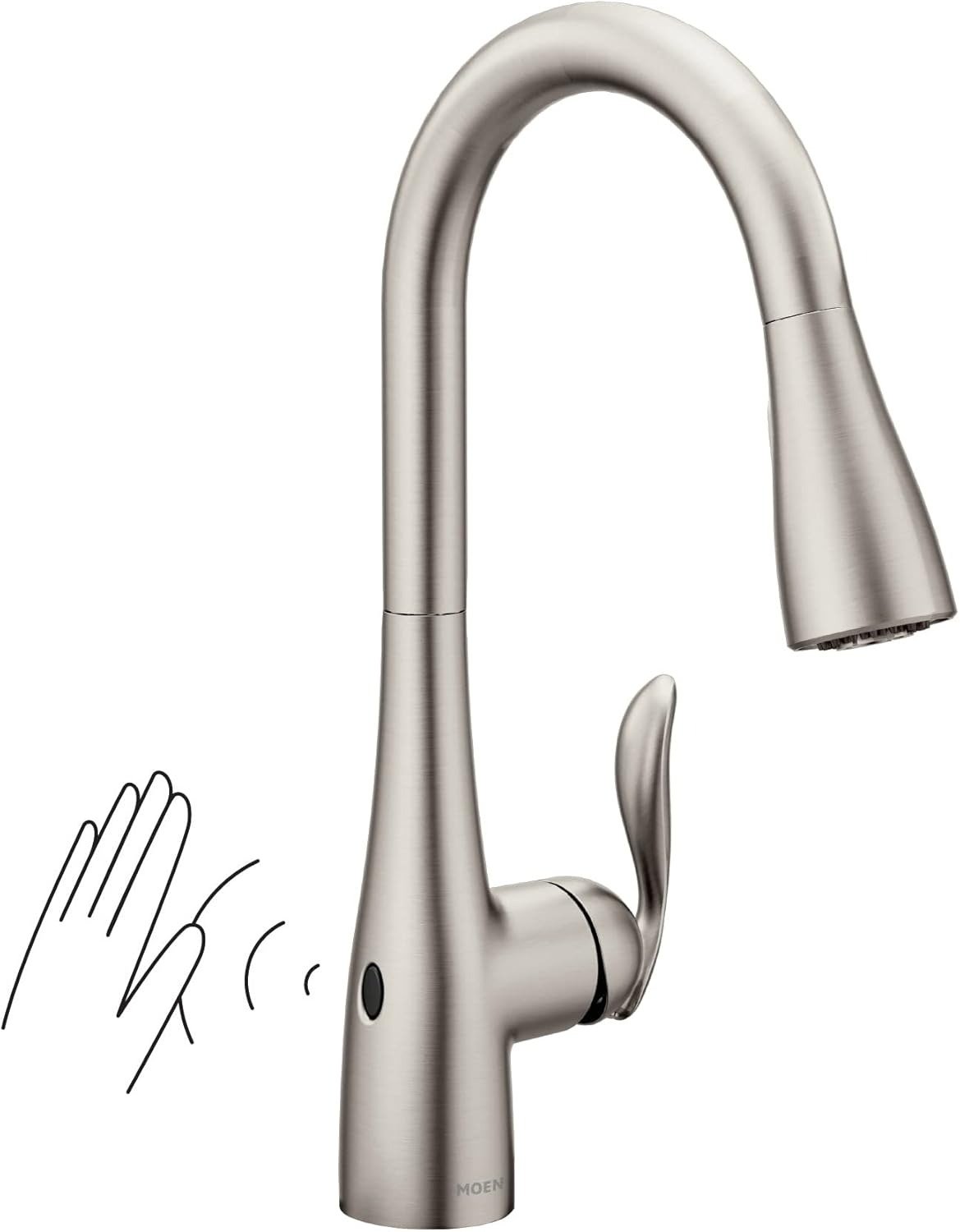
MOEN ARBOR MOTIONSENSE WAVE
Raw chicken on both hands. Flour to the wrists. A pot boiling over while your palms are still slick with dish soap. That’s the exact moment a kitchen faucet either helps you or fights you — not in a showroom, not on a spec sheet, right there at the sink, mid-mess, needing water now. The Moen Arbor Motionsense Wave (model 7594EWSRS) is built for that moment. Wave your hand, water starts. Wave again, it stops. No handle, no smear, no scrubbing grease off a lever later. That part of the promise holds up. What the listing doesn’t say quite as loudly is what happens on the one day the power behind that wave stops working — and why that single detail decides whether this faucet fits your kitchen or fights it.
At a Glance: Moen Arbor Motionsense Wave (7594EWSRS)
| Spec | Detail |
|---|---|
| Model number | 7594EWSRS |
| Finish | Spot Resist Stainless |
| Activation | MotionSense Wave — single sensor plus manual handle |
| Power source | 6 AA batteries (included), or an optional AC adapter |
| Sink compatibility | 1-hole or 3-hole, deck plate included |
| Handle mounting | Right side only |
| Spray modes | Aerated stream, powerful rinse, pause |
| Spout height / reach | 15.5″ / 7.5″ |
| Hose length | 68″ |
| Max flow rate | 1.5 GPM, EPA WaterSense certified |
| Warranty | Lifetime on leaks, drips, and finish / 5 years on electronics |
Moen Arbor Motionsense Wave Problems: The Result Looks Fine, The Problem Isn’t
On paper, this faucet reads clean. Owners who’ve had it installed for months report that the Spot Resist finish genuinely earns its name — even homes with hard water that leaves chalky rings on everything else describe the surface staying clear without constant wiping. The handle doesn’t need to sit in the “open” position for the wave sensor to work, either, which sounds minor until you’ve owned a touch faucet that demands exactly that.
So the average rating looks fine. We spent real time inside the reviews that don’t average out into a headline number — the complaint threads, the troubleshooting pages, the closed-out warranty claims — and “fine on average” turns out to hide a small, specific, repeatable set of issues. Not one bad unit. Not random luck. The same three or four patterns, over and over: a sensor that reacts to the wrong thing, a battery box that asks for more attention than expected, and one under-the-hood design decision most listings never mention at all. That last one is worth understanding before anything gets installed.
Moen Motionsense Wave Sensor Delay: What You’re Actually Feeling but Not Naming
Here’s the sensation owners describe but rarely name correctly: you wave, there’s a half-beat of nothing, so you wave again — and now the water’s cycling on and off out of rhythm with what you actually wanted. Or you’re mid-rinse, hands moving naturally, and the water just cuts out because you drifted a few inches outside the sensor’s actual field of view.
Why does this happen on a faucet that’s supposed to be effortless? Because the wave sensor isn’t reading “a hand” — it’s reading motion inside one fixed zone on one side of the faucet body. Step outside that zone, even slightly, and as far as the faucet’s concerned, you’re gone. Owners also report the mirror-image problem: the faucet firing with nobody near the sink, usually because something’s sitting inside that same detection zone that shouldn’t be. Same root cause, both directions. Worth naming precisely instead of just calling the faucet “glitchy” and leaving it there.

Why the Moen Arbor Sensor Misfires: The Hidden Mechanism Behind the Miss
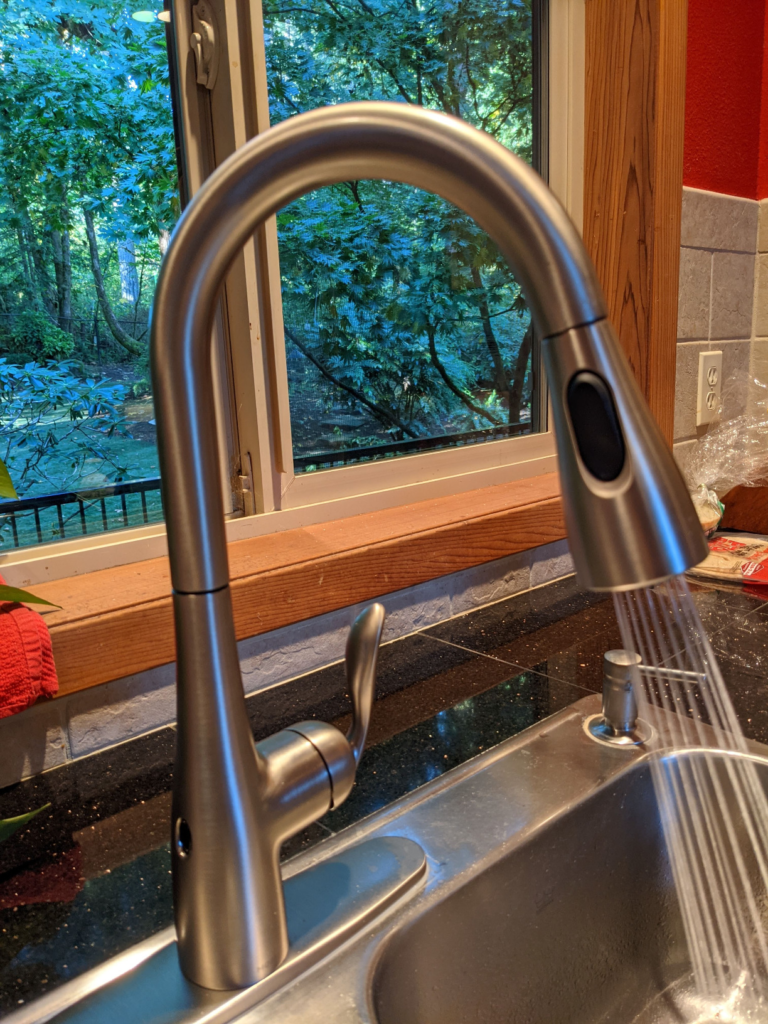
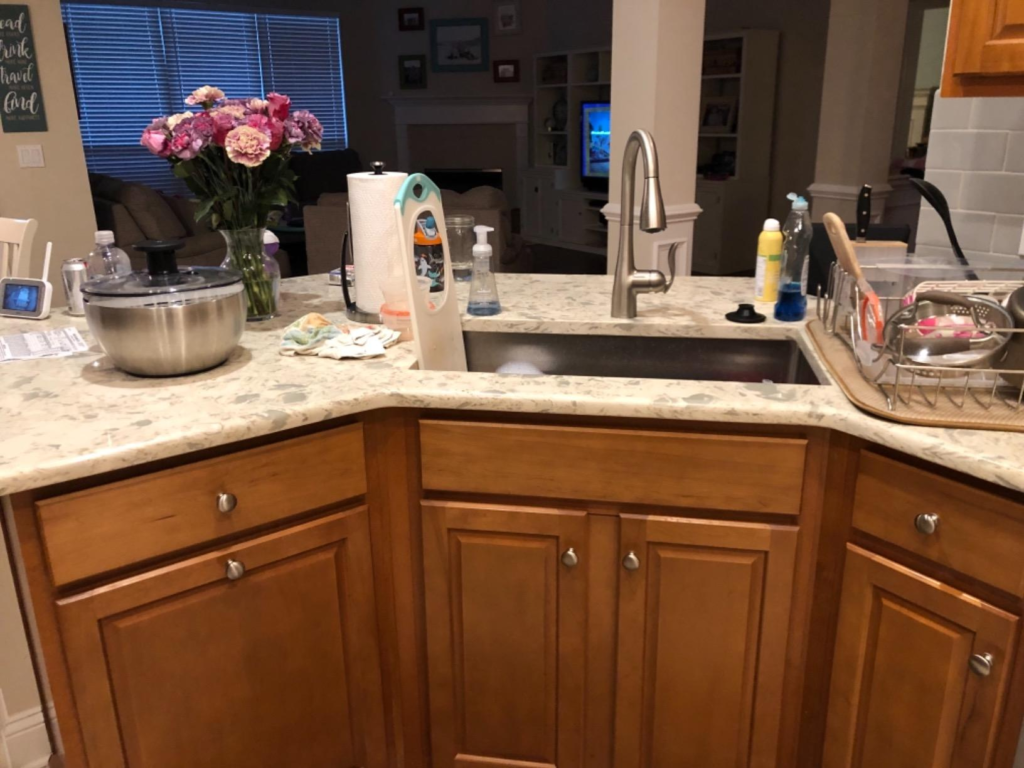
The wave sensor sits on one side of the spout base — not centered, not all-around. That single fact explains most of the “it turns on by itself” complaints. If your sponge, your soap bottle, or anything reflective lives on that side of the sink, reaching past it will trigger the faucet whether you meant to or not. Move that clutter to the other side, and most phantom activations stop on their own.
The second hidden variable is clearance. One detailed owner account described roughly 19 inches between the countertop and the bottom of the overhead cabinet, with about 2 inches of trim hanging down — and the sensor simply wouldn’t respond to a hand held directly in front of it. The fix was tilting the faucet close to 60 degrees off-center until the sensor could actually “see.” Nowhere in the installation instructions was a minimum clearance number given. If you’re installing this under a low cabinet or a window ledge, that’s a measurement worth checking before you buy, not after.
Moen Arbor Wave vs Smart Faucet (7594EVC): Why Most Buyers Misread This Too Early
A lot of shoppers land on this exact listing while actually comparing two different faucets without realizing it. Moen sells this MotionSense Wave version — sensor plus handle, nothing else — right alongside a separate “Smart Faucet” line (7594EVC and similar) that adds app control, voice commands through a smart speaker, and precise temperature and volume presets. Same Arbor body style, sometimes a similar price bracket, genuinely different products underneath.
Comparing them on price alone is the trap. The Smart version does more because it’s built to do more — most of that extra capability needs your WiFi, a smart speaker, and an app. The Wave version does exactly one job, hands-free on and off, and never touches your home network to do it. Neither is the “better” faucet in the abstract. One is right for someone who wants voice-controlled precision. The other is right for someone who just wants clean hands at the sink without adding another app to their phone.
| Motionsense Wave (7594EWSRS) | Smart Faucet w/ Voice (7594EVC) | |
|---|---|---|
| Control methods | Wave sensor, handle | Voice, app, wave sensor, handle |
| Needs WiFi or an app | No | Yes |
| Temperature presets | No | Yes, up to 120°F |
| Volume presets | No | Yes, from 1 tbsp to 15 gallons |
| Setup | Plumbing only | Plumbing plus app and network setup |
| Best fit | Simple hands-free convenience | Tech-forward kitchens wanting precision control |
Who Should Buy the Moen Arbor Motionsense Wave: Who Is Actually Inside This Problem
The person this actually fits isn’t “anyone with a kitchen.” It’s the household that cooks from scratch often enough to know the specific annoyance of a greasy handle — raw meat, dough, marinades, the days when your hands are full or filthy more than once an hour. It’s a kitchen with more than one cook, or kids old enough to help, where the handle gets touched by more hands than you can track. It’s someone renovating who already has a stable setup under the sink and wants the hygiene win without also wanting to manage an app.
If none of that sounds like your kitchen — you cook simply, live alone, rarely have both hands full at the sink — the case for paying more for hands-free activation gets thin fast. That’s not a knock on the faucet. It’s just a mismatch waiting to happen.
Moen Arbor Faucet Pros and Cons: Where Wrong-Fit Begins
We’ll lay this out plainly, because a faucet in this price range deserves a plain answer, not a highlight reel.
| Pros | Cons |
|---|---|
| Genuinely hands-free for messy or wet hands | No water at all if batteries die, corrode, or aren’t installed yet |
| Spot Resist finish holds up against hard-water spotting | Sensor zone can misread nearby objects or tight cabinet clearance |
| Handle doesn’t need to stay open for the sensor to work | Front sensor wants fairly precise hand positioning |
| Duralock quick-connect keeps install manageable for a confident DIYer | Noticeably higher upfront cost than a manual pull-down faucet |
| Well-documented warranty support, including full-unit replacements | Electronics are covered 5 years, not lifetime |
| Power Clean spray adds real rinse strength | A few owners report underwhelming pressure or heat — often house plumbing, not the faucet |
| Good fit | Consider skipping |
|---|---|
| Kitchens with regular raw-food prep or multiple cooks | Vacation homes or rarely-occupied properties |
| Households with kids sharing the sink | Well water with heavy sediment that clogs the aerator often |
| Buyers who want hands-free without an app or WiFi | Left-mounted handle setups unwilling to switch to right-only |
| Renovators keeping a 1- or 3-hole layout | Anyone who wants zero maintenance, permanently |
Is the Moen Arbor Motionsense Wave Worth It: The One Situation Where It Becomes the Logical Choice
If you’ve read this far and recognized your own sink in the sensor-zone habit, in the battery threshold, in the “I just don’t want to touch the handle with raw chicken hands again” feeling — this is the point where the faucet stops being a maybe. Its flaws aren’t mysterious. They’re documented, predictable, and manageable: keep the sensor’s side of the sink clear, keep spare batteries stocked, register the product. What it actually delivers — real hands-free operation, a finish that holds up, and a company that, by owner accounts, backs its warranty claims quickly — is just as real as the flaws.
On price: Moen’s own site lists this model at $804.90, with a $523.19 “web price” for buying direct. Third-party retailers routinely price it well below that, so it’s worth checking the current listing before you anchor on Moen’s own number.
What the Moen Arbor Motionsense Wave Solves, Reduces, and Still Leaves to You
What it solves: touching a handle with hands that shouldn’t touch anything else, and the cross-contamination that comes with that. What it reduces: the slow buildup of grease and grime on a lever nobody wants to scrub separately. What it still leaves to you: a clear sensor zone, a stocked battery drawer or an installed AC adapter, and a few minutes to register the product so the electronics warranty is easy to use if you ever need it. This isn’t an install-and-forget faucet. It’s install-and-maintain-lightly — and for the right kitchen, that’s an easy trade to make.
Moen Arbor Motionsense Wave FAQ: Fast Answers Before You Buy
| Question | Answer |
|---|---|
| Does it work if the power goes out or the batteries die? | No. The handle and the sensor both route through the same electronic control box, so neither one releases water without power. Keep a spare set of AA batteries on hand, or install the optional AC adapter. |
| How long do the batteries actually last? | Around a year under normal household use is what most owners report, though heavy daily use — or corrosion on the battery contacts from under-sink moisture — can shorten that noticeably. |
| Is this the same as the Moen Smart Faucet with voice control? | No. This model (7594EWSRS) is wave-sensor-plus-handle only. The voice- and app-controlled version is a separate product line that needs WiFi and a smart speaker. |
| Will it fit my current sink? | It’s built for 1-hole or 3-hole sinks, deck plate included, and mounts with the handle on the right side only. If your current handle sits on the left, plan for that change before ordering. |
| What does the warranty actually cover? | Leaks, drips, and finish defects are covered for as long as the original buyer owns the home. The electronics — sensor and control box — carry a 5-year warranty, so register the product early. |
| Why does the faucet turn on by itself sometimes? | Almost always an object sitting in the sensor’s detection zone on one side of the spout, a nearby reflective surface, or dust on the lens. Clearing that zone and wiping the lens resolves most cases. |
Moen Arbor Motionsense Wave: Final Verdict Before You Decide
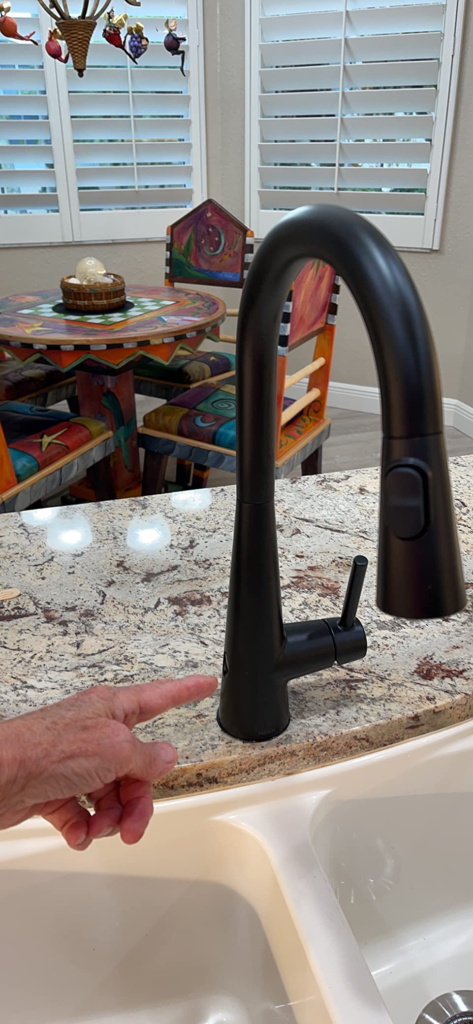
Strip away the spec sheet and this comes down to one honest trade: real hands-free convenience, in exchange for depending on power for water at all. For a kitchen that cooks often, shares a sink between more than one person, and is willing to keep a few spare batteries around, that trade pays off quickly and keeps paying off. For a quiet, low-traffic kitchen, it’s a nice-to-have wearing the price tag of a need-to-have.
If your break point is a handle you’re tired of scrubbing after every raw-meat dinner, this is where the decision stops being vague.
Transparency Note:
This analysis is built on aggregated real-world experience.
It extracts what repeatedly holds, what breaks, and what users uncover only after living with the system—then shapes it into a clear model you can use immediately.
Think of it as structured experience, refined and presented so you don’t have to learn it the hard way.
“A quick note: Don’t believe the star ratings, but trust personal experience. This article is a compilation of collected experiences.”