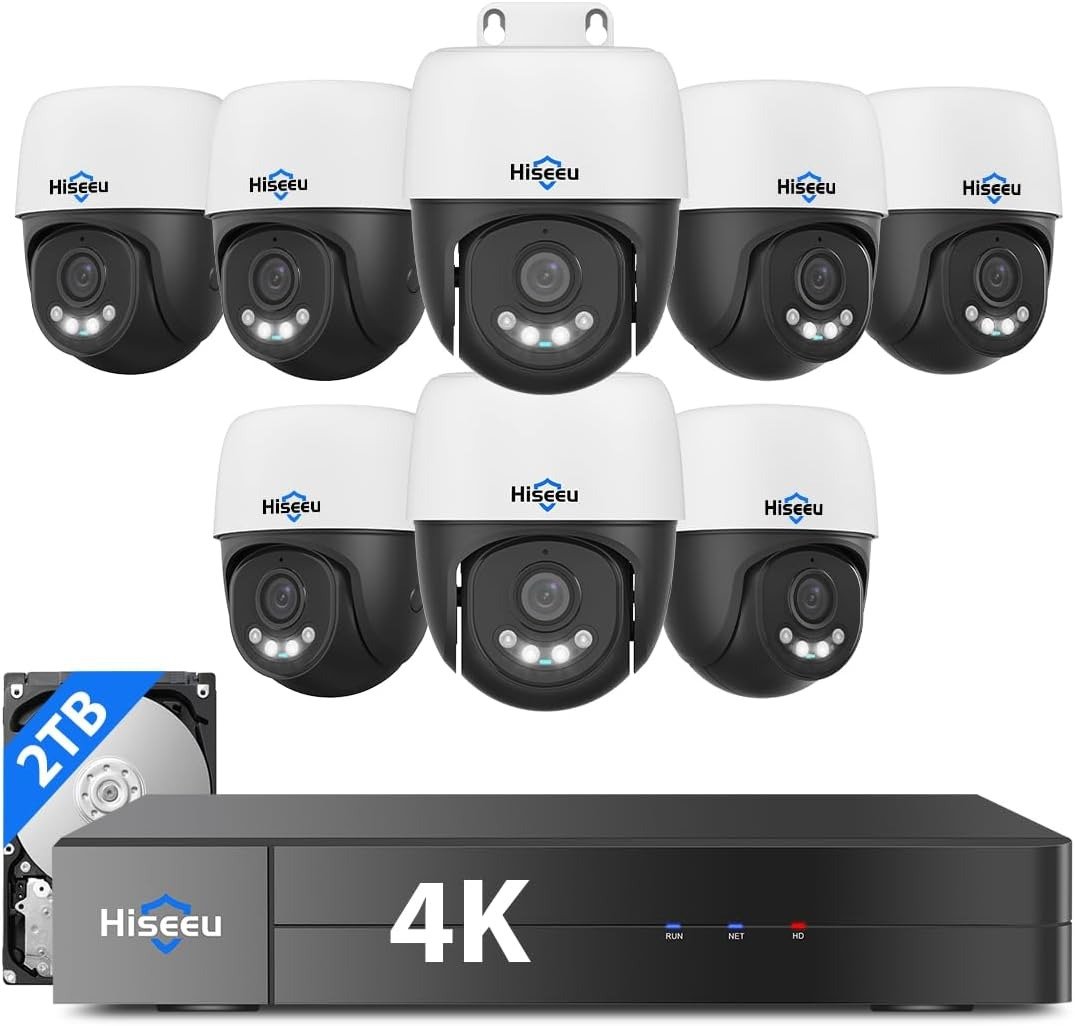
the moment demand crosses the stable operating ceiling.
ANALYSIS FRAMEWORK
What Breaks First (3 Fast Signals)
• Observable problem: Live view suddenly feels less fluid.
Condition: several cameras detect
motion simultaneously.
Number: delays often appear as clips starting a few seconds late during peak activity.
• Observable problem: Playback feels incomplete even though the system records continuously.
Condition: reviewing multiple cameras during high-motion periods.
Number: short gaps appear at the exact moments motion begins.
• Observable problem: Expansion appears simple, then becomes complicated.
Condition: adding cameras beyond the built-in ports.
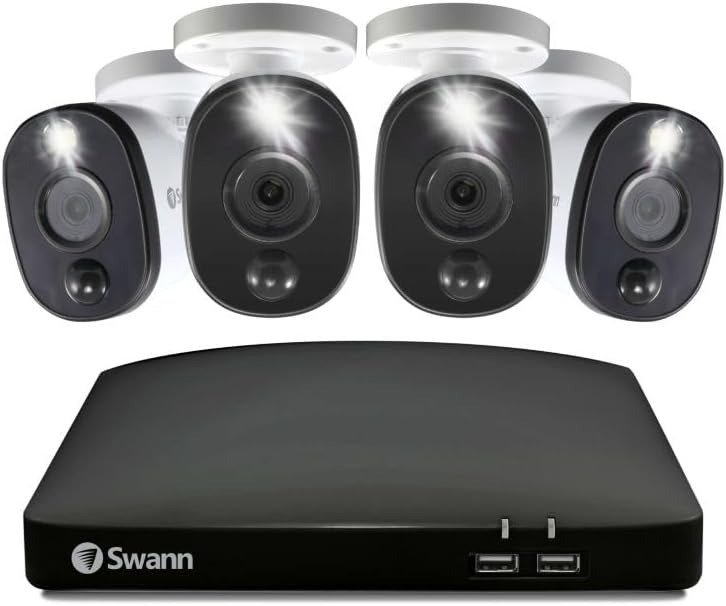
Number: the NVR contains 8 PoE ports, while 16 total channels require an external PoE switch.
Why I Judge These Systems by Peak Hours
When I evaluate a surveillance system, I rarely focus on image sharpness first.
Almost every modern system can produce a clear 8MP frame.
What matters more is how the system behaves when motion suddenly increases.
Late afternoon is usually where the truth appears.
Cars move, people enter gates, shadows trigger detection.
That is when stability either holds—or load begins to reveal the system’s real threshold.
My Testing Conditions (What I Hold Constant)
To understand system behavior, I treat the installation like a small network environment.
Testing conditions typically include:
• Camera resolution: 8MP streams (3840×2160)
• Recording method: continuous recording on a 2TB local drive
• Camera count: between four and eight cameras
• Detection features: motion alerts and PTZ tracking events
• Environment: entrance zones or driveways where motion density is naturally higher
The purpose is not to push the system artificially.
It is simply to observe what happens when normal behavior overlaps.
The Limit, The Driver, The Moment It Shows
Every system has a physical ceiling.
Ceiling
The maximum stable throughput the recorder and ports can process simultaneously.
Variable
The number of active 8MP streams combined with motion detection and PTZ tracking.
Event
A visible shift in playback or live viewing when multiple cameras detect movement at once.
The system is still working.
But stability has crossed its threshold.
The Exact Moment the System Starts to Struggle
Failure Signature:
Playback clips begin a few seconds late, and live view may briefly stutter when several cameras detect motion simultaneously during peak hours.
This is not random behavior.
It is a signal that the system has reached its load threshold.
Load vs. What You Actually See
| Load Condition | Observable Behavior | Interpretation |
|---|---|---|
| 1–2 cameras active | Smooth live view and immediate playback | Far below load threshold |
| 3–4 cameras detecting motion | Minor latency when opening clips | Approaching stability limit |
| 6–8 cameras detecting motion simultaneously | Live view stutter and delayed clip start | Load saturation behavior |
| Cameras added beyond onboard PoE ports | Installation complexity increases | Infrastructure constraint |
What Repeats in Real Deployments
Across many installations, the pattern rarely relates to image quality.
Most systems deliver clear video.
The repeating pattern appears when installation constraints meet load spikes.
Typical triggers include:
• high motion density at entry points
• poorly planned cable runs
• expansion beyond built-in PoE ports
When these factors combine, performance drift appears during peak hours.
3 Ways to Prevent the Same Collapse
- Limit simultaneous playback during peak motion windows.
Reviewing several cameras while motion alerts are firing increases load rapidly. - Stabilize the physical layer.
Cable quality and termination consistency directly affect signal stability. - Plan expansion before adding cameras.
Moving beyond the eight PoE ports requires external switching infrastructure.
The Line I Remember
Security systems rarely fail randomly.
Load reveals the real threshold.
Quote-Ready Explanation
A 4K security system can look flawless during quiet hours but begin drifting under peak motion, because stability is determined by throughput and load—not resolution alone.
Link Discipline
If you want to determine whether this system fits your environment, continue here:
Transparency Note
This analysis applies a structured performance framework to documented user behavior patterns, technical documentation, and repeatable system constraints.
The evaluation focuses on observable behavior over time rather than isolated impressions.

One Comment