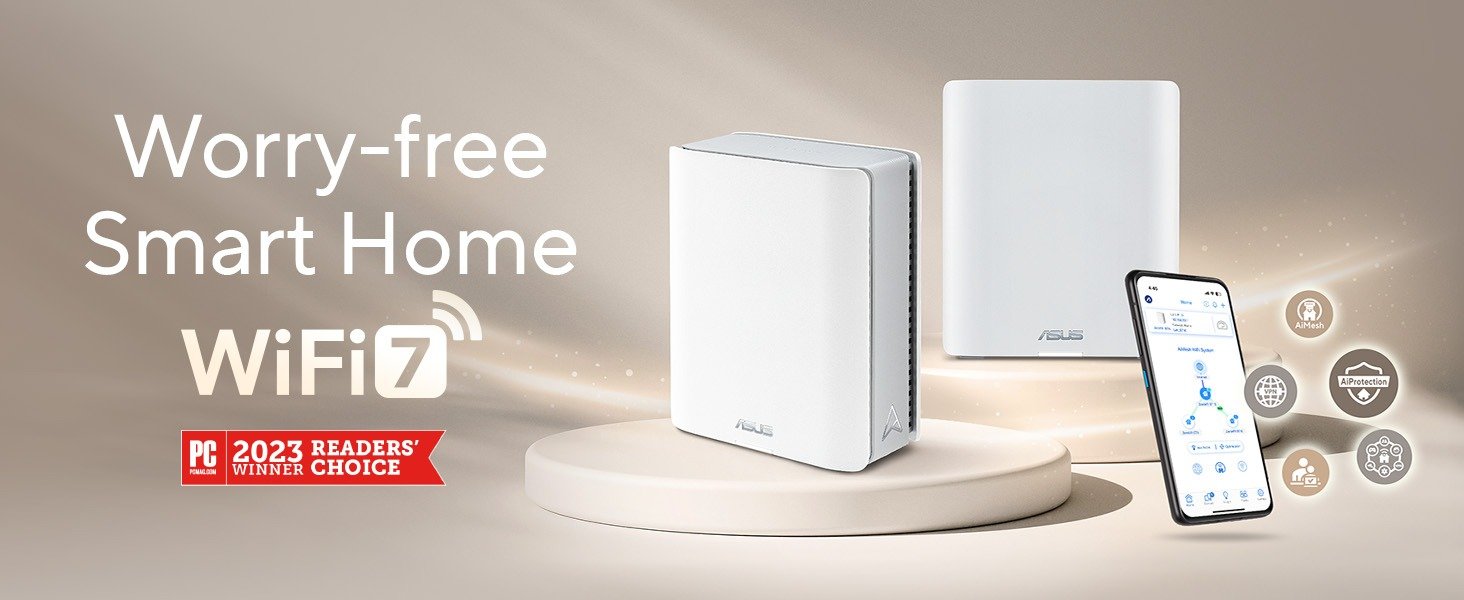
ASUS ZenWiFi BT10 Verdict: What You Pay for Is Low Variance
DECISION ANALYSIS
I’m going to say it plainly.
You don’t pay BT10 money to see a bigger speed-test number.
You pay it to
make your network feel boring—
the good kind of boring—if your deployment lets it stay under its stability threshold.
Why do some owners sound thrilled while others sound exhausted?
Because they bought the same hardware… into different ceilings.
What You Actually Pay For
- Backhaul escape hatch:
the BT10 gives you a real path to crush variance when wired backhaul is available. - Modern band behavior:
tri-band Wi-Fi 7 can reduce brittleness when spectrum and walls cooperate. - Control posture:
the system is designed to manage a messy household network without pushing you into constant “fixing mode.”
That’s the value: variance control, not headline speed.
Ceiling Statement
With wired backhaul, your ceiling shifts toward client behavior + roaming decisions + firmware cycles.
With wireless backhaul in a wall-heavy home, your ceiling becomes backhaul-driven, and drift is more likely during busy-hour routines.
This is the entire verdict in one line:
BT10 is worth it when your deployment keeps it below the stability threshold.
Two-Line Mitigation Spine
If you’re misaligned:
reduce variance by changing backhaul physics (wired/MoCA) or re-placing nodes so wireless backhaul isn’t crossing too many walls.
If you’re compatible:
preserve stability with intentional node spacing and a disciplined firmware cadence (updates are events—treat them that way).
If you want the product page for current pricing/variants:
Transparency Note:
This analysis applies a structured performance framework to documented user patterns and technical documentation, focusing on repeatable behavior over time rather than isolated impressions
2 Comments