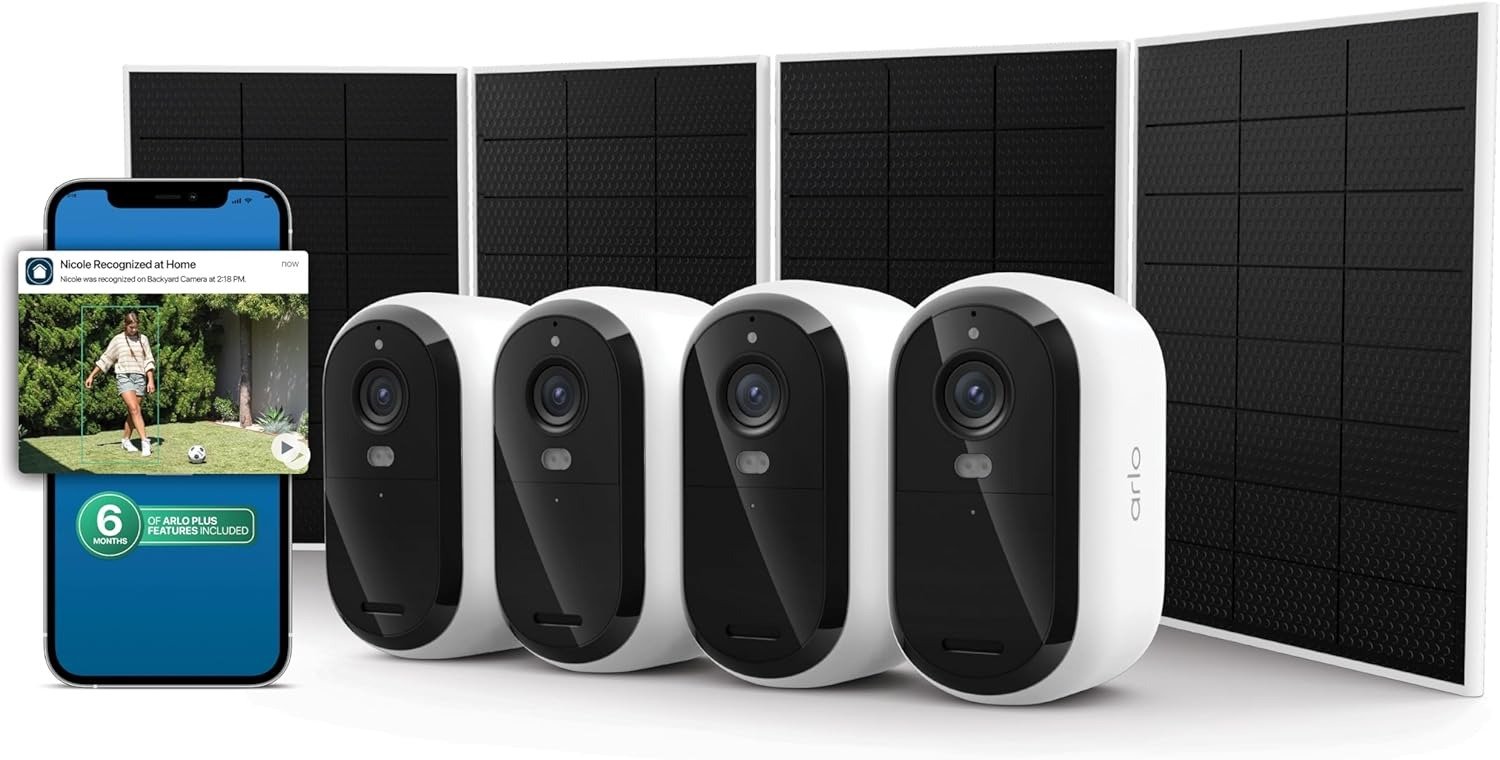
Arlo Essential 2K (3rd Gen) Verdict: Worth It Only If Your Deployment Holds the Threshold
DECISION ANALYSIS
What You Actually Pay For
I’m paying for a camera that behaves like a background system: it notices motion, pushes a useful preview
fast enough, and lets me confirm reality without babysitting.
The value isn’t “2K.” The value is low-friction proof—when the threshold holds.
The Operational Ceiling
The ceiling is the alert-to-useful-preview threshold, and it depends mainly on what happens at the camera mount: signal quality and airtime congestion.
If your mount typically sits around -55 to -67 dBm, the system tends to stay in the 2–6s band.
If it lives around -70 to -78 dBm, you’re more likely to see repeating 8–15s drift windows.
That’s the dividing line between “I trust it” and “I keep checking.”
Mitigation Spine
If misaligned: move the mount into a stronger signal zone (even a few feet can shift you from -72 dBm → -65 dBm) and reduce peak-hour congestion near the camera.
If compatible: keep the mount where the signal doesn’t swing, and judge stability after 1–2 firmware cycles—not during update week.
Transparency Note:
This analysis applies a structured performance framework to documented user patterns and technical documentation, focusing on repeatable behavior over time rather than isolated impressions
2 Comments