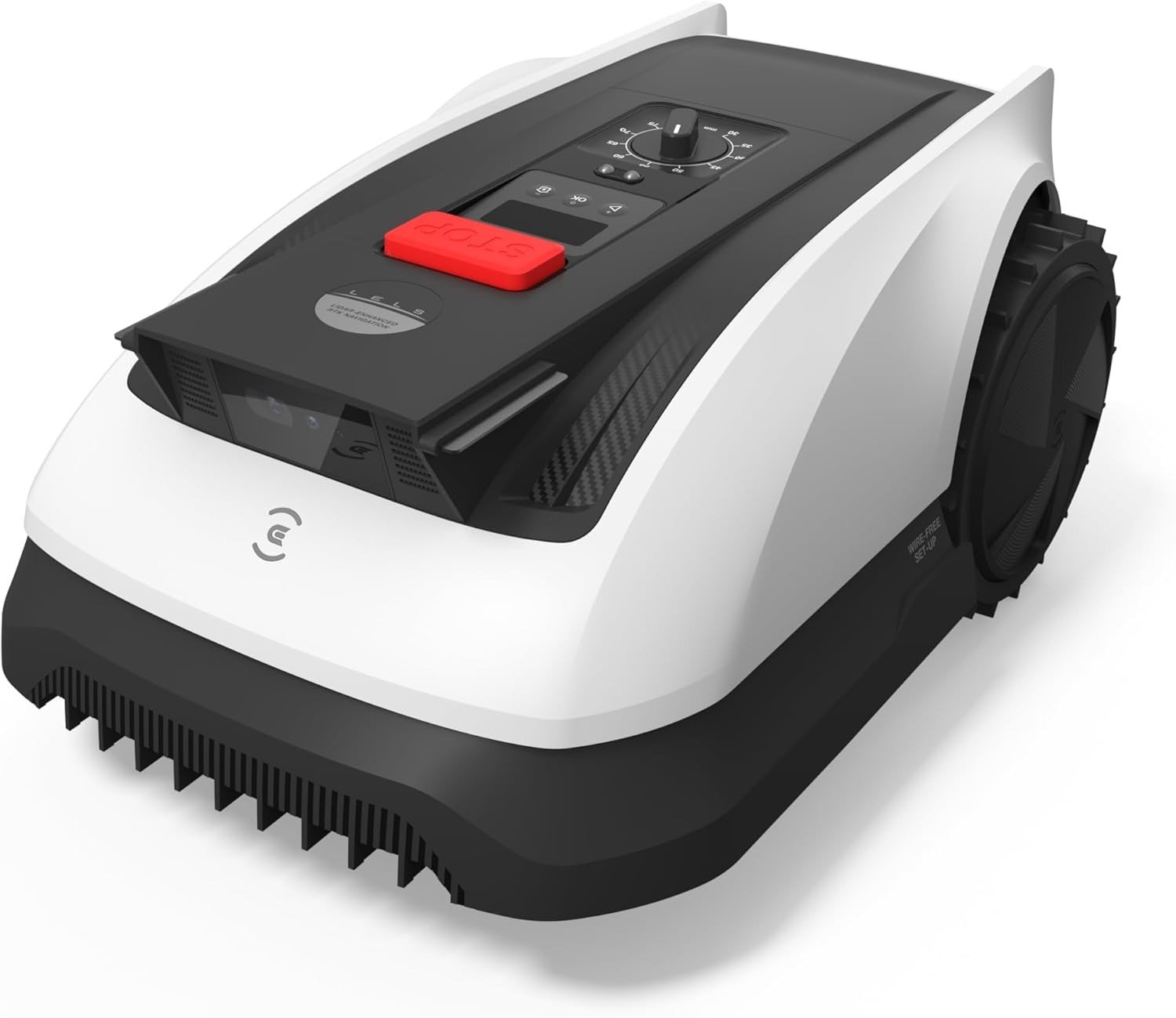
ECOVACS GOAT O1000 RTK — The Decision Lens (Signal Stability Window)
My decision in one line (no hype)
DECISION ANALYSIS
If my yard can keep the mower inside its Signal Stability Window, the GOAT O1000 RTK becomes a quiet, consistent “background worker.”
If my yard pushes it outside that window (shade + unstable RTK + long hot runs), I should expect signal events that feel random but aren’t.
For context, aggregated ratings land around 3.7/5 from 441 ratings on Amazon UK’s listing view, which matches the mixed reality: strong satisfaction when stable, frustration when drift dominates.
What the product is mechanically trying to do
The GOAT O1000 RTK is built around:
- Wire-free mapping and virtual boundaries
- RTK positioning + vision/obstacle avoidance (AIVI 3D)
- Coverage features like U-shaped patterns and edge-focused behavior
- Stated capability for tight spaces (~2.3 ft) and slopes (45% / 24°)
That’s the promise. The decision is whether your environment keeps that promise inside a stable window.
Drift probability escalation (the part owners keep describing)
I treat drift like a probability curve that steepens with three levers:
- Shade / sky blockage (trees, fences, structures)
- Exposure duration (how long it runs continuously in stress conditions)
- Load volatility (tall grass, uneven ground traps, tight edge demands)
And I watch for three indicators:
- Time indicator: errors cluster during hotter daylight for some owners
- Sensory indicator: repeated hesitations / “searching turns” near the same edges
- Performance indicator: missed strips, boundary bias, stop-and-freeze episodes
Compatibility Split 3.0 (the respectful “yes/no”)
Path A — Compatible (buying makes sense)
You’re a fit if:
- Your lawn is within the intended size band (≈ ¼ acre / ~8,600 sq ft)
- You can place the RTK/sensor cleanly and keep it from shifting (leaning/placement errors show up in owner notes)
- You don’t expect it to “tear through” overgrown grass; you’ll start with manageable height
- You’re okay doing a careful first map and marking no-go zones for holes/stuck spots
Path B — Misaligned (not a failure; just physics)
You should pass (or wait for a different navigation approach) if:
- Tree canopy/shade dominates the yard and you can’t solve sky view
- You need truly hands-free behavior immediately (no remaps, no tuning)
- You already know your yard creates frequent signal interruptions for RTK devices
I don’t “push” either path. I just respect the window.
The one human scene (what it felt like when it was right)
The first evening I let it run after a careful map, I walked outside expecting the usual mower noise—then realized I could barely hear it.
Up close it was mostly a soft cutting hiss. That quietness is what changes behavior: you stop postponing mowing because it doesn’t feel like an event.
Trust without marketing (support reality, stated cleanly)
Support sentiment is mixed. Some owners report warranty replacement that solved the issue; others describe slow troubleshooting cycles.
So I treat support as “may take time,” and I only commit if my yard is likely compatible in the first place.
Final decision compression (no pressure)
My rule is simple:
If I can keep it inside the Signal Stability Window, this is a rational automation upgrade.
If my yard forces it outside the window, I’m buying interruptions, not convenience.
“If your yard matches Path A, the exact ECOVACS GOAT O1000 RTK listing is here.”
Transparency Note: This analysis is not a passing personal opinion; it is the result of synthesizing feedback from real buyers, documented reviews, and technical documentation. The objective is to present a clear, structured interpretation of the data, free from personal bias.
The “Signal Stability Window” framing is exactly the kind of decision-making lens that most reviews skip entirely. It cuts through the specs and gets at the real question, which is whether your specific yard can support the RTK system reliably. Treating the mower as a background task rather than something to actively manage is the whole promise of autonomy, and it sounds like this one delivers when conditions are right. Great analysis.