Why Does a Robot Vacuum Feel Like Magic… Until One Day It Doesn’t?
ANALYSIS FRAMEWORK
There is always a moment.
The first week feels like freedom. Floors look calm. Corners look intentional. The house feels lighter.
Then one day, you notice something small. A thin line of dust near the wall. A faint streak where the mop passed. A rug edge that feels slightly damp.
And the question hits quietly:
Why?
Why did it work perfectly yesterday… and feel different today?
That question is not emotional. It is mechanical.
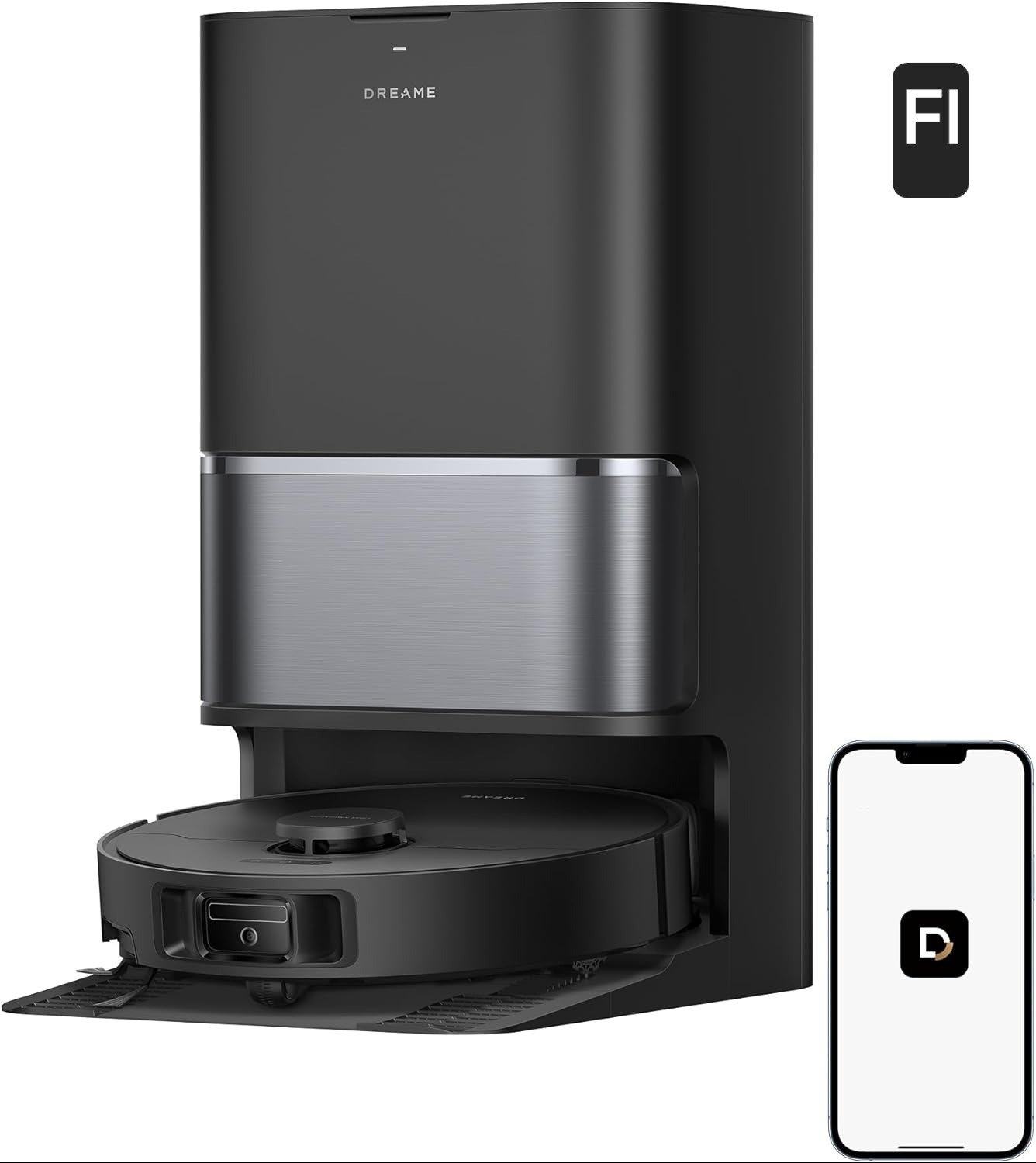
And when I studied the Dreame L40 Ultra Gen 2 , I stopped looking at it as a “smart vacuum.” I started looking at it as a stability system under load.
The Hidden Law Most Owners Never See
Robot vacuums do not randomly disappoint.
They either:
- Cross a mechanical threshold
or - Drift inside a performance variance window
That’s it.
If your home pushes a machine past its friction tolerance, airflow consistency, or navigation margin, the drop feels sudden. Not gradual.
And if your home creates variable debris patterns, mixed surfaces, and shifting obstacles, you don’t get collapse.
You get drift.
The Dreame L40 Ultra Gen 2 positions itself as a machine built to compress that drift window. High suction, extendable brush mechanics, mop lift height, auto-maintenance dock.
But those features only matter if your home stresses the right variables.
The Mechanical Core — What Actually Reduces Drift
When I break the machine down structurally, three stabilizers stand out.
First: sustained suction under debris variability. High airflow matters less for “power” and more for preventing performance compression when dust load increases. If suction consistency drops, cleaning becomes probabilistic.
Second: edge extension mechanics. Corners are not missed because robots are “dumb.” They are missed because geometry creates unreachable micro-zones. Extendable hardware is not marketing—it is geometry compensation.
Third: mop lift separation. Mixed flooring introduces one of the most common psychological breakpoints: moisture on fabric edges. A lift system is not about shine. It is about avoiding threshold violation.
These are not luxury features. They are variance controls.
The Psychological Side Nobody Admits
Automation creates expectation inflation.
When a machine empties itself, washes itself, dries itself, maps your house, and avoids obstacles, your brain upgrades its standard.
You no longer tolerate 90 percent clean.
You expect silent perfection.
So when it leaves one faint edge line, it feels like betrayal.
This is why reviews for premium robot vacuums are polarized. Not because the product swings wildly. Because expectation bandwidth narrows.
The L40 Gen 2 attempts to reduce friction points that typically create resentment:
- Fewer rescues
- Less manual emptying
- Fewer carpet-mop conflicts
- Better edge consistency
But no system removes variability entirely. It compresses it.
Field Reality — What Week Two Tells You
Week one feels impressive.
Week two tells the truth.
Here’s what I would watch carefully:
- Do corners remain consistent without manual correction?
- Does suction behavior feel identical when debris load increases?
- Does mop performance require frequent user adjustment?
- Does obstacle avoidance reduce intervention, or still require supervision?
If the system requires frequent behavioral compensation from you, then your environment may be widening the variance window faster than the hardware can compress it.
That is not failure.
It is mismatch.
The Nonlinear Split — System Compatible vs System Misaligned
This is not about budget. It is about structural compatibility.
System Compatible:
- Mostly hard floors with controlled carpet transitions
- Pets or daily dust load
- Desire for maintenance-level stability
- Tolerance for app calibration
System Misaligned:
- Expectation of deep stain removal without supervision
- High-pile rugs with lip elevation
- Constant furniture movement
- Desire for “press one button and never think again”
If you fall into the second group, it does not mean the machine is weak.
It means your home amplifies variance faster than automation can absorb it.
And that difference changes satisfaction more than any spec sheet.
Why This Model Feels More Stable Than Mid-Tier Robots
Because it attacks drift points directly:
- High suction reduces compression under load
- Edge extension reduces geometric loss
- Mop lift reduces surface conflict
- Self-maintenance reduces user fatigue
Stability is not about power.
It is about preventing small instabilities from compounding.
That is what separates “impressive demo” from “quiet long-term reliability.”
Final Reflection — What You’re Really Buying
You are not buying suction.
You are buying variance compression.
You are buying fewer small annoyances accumulating into doubt.
And that is why some homes feel liberated by this system… while others feel it is excessive.
The difference is never hype.
It is structural alignment.
If your floors create friction, debris load, and edge complexity daily, the Dreame L40 Ultra Gen 2 makes sense as a stabilizer.
If your space is already low-variance and low-load, you may never unlock its full mechanical advantage.
The machine does not decide satisfaction.
Your environment does.
And once you see that, the purchase becomes rational—not emotional.
**This analysis is based on aggregated user feedback, verified buyer reviews, and technical documentation. It is designed to provide structured clarity rather than personal opinion**