BOTSLAB R811 Review: I Kept Paying for a Doorbell I Already Owned — Until I Found the Threshold That Changed the Math
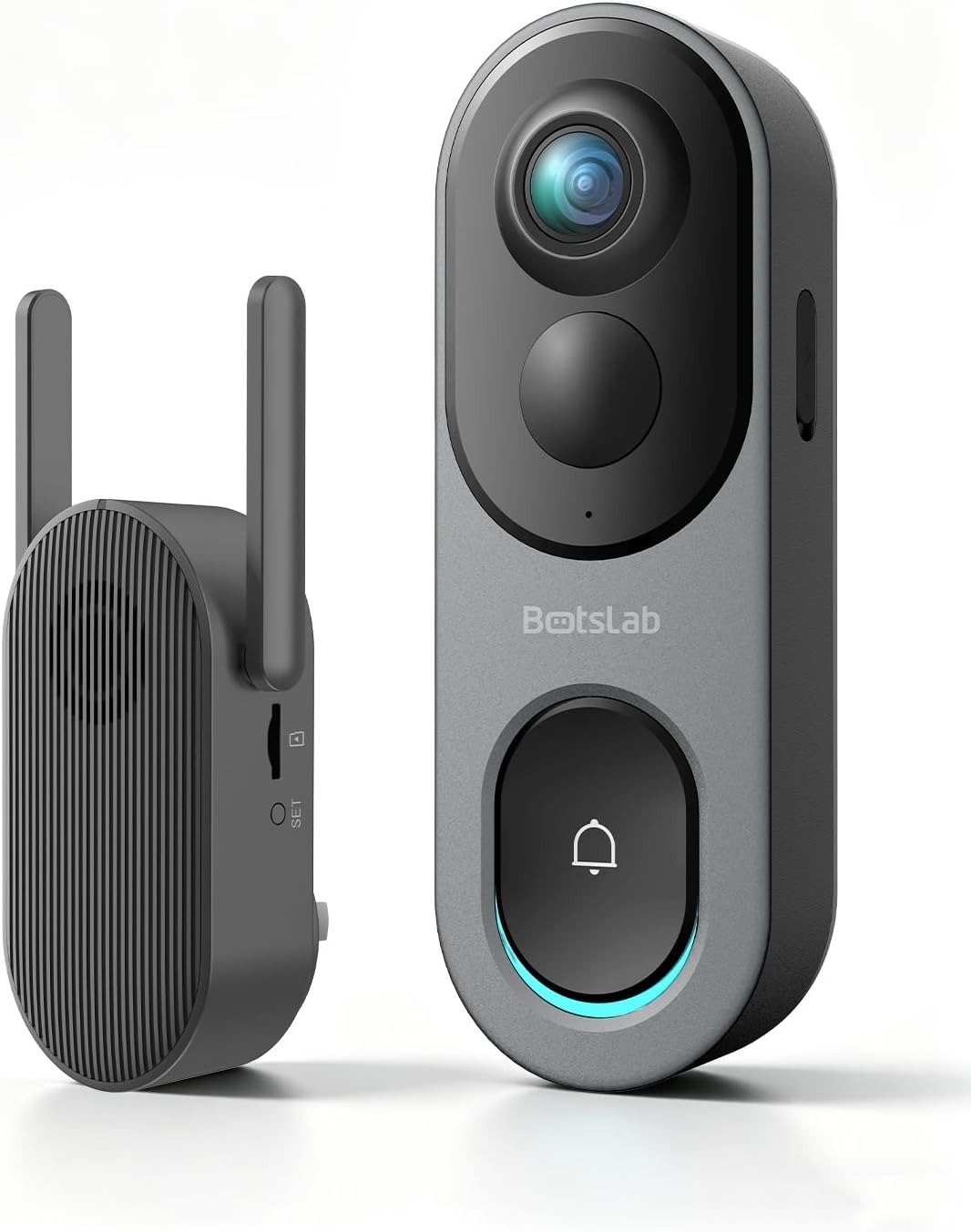
BOTSLAB R811
The Result Looks Fine. The Problem Isn’t.
You install the doorbell. You see the footage. The notification arrives. Everything appears to be working.
But something is wrong — and it’s not the hardware.
It’s the invoice you didn’t notice arriving twelve months into ownership. The cloud storage fee. The person-detection fee. The “advanced AI alerts” fee. You bought a doorbell. You’re renting the right to actually use it.
This isn’t a niche complaint. Ring, Arlo, and Nest have built entire business models on hardware that functions below its own capability until you pay monthly. The doorbell rings. The recording disappears after 24 or 48 hours unless you subscribe. The person-detection alert — the very feature that separates a smart doorbell from a $15 dumb buzzer — is paywalled.
Most buyers don’t realize this until sixty days in. By then the mount is drilled, the wires are tucked, and the app is installed.
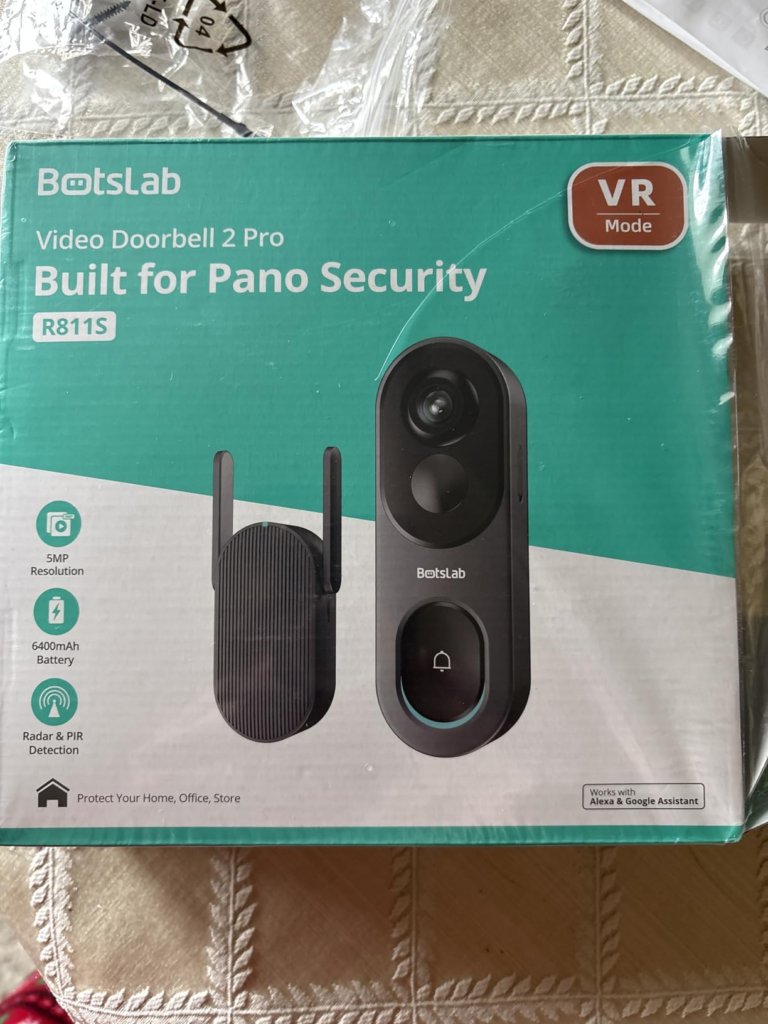
The BOTSLAB R811 Video Doorbell 2 Pro enters this conversation at a specific structural point: not as the best doorbell ever made, but as the first serious answer to a question most people haven’t consciously asked yet.
What You’re Actually Feeling but Not Naming
It isn’t that your current doorbell doesn’t work.
It’s that it works less than you expected — and costs more than the box implied.
The specific annoyance lives here: you get a motion alert at 2 AM. You open the app. The clip is gone, or blurry, or locked behind a plan you declined at setup. You upgrade. A year later you’re paying $100+ annually for a feature that should have been included in the $200 device sitting on your front door.
This is the friction that brings people to the BOTSLAB R811 search query. Not a love of new gadgets. Not brand loyalty. A specific, repeating frustration with the economics of subscription-dependent home security.
That frustration is valid. And it has a structural cause.
The Hidden Mechanism Behind the Miss
The video doorbell industry is built on a deliberate split: hardware price and feature price are separated by design.
The hardware sells at a loss or at thin margin. The subscription recovers it, then profits from it indefinitely. This model works because most buyers evaluate the device at the moment of purchase — not at month eighteen.
Here is the mechanism that most buyers miss entirely:
| Feature | Ring (without plan) | Arlo (without plan) | BOTSLAB R811 (no plan needed) |
|---|---|---|---|
| Local video storage | ❌ None | ❌ None | ✅ 32GB built-in |
| Person detection | ❌ Locked | ❌ Locked | ✅ Free AI detection |
| Cloud backup (basic) | ❌ Locked | ❌ Locked | ✅ 48 hrs free, Year 1 |
| Package/prowler alert | ❌ Locked | ❌ Locked | ✅ Included |
| Indoor chime unit | ❌ Sold separately | ❌ Sold separately | ✅ Included in box |
| Works offline (chime) | ❌ No | ❌ No | ✅ Yes — chime paired out of box |
The BOTSLAB R811 doesn’t break this model by being louder or cheaper. It breaks it by putting the storage inside the device.
32GB of onboard storage means the footage is yours, locally, without a monthly gate. The AI detection — person, motion zone, prowler classification — runs without a subscription. The indoor chime stays connected to the doorbell even when Wi-Fi is down.
None of this is magic. It’s a different architecture decision.
The Threshold Where the Outcome Quietly Breaks
Here is where I need to be precise, because this is the threshold most reviewers describe too vaguely.
The BOTSLAB R811’s performance is not uniform. It has a specific break point — and if you’re on the wrong side of it, the product will disappoint you despite being technically functional.
The threshold is Wi-Fi distance and router placement.
At 8–10 meters from a router with an average 5GHz signal, live stream lag of 1–3 seconds is measurable. That delay is tolerable for reviewing footage after the fact. It is less tolerable for real-time voice conversations with a delivery driver who is already walking away.
The second threshold: low-light performance.
Infrared night vision is functional, but performance on par with a dedicated security camera — which typically offers continuous recording and advanced low-light sensors — should not be expected. The R811’s night vision reaches approximately 24 feet. Beyond that range, or in scenes with mixed partial lighting (a streetlamp at one edge, deep shadow at the other), the image degrades more than the spec sheet suggests.
The third threshold: the app experience.
The app lacks polish and there’s minor connectivity lag. This isn’t a dealbreaker for most users. But it is a daily interaction point. If you’re someone who checks footage obsessively, navigates menus frequently, or expects the fluidity of a Ring or Nest app — you will feel the friction.
These three thresholds define the boundaries of where the R811 earns its place and where it does not.
| Performance Category | Below Threshold | Above Threshold |
|---|---|---|
| Wi-Fi distance | >10m / weak signal = noticeable lag | <8m / strong signal = smooth streaming |
| Night vision | Partial lighting, beyond 24ft = degraded | Full darkness, <24ft = clear |
| App experience | Power user expecting premium polish | Practical user, setup-and-forget |
| Battery life | High-traffic entry, cold winters = shorter | Moderate activity, mild climate = up to 210 days |
| AI detection | Busy street, high-sensitivity = false alerts | Tuned zones, moderate traffic = accurate |
Why Most Buyers Misread This Too Early
The comparison most people make when shopping for a video doorbell is wrong — not in conclusion, but in timing.
They compare the BOTSLAB R811’s upfront price against Ring’s upfront price. That comparison is nearly meaningless. The honest comparison is total cost of ownership over 24 months.
| Doorbell | Upfront Price | Monthly Plan | 24-Month Total |
|---|---|---|---|
| Ring Battery Doorbell Pro | ~$150 | ~$10/mo (Basic+) | ~$390 |
| Arlo Video Doorbell 2K | ~$129 | ~$8/mo (Secure Basic) | ~$321 |
| Google Nest Doorbell | ~$180 | ~$8/mo (Nest Aware) | ~$372 |
| BOTSLAB R811 | ~$130 | $0 (optional $5/mo) | ~$130 |
| eufy S330 | ~$220 | $0 | ~$220 |
While Ring’s upfront pricing is attractive, the monthly subscription fee makes it much more expensive to own in the long term.
The other misread: buyers assume that a less-known brand means less engineering. The BOTSLAB R811 carries a 5MP sensor at 2880×1620 resolution, HDR, dual-band Wi-Fi (2.4GHz and 5GHz), IP66 weatherproofing, and a 6,400mAh battery. Similarly equipped doorbells from established brands will cost considerably more.
The brand recognition gap is real. The hardware gap is not.
Who Is Actually Inside This Problem
This product has a defined fit — and being honest about it is more useful than a generic recommendation.
You are the right buyer if:
- You are replacing a Ring or Nest doorbell specifically because of subscription fatigue
- Your router is within 6–8 meters of your front door
- You have moderate front-door traffic (not a busy urban entrance)
- You want footage stored locally without a monthly decision
- You are comfortable with a functional, not beautiful, app interface
- You live in a climate that doesn’t regularly drop below freezing for extended periods
You are also the right buyer if:
- You want an indoor chime included — not sold separately
- You want the doorbell to stay operational even when your internet drops
- You want AI detection (person, prowler, motion zones) without unlocking a tier
Users who switched from Ring specifically because of rising subscription costs report being pleasantly surprised by the overall experience.
Where Wrong-Fit Begins
This section is as important as the recommendation.
Do not buy the BOTSLAB R811 if:
Your router is far from the front door and you’re unwilling to add a Wi-Fi extender. The lag problem is real, and it doesn’t resolve itself.
You expect app-level polish comparable to Ring or Google. The BOTSLAB app is functional. It is not elegant. If the interface is a meaningful part of your daily security routine, you will feel its roughness consistently.
You are in an area with significant traffic — cars, pedestrians, wind-activated plants — and you don’t intend to spend time tuning detection zones. False alerts are addressable by adjusting AI detection sensitivity and customizing detection zones in the Botslab app — but they require your attention to configure properly.
You want package-specific detection. There is no package detection on the R811. The wide 180° lens will capture packages on the ground, but no AI label or specific package alert will trigger.
You want a removable battery. The built-in battery means removing the entire unit for charging, which happens every few months depending on usage. For some users, this is negligible. For others it’s a recurring inconvenience.
| Situation | Fit |
|---|---|
| Router 5m from door | ✅ Strong fit |
| Router 15m+ from door | ❌ Poor fit |
| Replacing Ring (subscription fatigue) | ✅ Strong fit |
| Expecting Ring-level app | ❌ Poor fit |
| Moderate residential traffic | ✅ Strong fit |
| Busy urban entrance with street traffic | ⚠️ Needs tuning |
| Wants local storage, no monthly fee | ✅ Core fit |
| Wants package-specific detection | ❌ Wrong product |
| Cold climate (-10°F winters) | ⚠️ Battery impact |
| Mild to moderate climate | ✅ Fine |
The One Situation Where This Product Becomes Logical
If your router is within range, if your current doorbell is billing you monthly for features you expected to own, and if you want footage that is yours — stored locally, accessible without a plan, captured at 5MP with AI detection running free — then the BOTSLAB R811 is the logical answer.
The camera functions without a subscription thanks to 32GB of onboard storage plus free cloud recordings, with 48 hours of storage in the first year and 24 hours in subsequent years.
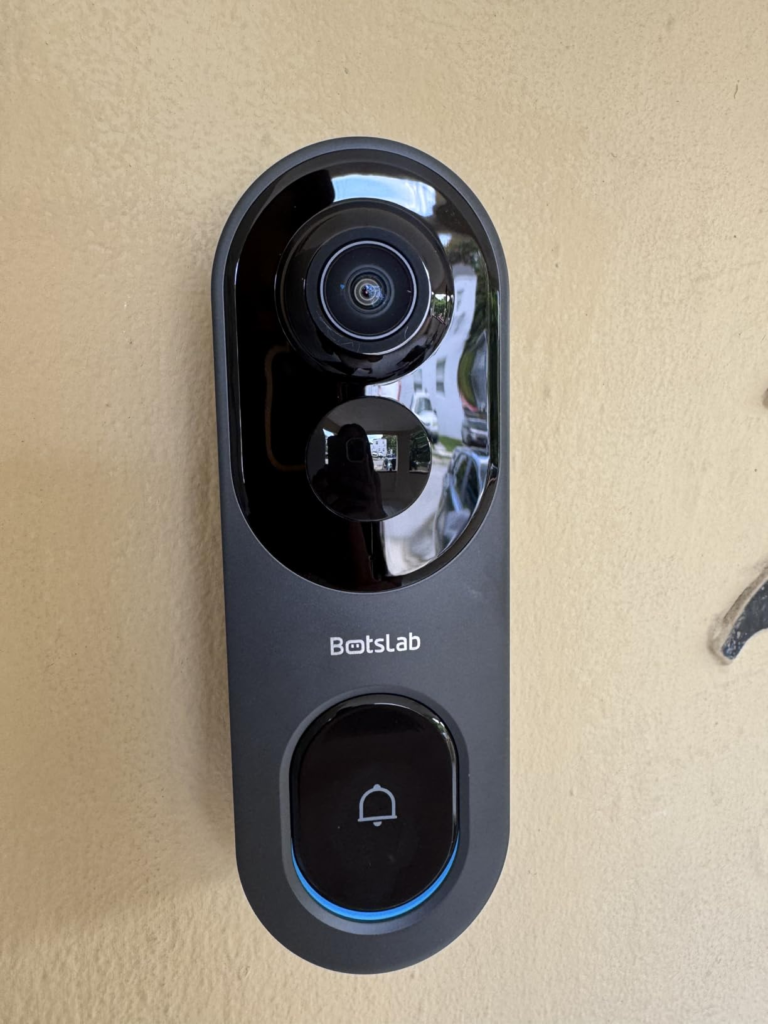
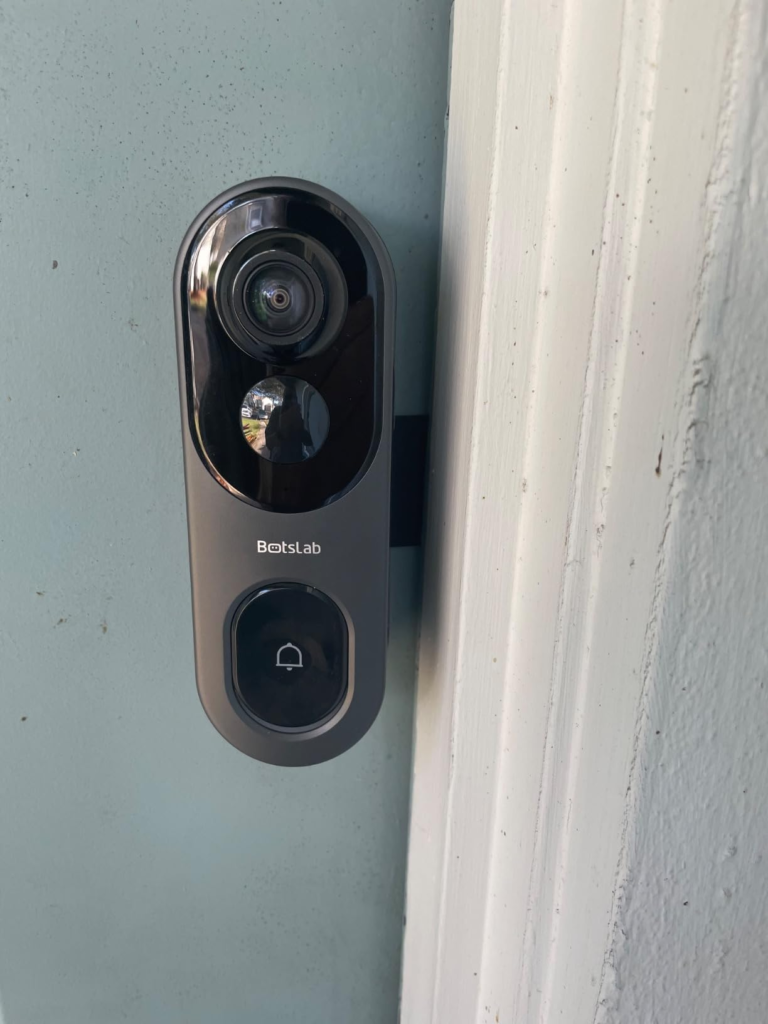
The 6,400mAh battery with wired and wireless options, 180-degree lens providing wide coverage, HDR, and night vision deliver strong image quality overall.
The optional cloud subscription exists at $5/month for one device or $13/month for ten. It unlocks advanced AI features. But it is optional — not the gate through which the product becomes usable.
That structural fact changes the ownership experience entirely.
What It Solves, What It Reduces, and What It Still Leaves to You
What the BOTSLAB R811 solves:
- Monthly storage fees — eliminated by 32GB built-in local storage
- Paying for AI detection — included at no subscription cost
- Buying a separate indoor chime — included in the box
- Footage disappearing after 24 hours — local storage overwrites on your terms
- Doorbell failing when internet drops — chime stays paired to the unit directly
What it reduces:
- Total ownership cost over 24 months — from $320–390 down to $130 base
- Installation complexity — battery eliminates wiring requirement
- False alerts over time — tunable zones and sensitivity settings
What it still leaves to you:
- Wi-Fi signal quality near the door — your responsibility, not the device’s
- Detection zone configuration — takes 10–15 minutes but is necessary for accuracy
- App navigation learning curve — modest but real
- Charging schedule — every 2–6 months depending on traffic and climate
- Low-light performance expectations — functional at 24 feet, not beyond
Final Compression
The BOTSLAB R811 doesn’t win by being the most advanced doorbell on the market. It wins by refusing to hold your footage hostage.
If your front door is within clean Wi-Fi range, if subscription fees on your current doorbell have quietly become a recurring frustration, and if you are willing to spend 15 minutes tuning detection zones once — then the decision is not complicated.
The footage is yours. The detection runs free. The chime is included. The math is not close.
If you are already inside the subscription threshold — paying monthly for a doorbell you purchased outright — this is where that pattern ends.
Frequently Asked Questions
| Question | Answer |
|---|---|
| Does the BOTSLAB R811 really work without any monthly subscription? | Yes. The 32GB built-in local storage records all detected events without requiring a plan. Basic cloud storage (48 hours, Year 1; 24 hours thereafter) and AI person/motion detection are also included for free. The optional $5/month plan unlocks advanced AI features, but the device is fully functional without it. |
| How long does the battery actually last in real use? | Botslab advertises up to 210 days. Real-world results vary: moderate residential traffic in mild climates gets close to that figure. High-traffic entries or cold winters (below freezing) reduce it meaningfully — expect 60–120 days under those conditions. Wired installation eliminates this variable entirely. |
| How does the BOTSLAB R811 compare to Ring in video quality? | The R811 shoots at 5MP (2880×1620) with HDR. Ring’s Battery Doorbell Pro records at 1536p. On raw resolution, the R811 leads. On app polish, live stream reliability, and ecosystem integration, Ring has the edge. The core trade-off is image quality and cost versus a more refined software experience. |
| What happens if my Wi-Fi goes down? | The indoor chime unit is paired directly to the doorbell out of the box. Physical doorbell presses will still trigger the indoor chime without an internet connection. Live streaming, app notifications, and cloud recording require Wi-Fi to be active. |
| Is the BOTSLAB R811 the same as the R811S? | The R811S is an updated variant with radar-assisted detection for improved false alert filtering. The core architecture — 5MP sensor, 180° field of view, 32GB local storage, 6,400mAh battery — is shared. The R811S adds radar as a second detection layer. Both are available on Amazon. |
| Can I connect the BOTSLAB R811 to my existing wired doorbell system? | Yes. The R811 supports wired installation using your existing doorbell wiring, which keeps the battery continuously charged and allows connection to compatible existing chime systems. Wiring is optional — battery operation is the default. |
| What is the prowler alert feature? | If a person lingers at your door for an extended period without ringing the bell, the R811 classifies and alerts this behavior separately as a “prowler” event. This is a native AI classification included without a subscription — and one of the more operationally useful distinctions the device makes. |
Transparency Note:
This analysis is built on aggregated real-world experience.
It extracts what repeatedly holds, what breaks, and what users uncover only after living with the system—then shapes it into a clear model you can use immediately.
Think of it as structured experience, refined and presented so you don’t have to learn it the hard way.
“A quick note: Don’t believe the star ratings, but trust personal experience. This article is a compilation of collected experiences”