YOUR DOORBELL RECORDS THE MOTION. IT MISSES THE MOMENT THAT ACTUALLY MATTERS.
There is a gap between when something happens at your front door and when you can prove it did. Most video doorbells live inside that gap — and market themselves as if the gap doesn’t exist.
The Footage Looks Fine. The Problem Isn’t the Picture.
You checked the app after the delivery. The clip was there. The resolution was clean enough to read the label on the package. You assumed everything was working the way it should. Then, three weeks later, a porch incident happened — something you needed documented — and what you found in the timeline was either a missing clip, a buffered blur, or a five-second delay that started after the thing you needed to see had already finished happening.
The picture quality was never the problem. The problem was the architecture beneath it — what triggers recording, how fast the alert fires, whether the storage is actually catching the event, and whether any of that is available to you when it matters most, not just when you are casually reviewing the feed on a Tuesday afternoon with full Wi-Fi bars.
Most people diagnose this wrong. They assume it is a resolution issue. Or a night-vision issue. Or a placement issue. It is none of those. It is a threshold problem — and it starts earlier in the device’s decision-making than the spec sheet ever acknowledges.
What You Are Actually Feeling but Have Not Named Yet
There is a specific kind of unease that builds around a doorbell camera that is technically working. You get the notifications. You open the app. The feed loads — most of the time. You went back once to find a clip and found the thumbnail, but when you pressed play it stuttered, buffered, and resolved into ten seconds of a blurry figure already walking away.
That experience doesn’t feel like a malfunction. It feels like bad luck. So you don’t report it. You don’t return the device. You quietly stop trusting it for anything serious.
What you are feeling is reliability gap friction — the quiet accumulation of small delivery failures that never cross the threshold of obvious, but erode the system’s functional value faster than any single visible malfunction would. You stop checking the timeline. You stop relying on the two-way audio for anything important. The device becomes ambient decoration.
This is the failure most doorbell cameras produce. Not broken footage. Not no footage. Just footage that arrives slightly wrong, slightly late, or slightly incomplete — with just enough quality during casual use to make you doubt your own concern.
The Hidden Mechanism Behind the Miss
Every video doorbell makes a sequence of micro-decisions before the first frame of a recorded clip reaches your storage. It has to detect motion — which means the sensor has to activate, cross a sensitivity threshold, and classify the trigger as worth recording. Then it has to begin buffering, connect to your network with sufficient upload bandwidth, authenticate with the cloud server, and write the clip. Only after all of that is the event considered captured.
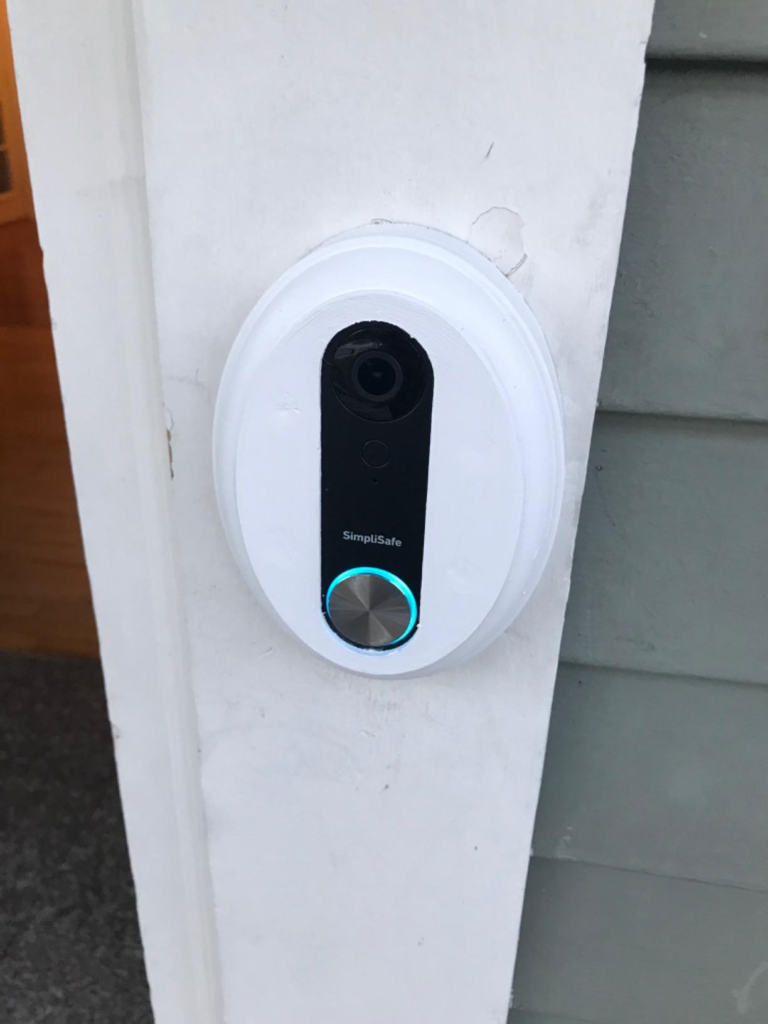
At each step, there is a latency cost. Most hardwired doorbells require 2 Mbps of sustained upload speed per camera just to stream cleanly — not to record, not to recover from a momentary drop, just to transmit a live feed without degradation. That number assumes no packet loss, no network contention from other devices, and no distance penalty from being on 2.4 GHz Wi-Fi — which is the only band the SimpliSafe Video Doorbell Pro supports.
The motion cool-off period introduces a second gap. On the SimpliSafe Video Doorbell Pro, motion alerts carry a five-minute cooldown between notifications. Anything happening during that window is still recorded, but generates no alert. You will not know to check. You will not open the app. The event will exist in the timeline with no flag, and the overwhelming probability is that you will never find it.
Person detection helps with false positives. The dual PIR and computer-vision classification system genuinely reduces car and branch alerts during daylight hours. But at night, the classification drops back to raw motion detection. The same doorbell that filters intelligently by day becomes a general heat-source sensor after dark — which is precisely when the events you actually care about documenting tend to occur.
The Threshold Where the Outcome Quietly Breaks
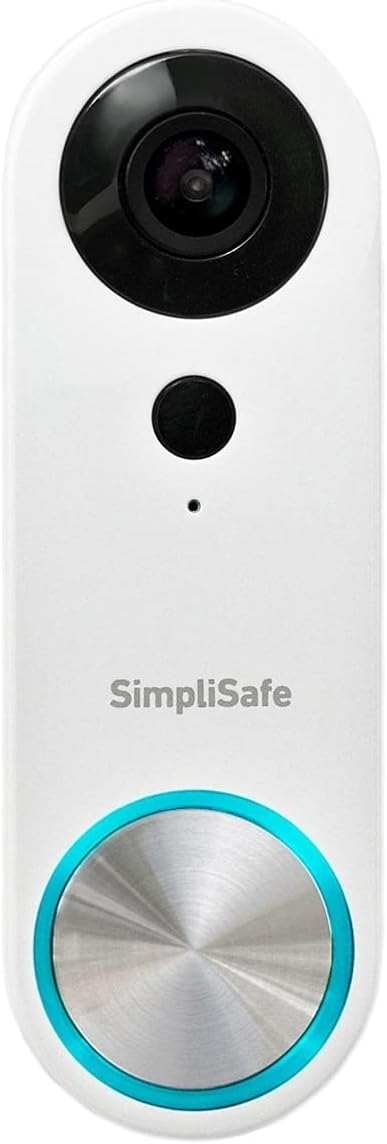
The SimpliSafe Video Doorbell Pro functions as described in its spec sheet up to and including the point where everything at your door is routine. The threshold is the moment something non-routine happens — and everything non-routine tends to happen at night, during network contention, at distances beyond six feet from the lens, or within a cooldown window. That is exactly where the device’s architecture begins to underperform its marketing.
Night vision clarity degrades past roughly six feet from the camera. Within close range — a caller standing directly at the door — the IR image is sharp and workable. Beyond that, movement becomes progressively blurry. For a camera positioned at a typical front door, six feet is roughly where someone walking up the driveway begins to enter the frame meaningfully. The most useful footage window and the clearest footage window do not fully overlap.
The live feed reliability has a similar inflection point. Under good conditions, most users connect to the live view on the first attempt. Under contested Wi-Fi, elevated household traffic, or momentary ISP inconsistency, the failure rate climbs — consistent independent testing surfaces a roughly one-in-four rate of failed live-load attempts. Not catastrophic, but enough to make the live feed unreliable for time-sensitive situations.
Two-way audio operates on a walkie-talkie protocol with a delay of several seconds each direction. For package delivery acknowledgment, that works. For anything requiring a real exchange — a conversation, a deterrence interaction, a security-adjacent situation — the lag makes the communication practically unusable before the other person gives up and leaves. Only the camera-side audio is captured in recordings. If someone speaks at your door and you respond through the app, your half of the exchange does not exist in the clip.
Why Most Buyers Misread This Too Early
The comparison trap is almost automatic. You look at $169. You look at 1080p. You look at the 162-degree field of view and HDR. You compare it to a Ring at $60 less with comparable specs on paper, and the question becomes: what are you paying for?
The answer is not in the spec comparison. The answer is in the system architecture it connects to.
Standalone, the SimpliSafe Video Doorbell Pro is a competent but unremarkable hardwired doorbell. The video is good. The person detection reduces noise. The HDR handles backlit scenes better than most alternatives at this price. But every serious competitor has a comparable answer to every one of those claims. The resolution parity is nearly universal in this category. The HDR advantage is real but incremental. The person detection works well by day and reverts at night.
The error most buyers make is evaluating this doorbell on its standalone merits — because that is how doorbell cameras are reviewed, compared, and sold. The device’s actual value structure is not standalone. It is conditional on something else being true about your situation.
When the doorbell connects to a SimpliSafe Gen 3 security system, it changes function. Any triggered sensor in the system — a door contact, a motion detector, a glass break sensor — signals the doorbell camera to begin recording immediately. The doorbell is no longer just a doorbell. It becomes a synchronized recording node that activates on system events, not just on its own motion detection threshold. That changes what the device is worth, and to whom.
Buying this doorbell to replace your Ring is likely a lateral move. Buying it to complete your SimpliSafe system is a structurally different decision.
Who Is Actually Inside This Problem
You already have a SimpliSafe security system — or you are actively building one. You have existing doorbell wiring that runs to a mechanical chime, not a digital one. Your transformer operates somewhere between 8 and 24 volts AC. Your Wi-Fi operates on 2.4 GHz, or you are willing to operate on it for this device specifically. You are comfortable with a 15-minute self-installation that involves turning off a circuit breaker and threading wires through a mounting bracket.
You want one subscription to cover your security monitoring and your camera storage, not separate billing relationships with separate companies. You are not looking for Alexa routines or Google Home announcements or IFTTT integrations. You are looking for a camera that rings your existing chime, connects to your existing system, and records to the same timeline your sensors already write to.
You have experienced a porch incident — a stolen package, an unrecorded visitor, a moment you wish you had on camera — and the weight of that miss is sharper than any spec comparison was ever going to be. You are buying to close a gap you already felt, not to acquire a feature you read about.
Where Wrong-Fit Begins
You do not have existing doorbell wiring, or your chime is digital. The SimpliSafe Video Doorbell Pro does not function without a mechanical chime and a compatible wired transformer. There is no battery option, no workaround, and no adapter that changes this constraint. If your home has never had a wired doorbell, this device requires running new wiring before it can operate — that is a different project than a doorbell installation.
You operate a Google Home or Amazon Alexa ecosystem and expect the doorbell to integrate with it. It does not. The SimpliSafe Video Doorbell Pro lives inside the SimpliSafe app and the SimpliSafe app only. There is no Alexa live-view command, no Google Home doorbell announcement, no IFTTT hook. If your home security is distributed across multiple platforms and you expect everything to talk to everything, this device will sit in isolation.
You want customizable motion zones. This doorbell does not offer them. You get four sensitivity levels applied to the entire field of view — off, low, medium, high — or nothing. If your camera position faces a busy street or active yard, sensitivity compromise is your only tool. Precision exclusion does not exist here.
You want video storage without a subscription at all, including the ability to review past events. Without a paid plan, you receive live view and push notifications only. You cannot review, download, or retain any historical footage. There is no free tier for recorded clips — not even thumbnails. If something happens and you are not watching live, and you have not paid for cloud storage, the event is gone.
You need reliable two-way audio for real conversations — deterrence scenarios, situations where timing matters, anything requiring a genuine back-and-forth. The press-to-talk delay makes live conversation functionally difficult, and only the camera-side audio is captured in recordings. The person standing at your door is documented. Your response is not.
The One Situation Where This Doorbell Becomes Logical
You are a SimpliSafe Gen 3 system owner. You want every component of your front-door security — the detection, the recording, the alert, the review — to feed into one timeline, governed by one subscription, accessible from one app. You have existing wiring. You are not building toward a smart home ecosystem. You are building toward a monitored perimeter.
In that situation, the SimpliSafe Video Doorbell Pro at $169 is not a doorbell with camera features. It is a synchronized node in a security architecture — one that activates not just on its own PIR threshold but on any system event that the broader SimpliSafe network triggers. That capability does not exist if you buy a Ring and pair it with a SimpliSafe system. The systems do not talk to each other. The timelines stay separate. The alerts stay separate. The subscriptions stay separate.
The HDR video is genuinely useful in real conditions. Backlighting from a bright street behind a shaded porch is the environment that causes most doorbell cameras to produce unusable footage, and the HDR handling here is measurably better than sensors without it. The dual-sensor person detection reduces daytime false alerts to a workable level — consistently low enough that medium sensitivity is sustainable in most suburban environments without producing notification fatigue.
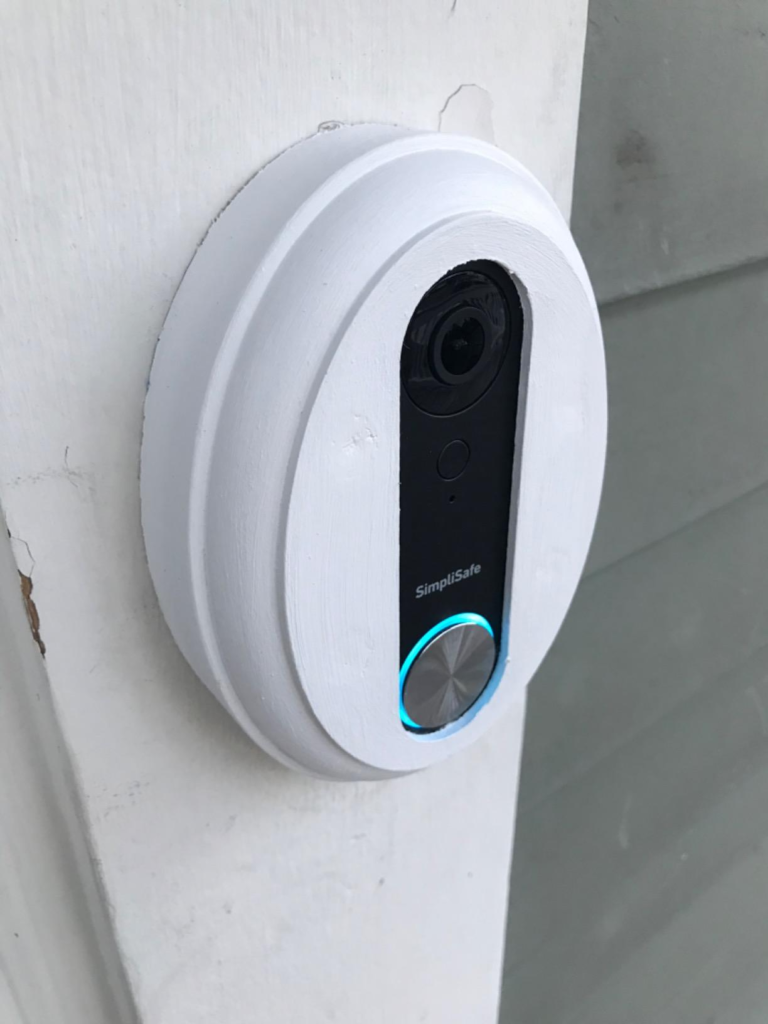
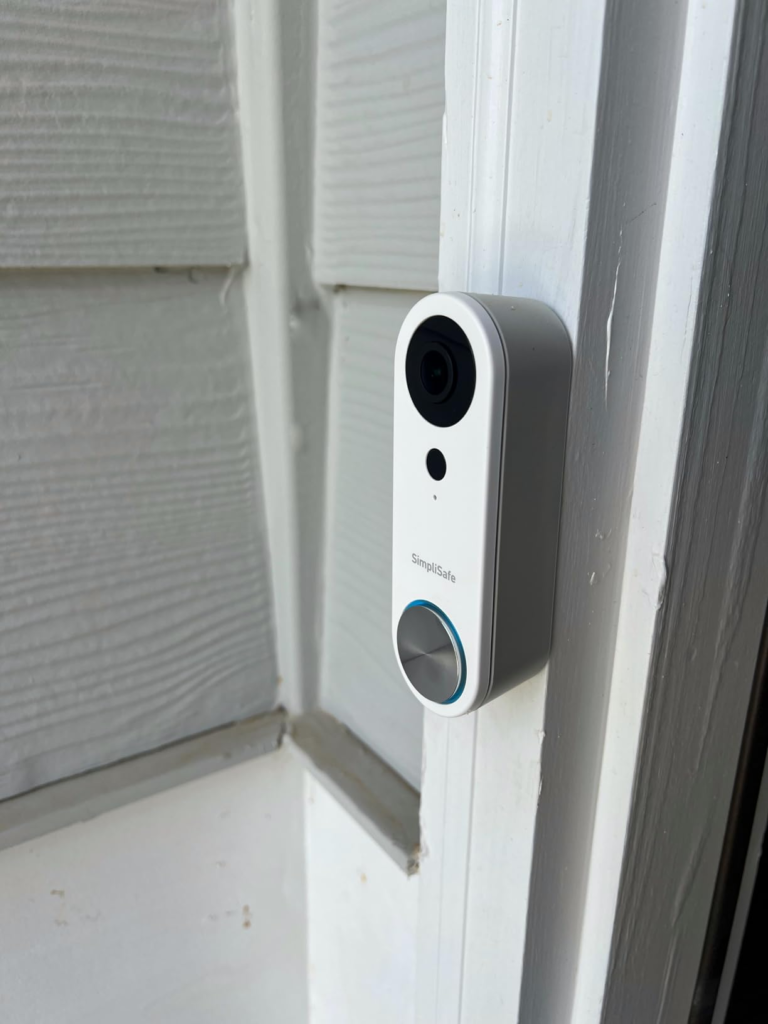
Installation takes under fifteen minutes for anyone comfortable with a circuit breaker and a screwdriver. The Wi-Fi pairing process — QR code displayed by the app, read by the camera — is the cleanest first-setup experience in this category. The device is weatherproofed for outdoor operation across rain, snow, and temperature extremes. None of that makes it the best video doorbell on the market for every buyer. It makes it the most architecturally coherent choice for one specific buyer — the one whose infrastructure is already SimpliSafe, and who is adding the doorbell as the final piece of a system they are not rebuilding from scratch.
What It Solves, What It Reduces, and What It Still Leaves to You
It solves the coverage gap at your front door within a SimpliSafe system. Motion events at the doorbell trigger recording synchronized with your existing sensor timeline. Daytime person detection significantly reduces notification noise. The HDR video makes footage usable in high-contrast lighting that defeats most competing sensors. Installation is fast, and the device does not require battery management — you will not discover a dead camera after three months of forgetting to charge it.
It reduces the probability that a relevant front-door event goes completely unrecorded. It reduces the cognitive overhead of managing multiple security apps and multiple subscriptions. It reduces the risk of ecosystem mismatch — everything in your SimpliSafe network operates under one roof, with one support contact, one monthly charge, and one alert hierarchy.
It does not eliminate the five-minute notification cooldown window. It does not improve night vision past roughly six feet — if your porch is deep or your approach path is long, that range limit is a real constraint. It does not add motion zones, so a busy street or active yard will require sensitivity compromise rather than precise exclusion. The two-way audio will remain a delayed press-to-talk system. And without a subscription, the camera’s history is inaccessible — if something happens and you are not watching live, you cannot retrieve what was recorded.
These are not disqualifying conditions for the right buyer. They are the specific shape of this device’s limitations, named accurately so that the decision you make with them in mind holds.
Final Compression
The SimpliSafe Video Doorbell Pro is a hardwired security camera designed to function as a synchronized node inside a SimpliSafe Gen 3 security system. Outside that context, it is a competent but undersized option relative to what Ring, Nest, and Arlo offer for comparable money. Inside that context, it is the only choice that closes the loop — connecting your front-door camera to your door sensors, your motion detectors, and your monitoring center inside one coherent system.
The regret profile for wrong buyers is specific: they bought it without existing wiring, or expecting Alexa integration, or as a standalone camera without a subscription — and then discovered there was nothing to review after the fact. That regret is preventable, and the conditions for avoiding it are clear.
The regret profile for right buyers is almost nonexistent. If your system is already SimpliSafe, your wiring is already in place, and you are closing the front-door gap — this device does exactly what it says, reliably, at a price that doesn’t require justifying twice.
If this is your situation, the decision has already been made. The only remaining question is how long the front door stays uncovered.
Transparency Note:
This analysis is built on aggregated real-world experience.
It extracts what repeatedly holds, what breaks, and what users uncover only after living with the system—then shapes it into a clear model you can use immediately.
Think of it as structured experience, refined and presented so you don’t have to learn it the hard way.
“A quick note: Don’t believe the star ratings, but trust personal experience. This article is a compilation of collected experiences”