Breville Barista Express Review: The Shot Can Look Right and Still Be Wrong
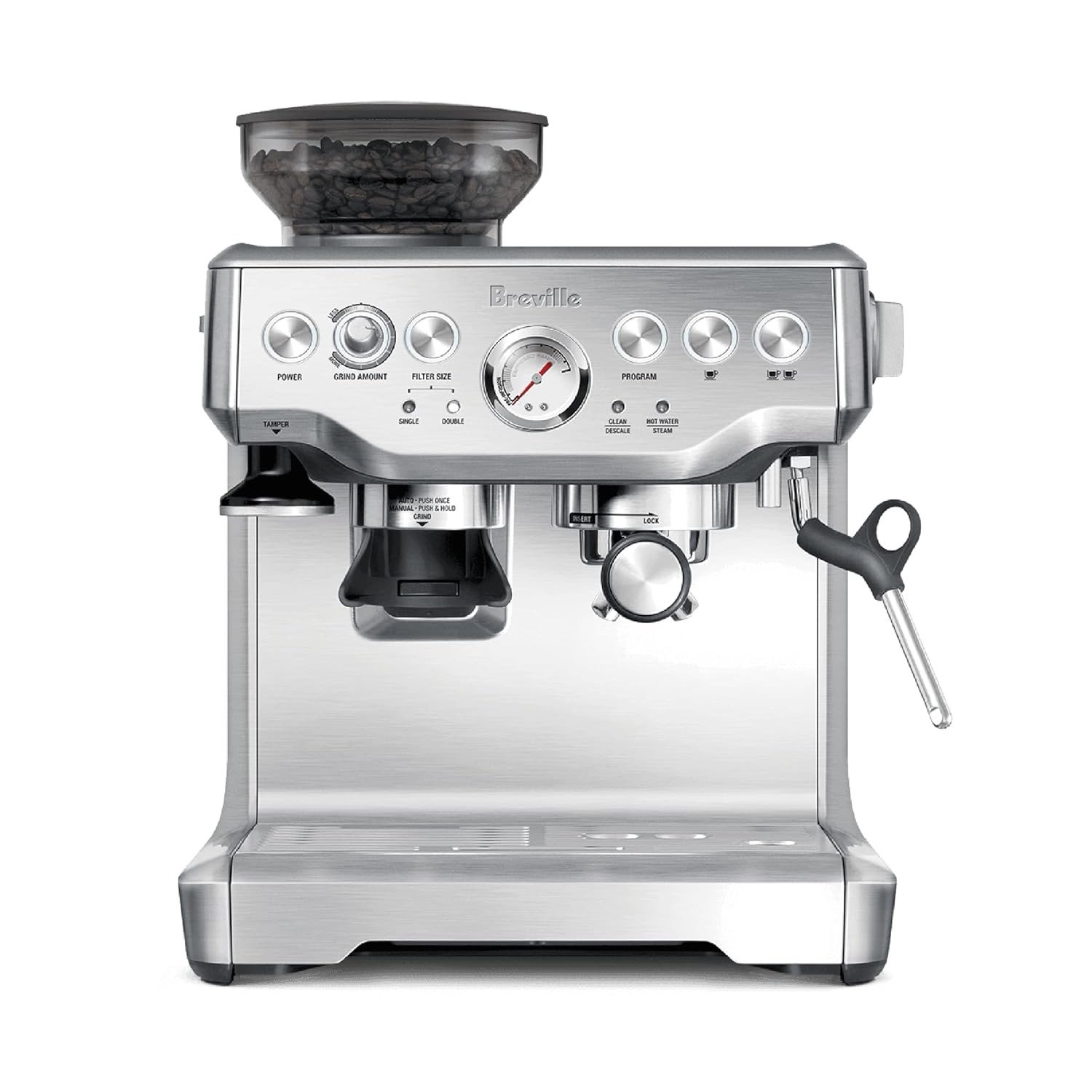
BREVILLE BARISTA EXPRESS
The expensive mistake is not buying a bad espresso machine.
It is buying a machine that flatters you for two weeks, decorates the counter for six months, and then turns every rushed morning into a low-grade argument with yourself.
That is why the Breville Barista Express keeps pulling people in. It promises something intoxicating: fresh-ground espresso, real milk texture, one metal-bodied machine, and a counter that suddenly looks less like a kitchen and more like a small private café. Breville positions it around integrated grinding, PID-controlled water temperature near 200°F, a 54 mm portafilter built around an 18 g dose, and manual microfoam capability. On paper, that is a lot of machine in one footprint.
But the real question is not whether it can make espresso. It can. Repeatedly. That is not the controversy. Reviewers at Tom’s Guide, WIRED, and TechGearLab all describe it as capable of producing consistently strong espresso, with solid milk frothing and an unusually balanced all-in-one workflow for the money.
The real question is sharper than that.
When does this machine stop being a stylish fantasy and become a rational purchase?
That is the threshold. And if you miss it, the machine does not punish you loudly. It punishes you quietly: in wasted beans, messy dialing-in, steam you wish were faster, and the creeping sense that you bought a serious-looking object for a routine you do not actually want.
The Result Looks Fine. The Problem Isn’t.
A Barista Express shot can look beautiful before it is truly working for you.
That is part of its seduction. The brushed stainless body has presence. It occupies the counter like a piece of equipment, not an appliance. It is about 12.5 × 13.8 × 15.9 inches, with a 67 oz water tank, a half-pound bean hopper, and enough visual weight to change the room around it. Set it under warm light, leave cups stacked nearby, keep the milk jug to the right, and the whole corner starts reading differently—cleaner, more deliberate, more expensive.
And yes, that matters.
Because people do not buy home espresso machines for liquid alone. They buy ritual. They buy control. They buy the feeling that morning no longer begins in a paper cup and a plastic lid.
Still, beautiful ritual is not the same thing as low-friction ownership.
Here is the split I kept seeing across expert reviews and owner feedback:
| What looks solved quickly | What actually takes time |
|---|---|
| Beans grind directly into the portafilter | Dialing in grind size still takes patience |
| Espresso appears with crema | Consistency depends on bean freshness and grinder tuning |
| Steam wand gives café-style control | Milk texture is learnable, not automatic |
| One machine saves space | One machine also locks grinder and brewer into the same workflow |
The machine’s appeal is real. So is the work hiding behind the shine.
What You’re Actually Feeling but Not Naming
Most people do not need “an espresso machine.”
They need relief from one of three things:
- coffee that tastes flat after spending too much at cafés
- a morning routine that feels disposable
- the itch to make something with their own hands instead of pressing a dead button and accepting the result
The Barista Express speaks to all three. That is why it sells so well and why its owner ratings stay strong. Amazon marketplace listings show it around 4.4/5 across 21,000+ ratings on major regional listings, which is not the profile of a niche darling—it is the profile of a machine that lands in a lot of real kitchens and survives a lot of imperfect owners.
But owners also keep circling the same emotional friction points:
- the grinder is convenient, but not endlessly precise
- grind retention can slow adjustment and waste coffee when you change settings
- the steam wand is capable, but not especially fast compared with more advanced machines
- it rewards repetition, not impatience
That emotional texture matters more than the spec sheet.
Because the machine is not hard in a dramatic way. It is hard in a domestic way. A small clump here. A stale gram there. A shot that runs a little too fast before work. Milk that is almost silky, not quite. Nothing catastrophic. Just enough resistance to expose whether you actually enjoy the process or only admired the idea of it.
The Hidden Mechanism Behind the Miss
The hidden variable is not pressure.
It is workflow tolerance.
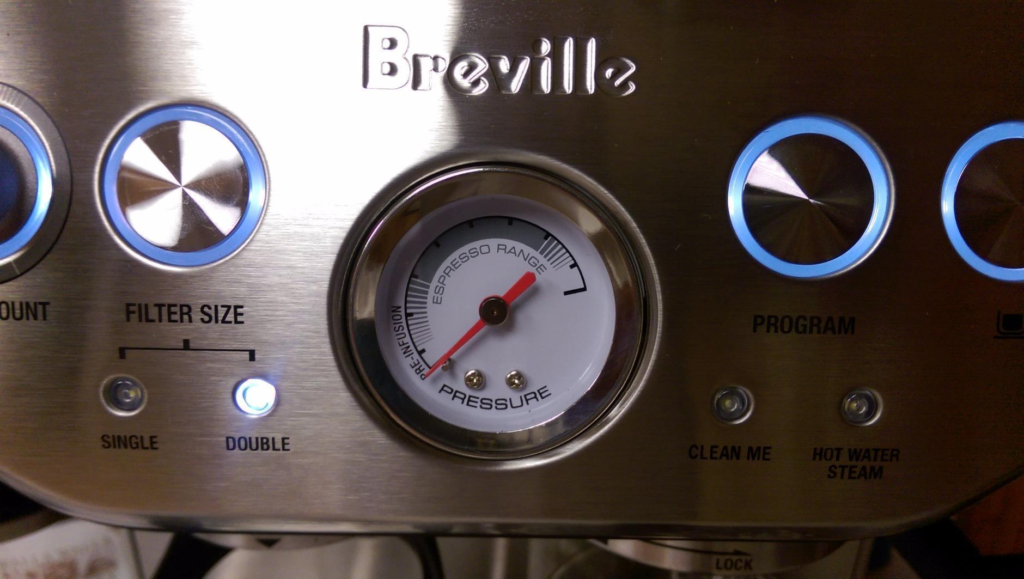
Breville’s official design language is built around the “4 keys” idea: integrated grinding, controlled dose, temperature stability, and manual microfoam. The Barista Express backs that up with a conical burr grinder, manual grind adjustment, adjustable dose, and PID-regulated thermocoil heating. Those are not fake features. They are the reason the machine can punch above entry-level pod-style convenience.
But machines do not fail only on what they can do. They fail on what they require from you.
And this machine requires three things, over and over:
| Hidden requirement | Why it matters |
|---|---|
| Fresh beans | Old beans make dialing-in feel random |
| Repetition | The machine gets better as your habits get tighter |
| Cleaning discipline | Coffee oils, retained grounds, and scale quietly erode performance |
That is why the same machine can inspire loyalty in one kitchen and regret in another. Some reviewers praise its consistency and thoughtful all-in-one design. Others point to grinder retention, slower steaming, and the reality that separate grinder-and-machine setups outperform it once your standards climb. Both camps are right because they are often describing different users, not different facts.
The miss happens when a buyer reads the machine as “semi-automatic convenience” when it is actually “manual espresso with training wheels.”
That distinction changes everything.
The Threshold Where the Outcome Quietly Breaks
Here is the threshold I would name for this machine:
The Barista Express becomes a bad buy the moment you want café-level control without café-level repetition.
That is the break point.
If you want to grind, tamp, pull, steam, wipe, purge, brush, descale, and slowly sharpen your taste over time, the machine feels coherent. If you want perfect results while half-awake, on changing beans, with no tolerance for experimentation, the friction starts showing fast. Owner discussions and reviewer commentary converge on the same pattern: it is a strong starter-to-intermediate platform, but the grinder becomes the first ceiling for people who chase tighter precision or switch coffees often.
This is where many buyers misread the machine. They think the threshold is budget.
It is not.
It is temperament.
A cleaner way to see it:
| Threshold test | If your answer is “yes” | If your answer is “no” |
|---|---|---|
| Will you use the same beans for stretches of time? | The integrated grinder becomes easier to live with | Retention and re-dialing will annoy you more |
| Do you enjoy learning by repetition? | The machine starts to feel rewarding | It starts to feel fussy |
| Do you want one footprint instead of two machines? | Its all-in-one format becomes a strength | Separate gear may serve you better |
| Are you okay brewing and steaming in sequence, not at once? | Workflow stays reasonable | You may notice the limits sooner |
This is not a machine for people who hate process.
It is a machine for people who want process—but not a laboratory on the countertop.
Why Most Buyers Misread This Too Early
Because they compare features instead of living costs.
The lazy comparison sounds like this: built-in grinder, stainless body, pressure gauge, steam wand, single and double baskets, included accessories—therefore, high value. And to be fair, the box is generous. You get the 54 mm portafilter, single- and dual-wall baskets, milk jug, tamper, Razor trimming tool, cleaning accessories, and water filter hardware. That lowers the pain of getting started.
But a serious buy is never decided by accessories alone.
It is decided by the shape of the annoyance that remains after the novelty wears off.
May you make good espresso with this machine? Absolutely.
Will the grinder sometimes be the part you outgrow first? Also yes.
Will its slower, more forgiving steam wand actually help beginners learn milk texture rather than blast past it? In many cases, yes again.
That is why the machine is so often misjudged.
People expect a miracle.
What it offers is a compact apprenticeship.
Who Is Actually Inside This Problem
This machine becomes logical for a very specific person.
You are inside the fit if most of this sounds like you:
- You want espresso that tastes materially better than pod coffee or casual drip, and you care enough to learn why.
- You value one integrated machine more than building a separate grinder-plus-machine setup.
- You want your kitchen to look more intentional, more tactile, more like a place where something crafted happens.
- You are willing to repeat a workflow until it becomes muscle memory.
- You mostly drink milk drinks, straight shots, or americanos at home and want that daily loop under your own control.
And just as important, you are probably not chasing endless gear escalation. Forum discussions around separate setups often make a fair point: dedicated machines and grinders can outperform the Barista Express. But they also cost more, take more space, and often make sense only once you already know you want to go deeper.
That is the psychological center of this machine.
It is for the buyer who wants the door into real espresso, not the buyer who wants the final room.
Where Wrong-Fit Begins
Wrong-fit starts earlier than most people think.
Not when you dislike the coffee.
When you resent the ritual.
If these are true, I would step back:
- you want fast steam power above all else
- you switch beans constantly and hate wasting coffee while adjusting
- you want no-learning convenience more than tactile control
- you already suspect you will upgrade the grinder soon
- your counter is tight enough that even this “compact” all-in-one will still dominate the space
The strongest criticisms I found do not say the Barista Express is bad. They say something more useful: its built-in grinder has retention limits, its steam is not the fastest in class, and separate components give higher long-term flexibility once your standards change. That is not a takedown. It is a boundary line.
And boundaries are where good decisions begin.
The One Situation Where This Product Becomes Logical
The Breville Barista Express becomes logical when your real problem is not “I need the best espresso machine.”
It is this:
I want one serious machine that lets me build a café-quality morning ritual at home without turning my kitchen into a gear project.
That is the moment the product clicks.
Not because it wins every technical battle. It does not.
Not because it is perfect for everyone. It plainly is not.
But because it compresses the right things into one body: grinder, brewing, steaming, a real portafilter workflow, enough temperature control to matter, and a physical presence that makes the space feel upgraded the minute it lands.
If that is your condition, the Barista Express stops looking like a compromise and starts looking like a clean answer.
A clean answer is powerful.
Especially in a market full of machines that are either too automatic to feel rewarding or too modular to feel sane.
If this is the condition you are actually dealing with, this is the logical next step.
What It Solves, What It Reduces, and What It Still Leaves to You
Here is the honest compression.
| It solves | It reduces | It still leaves to you |
|---|---|---|
| Buying café drinks out of habit | Counter clutter from separate entry-level gear | Learning grind and shot timing |
| Weak home coffee ritual | Guesswork around dose-to-cup workflow | Cleaning retained grounds and milk residue |
| The gap between convenience coffee and real espresso | The distance between “I want espresso” and “I know how to start” | Accepting that the grinder is the first likely ceiling |
| Cheap-looking coffee corners | The psychological drag of disposable coffee routines | Using fresh beans and maintaining the machine regularly |
Maintenance is not optional here. Water filters help with scale, and regular cleaning of the grinder, tray, tank, and brew components matters if you want the machine to keep tasting like it did when you first got it. Reviewers and service-oriented writeups repeatedly emphasize that neglect shows up as flavor drift, residue buildup, and the kind of silent decline many owners mistake for “the machine getting old.”
So no, it does not erase effort.
It does something better.
It makes the effort feel justified—provided you are the kind of person who was always going to care.
Final Compression
Most people do not need a more expensive machine.
They need a cleaner decision.
Here is mine after tracing the specs, the long-term praise, the recurring complaints, the owner tolerance, and the kitchen reality:
The Breville Barista Express is a strong buy only after you admit that what you want is not pure convenience and not obsessive hobbyism, but a middle state—a machine with enough weight, enough ritual, enough control, and enough beauty to make home espresso feel real without demanding a full equipment ecosystem.
That is its real category.
Not “best for everyone.”
Not “entry-level miracle.”
Not “cheap café replacement.”
A middle state. A useful one.
And if your mornings already break at exactly that point—where instant coffee feels dead, café spending feels stupid, and fully separate gear feels like too much—then the Barista Express stops being a tempting object and becomes something rarer:
A justified machine.
Transparency Note:
This analysis is built on aggregated real-world experience.
It extracts what repeatedly holds, what breaks, and what users uncover only after living with the system—then shapes it into a clear model you can use immediately.
Think of it as structured experience, refined and presented so you don’t have to learn it the hard way.
“A quick note: Don’t believe the star ratings, but trust personal experience. This article is a compilation of collected experiences”