You Don’t Miss the Visitor First. You Miss the Space That Proves They Were There.
ECOBEE SMART DOORBELL CAMERA
The Result Looks Fine. The Problem Isn’t.
A lot of doorbell cameras fail in a strangely polite way. The person shows up. The alert lands. The clip looks clean enough. You think the system worked.
Then the package is half out of frame. The visitor stood too close. The porch glare washed the face. The notification arrived, but the useful part of the moment slipped through a crack so small most buyers never name it.
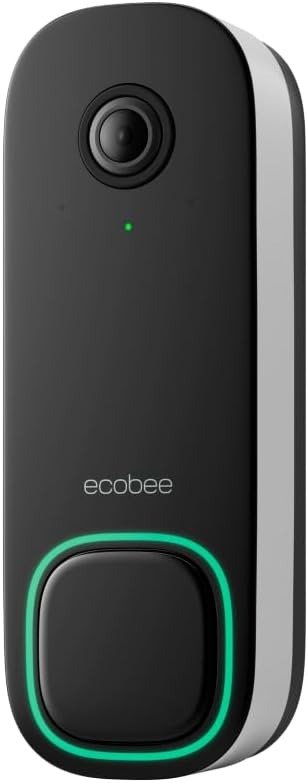
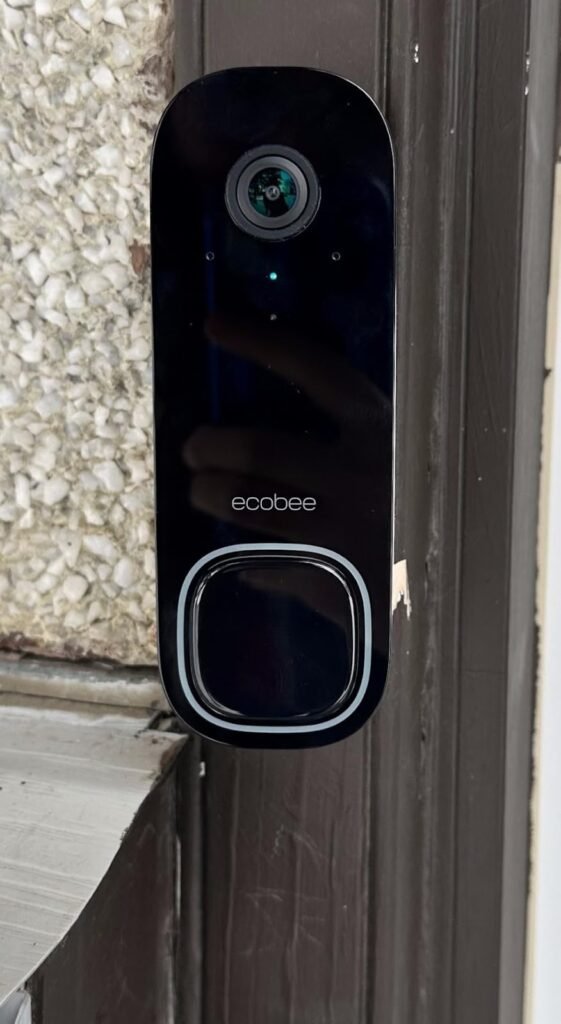
That is the real tension around the ecobee Smart Doorbell Camera. Not whether it records video. Not whether it rings. Not whether it looks modern on the wall. The question is harsher: does it reduce the kind of front-door ambiguity that actually creates regret? The hardware is solid on paper—1080p video, 5MP sensor, HDR, dual-band Wi-Fi, IP65 weather resistance, a 187-degree diagonal field of view with a notably tall 175-degree vertical view, IR night vision to 30 feet, and two-way audio. The broader review consensus also lands in roughly the same place: strong field of view, accurate alerts, useful smart-home integration, but software and subscription limits that matter more than the box suggests.
What grabbed me here was not the resolution. It was the geometry.
What You’re Actually Feeling but Not Naming
Most people say they want a “good doorbell camera.” That sounds clear. It isn’t.
What they usually want is three things at once: less uncertainty, fewer false interruptions, and a cleaner read on what happened at the door. That is different. A sharper image alone does not solve that. A louder chime does not solve that. A longer feature list definitely does not solve that.
The itch is subtler. You want to know whether a box was dropped at the threshold or one step lower. You want to catch the moment a visitor leans out of the flattering center of the frame. You want the alert to arrive when something meaningful happens, not every time wind drags a shadow across the mat. Reviewers who actually lived with the device kept circling the same pattern: the ecobee is compelling when the problem is porch visibility and notification quality, not when the problem is “I want every advanced security feature without ongoing tradeoffs.” The Verge praised the head-to-toe view, fast people/package alerts, and thermostat integration, while also flagging the subscription gate around recorded video and richer alert behavior. Tom’s Guide reached a similar conclusion, calling it a strong first effort and emphasizing the same porch-first strengths.
That gap matters. Because once you name the friction correctly, the product stops looking like a generic smart-home accessory and starts looking like a tool built for one very specific front-door failure.
The Hidden Mechanism Behind the Miss
Here is the hidden variable most buyers underweight: vertical coverage.
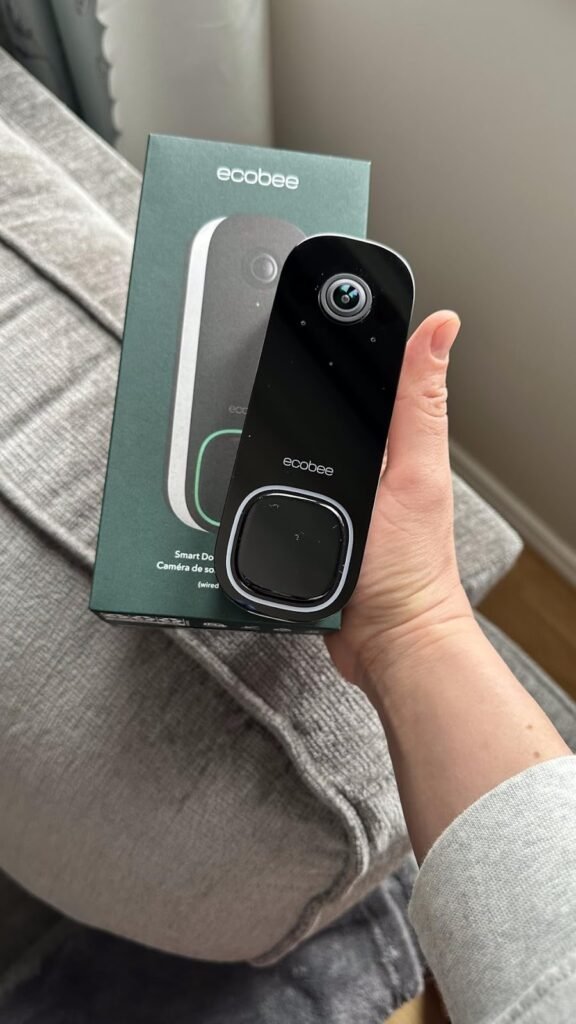
Doorbells live in a cruel physical space. Faces are high. Packages are low. Visitors move toward the lens, not across it. Standard wide-angle bragging often sounds impressive but still misses the practical shape of the scene you care about. Ecobee’s core advantage is that its field of view is unusually tall, using a 3:4 portrait feed to show both a standing visitor and the drop zone near the door. In hands-on testing, that translated into seeing parcels pushed right up against the threshold without losing the person at the button.
That changes the buying logic.
A doorbell is not a driveway cam. It is not a floodlight. It is not a perimeter system. It sits in the narrow theater of your entryway, where usefulness depends less on cinematic sharpness and more on whether the frame matches the problem. Ecobee leans into that with radar-assisted motion detection, computer vision for person/package alerts, and Smart Focus pan-and-zoom behavior. That stack is why several reviewers described the alerts as fast and accurate, especially for the kinds of events people actually care about at a front door.
But the mechanism cuts both ways. Because once the field-of-view problem is solved, the weaknesses become easier to see.
The Threshold Where the Outcome Quietly Breaks
This is the threshold I would name for this category:
The Porch Ambiguity Threshold — the point where a doorbell stops being reassuring and starts becoming interpretive work.
Below that threshold, you glance at the alert and immediately know what happened. Above it, you replay, zoom, squint, and still feel uncertain.
Ecobee stays below that threshold surprisingly well when your main pain is front-door visibility. Its tall frame, solid HDR video, clear two-way audio, and person/package detection reduce guesswork in exactly the zone where many doorbells get clumsy. That is the part I take seriously.
It crosses the threshold in a different way when you expect it to behave like a full-fat security platform with generous recording policies and zero ecosystem friction. The Verge noted no local storage, no free recorded video, no HomeKit Secure Video, and no 24/7 recording. A Reddit owner complaint also points to a hard practical frustration: event recording capped at two minutes can feel too short for longer doorstep incidents. Those are not cosmetic issues. They shape whether the product feels calmly useful or faintly incomplete over time.
That is where the dream breaks quietly. Not at install. Later.
Why Most Buyers Misread This Too Early
Because they shop doorbells the way people shop TVs: by comparing visible specs before they compare lived conditions.
1080p sounds ordinary. A subscription sounds annoying. A wired-only design sounds limiting. On a product grid, those details can make the ecobee look merely competitive rather than decisive.
But the real split is not “more features versus fewer features.” It is this:
| What buyers compare too early | What actually determines satisfaction |
|---|---|
| Resolution number | Whether the frame captures face + threshold in one useful view |
| Long feature list | Whether alerts reduce front-door ambiguity |
| Cheap entry price | Whether subscription limits irritate you after month three |
| Ecosystem logos | Whether you already live inside ecobee / Apple Home / Alexa workflows |
| “Security” branding | Whether you need porch awareness or full incident-grade coverage |
That is why the product attracts both praise and backlash. Amazon’s review average sits at 4.1/5 from 974 global ratings, which shows plenty of owners are satisfied overall, but the spread is telling: there are strong positive reviews praising build, installation, and package detection, alongside sharp complaints about failures, lag, and image softness when zooming.
A weaker product gets hated uniformly. A mismatched product gets loved by the right household and resented by the wrong one.
Who Is Actually Inside This Problem
You are the right reader for this doorbell if your front-door problem sounds like this:
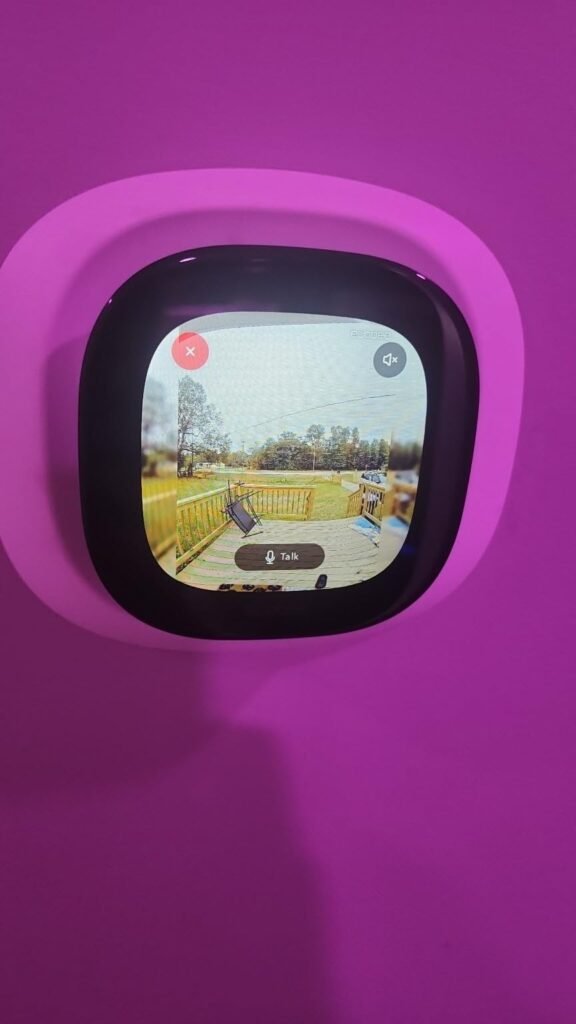
You already have wiring. You care about packages as much as faces. You want fewer junk alerts. You like the idea of seeing the doorbell feed on an ecobee Smart Thermostat Premium or through Apple Home / Alexa. You want a camera that feels like part of a broader home routine, not a random app bolted onto the house. Ecobee’s integrations are real: the doorbell works with Apple Home and Amazon Alexa, and the Smart Thermostat Premium can show the live feed at the thermostat itself.
You are especially inside the fit if your porch creates the classic blind spot problem—tight landing, deliveries pushed near the door, visitors standing close, mixed lighting, and a constant low-level annoyance that “the camera caught something” is not the same as “the camera settled the question.”
That is this product’s territory.
Where Wrong-Fit Begins
Wrong fit starts the moment you need this doorbell to be something it is not.
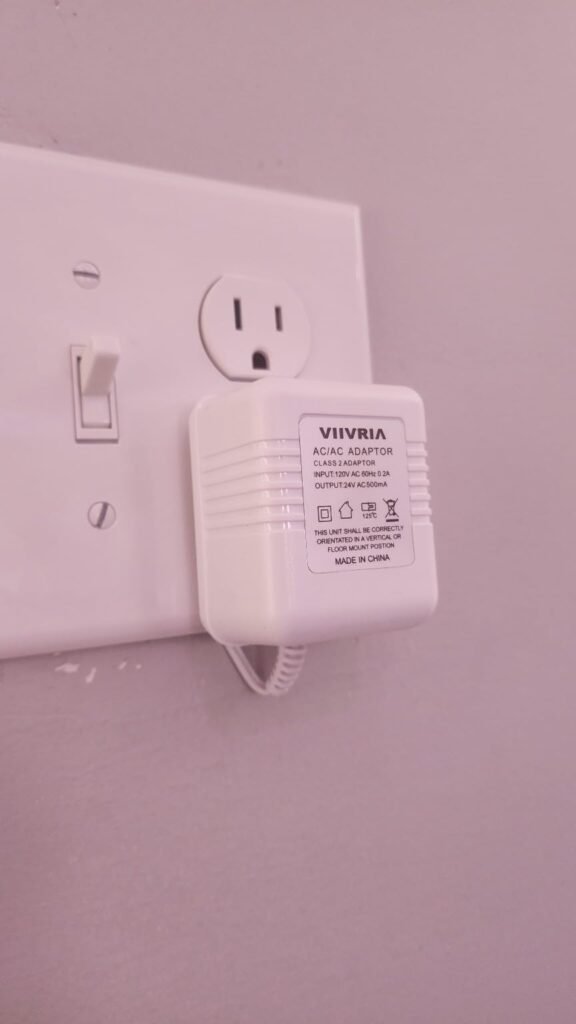
If you need battery power, stop here. This is wired only. If your home uses wireless or plug-in chimes, compatibility becomes a problem; ecobee’s official support says it is compatible with most mechanical and digital chimes, not wireless or plug-in chimes, and it expects 16V to 24V with at least 10VA.
If you hate subscriptions on principle, wrong fit starts even faster. Ecobee locks meaningful pieces of the experience behind Smart Security: recorded video storage, package detection in some official descriptions, richer notifications, and the broader security context all become part of a paid layer. The Verge was blunt about this, and ecobee’s own product materials tie 30-day storage and advanced features to subscription terms.
If you want a forensics-first security camera for long incidents, outages, and edge-case resilience, the objections get heavier. There is no local storage. No HomeKit Secure Video. Reviewers and users have also raised concerns about livestream responsiveness and event limits in real use.
And if you are shopping outside the ecobee / Apple Home / Alexa comfort zone, part of the product’s elegance simply evaporates.
The One Situation Where This Product Becomes Logical
The ecobee Smart Doorbell Camera becomes logical in one narrow but powerful situation:
You are trying to fix front-door uncertainty inside an already smart, already wired home—not build a no-compromise security perimeter from scratch.
That is the moment the product clicks.
Because then the unusual vertical view matters. The radar-assisted alerting matters. The thermostat integration stops being a gimmick and starts feeling like friction removed. The package zone near the threshold stops disappearing. The app alert becomes less noisy. The system begins to answer the real question faster: What actually happened at my door?
That is also why major reviewers keep placing it not as the universal best doorbell, but as a particularly sensible option for ecobee homes and certain Apple-oriented setups. Even The Verge’s broader 2025 guide still frames it as an ecobee-owner play rather than a category-wide default.
What It Solves, What It Reduces, and What It Still Leaves to You
Here is the cleanest way I can compress the tradeoff:
| It solves | It reduces | It still leaves to you |
|---|---|---|
| Poor head-to-toe porch visibility | Useless motion noise | Subscription decision |
| Missing packages at the threshold edge | Guesswork about who/what triggered the alert | Compatibility check for wiring and chime |
| Weak integration in an ecobee-centered home | Friction between doorbell and indoor device workflow | Acceptance of cloud-first storage |
| “Did something happen?” uncertainty | The need to constantly open clips just to verify small events | Living without local/HKSV-style ownership |
I would add one more practical line. The hardware story is better than the ownership story. The camera body, weather rating, field of view, and core live-view behavior are credible. The long-term emotional cost comes from the software envelope around it—what is free, what is delayed, what is capped, what requires trust in the ecosystem staying aligned with your habits. That tension is visible in professional reviews and in owner comments alike.
So no, this is not the clean answer for everyone.
But that is exactly why it can be the right answer for a smaller group.
Final Compression
Most people buy a video doorbell to see who is there. That is too shallow. The real purchase is about reducing ambiguity at the one point of the home where tiny misses turn into recurring irritation.
If your problem is porch geometry, package visibility, and front-door uncertainty inside a wired smart home, the ecobee Smart Doorbell Camera has a real edge. Its tall field of view is not marketing fluff. Its alert behavior is often better than the average spec sheet suggests. Its ecosystem fit can make the whole thing feel cleaner than a more famous alternative.
If your breakpoint is subscription fatigue, local-control demands, battery flexibility, or incident-grade recording expectations, this is where the decision should stop. The wrong buyer will not feel mildly disappointed. The wrong buyer will feel nickeled, limited, and quietly irritated every week.
That is the split.
And once you see that split clearly, the product either snaps into place—or it disappears.
If this is the condition you are actually dealing with, the next step is simple: check the product page, confirm your transformer and chime compatibility, and decide whether your real problem is coverage or control. If it is coverage, this is one of the more logical wired doorbells in its lane.
Transparency Note:
This analysis is not based on quick personal impressions.
It is derived from documented system behavior, verified user patterns, and the physical constraints of storage capacity.
The goal is to translate complex technical behavior into a realistic performance model that helps you make a clear decision.
“A quick note: Don’t believe the star ratings, but trust personal experience. This article is a compilation of collected experiences”