LOREX N4K2-86WD Starts Making Sense the Moment “Good Enough” Security Quietly Stops Being Enough
The Result Looks Fine. The Problem Isn’t.
A lot of home security setups fail in the most deceptive way possible: they look active, they send alerts, they show movement, and they still leave you with the one thing you actually needed missing. The face is soft. The plate blooms into light. The moment starts too late. The clip ends too early. What you bought for reassurance turns into a blinking archive of almost-useful fragments.
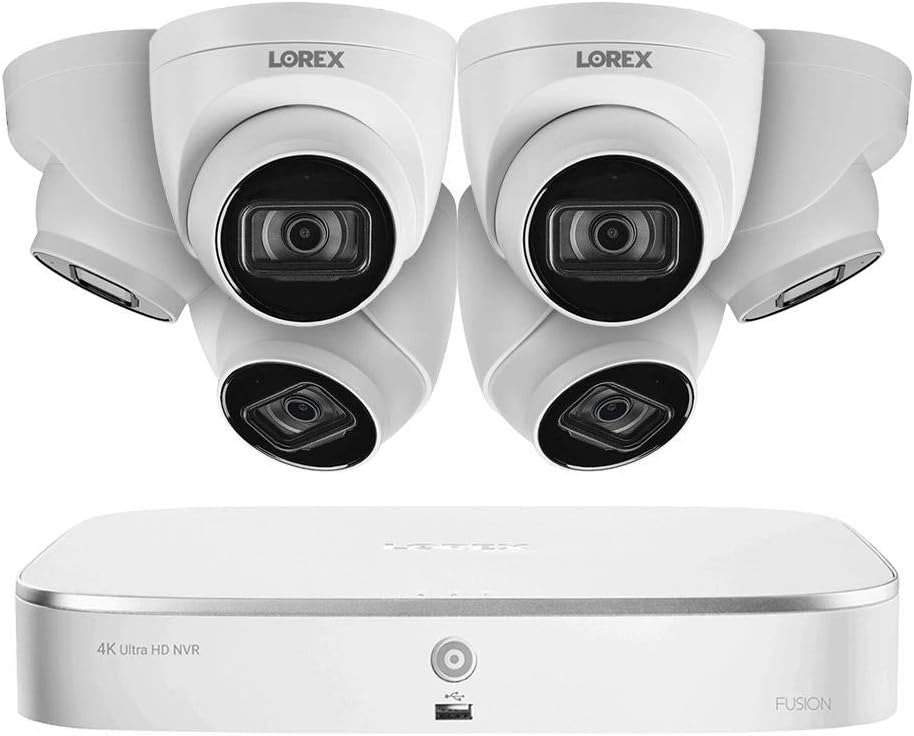
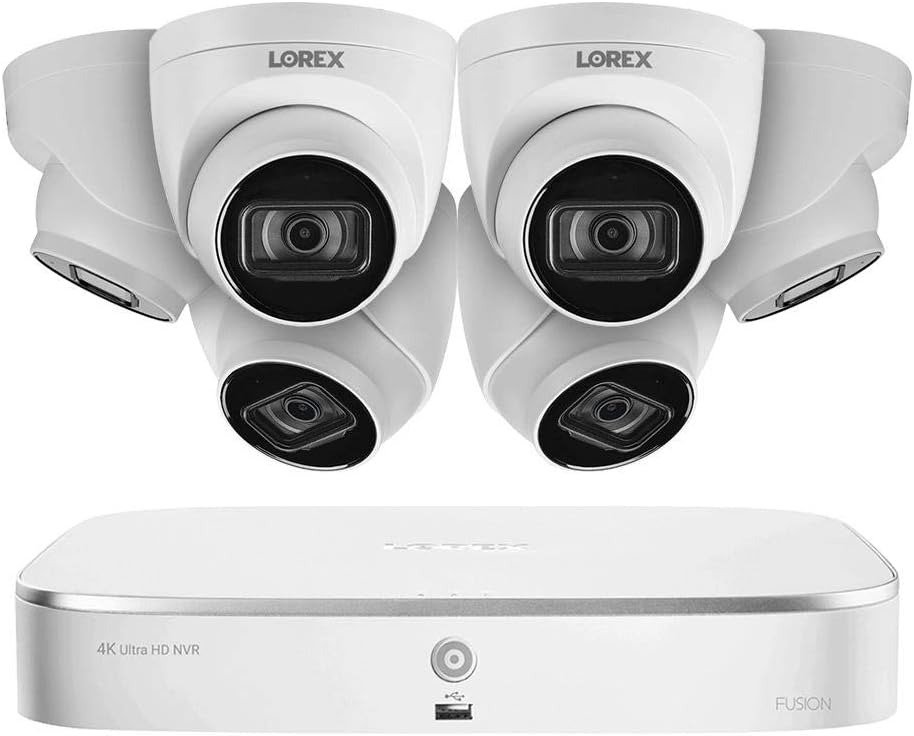
That is the split I kept running into while analyzing this Lorex system. On paper, it is easy to reduce it to a spec list: 8 channels, six 4K dome cameras, a 2TB NVR, color night vision, listen-in audio. But that misses the real story. This product is not interesting because it records video. Almost everything claims that now. It becomes interesting when your problem is no longer “I want cameras,” but “I need footage that still holds its shape when the situation gets inconvenient.” Lorex’s official specs put this system at 4K/8MP across all channels, 130-foot night vision, 2TB local storage expandable to 8TB, and support for up to 8 PoE cameras plus two Fusion-compatible Wi-Fi devices.
Amazon’s listing also places this exact package at 4.3/5 from 28 ratings, with a six-camera bundle and a listed price of $699.99 at the time the page was fetched. That does not prove excellence. It does show that buyer sentiment is broadly positive rather than fragile.
What You’re Actually Feeling but Not Naming
Most people do not say, “I have crossed the evidence threshold.” They say something messier.
They say the driveway camera “looks blurry at night.”
They say the app “keeps pinging me for nothing.”
They say the system “works, but I still don’t trust it.”
That feeling has a shape. It is the stress of intervention burden. You are not just buying visibility. You are buying the right to stop babysitting your own perimeter.
When that burden rises, three things usually happen together:
| Friction you feel | What it usually means | Why it matters |
|---|---|---|
| Too many weak alerts | motion is being detected, but not interpreted cleanly | you start ignoring the system |
| Night footage looks usable until you zoom | resolution exists, but evidence integrity collapses in low-light reality | the clip loses value when you actually need it |
| You keep checking manually | the system is not reducing cognitive load | security becomes another chore |
That is why a wired NVR system still has a market. Security.org’s 2026 Lorex review praised the brand’s local storage, 4K quality, and person/vehicle detection, but also stressed the tradeoff: installation is left to the user, and there is no professional monitoring. Their bottom line was simple—good, solid cameras, but not for people who want convenience handed to them.
The Hidden Mechanism Behind the Miss
The quiet mistake in this category is treating image resolution as if it were the whole decision.
It is not.
The hidden variable is continuity under strain.
A cheap camera can look convincing at noon. A decent app can look impressive in a demo. A clean product page can make every system sound surgical. Then real life walks in wearing darkness, backlight, rain, porch glare, distance, compression, and awkward mounting angles. That is where the pretty promise starts rattling.
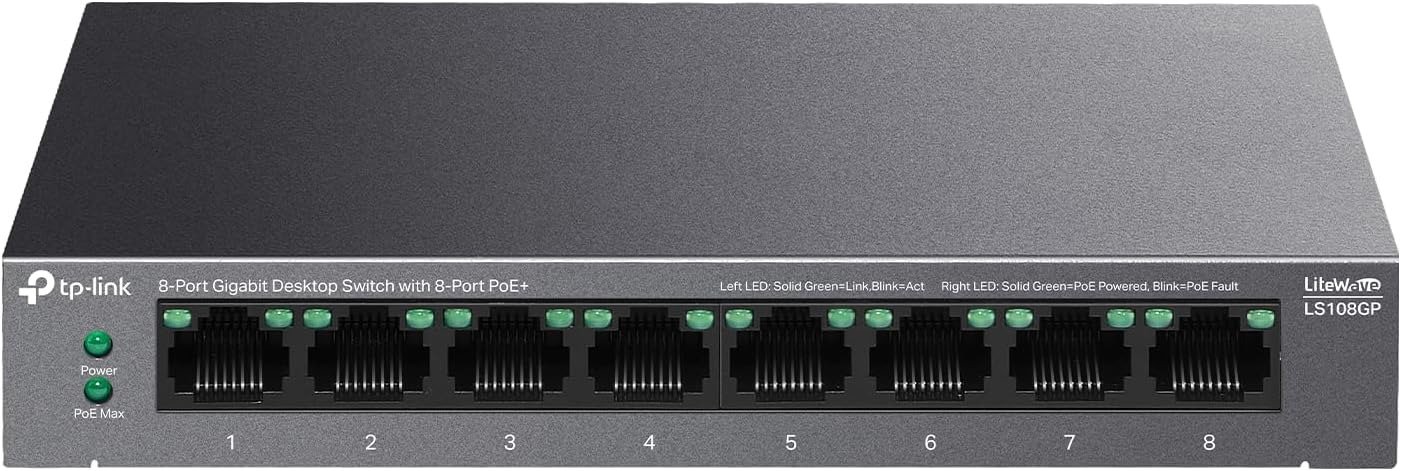
What Lorex gets right here is not mystery. It is infrastructure. The cameras use PoE, so one Cat5e cable handles power, video, and network connection, which reduces the usual wireless instability tax. The system records to a security-grade hard drive built for 24/7 monitoring, uses HEVC compression to save space, and allows synchronized playback from up to four cameras at once.
That matters because evidence quality is not only about pixels. It is about whether the system keeps collecting usable footage without depending on battery discipline, cloud fees, or motion-trigger luck. Security.org explicitly notes that Lorex-style DVR/NVR systems offer continuous recording and a more commercial-grade feel than motion-only consumer cameras.
The Threshold Where the Outcome Quietly Breaks
Here is the threshold in plain English:
The system stops being “good enough” when missing a moment becomes more expensive than installing a serious one.
That threshold is usually crossed in one of three ways:
| Threshold marker | What changes | Why a light setup starts failing |
|---|---|---|
| Multiple entry points | one camera no longer gives context | you need overlap, not isolated clips |
| Night identification matters | motion awareness is no longer enough | you need better low-light detail and stable recording |
| You want fewer compromises over time | convenience loses to reliability | batteries, cloud dependence, and short event clips start feeling flimsy |
Lorex’s own materials support that framing more than they support hype. Color Night Vision on these cameras works with external lighting, and when the scene is too dark, the system falls back to infrared, with claimed black-and-white footage up to 130 feet and up to 90 feet in complete darkness. In other words, Lorex is not promising cinematic night color in a black void. It is telling you the actual condition under which color works. That honesty matters.
Why Most Buyers Misread This Too Early
They compare the wrong thing.
They compare the brochure, not the burden.
They compare maximum sharpness, not recovery from bad conditions.
They compare features, not failure patterns.
You see this everywhere in owner language. People get pulled toward easy words—4K, app, AI, smart, motion, audio. Then the first serious friction arrives and the real evaluation begins.
One detailed Best Buy review of a comparable Lorex 4K Fusion NVR system praised the metal camera housing, high-quality cellular streaming, updated NVR interface, local recording, no subscription fees, continuous recording, and H.265 support. But the same review also called out the harder truths: night ghosting in color mode, object recognition at night only reaching about 30 feet in practice, headlights triggering vehicle alerts, app zone configuration conflicts with NVR settings, and some setup tasks still needing direct NVR access.
That is exactly the kind of feedback I trust. Not because it is flattering. Because it is specific.
The shallow buyer asks, “Does it have 4K?”
The better buyer asks, “What starts to break first?”
That second question is where this product lives.
Who Is Actually Inside This Problem
This system is logical for a very specific person.
You are inside this problem if:
- you want continuous local recording, not event-only fragments
- you have a home or small business with several meaningful perimeter points, not one decorative front-door angle
- you are tired of subscription creep and want storage you control locally, with expansion up to 8TB on this platform
- you care about weather resistance, where IP67 and a rated operating range from -22°F to 140°F are not marketing garnish but operational comfort
- you value listen-in audio as an evidence layer, not just visuals alone, while understanding local consent laws matter
This is also where the psychology changes. Once you want security to feel infrastructural rather than decorative, wired systems stop feeling old-school and start feeling calm.
Where Wrong-Fit Begins
This is not for everybody.
If what you really want is frictionless plug-and-play, ultra-light install effort, or a system that makes every decision for you without touching an NVR, you are already leaning away from this. Security.org is blunt that Lorex installation can be tricky and that there is no professional monitoring.
Wrong-fit starts here:
| Wrong-fit signal | Why it matters |
|---|---|
| You hate cable runs on principle | PoE reliability comes with installation work |
| You want a fully cloud-first experience | the appeal here is local recording and control |
| You expect night color in total darkness without ambient light | Lorex’s CNV depends on external lighting |
| You want pure app-based setup and tuning | some meaningful configuration is better handled on the NVR itself, according to user feedback |
There is another subtle wrong-fit too: the buyer who thinks “more cameras” automatically means “more security.” Six cameras help only if you are solving the right geometry. Coverage is a map problem before it is a shopping problem.
The One Situation Where This Product Becomes Logical
It becomes logical when your security problem has crossed from awareness into evidence.
That is the moment.
Not when you are casually browsing. Not when you want a gadget. Not when you are collecting features like refrigerator magnets. It becomes logical when you need a system that can sit there, record continuously, survive weather, cover multiple fixed points, and stop charging rent on its own existence.
This Lorex package gives you six 4K dome cameras, an 8-channel Fusion NVR, 2TB included storage, PoE wiring, mobile remote viewing, built-in microphones, color night vision with ambient light, long-range IR fallback, HDR for high-contrast scenes, and room to expand the system later. It also supports up to two compatible Fusion Wi-Fi devices, which is useful if one part of the property resists clean cable routing.
That combination is why the product makes sense. Not because it is magical. Because it answers the exact point where lightweight security starts leaking.
If you place the forward action near the close, this is the sentence I would use: If your break point is missed footage rather than missing features, this is the logical next step.
What It Solves, What It Reduces, and What It Still Leaves to You
What it solves:
- sharper identification potential through 4K capture and better digital zoom headroom
- stable wired recording through PoE rather than battery dependence or purely Wi-Fi transmission for the main cameras
- ongoing storage fees, since local storage is the core model here
- broader perimeter coverage with six included cameras and up to eight wired channels total
What it reduces:
- false-positive fatigue, especially when person/vehicle filtering is tuned properly, though not perfectly
- evidence loss from motion-only recording gaps, thanks to continuous recording design
- weather anxiety from exposed outdoor placement, with IP67 protection and wide operating temperature claims
What it still leaves to you:
- cable planning
- camera placement discipline
- night-scene realism, because color night vision still wants light
- NVR-side setup patience
- your own response in an emergency, because Lorex is not a monitored service
That last part matters. A serious system does not erase responsibility. It reduces guesswork.
Final Compression
The biggest lie in home surveillance is that visibility and security are the same thing. They are not. Visibility is seeing motion. Security is keeping a usable record when the scene turns ugly, dim, wet, backlit, or fast.
That is why I would not frame the Lorex N4K2-86WD as a general recommendation for everybody. I would frame it much more narrowly, which is exactly why it becomes persuasive.
Choose it when your current setup is failing at the evidence layer.
Choose it when clip gaps, weak night detail, and subscription fatigue are the real pain.
Choose it when you want a system that behaves more like infrastructure than a toy.
And do not choose it if what you really want is effortless installation, hands-off configuration, or the illusion that every “smart” camera belongs in the same category.
This is not the answer to every security problem. But once you are inside this threshold, the decision stops being vague. It starts looking structural.
Transparency Note:
This analysis is not based on quick personal impressions.
It is derived from documented system behavior, verified user patterns, and the physical constraints of storage capacity.
The goal is to translate complex technical behavior into a realistic performance model that helps you make a clear decision.
“A quick note: Don’t believe the star ratings, but trust personal experience. This article is a compilation of collected experiences”