DILETTA MIO REVIEW: THE THRESHOLD MOST BUYERS MISS
The Result Looks Fine. The Problem Isn’t.
A lot of espresso machines fail in a very polite way.
They pull one handsome shot. They hiss some steam. They sit on the counter in polished steel and ask you to believe the rest will sort itself out. Then morning arrives with two cappuccinos, one distracted hand, one eye on the clock, and suddenly the machine you thought you understood starts showing its real shape.
That is where the Diletta Mio gets interesting.
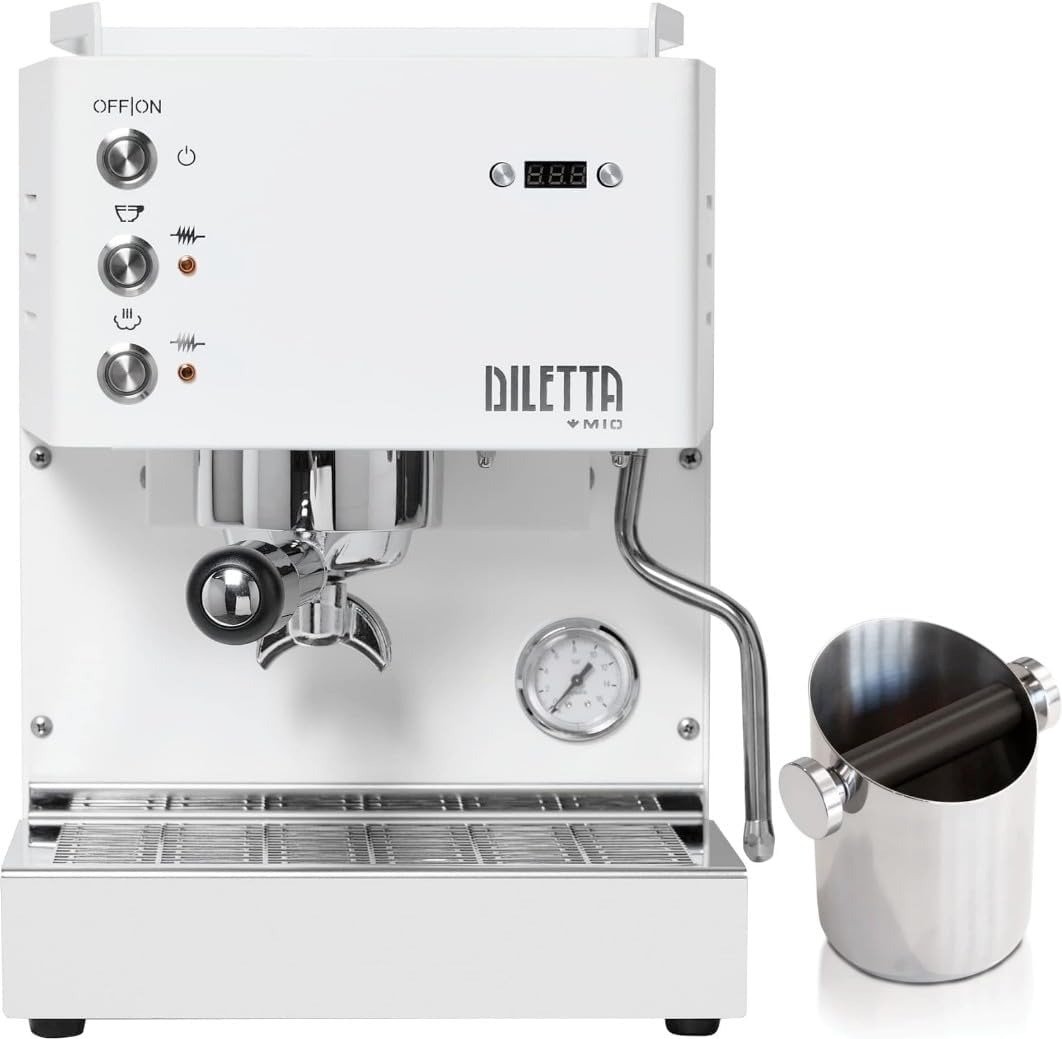
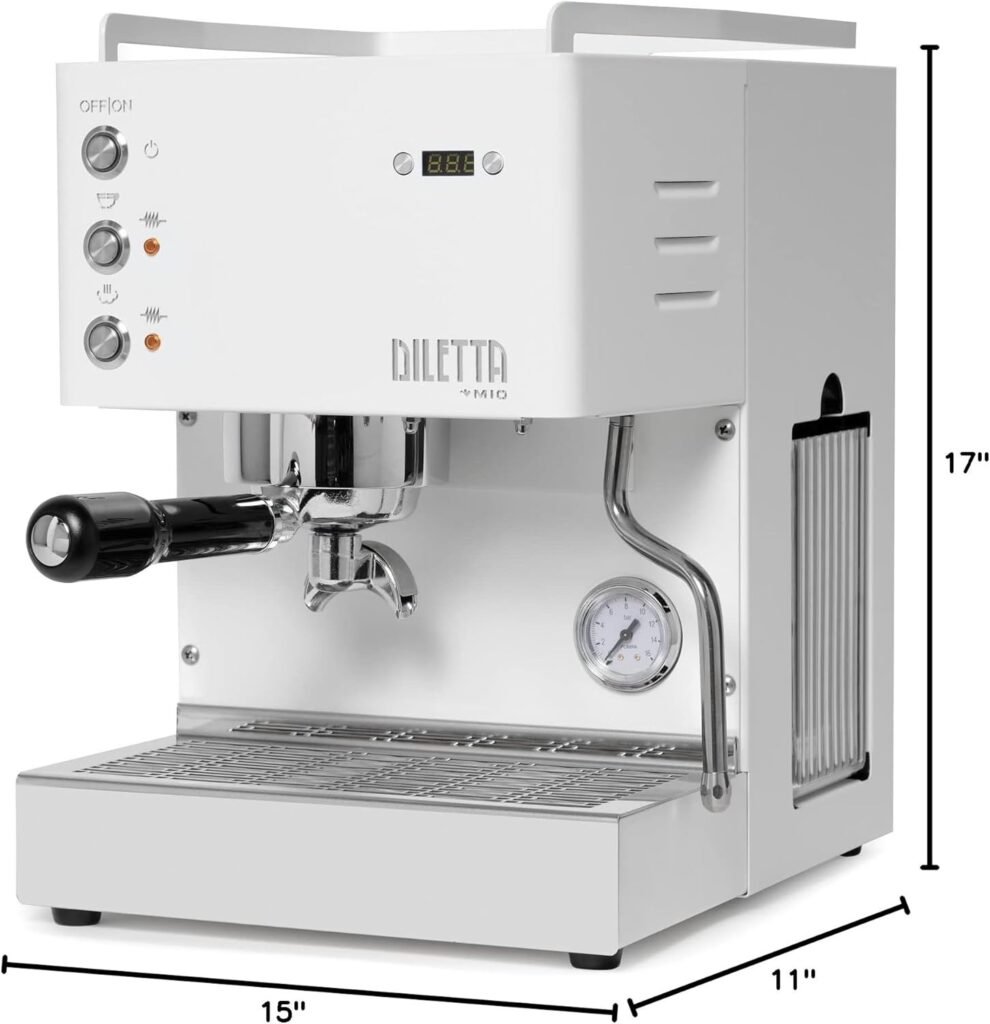
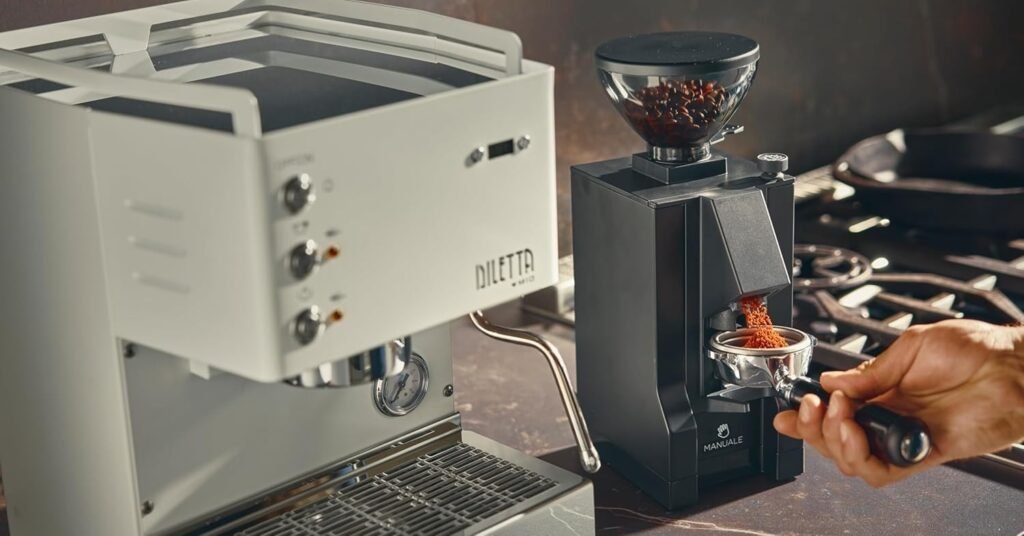
On paper, it is compact enough for a home setup, built in stainless steel, fitted with a 58mm commercial-size portafilter, driven by a PID-controlled 400 mL brew boiler, backed by a separate steam thermoblock, and fed by a 2 L side-access reservoir. Officially, Diletta lists a 7-minute warm-up, 1600 W power, Eco mode, a 3-inch cup clearance, and no built-in pre-infusion. Seattle Coffee Gear positions it as an intermediate machine, and Tom’s Guide frames it as a lower-cost route to near dual-boiler workflow rather than a true dual boiler.
That sounds clean. Almost too clean.
Because the real question is not whether the Mio can make espresso. It can. The real question is where your workflow starts to break on lesser machines, and whether this machine lands on the right side of that break point. That is the threshold. Miss it, and you overpay for romance. Hit it, and the Mio suddenly stops looking expensive and starts looking structurally justified.
What You’re Actually Feeling but Not Naming
Most buyers do not describe the real friction correctly.
They say they want better espresso. Usually that is not the full truth.
What they actually want is this:
| What people say | What they usually mean |
|---|---|
| “I want better coffee.” | I am tired of inconsistency. |
| “I want steam power.” | I do not want my workflow to stall after the shot. |
| “I want a nicer machine.” | I want fewer weak links, fewer workarounds, less morning irritation. |
The pain is rarely flavor alone. It is repetition. Tiny delays. Small resets. The stupid dance of waiting for temperature, waiting for steam, purging, correcting, compensating, guessing. One bad shot does not make people upgrade. A routine that keeps fraying at the edges does. That is why owners and reviewers keep circling back to the same themes on the Mio: shot stability, easier milk-drink workflow than classic single boilers, accessible pressure control, and a PID display that doubles as a shot timer.
That annoyance has a texture to it. You can feel it. It is the sound of a pump you are forced to wait on. The pause between brew and steam. The cup that no longer fits once the scale goes under the spouts. The second drink that arrives just a little later than it should. Not failure. Friction. And friction is what separates a seductive spec sheet from a machine you keep wanting to use.
The Hidden Mechanism Behind the Miss
The Mio is built around a split heating logic.
Not a full dual boiler. Not a plain single boiler either.
It uses a PID-controlled brew boiler for espresso and a separate steam thermoblock for milk. That architecture is the whole story. It is why the machine can brew and steam at the same time, recover quickly between drinks, warm relatively fast, and still cost less than many true dual-boiler machines. It is also why the steaming experience does not behave like a heavier, steam-boiler-driven machine. Tom’s Guide called this the core trade: dual-boiler-like workflow at a lower price, with slower steam performance and no pre-infusion. Seattle Coffee Gear describes the steam side as a discrete 1000 W thermoblock meant for on-demand steaming rather than high-volume milk production.
That hidden variable is what most buyers miss.
They compare categories instead of behavior. They compare “single boiler,” “thermoblock,” and “dual boiler” as labels, when what actually matters is how the machine behaves at the moment your drink routine becomes slightly demanding. The Mio’s mechanism is less glamorous than a true dual boiler, but more strategically useful than a traditional single boiler for the right home user. It shifts the machine from a flavor-only purchase to a workflow purchase.
And the mechanism shows up in the details. The PID lets you control brew temperature. The pressure gauge and externally adjustable OPV make dialing in more transparent. The 58mm standard opens the door to normal accessories instead of proprietary compromises. The side-loading tank matters more than it sounds, especially under cabinets. These are not decorative features. They are friction-control features.
The Threshold Where the Outcome Quietly Breaks
Here is the threshold in plain English:
The Diletta Mio becomes logical when you want real espresso control and milk-drink flexibility without stepping into the size, price, and thermal overhead of a true prosumer dual boiler.
That is the line.
Below that line, it is too much machine. Above that line, it is not enough machine.
You cross into the Mio zone when three things start happening at once:
- you care about shot stability enough to want PID and pressure visibility,
- you make milk drinks often enough that brew-then-wait-then-steam starts irritating you,
- you still do not need commercial-speed steam or a more complex machine class.
This is the threshold table I would use before spending a dollar:
| Threshold signal | If this is true for you | What the Mio does with it |
|---|---|---|
| Espresso quality is no longer enough by itself | You want repeatability, not lucky shots | PID, pressure gauge, OPV access, shot timer help turn guesswork into a controllable routine. |
| Milk drinks are frequent, but not high-volume | You want simultaneous brew/steam more than raw steam muscle | The separate thermoblock keeps workflow moving, but it is not a steam monster. |
| Counter space and idle power still matter | You do not want a larger, hotter dual-boiler presence | The Mio stays relatively compact, uses Eco mode, and separates the steam circuit. |
The quiet break happens when your expectations cross from “better than an entry machine” into “should handle my daily ritual without feeling like a compromise.” That is exactly where the Mio is strongest.
Why Most Buyers Misread This Too Early
Because they judge it by the wrong theater.
They either underrate it for not being a true dual boiler, or overrate it because the feature list looks unusually generous for the price. Both shortcuts miss the point.
The first mistake is a category trap. On paper, a thermoblock steam system looks like a downgrade. In use, that is not automatically true for a home barista making a few milk drinks back-to-back. Tom’s Guide found the Mio capable of consecutive drinks and simultaneous brew-and-steam workflow, even while noting that boiler-driven steam systems are faster. Reddit owners echoed that the machine feels easier to live with than conventional single boilers and praised the instant steam behavior, OPV access, and shot-feedback tools.
The second mistake is a fantasy trap. Features do not erase boundaries. The Mio still has only 3 inches of cup clearance. Multiple reviewers and owners complained about the oversized, high-sitting drip tray, especially when adding a scale. It also lacks pre-infusion, and steaming an 8-ounce milk drink can take roughly 45 to 60 seconds rather than delivering the faster rush of a stronger steam boiler. Even positive reviews keep returning to the same caveat: excellent home performance, but not unlimited momentum.
So the machine is not a miracle. Good. Machines that pretend to be miracles usually become regrets.
Who Is Actually Inside This Problem
I would place you inside the Mio problem if you recognize yourself in this picture.
You are past the toy stage. You want a real 58mm workflow, better thermal behavior, clearer shot feedback, and a machine that feels like equipment rather than an appliance. You probably make straight espresso and milk drinks. You care about taste, but you also care about pace. You want to steer the shot instead of asking the machine to hide your mistakes. And you want something repairable, solid, and more serious than the common beginner tier. Seattle Coffee Gear explicitly frames the Mio for intermediate users, and Tom’s Guide called it enthusiast-tier while also noting its forgiving nature for motivated newcomers.
You are also the right fit if your kitchen imposes ordinary domestic constraints. The side-access tank is useful under cabinets. The 35-pound body is substantial without turning the counter into an industrial installation. The Eco mode and selectable steam circuit make more sense at home than they would in a café. These details look small in a spec list. In a morning routine, they stop being small.
And there is one more signal I would not ignore: the Mio keeps attracting people who were hovering between classic single boilers and pricier prosumer options. That is usually a clue. It means the machine lives in a narrow but valuable corridor where workflow matters more than status.
Where Wrong-Fit Begins
Wrong-fit starts the moment you ask this machine to be something it never claimed to be.
If you want aggressive steam power for larger milk volumes, repeated entertaining, or a café-like pace, this is where the Mio begins to thin out. Seattle Coffee Gear says the steam thermoblock is fast to heat but not as fast in actual steaming as some similarly priced machines, especially if you make many milk drinks in a row. Tom’s Guide landed in the same place: good texture, forgiving control, but slower than boiler-fed steam systems.
If you want convenience features that flatten the learning curve for you, there are boundaries there too. The Mio is manual. No grinder, no automated milk system, no hot water dispenser, and no pre-infusion. HomeBaristas also flags a learning curve, limited cup clearance, and slightly wobbly-feeling buttons among the tradeoffs.
If you are highly sensitive to setup risk or early ownership snags, you should keep another boundary in mind. Community reports include an air-lock issue that one owner fixed easily, and a separate Reddit thread documents complaints about leaking boilers on two units. That does not prove a widespread failure pattern, but it does mean the ownership story is not spotless.
This is the wrong-fit map:
| Wrong-fit signal | Why it matters |
|---|---|
| You want very fast, powerful milk steaming | The thermoblock is competent, not dominant. |
| You want high cup clearance with a scale | The tall drip tray becomes annoying quickly. |
| You want automation or beginner cushioning | The Mio gives tools, not training wheels. |
| You require pre-infusion as a must-have | It is not built in. |
| You live outside the U.S. on 230V power | The machine is sold for 110–120V use and Tom’s Guide notes transformer issues abroad. |
The One Situation Where This Product Becomes Logical
Here it is.
The Diletta Mio becomes logical when you have outgrown entry-level compromise, but you are still disciplined enough not to buy a bigger machine just to soothe your ego.
That is the exact situation.
At around $1,349, the Mio sits in a strange and useful middle ground. Tom’s Guide notes it undercuts the Breville Dual Boiler by about $250 while offering simultaneous steaming and brewing, PID control, rapid heat-up, and adjustable pressure—features that push it well beyond the usual single-boiler conversation. Seattle Coffee Gear’s own positioning is even more direct: this machine prioritizes shot quality and structural usability over creature comforts. That framing matches what users keep reporting. The appeal is not spectacle. It is reduced routine resistance.
So no, I would not call the Mio the universal answer.
I would call it the clean answer for one very specific buyer: the person who wants manual espresso to feel serious, stable, and sustainable before stepping into heavier, hotter, more expensive territory. That is not a broad market. It is a precise one. And precision is what makes this machine make sense.
What It Solves, What It Reduces, and What It Still Leaves to You
What it solves is straightforward.
It solves the stale middle ground where a machine can pull a good shot yet still interrupt your rhythm every time milk enters the picture. It solves the vague feeling that your espresso setup is “almost there” but still too dependent on waiting, guessing, and compensating. It solves the desire for serious hardware without an immediate leap into more expensive prosumer complexity.
What it reduces is just as important.
It reduces brew-and-steam bottlenecks. It reduces accessory frustration by using a normal 58mm format. It reduces energy waste with Eco controls and a selectable steam circuit. It reduces blind dialing-in through its gauge, timer, and OPV access. These are not theatrical gains. They are the sort of gains you notice because you stop swearing at the machine.
What it still leaves to you is the real work of espresso.
You still need a capable grinder. You still need puck prep discipline. You still need to learn the relationship between dose, grind, yield, temperature, and pressure. You still need to accept the physical limits of the tray height and the non-boiler steam character. And you still need to maintain it like any serious manual machine—purging, wiping, cleaning the group, watching scale buildup, and staying honest about water quality.
That honesty matters. A machine that pretends to remove skill usually removes understanding first.
Final Compression
Most buyers do not need a more impressive espresso machine.
They need a machine that stops wasting their mornings.
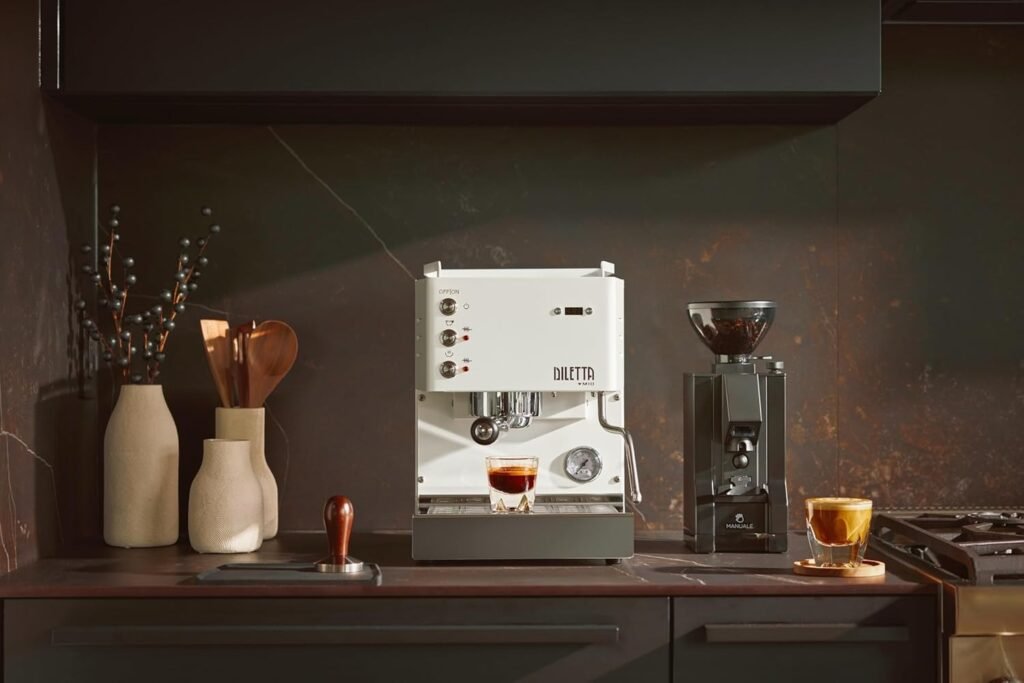
The Diletta Mio is not built for people chasing badges, bragging rights, or fantasy café throughput. It is built for the moment when home espresso stops being a flirtation and starts becoming a daily system. That is why the threshold matters so much. Below it, the Mio looks indulgent. Above it, the Mio looks limited. Right on it, the machine becomes sharp, calm, and strangely persuasive.
If your break point is exactly this—serious shot control, repeatable workflow, regular milk drinks, no appetite for a larger true dual boiler—then the decision stops being vague here.
Transparency Note:
This analysis is not based on quick personal impressions.
It is derived from documented system behavior, verified user patterns, and the physical constraints of storage capacity.
The goal is to translate complex technical behavior into a realistic performance model that helps you make a clear decision.
“A quick note: Don’t believe the star ratings, but trust personal experience. This article is a compilation of collected experiences”