Your Doorbell Looks Useful Until the One Moment It Starts Missing What Matters
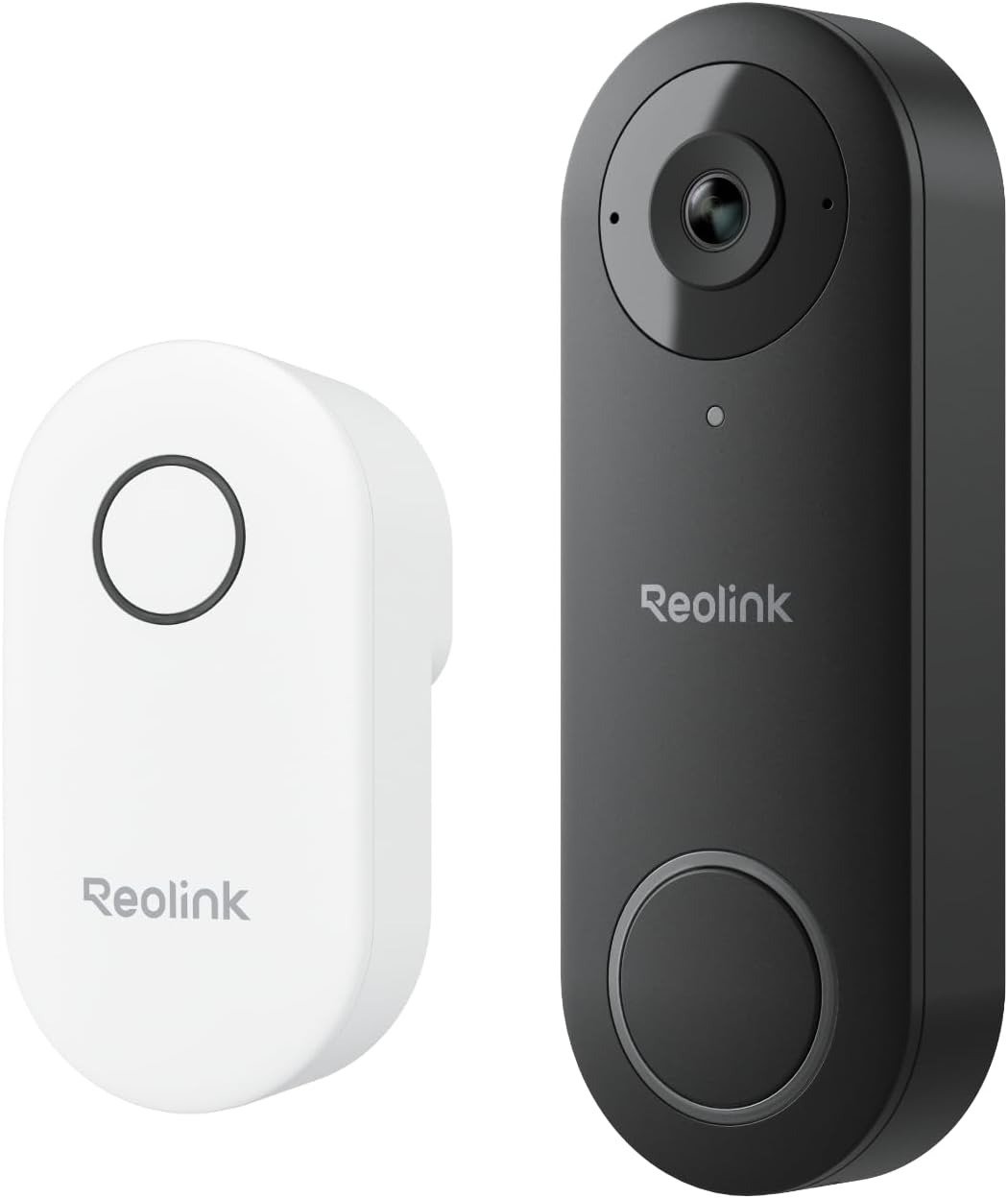
REOLINK VIDEO DOORBELL WIFI
The live view can look sharp.
The app can ping on time.
The button can ring exactly as expected.
And yet the front door still feels half-covered.
That is the part most people misread.
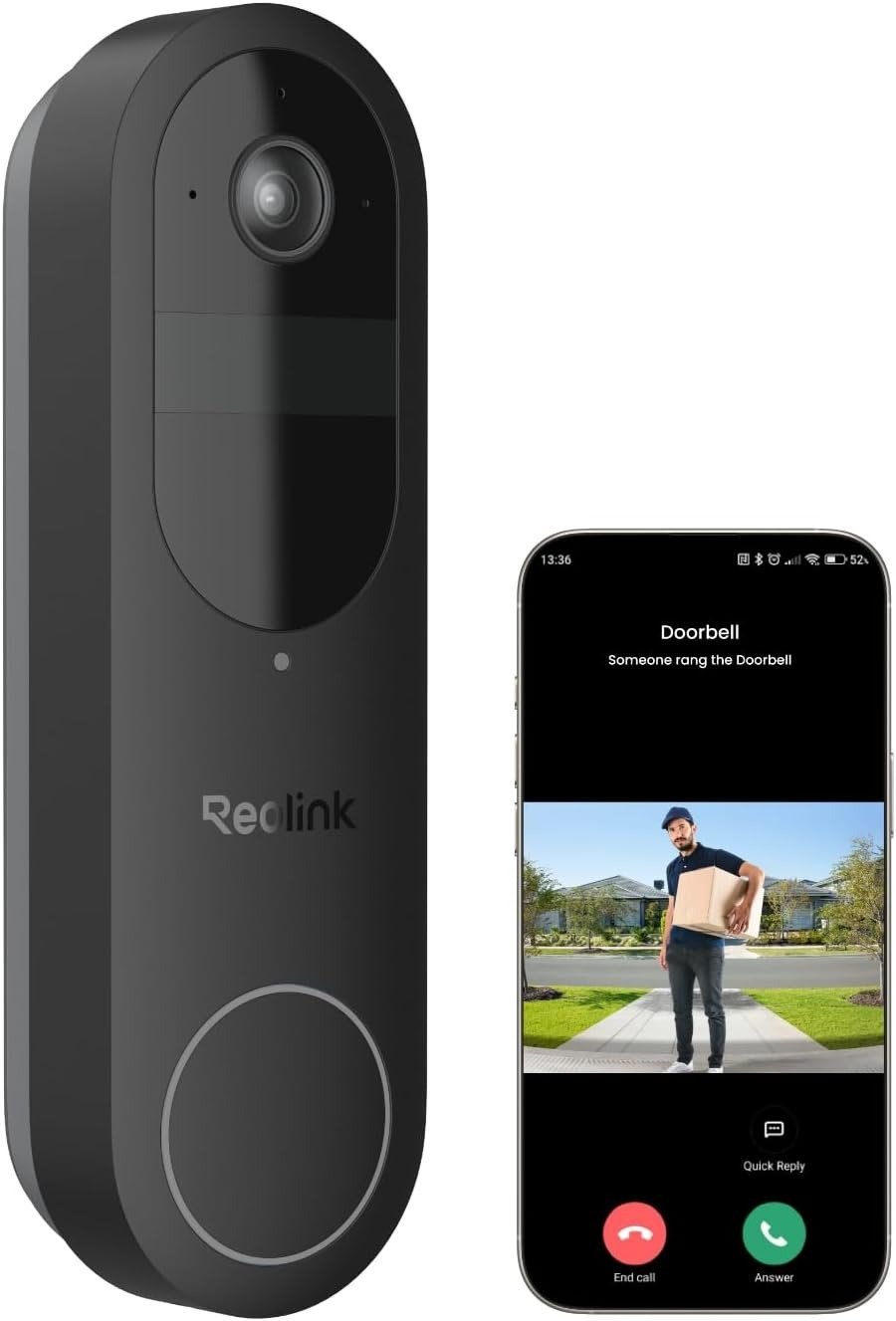
I do not judge a doorbell by the first clean daytime clip anymore. I judge it by what happens when the event begins before the notification, when the person is standing too low in frame, when the package lands under the camera line, when I need a record instead of a glimpse, and when I do not want a monthly fee quietly attached to the basic act of owning my own footage. That is the point where a lot of “good enough” doorbells stop feeling good at all. Reolink’s wired Video Doorbell WiFi is built around a 5MP 2560×1920 stream, a 4:3 view with a 180° diagonal field of view, dual-band Wi-Fi, local storage options, and 24/7 recording support without requiring a subscription. That combination matters more than the usual marketing phrases because it changes what the device is actually doing at the door.
The Result Looks Fine. The Problem Isn’t.
REOLINK VIDEO DOORBELL WIFI
The usual mistake is thinking the job is “show me who pressed the bell.”
That is not the real job.
The real job is to reduce uncertainty at the exact place where uncertainty keeps repeating: delivery drop-offs, short visitor interactions, failed motion timing, partial framing, and the irritating little gaps between “something happened” and “I can prove what happened.” A doorbell becomes disappointing when it behaves like an alert gadget instead of a front-door recorder. Reolink leans the other direction: hardwired power, continuous recording support, pre-motion capture, local microSD/NVR/NAS/FTP storage, and a taller 4:3 framing designed to carry more of the doorway scene than a wide cinematic crop would.
What looks solved What usually remains broken
“I got the notification.” The event started before the alert.
“The image is clear.” The framing still misses the lower part of the doorway.
“It has smart detection.” Storage or playback still depends on a paid layer on many brands.
“It works in the app.” The record is weak when you need timeline-level context.
That gap is why this category disappoints so many buyers. The first impression is visual. The actual burden is operational.
What You’re Actually Feeling but Not Naming
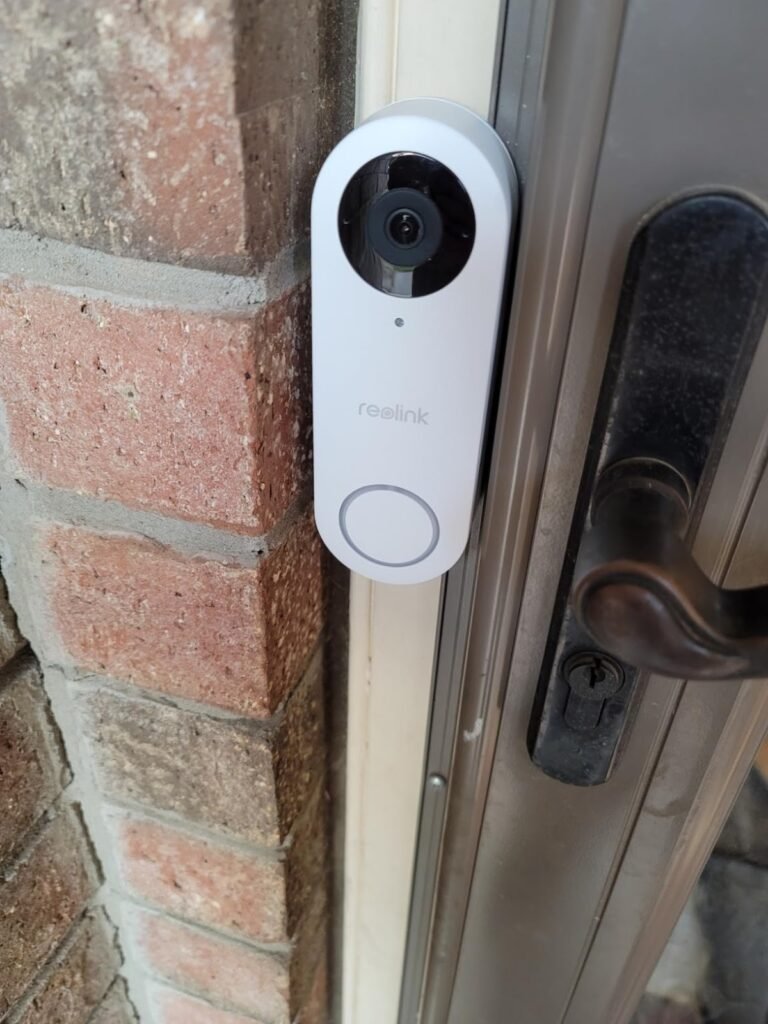
REOLINK VIDEO DOORBELL WIFI
It is not just security anxiety.
It is interruption fatigue.
It is the low-grade annoyance of having to check, re-check, and mentally reconstruct tiny front-door events because the system never feels complete enough on its own. A good doorbell lowers intervention. A weak one increases it. That is why certain feature combinations matter more than headline specs: pre-motion recording, local storage, continuous recording support, motion zones, and a framing ratio that captures the working area of a doorstep instead of just the face at eye level. Reolink’s product page explicitly highlights pre-motion capture, custom motion zones, quick replies, two-way audio, and 24/7 recording to microSD, NVR, Home Hub, NAS, or FTP without monthly fees.
I keep coming back to this rule:
At the front door, clarity is not enough. Continuity is what removes doubt.
That is the hidden standard most buyers feel before they can name it.
The Hidden Mechanism Behind the Miss
REOLINK VIDEO DOORBELL WIFI
The miss usually comes from one of three places.
The first is aspect ratio. A lot of doorbells feel wide but not useful. Wide can be visually pleasing while still failing the doorstep. Reolink’s wired WiFi model uses a 4:3 framing with a listed 135° horizontal and 100° vertical field of view, which is less about drama and more about usable scene capture around the entry area.
The second is recording logic. Motion-only systems often turn events into fragments. Reolink supports 24/7, motion-triggered, and scheduled recording, plus pre-motion capture. That means the device is better positioned to preserve context instead of just the middle of the event.
The third is ownership of footage. Once storage becomes an ongoing payment decision, the product stops being a device and starts being a service contract. Reolink’s local-storage-first design is one of the main reasons it gets attention from buyers who care about control, not just convenience. Officially, it supports microSD cards up to 256GB, Reolink NVR, Home Hub, NAS, and FTP.
| Mechanism | Why it matters more than the spec sheet usually suggests |
|---|---|
| 4:3 framing | Better chance of catching the actual doorstep zone, not just a face-centered slice |
| Pre-motion recording | Preserves the beginning of the event instead of starting late |
| 24/7 recording support | Turns the doorbell into a record, not just a trigger |
| Local storage | Reduces subscription dependence and improves footage ownership |
| Hardwired power | Avoids the maintenance and latency compromises common in battery-first setups |
The Threshold Where the Outcome Quietly Breaks
REOLINK VIDEO DOORBELL WIFI
This is the threshold I would use for this category:
A video doorbell stops being “good enough” when missing context becomes more expensive than getting alerts.
That threshold is crossed when at least two of these are true:
| Threshold sign | What it usually means |
|---|---|
| You care about deliveries left low or close to the door | Vertical scene capture matters more than headline resolution |
| You want a full record, not only motion clips | Continuous recording support becomes important |
| You refuse monthly storage fees | Local storage stops being a bonus and becomes a requirement |
| You already have wiring | Battery convenience stops being a meaningful advantage |
| You want integration beyond a closed app | RTSP/RTMP/ONVIF support starts to matter |
Reolink’s wired WiFi doorbell sits on the right side of that threshold because it is hardwired, supports local storage and continuous recording, and exposes protocols such as RTSP, RTMP, and ONVIF according to published specs and retailer documentation. That last part is one reason it is repeatedly discussed by Home Assistant users and reviewers who care about local smart-home integration rather than just app-level viewing.
Why Most Buyers Misread This Too Early
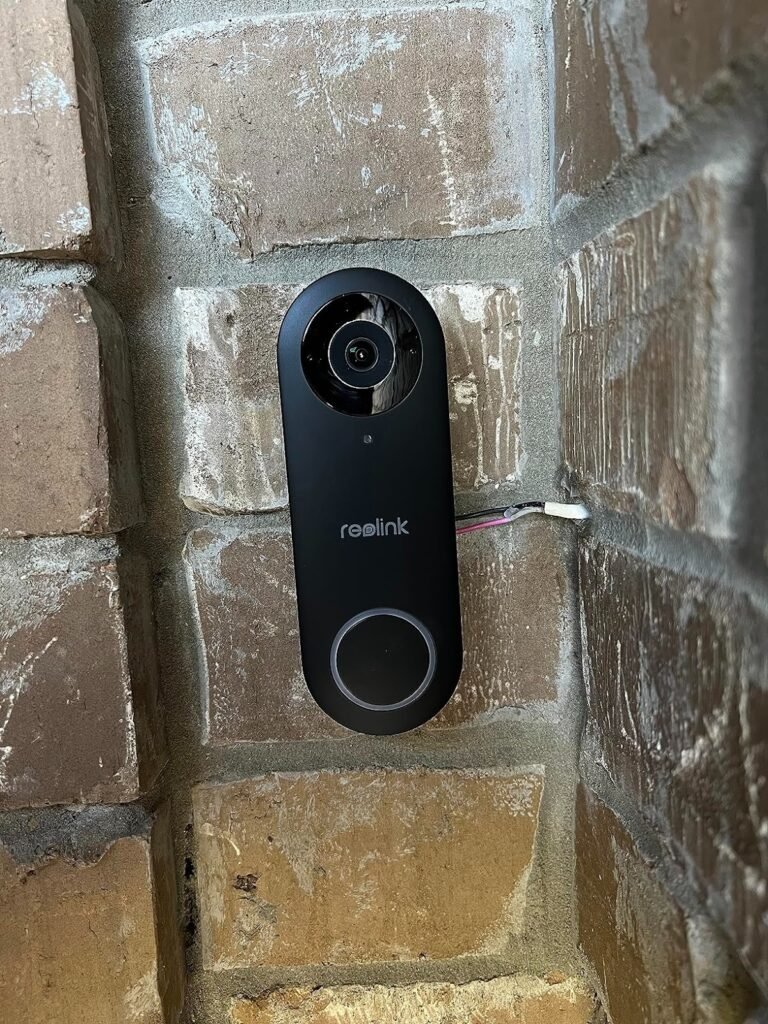
REOLINK VIDEO DOORBELL WIFI
They shop the category as if it were a camera spec contest.
It is not.
The early comparison trap is simple: resolution, pretty screenshots, maybe a list of smart alerts. But the actual ownership experience depends on a quieter stack of questions:
- Do I own the recordings?
- Do I get the start of the event?
- Can the device keep recording without babysitting power?
- Does the frame match the physical reality of a doorstep?
- Can it fit into a local system later if I outgrow the default app?
That is where this Reolink starts making more sense than it does in a casual scroll. Reviewer coverage repeatedly highlights image quality, person detection, RTSP support, Home Assistant integration potential, and reliable notifications as meaningful strengths. User discussions also show why this product is not magic: some buyers report audio limitations or intermittent Wi-Fi issues depending on network conditions, and the Home Assistant team specifically noted that the Reolink doorbell had experienced flaky RTSP issues in parts of its ecosystem history.
That mix is exactly why the product is interesting. It is strong for the right reason. It is not friction-free for every installation.
Who Is Actually Inside This Problem
REOLINK VIDEO DOORBELL WIFI
This doorbell makes the most sense for a very specific buyer.
| You are inside this problem if… | Fit |
|---|---|
| You already have existing doorbell wiring | Strong |
| You want local storage and no mandatory subscription | Strong |
| You care about preserving delivery and doorstep context | Strong |
| You want 24/7 recording support | Strong |
| You use or may later use NVR/NAS/Home Assistant workflows | Strong |
| You want a simple app-only consumer gadget and nothing more | Borderline |
| You need a battery model because wiring is not practical | Weak |
| You expect flawless performance from weak Wi-Fi conditions | Weak |
I would narrow it even further. This is especially logical for someone who is tired of front-door devices that behave like polished notification tools while quietly failing as evidence tools. Reolink’s spec set is unusually aligned with the buyer who wants a doorbell to function like part of a real security system rather than a subscription-centered accessory.
Where Wrong-Fit Begins
REOLINK VIDEO DOORBELL WIFI
This is not for everyone.
If your top priority is no wiring at all, stop here. This model is hardwired and expects 12–24VAC or DC 24V.
If your top priority is the simplest possible consumer setup with zero tolerance for network tuning, this can drift into the wrong fit. Reolink supports dual-band Wi-Fi, but user reports show that some setups still experience intermittent connection trouble, which is exactly the kind of issue that matters more on a doorbell than on a secondary camera.
If your top priority is package detection on every finish/version without reading the fine print, be careful. Reolink states that package detection on this wired WiFi doorbell is available exclusively on the white model. That detail is small on the page and large in real ownership.
If your priority is heavy cloud-first polish, this product may feel less curated than the most mainstream app ecosystems. Its strength is control, not theatrical smoothness.
The One Situation Where This Product Becomes Logical
REOLINK VIDEO DOORBELL WIFI
It becomes logical when your front door has moved beyond “I want to see who rang” and into “I need a reliable record of what actually happened at the threshold.”
That is the condition.
In that condition, the Reolink Video Doorbell WiFi stops looking like a feature list and starts reading like a coherent tool:
| Need | How this model answers it |
|---|---|
| Clearer scene detail | 5MP / 2560×1920 video |
| Better doorstep coverage | 4:3 framing, 135° horizontal / 100° vertical / 180° diagonal view |
| Less storage dependency on subscriptions | microSD, NVR, Home Hub, NAS, FTP support |
| Stronger event context | pre-motion recording and 24/7 recording support |
| Basic voice interaction | two-way audio and quick replies |
| Smart-home flexibility | RTSP / RTMP / ONVIF support listed in documentation |
| Outdoor use | IP65 weather resistance |
What makes this product compelling is not that it does one headline feature better than everything else. It is that the architecture is unusually consistent for a buyer who values ownership, continuity, and integration. That is a rarer strength than people think.
What It Solves, What It Reduces, and What It Still Leaves to You
REOLINK VIDEO DOORBELL WIFI
It solves the basic structural weaknesses that make many doorbells feel superficial: thin storage control, short event context, and frame shapes that do not fully serve the doorstep. Official specs and reviewer coverage support the case for strong image quality, useful two-way audio, dual-band Wi-Fi, hardwired reliability, and a genuinely subscription-light ownership model.
It reduces a different kind of burden too: the need to treat every alert like a miniature investigation. When local recording, pre-roll, and 24/7 options are present, the system does more of the remembering for you.
What it still leaves to you is important:
| It helps with… | It does not erase… |
|---|---|
| Better front-door coverage | The need for solid Wi-Fi placement and network quality |
| Local footage ownership | The setup effort of choosing storage and tuning notifications |
| Continuous recording options | The reality that app experience and ecosystem polish vary by user expectations |
| Smart alerts | The need to confirm version-specific features like package detection |
| Hardwired stability | The fact that installation still depends on compatible doorbell power |
That is the trade-off framing I trust here: you gain control, continuity, and flexibility, but you trade off some of the frictionless, appliance-like simplicity that closed consumer ecosystems spend so much energy polishing. User reports and smart-home community commentary fit that pattern closely.
Final Compression
REOLINK VIDEO DOORBELL WIFI
Most video doorbells look competent until you ask them for context.
That is the real dividing line.
If you need a doorbell to act like a lightweight security node instead of a decorative alert button, the Reolink Video Doorbell WiFi lands on the right side of the threshold: 5MP 4:3 video, hardwired power, pre-motion capture, 24/7 recording support, local storage without mandatory fees, and integration paths that matter to people who want more than a closed app. Its weak points are not hidden either: network quality still matters, some users report connection friction, and package detection requires version awareness.
That is why I would not frame it as the perfect doorbell. I would frame it as the moment a front-door device stops being vague.
If this is the condition you are actually dealing with, this is the logical next step: REOLINK Video Doorbell WiFi on Amazon
Transparency Note:
This analysis is not based on quick personal impressions.
It is derived from documented system behavior, verified user patterns, and the physical constraints of storage capacity.
The goal is to translate complex technical behavior into a realistic performance model that helps you make a clear decision.