Your Doorbell Sees the Visitor. It Still Misses the Problem
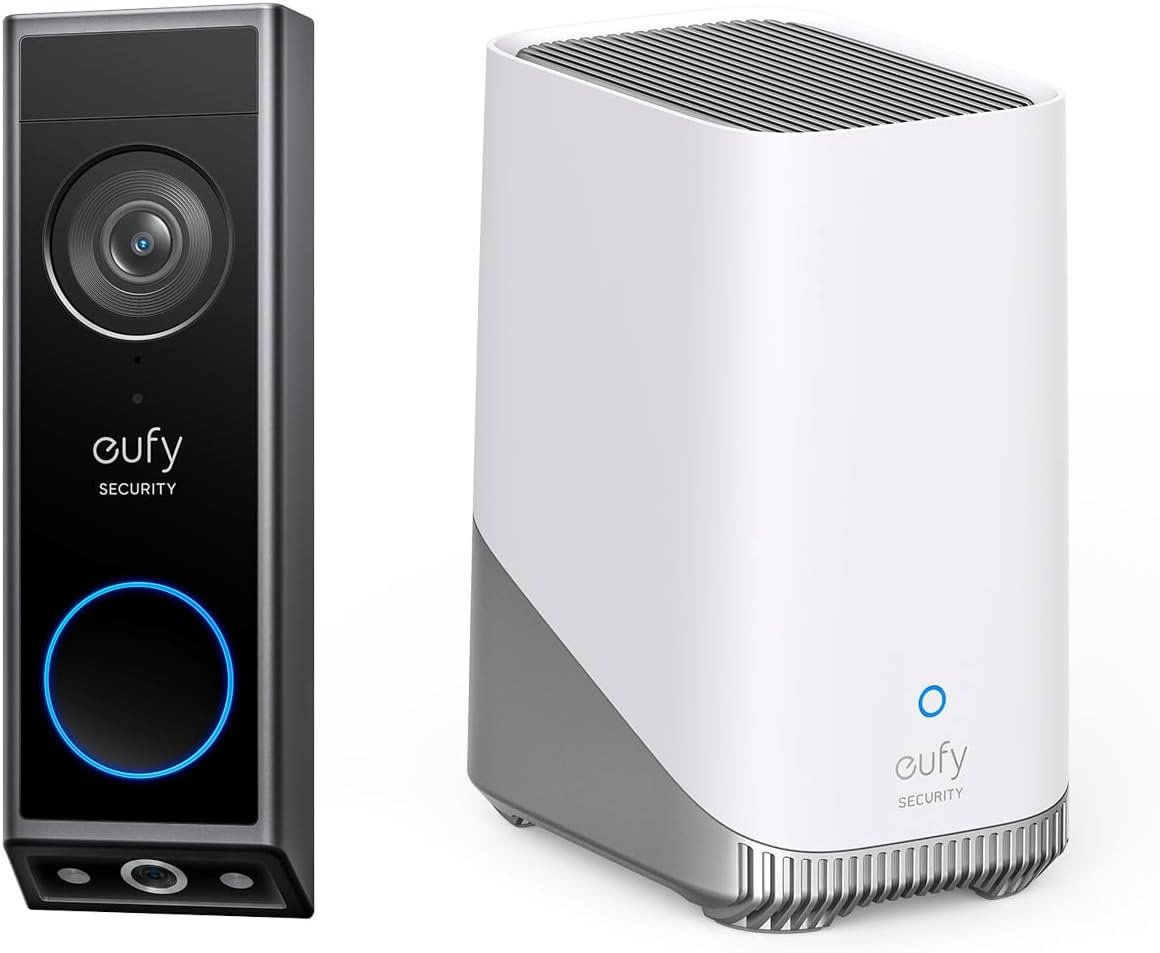
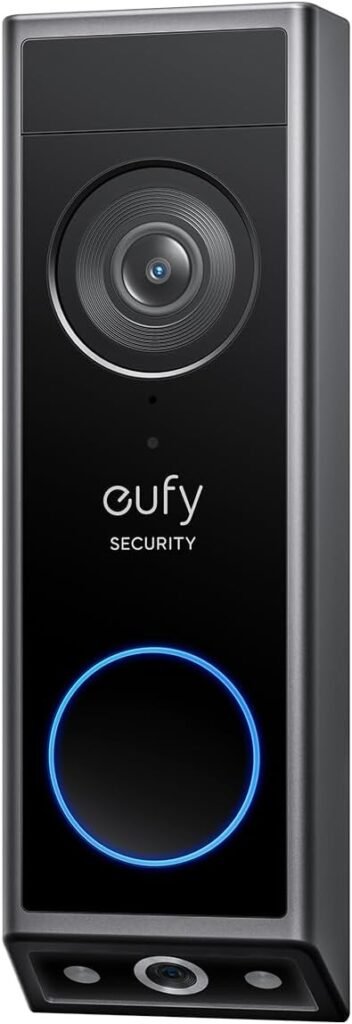
EUFY VIDEO DOORBELL E340
A lot of front doors look “covered” right up until the moment something small goes wrong. The courier drops a box low and close to the wall. Someone leans out of frame. A package is there, then gone, and the recording tells only half the story. That is the crack most people do not notice when they shop for a video doorbell: the image can look clean, the notification can arrive, and the useful evidence can still be incomplete.
The eufy Video Doorbell E340 was built around that exact crack, not around the usual promise of just “better video.” Its main camera records at 2048×1536, its second camera records at 1600×1200, it supports HDR, color night vision, package detection, face detection, local storage on the device, and can run on battery or hardwired power. On paper, that sounds like feature stacking. In practice, it changes one thing: whether the floor in front of your door stops being a blind spot.
The Result Looks Fine. The Problem Isn’t.
This is the part that fools people.
A normal doorbell clip can look perfectly acceptable because the face is clear, the porch is visible, and the event appears recorded. Then the delivery sits too low for the framing. Or the person bends outside the useful angle. Or the package is recorded only after it has already been moved. The result feels “mostly fine,” which is exactly why many buyers misdiagnose the problem.
The issue is not always image quality. Often it is event completeness.
That is why the E340’s design matters more than its marketing line. eufy positions the model around a front-facing camera plus a downward-facing package camera specifically to cover the floor area that many single-lens doorbells still treat as secondary.
Reviewers who lived with it for months kept circling back to the same point: the dual view is what changes daily usefulness, not the spec sheet in isolation. Homes & Gardens highlighted the ability to see both who is at the door and what has been left on the ground, while Tom’s Guide repeatedly emphasized package protection as the reason this model stands out in actual use.
What You’re Actually Feeling but Not Naming
Most people do not say, “I have an event-completeness problem.”
They say something vaguer.
“I got the alert, but it didn’t really show me enough.”
“I can see the person, but not the package.”
“It works, but I still end up checking twice.”
“I know someone was there, but I can’t reconstruct what happened.”
That last part matters. A security device becomes mentally expensive when it forces a second check. The drain is not only technical. It is cognitive. You bought it to reduce uncertainty. If it still leaves you leaning forward, pinching the screen, replaying clips, and guessing what happened at ground level, the product is not actually reducing the task. It is preserving part of it.
That is where this model starts to feel different for the right user. Not because it is magical. Because it targets a specific irritation: the gap between “motion detected” and “I understand the event.” Reviewers testing the E340 over months praised its clear video, local storage, easy setup, and especially the second view for packages, but some also reported slower live-view loading when farther from the router.
User reports add another layer: when configured badly or used in high-traffic battery mode, some owners report short battery life, delay, inconsistent notifications, or missed events. So the friction is real on both sides. The E340 reduces one class of uncertainty very well, but it does not erase the physics of Wi-Fi quality, transformer strength, cold weather, or excessive motion triggers.
The Hidden Mechanism Behind the Miss
The quiet failure in many doorbells is not resolution. It is camera geometry.
A single doorbell camera can be sharp and still be structurally incomplete at close range. The closer an object sits to the wall below the lens, the easier it is to create a useful-looking view that omits the thing you needed most.
That is why “head-to-toe” framing and “door-to-floor” coverage became meaningful phrases in this category. The E340 attacks that geometry directly with two cameras: one for the person, one for the doorstep. The company’s own product and support pages make that explicit, and the specifications confirm separate resolutions for the main and lower cameras.
The second hidden mechanism is power mode.
Battery doorbells do not think like wired doorbells. They conserve energy, wake up, detect, and record. That means the threshold for catching the very start of an event is partly a power problem, not just a camera problem. On the E340, pre-record is tied to sufficient constant power; eufy states it becomes compatible with pre-record when constantly powered by a 16–24V, 30VA transformer, while baseline wiring requirements are lower for basic operation.
User discussions reinforce the same theme: once the unit enters true wired mode with adequate power, people notice the difference in pre-roll behavior.
That leads to the real mechanism:
Coverage solves the floor problem. Stable power solves the start-of-event problem.
Those are not the same thing. Buyers often blur them together.
The Threshold Where the Outcome Quietly Breaks
The E340 becomes logical at a very specific threshold:
When the missing evidence is happening low, close, and fast.
Not just “when you want a smart doorbell.”
Not just “when you want 2K.”
Not just “when you hate subscriptions.”
Those are surface reasons.
The real threshold is when a normal visitor camera is no longer enough because the event you care about includes the doorstep itself: packages, handoffs, low-angle interactions, quick pickups, partial theft, or repeated delivery traffic.
Add one more condition and the threshold gets stronger: you want to keep recordings local instead of paying ongoing cloud fees. The E340 stores video on the device with 8GB built in, quotes roughly 90 days based on light usage assumptions, and can also pair with HomeBase options for chime and expanded storage workflows. It supports Alexa and Google Assistant, but not Apple HomeKit, and it uses 2.4 GHz Wi-Fi only. That last limitation matters more than people think, because slow responsiveness complaints often start with wireless conditions, not with the cameras themselves.
Threshold Map
| Condition | Does the E340 get more logical? | Why |
|---|---|---|
| Frequent package deliveries | Strong | The lower camera directly addresses doorstep visibility. |
| You want local storage and no mandatory subscription | Strong | 8GB on-device storage is part of the core design. |
| You can hardwire with sufficient power | Stronger | Pre-record and steadier long-term use improve with real wired power. |
| You rely on weak Wi-Fi or far router placement | Weaker | Live view delay and responsiveness can suffer. |
| You expect battery mode to behave like full wired mode | Weak | Battery-saving behavior changes event capture and longevity. |
| You need HomeKit | No | The model does not support it. |
Why Most Buyers Misread This Too Early
They shop by the wrong metric.
They compare doorbells like phone cameras: resolution, buzzwords, maybe night vision, maybe price. That is too early. The smarter buying metric is not “How sharp is the image?” It is “What part of the event tends to go missing at my door?”
That shift changes the whole decision.
If your frustration is actually incomplete doorstep visibility, then a second camera is not an extra. It is the category correction. If your frustration is lag, missed wake-ups, notification inconsistency, or poor battery endurance in a high-traffic area, then the problem may be power architecture, signal quality, sensitivity settings, or setup discipline before it is anything else.
Homes & Gardens found the E340 crisp and easy to install with a slight live-view slowdown in weaker Wi-Fi conditions. Community users describe a wider spread: some call it a clear upgrade from Ring in resolution and package coverage, while others complain that battery life can drop to weeks or even days in heavy-motion scenarios, or that package detection can be inconsistent if the zone logic and real-world porch layout do not align.
That spread is not noise. It is the product telling you its threshold.
The E340 is not a universal “best doorbell.” It is a doorbell with a very clear center of gravity.
What buyers often use vs. what actually matters
| Early Buying Metric | Why It Misleads | Better Metric |
|---|---|---|
| “It’s 2K, so it should be enough.” | Sharpness does not fix low-angle blind spots. | Can it show both person and package as one usable event? |
| “Battery and wired are basically the same.” | They behave differently under load and detection timing. | Will I run this in true wired mode with adequate power? |
| “AI package detection means it will never miss.” | Detection depends on angle, zones, scene shape, and traffic. | Is my porch layout simple enough for package logic to stay reliable? |
| “No subscription means no compromise.” | Local storage helps cost control, not every performance variable. | Do I also have strong Wi-Fi and realistic expectations? |
Who Is Actually Inside This Problem
This model fits a narrower group than its Amazon page suggests.
| You are likely a fit if… | Why |
|---|---|
| Deliveries matter more than visitor-only footage | The lower camera gives the doorstep its own visual job. |
| You hate recurring subscription fees | The device’s local storage is part of the value equation. |
| You want one device to cover both face-level and parcel-level evidence | That is the product’s main structural advantage. |
| You are willing to tune motion zones and sensitivity | Better setup reduces noise and battery waste. |
| You can hardwire properly, or at least understand the trade-offs of battery mode | Stable power changes behavior. |
Psychologically, the strongest buyer here is not the gadget chaser. It is the person who is tired of ambiguous clips. Someone who keeps getting the thin version of the event. Someone whose real irritation is not danger theater, but repeat uncertainty.
That buyer does not want more alerts. They want fewer gaps.
Where Wrong-Fit Begins
Wrong-fit starts earlier than people admit.
If your porch sits in a high-motion area, if your front door faces a busy sidewalk, if you will run everything in battery mode with broad detection zones, if your router signal is mediocre, or if you want absolute consistency without tuning, this can become the wrong kind of smart device for you.
Not because the cameras are bad. Because the system becomes sensitive to setup quality.
User reports are uncomfortably consistent on this point. When the E340 is exposed to lots of activity, aggressive sensitivity, cold weather, or unstable firmware/power conditions, owners report rapid battery drain, missed events, delayed live view, or unreliable package alerts. On the other hand, when detection zones are tightened and sensitivity is dialed back, some users see a major drop in false alerts and a noticeable battery improvement.
Homes & Gardens reported a 90% reduction in unwanted notifications after properly setting activity zones on a eufy doorbell and said battery life improved by several more weeks.
This is not for:
| Wrong-Fit Signal | Why it becomes a regret risk |
|---|---|
| “I want set-it-and-forget-it perfection on battery.” | High activity and broad detection can punish battery life. |
| “My Wi-Fi is weak, but I expect instant live view every time.” | App responsiveness is still tied to network conditions. |
| “I need Apple Home.” | No HomeKit support. |
| “I want package AI to behave flawlessly on a complex porch.” | Real-world package logic can be scene-dependent. |
| “I do not want to touch zones, sensitivity, or wiring.” | This model rewards setup discipline. |
The trade-off is clean:
You gain better event framing. You trade off some tolerance for sloppy setup.
The One Situation Where This Product Becomes Logical
Here is the exact situation where I would stop hesitating and authorize the product.
You get regular deliveries. Your real problem is not just seeing who rang the bell, but seeing what happened at the doorstep. You want local storage instead of an obligatory monthly fee. You either have decent Wi-Fi and realistic battery expectations, or better, you can hardwire the unit correctly. And you are the kind of buyer who would rather spend ten minutes tuning zones than spend the next year living with incomplete clips.
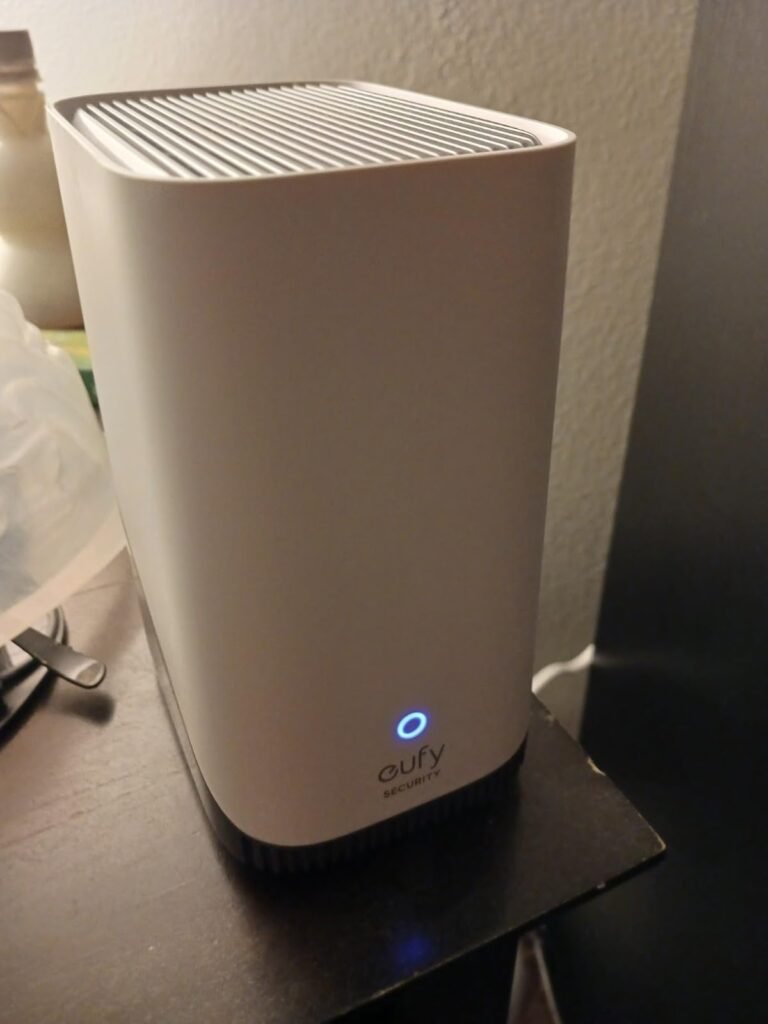
In that situation, the eufy Video Doorbell E340 stops being a feature-rich option and becomes a structurally sensible answer. The bundle on Amazon adds HomeBase 3, which extends storage possibilities and can serve as a chime path, while the doorbell itself already carries 8GB on-device storage, dual cameras, two-way audio, HDR, and battery/hardwire flexibility. That combination is why review outlets kept treating it as one of the strongest subscription-free package-focused doorbells in the segment.
If this is the condition you are actually dealing with, this is the logical next step: [link].
What It Solves, What It Reduces, and What It Still Leaves to You
What it solves:
| Solves | How |
|---|---|
| Doorstep blind spots | The second camera gives the floor area its own frame. |
| Subscription fatigue | Local storage is built into the product. |
| Package-awareness gaps | Dual-camera view and package detection target the porch-drop zone. |
| Basic installation flexibility | It can run on battery or be hardwired. |
What it reduces:
| Reduces | But does not erase |
|---|---|
| The chance that a package event is visually incomplete | Detection accuracy still depends on layout, zones, and motion logic. |
| Ongoing cost pressure | It does not remove the need for setup work or optional ecosystem add-ons. |
| Night-time ambiguity | It still works within the limits of porch lighting, distance, and scene contrast. |
What it still leaves to you:
| Still on you | Why |
|---|---|
| Tuning motion/activity zones | This directly affects false alerts and battery drain. |
| Managing expectations in battery mode | Heavy traffic can shorten real battery life dramatically. |
| Ensuring decent Wi-Fi | Slow live view is not solved by better cameras alone. |
| Supplying proper wired power if you want the fuller wired behavior | Pre-record depends on sufficient constant power. |
That is the honest shape of the product.
Not frictionless. Not fake-perfect. But sharply sensible inside the right threshold.
Final Compression
After going through the specs, long-form reviews, and owner complaints, the cleanest reading is this:
The eufy E340 is not compelling because it is another 2K smart doorbell. It is compelling because it corrects a blind-spot problem many people do not name until after they have already bought the wrong type of doorbell. Its dual-camera design makes the most sense for delivery-heavy homes, package-sensitive households, and buyers who want local storage without automatic subscription costs. Its weak points are equally clear: 2.4 GHz Wi-Fi only, no HomeKit, real sensitivity to setup quality, and battery performance that can shrink hard under heavy motion or loose detection settings.
So the decision is not really “Is this doorbell good?”
It is narrower.
Is your break point the moment a normal doorbell clip stops telling the whole story at the doorstep?
If yes, the E340 is one of the more rational answers in this category. If not, its extra intelligence is likely more architecture than you actually need.
Transparency Note:
This analysis is not based on quick personal impressions.
It is derived from documented system behavior, verified user patterns, and the physical constraints of storage capacity.
The goal is to translate complex technical behavior into a realistic performance model that helps you make a clear decision.