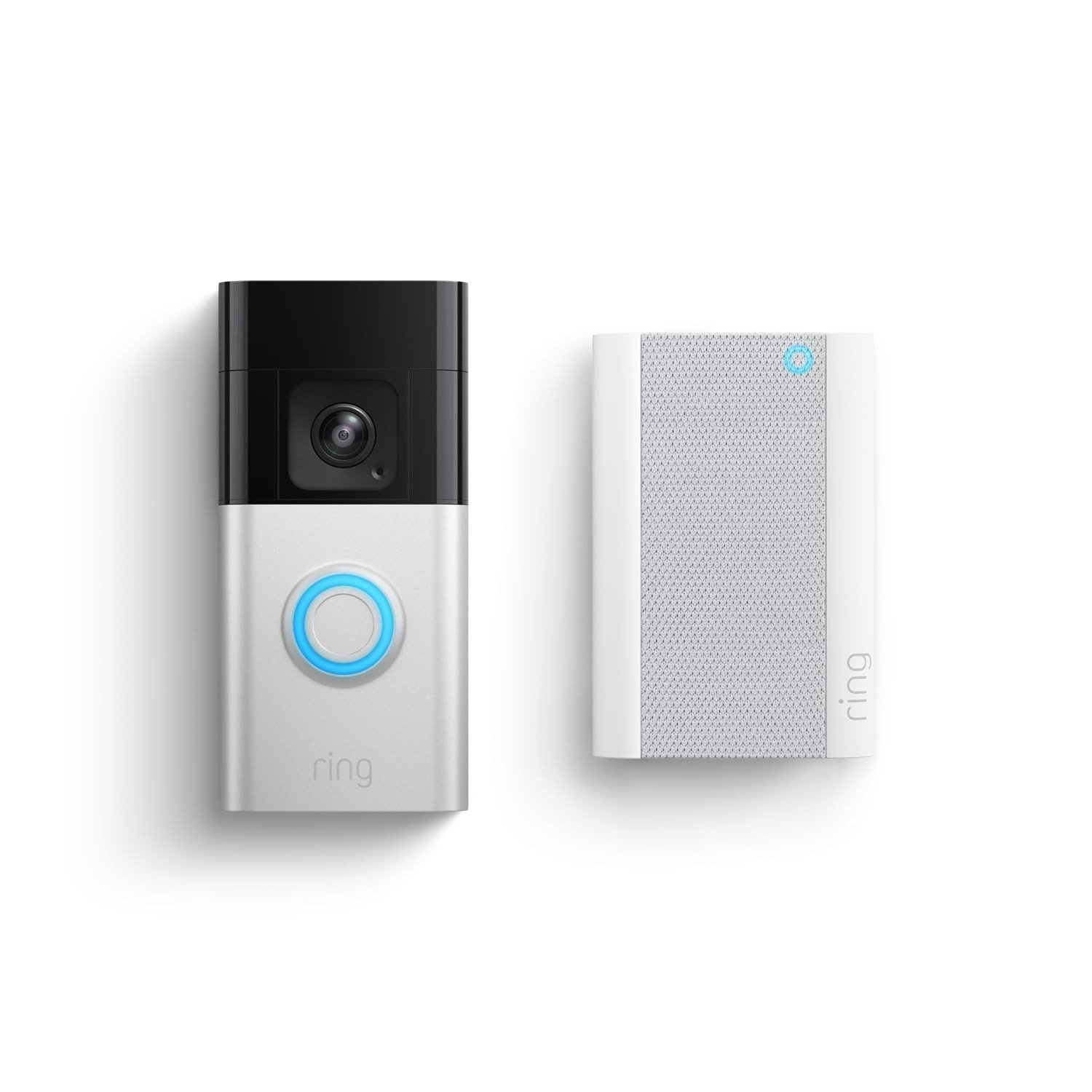
Ring Battery Doorbell Pro
RING BATTERY DOORBELL PRO
Looks Premium Immediately. The Real Question Starts After the First Week
A clean front-door feed is easy to admire for ten minutes. What matters more is what happens after the novelty burns off—when delivery drivers cut in and out of frame, when a passing car triggers another useless alert, when your router is a little too far from the entryway, and when “battery-powered convenience” quietly turns into another device you have to babysit.
That is where I would place the linked product: the Ring Battery Doorbell Pro with Ring Chime Pro bundle. The doorbell itself is Ring’s 1536p battery-powered Pro model with a removable Quick Release Battery Pack, 150° by 150° field of view, dual-band Wi-Fi, 3D Motion Detection, Bird’s Eye View, color night vision, and optional hardwiring for trickle charging. The included Chime Pro is not a cosmetic add-on; it is a plug-in chime and Ring-specific Wi-Fi extender with 2.4 GHz and 5 GHz support. That matters more than most people think.
There is one detail many buyers will miss right now: the product in your Amazon link is not Ring’s newest battery flagship as of March 2026. Ring has already announced a Battery Doorbell Pro (2nd Gen) with 4K video and a redesigned body, while the linked bundle is the earlier 1536p Battery Doorbell Pro. If someone is searching “latest Ring battery doorbell pro,” that distinction is not minor; it changes what “premium” means in the current lineup.
The Result Looks Fine. The Problem Isn’t.
Most people do not replace a front-door camera because the old one is unusable. They replace it because the result feels just slightly wrong in too many small ways.
You still get motion alerts, but you stop trusting them.
You still get a visitor clip, but the package is half out of frame.
You still have a battery doorbell, but now you are thinking about charge cycles, missed recordings, and signal strength.
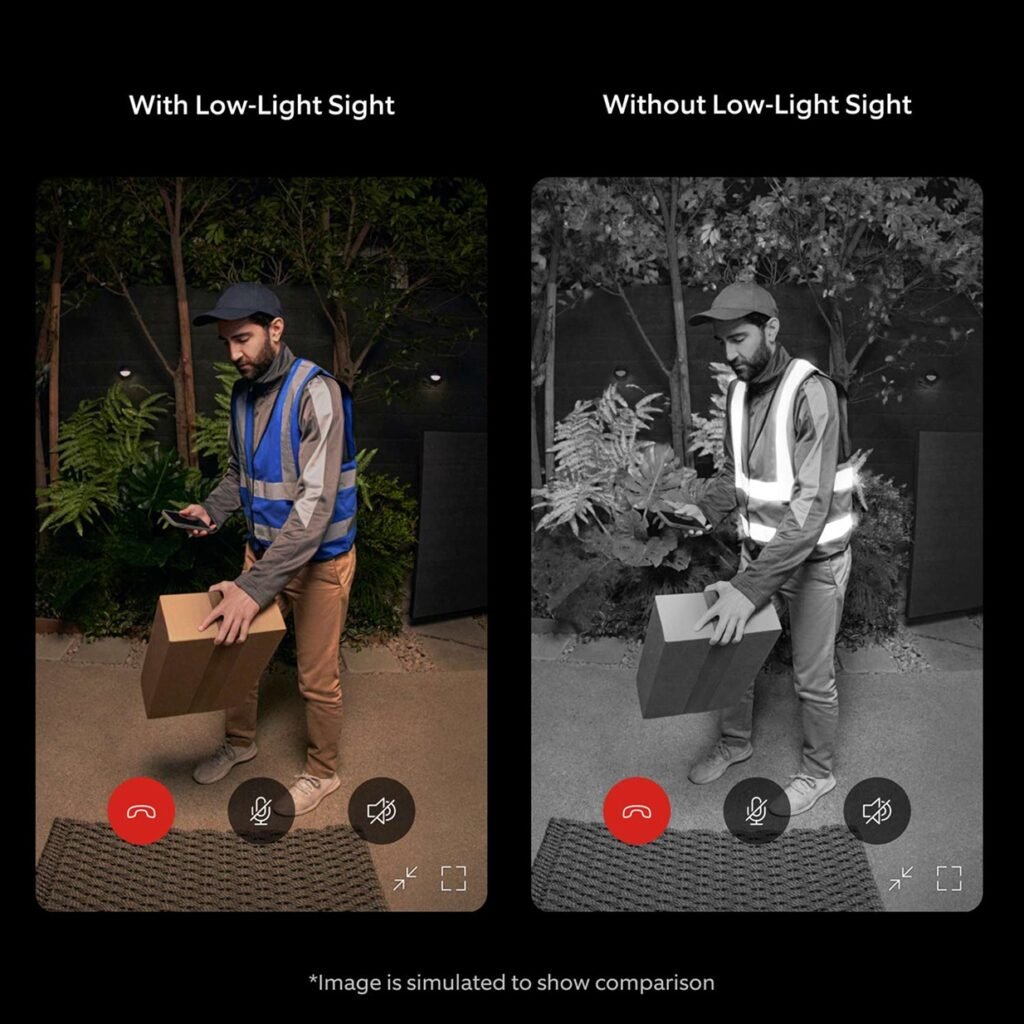
That is why the Ring Battery Doorbell Pro is not really a “video quality” product first. It is a friction-control product. The sharp 1536p view matters, the head-to-toe framing matters, and the low-light improvements matter—but the bigger shift is that Ring’s radar-backed 3D motion system is designed to reduce the kind of low-value alert noise that makes people ignore their own security device. That pattern shows up repeatedly in hands-on reviews: strong image quality, strong package visibility, and noticeably better motion precision than basic PIR-style battery doorbells.
What You’re Actually Feeling but Not Naming
What many buyers call “bad battery life” is often something else first: too much unfiltered activity.
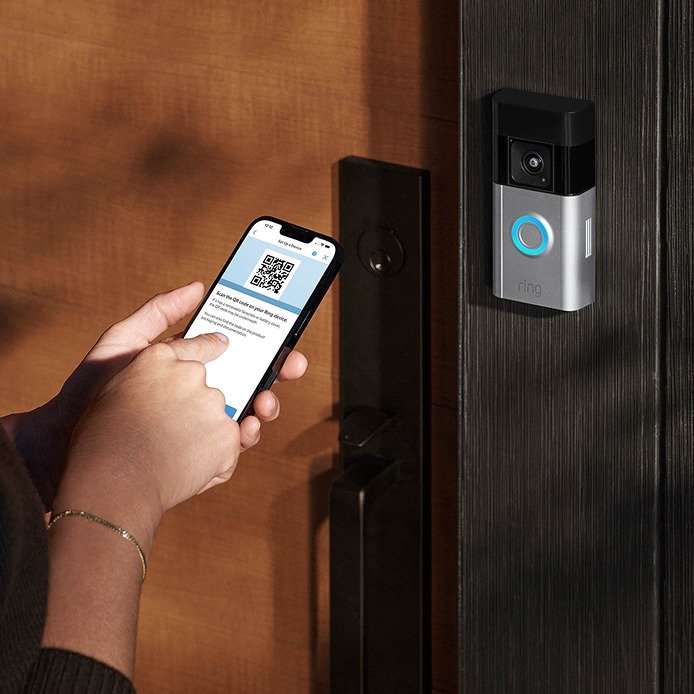
A battery doorbell does not live on resolution alone. It lives on event volume, placement, signal quality, weather, and how aggressively you configure motion settings. Ring itself notes that prolonged heat can affect performance, reviewers found the Pro’s advanced features drain power faster than simpler models, and owner discussions repeatedly describe battery life as highly dependent on traffic and cold weather. In other words, the battery problem often starts as a threshold problem, not a battery problem.
Here is the clean way I would name the friction:
| What you notice | What is actually happening |
|---|---|
| “It sends too many alerts.” | Your entryway has motion clutter, and basic detection rules are too loose. |
| “The battery feels weak.” | The camera is waking too often, recording too often, or working through poor placement/signal. |
| “I cannot always see the package.” | Your old field of view was built for faces, not doorstep geometry. |
| “The app feels more important than the camera.” | This category is increasingly software-shaped; hardware alone no longer closes the loop. |
That last line matters. Without a Ring subscription, you still get live video and real-time response, but recorded event history and smart alerts are restricted. Ring’s current plan structure puts video playback and person/package alerts behind paid tiers, and third-party reviews treat that recurring cost as one of the central trade-offs of buying into the Ring system.
The Hidden Mechanism Behind the Miss
The hidden variable is not “better camera” versus “worse camera.”
It is whether your front door has become a noisy detection environment.
The Ring Battery Doorbell Pro earns its place through a specific mechanism stack:
- 1:1 head-to-toe framing for people plus packages.
- 3D Motion Detection with Bird’s Eye View/Zones to map approach paths and trim irrelevant motion.
- Dual-band Wi-Fi for better flexibility in homes where 2.4 GHz-only gear becomes congested.
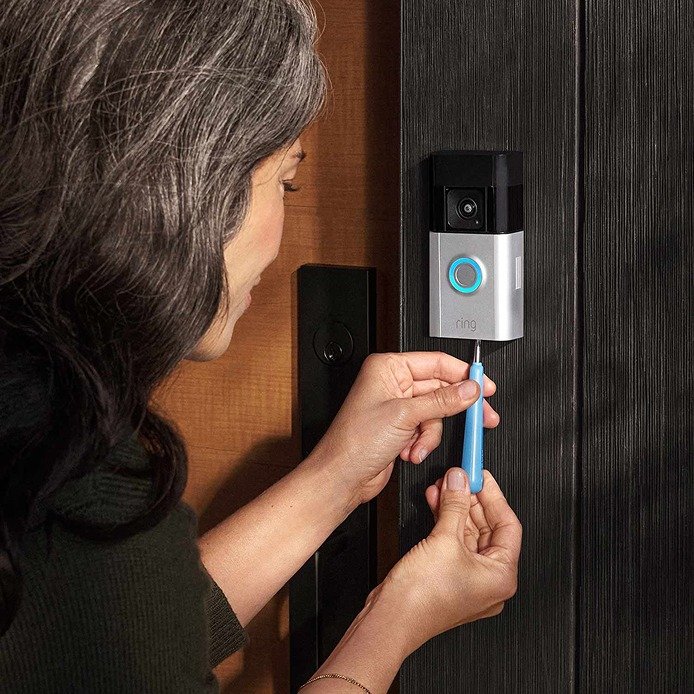
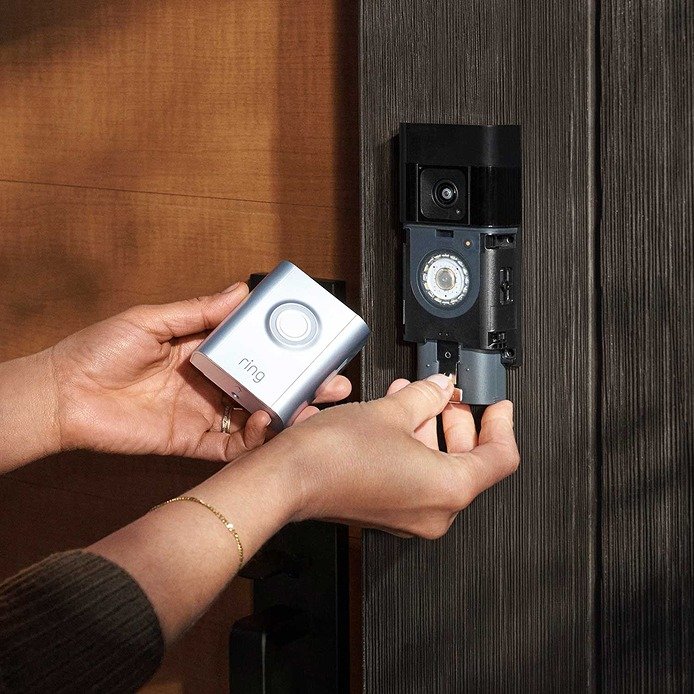
- Removable battery so charging does not require taking the entire unit off the wall.
That combination is why this model exists at all. The cheaper Ring Battery Doorbell Plus delivers the same 1536 x 1536 resolution and same 1:1 style framing, but it gives up some of the Pro-specific logic—most notably Bird’s Eye View, dual-band Wi-Fi, and the full radar-led positioning story. So the price jump is not mainly paying for prettier footage. It is paying for better control over when the camera decides something matters.
The Threshold Where the Outcome Quietly Breaks
Here is the threshold in plain English:
The Ring Battery Doorbell Pro becomes logical when your front door has enough movement, distance, package exposure, or Wi-Fi weakness that a normal battery doorbell stops feeling dependable.
Not “when you want premium.”
Not “when you want the best.”
When the simpler result starts leaking trust.
I would map the threshold like this:
| Condition at the door | Battery Doorbell Pro fit |
|---|---|
| Frequent package drops near the threshold | Strong |
| Sidewalk, driveway, or approach-path motion nearby | Strong |
| Router is not ideally placed near the door | Stronger with Chime Pro |
| You need only basic visitor alerts | Borderline |
| You hate recurring subscriptions | Weak |
| You already have reliable doorbell wiring and want maximum value | Weak, because Ring’s wired options can make more sense |
| You want local storage first | Weak |
That last point deserves blunt wording. Ring’s system remains cloud-centered. Ring says recorded video review requires a subscription, and even favorable reviewers repeatedly flag the subscription dependency as part of the real cost. If local-first ownership is your priority, this bundle is already on the wrong side of your threshold.
Why Most Buyers Misread This Too Early
Most buyers compare doorbells the lazy way: resolution, price, maybe brand familiarity.
That is how they end up either overpaying for the Pro or underbuying for the problem they actually have.
The uncomfortable truth is that 1536p alone is not enough reason to buy this. Even reviewers who liked the product were clear that the Pro’s premium features are not necessary for every home, and that more affordable models cover the basics very well. The Pro becomes rational only when the extra control solves an actual front-door failure pattern: false or noisy alerts, uncertain package coverage, awkward Wi-Fi placement, or repeated frustration with generic motion sensing.
There is also a timing trap here. Because Ring launched a newer 4K Battery Doorbell Pro (2nd Gen) in March 2026, a buyer who pays full flagship money for the older 1536p Pro without realizing it may think they bought the current peak model when they did not. That does not make the linked bundle bad. It just makes awareness part of the decision hygiene.
Who Is Actually Inside This Problem
This bundle fits a very specific buyer.
| You are probably inside the problem if… | Why this bundle makes sense |
|---|---|
| Your door sees real motion noise from a path, street, or shared approach | 3D Motion Detection and Bird’s Eye tools are more relevant here than on a quiet porch. |
| You care about seeing both people and packages in one frame | The 1:1 head-to-toe layout is built for that use case. |
| Your front door is not ideally placed for your router | Chime Pro can extend the Ring network and improve alert reliability if placed correctly. |
| You want battery flexibility but do not want to unmount the whole doorbell to charge | The removable Quick Release Battery Pack is a practical quality-of-life win. |
| You are already inside the Ring/Alexa ecosystem | The ecosystem value compounds more naturally here. |
That last row is not marketing fluff. Ring’s own materials and multiple reviews point to better fit when you already use Ring or Alexa devices, because live view, alerts, smart displays, and app familiarity all reduce setup friction.
Where Wrong-Fit Begins
This is not for everyone.
This is not for the buyer whose front door is quiet, close to the router, and already well-served by a simpler battery model.
This is not for the buyer who hates subscriptions on principle.
This is not for the buyer who already has strong existing wiring and mainly wants maximum hardware value, because Ring’s wired line keeps more features without battery maintenance.
And this is not for the buyer who thinks the Chime Pro is just a glorified ringtone box. If your Wi-Fi is already strong at the entryway, its value collapses fast. If your signal is marginal, though, it can be the difference between a smart doorbell that feels immediate and one that feels slightly late and slightly unreliable—the kind of weakness that ruins confidence one missed moment at a time.
The One Situation Where This Product Becomes Logical
The cleanest case for the linked bundle is simple:
You want a battery-powered Ring doorbell because wiring flexibility matters, but your front door is active enough that standard motion detection, basic framing, or weak edge-of-home Wi-Fi has already started to fail you.
In that one situation, the Ring Battery Doorbell Pro with Chime Pro stops looking expensive and starts looking specific.
Not magical.
Not universal.
Specific.
What you are buying is a battery doorbell that tries to behave less like a casual gadget and more like a tuned perimeter sensor—while the Chime Pro tries to stabilize the weak point many people ignore: the network path between router and front door.
What It Solves, What It Reduces, and What It Still Leaves to You
| What it solves | What it reduces | What it still leaves to you |
|---|---|---|
| Better vertical coverage for people and packages | Some false or low-value motion noise | Battery management still exists |
| More precise motion context with radar/Bird’s Eye features | Some placement and Wi-Fi pain when paired with Chime Pro | Subscription cost if you want recordings and smart alerts |
| Easier charging than fixed-battery designs | Front-door blind spots that cheaper wide-but-not-tall cameras leave behind | Careful setup still matters—zones, sensitivity, placement |
| Cleaner Ring/Alexa integration | The mental friction of inconsistent alerts | Awareness that a newer 4K 2nd Gen now exists |
That is the trade-off frame I trust here: you gain precision and convenience, but you trade away some simplicity, some battery endurance, and some total cost control. Reviewers were broadly positive on video, audio, and responsiveness, but just as consistent about the pressure points—premium price, subscription dependence, and battery drain that can become noticeable when advanced features are working hard.
Final Compression
If all you need is a basic front-door camera, this is too much product.
If your real break point is motion clutter, package visibility, weak entryway Wi-Fi, and the need to mount anywhere without losing too much control, this bundle becomes much easier to justify.
That is the decision in one line:
The Ring Battery Doorbell Pro with Chime Pro is logical when a normal battery doorbell has already started costing you trust.
Transparency Note:
This analysis is not based on quick personal impressions.
It is derived from documented system behavior, verified user patterns, and the physical constraints of storage capacity.
The goal is to translate complex technical behavior into a realistic performance model that helps you make a clear decision.