Your Doorbell Looks Fine Until the Miss Starts Happening
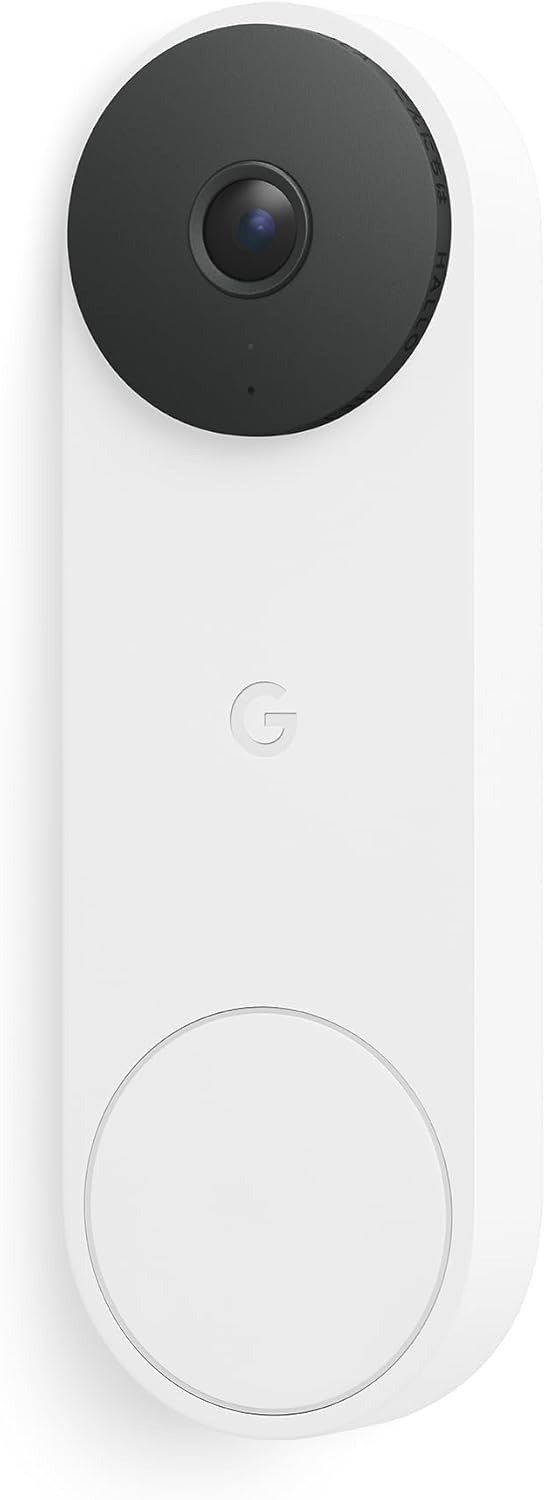
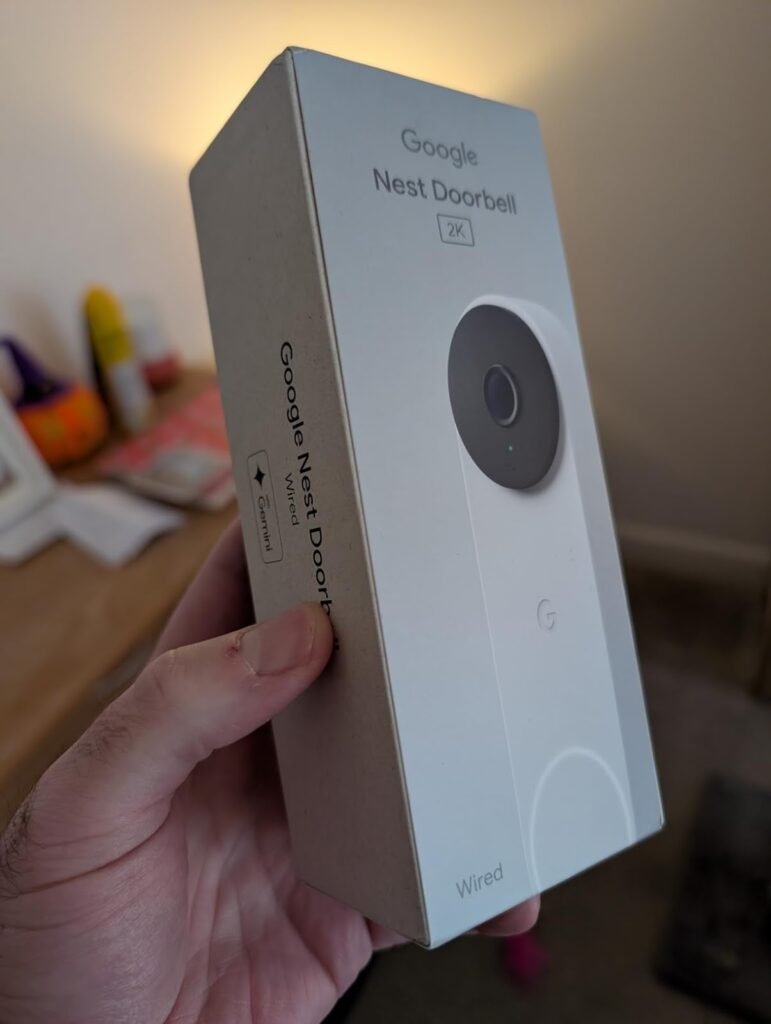
PRODUCT: GOOGLE NEST DOORBELL (WIRED, 3RD GEN)
A front door camera can look perfectly acceptable right up to the moment you need one thing from it: certainty.
Not a pretty live view.
Not a neat app screen.
Not another alert you swipe away half-awake.
Certainty.
The problem usually starts lower than people expect. A parcel sits too close to the step. A visitor stands off-center. A motion clip catches the approach but not the handoff. The image is technically there, yet the useful part of the event is not. That gap is where most doorbells stop being “good enough.”
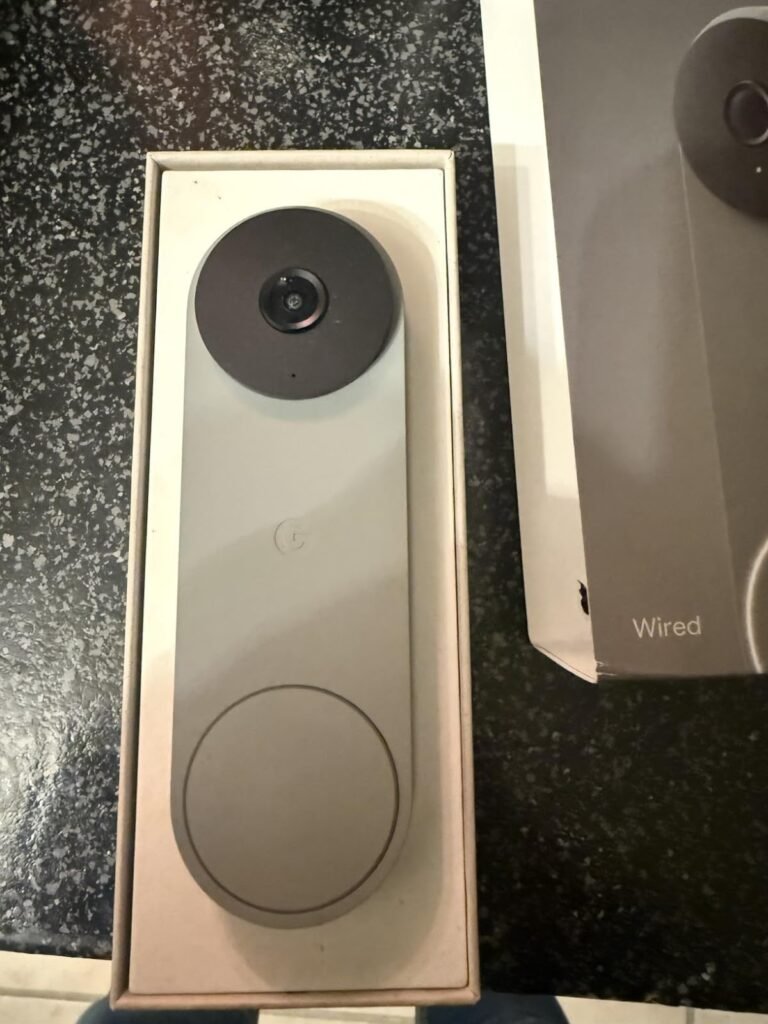
That is the threshold I kept coming back to while studying the Google Nest Doorbell (wired, 3rd gen): this product is not mainly about having a nicer picture. It is about reducing the number of front-door moments that look covered but are not. Google’s current wired 3rd-gen model uses a 2K 2048×2048 sensor, a 1:1 aspect ratio, a 166° diagonal field of view, HDR, 24/7 live view, 6x digital zoom, and IP65 weather resistance. It also requires a 16–24VAC, 10–40VA transformer and works inside the Google Home app.
The Result Looks Fine. The Problem Isn’t.
Most people judge a doorbell camera the same way they judge a phone photo: does it look sharp when I open the app?
That is early-stage thinking.
A doorbell is not a display object. It is a recovery tool. Its job is to preserve the event in a form that still makes sense after the interruption, after the delivery, after the missed ring, after the moment has already passed.
That is why “the video looks good” is too weak a buying metric. Plenty of cameras look good during a casual check. The miss appears later, when you need to answer a narrower question:
- Who came closest to the door?
- Was the package actually left or just carried into frame?
- Did the motion happen high in frame or at foot level?
- Can I reconstruct the sequence without guessing?
The wired 3rd-gen Nest is built around solving that kind of miss more than solving the vanity problem of “does my porch look crisp.” Its square 1:1 frame and 166° field of view are not cosmetic choices. They are coverage choices.
What You’re Actually Feeling but Not Naming
People rarely describe this problem correctly.
They say:
- “I want better video quality.”
- “I need a smarter doorbell.”
- “My current one misses stuff.”
- “I want fewer false alerts.”
What they usually mean is something more specific.
They are tired of incomplete evidence.
That irritation has a particular texture. It is not dramatic. It builds quietly.
You check a clip and it starts too late.
You see a person, but not what they did near the threshold.
You get motion, but not enough context.
You miss the package zone because the useful area is lower than the face-level area.
You receive an alert, but the saved history is too thin to settle what happened.
That is not just “bad quality.” It is front-door ambiguity.
Google’s subscription matrix makes this even clearer. With no subscription, the wired 3rd-gen gets 10-second event previews stored for 6 hours. Standard adds 5-minute event-based recordings stored for 30 days. Advanced extends that to 60 days and adds 10 days of 24/7 video history for wired doorbells.
The hidden emotional burden is not fear. It is replay fatigue. You stop trusting the system because you keep having to interpret around its gaps.
The Hidden Mechanism Behind the Miss
The uncomfortable truth is that most front-door failures are geometry failures first, resolution failures second.
That sounds backward until you look closely.
A doorbell can advertise sharper video and still lose the event if its framing does not preserve the useful area near the step, the package drop zone, or the edge where someone pauses before pressing the button. A cleaner sensor cannot rescue footage that never held the right slice of reality.
This is where the Nest Doorbell (wired, 3rd gen) makes its strongest case. The 1:1 format and 166° diagonal field of view are doing the heavy lifting. The video is up to 2K at 30 FPS with HDR, but the more important point is how much of the doorway interaction it can keep inside the frame.
That wider, taller capture area also explains one of the recurring user reactions: some people love the added usability, while others need time to adjust to the more fisheye-like perspective. A Reddit comparison from an owner moving from an older generation said the wider view was “much more usable” for seeing packages close to the door, even if it looked less attractive in the traditional sense.
That is the trade.
You gain retrieval value.
You give up some visual neatness.
And that trade is more intelligent than it first appears.
The Threshold Where the Outcome Quietly Breaks
Here is the threshold in plain language:
A basic or older doorbell starts to fail when you need the footage to answer a specific front-step question, not merely show that motion existed.
That break point usually appears under one or more of these conditions:
| Condition | What starts breaking |
|---|---|
| Packages are left low and close to the door | Lower frame coverage becomes more important than headline resolution |
| You review events after the fact, not live | Storage model matters more than instant picture quality |
| Visitors pause off-center or near the edge | Wider field of view starts outperforming “cleaner” framing |
| Your porch has mixed lighting | HDR and better exposure control matter more than spec-sheet bravado |
| You need a timeline, not just a trigger | Wired + 24/7 history becomes the real dividing line |
Google officially limits 24/7 history to wired Nest cameras and doorbells, and only on the Advanced Google Home Premium tier. The battery doorbell does not get that option, even when wired for power.
That is why this product is not simply “better than a battery doorbell.” It crosses a threshold that battery models, by design, do not fully cross: continuous context.
Why Most Buyers Misread This Too Early
Most buyers judge too early because they compare the wrong variables.
They compare:
- resolution labels
- brand familiarity
- subscription annoyance
- hardware price
Those things matter. They just do not decide the real fit on their own.
The early mistake is feature-led judgment. People see “2K,” “AI,” or “Gemini” and assume the value is intelligence theater. The more grounded reading is this: the hardware matters because it improves capture width, porch coverage, and wired continuity; the software matters because it changes how much usable history you can recover later. Google’s official feature matrix shows that even without a subscription you still get person, animal, vehicle, package, motion alerts, live view, two-way talk, activity zones, and zoom/crop, while richer history, familiar faces, and Gemini-powered features depend on the paid tiers.
That distinction is important because it strips away two lazy conclusions:
- Lazy conclusion one: “This is worthless without a subscription.”
Not true. You still get core detection and short event previews. - Lazy conclusion two: “This is fully justified by 2K alone.”
Also not true. The better case is coverage geometry plus wired retention plus Google ecosystem fit.
A good doorbell does not win on spec fireworks. It wins by lowering ambiguity at the exact place your old system starts forcing guesses.
Who Is Actually Inside This Problem
This product becomes easier to justify when I narrow the reader instead of widening the pitch.
You are inside this problem if most of the following are true:
| Signal | Fit |
|---|---|
| You already have compatible wired doorbell power | Strong |
| You use Google Home as your main smart-home layer | Strong |
| You care about package area visibility, not just face capture | Strong |
| You want 24/7 history as an option later | Strong |
| You review events after the fact, not only in real time | Strong |
| You want person / animal / vehicle / package alerts without paying extra just for basic classification | Strong |
| You dislike battery charging routines | Strong |
This mapping is not theoretical. TechHive praised the very wide field of view, 8x zoom in its hands-on write-up, and noted that limited recordings plus person, pet, vehicle, and package detection are available without a subscription, while also criticizing the cost of unlocking the full Gemini experience.
Retail feedback points in the same direction. Best Buy lists the product at 4.7/5 from 270 reviews, with recurring praise for installation ease, video quality, and the wider field of view.
That consistency matters. It suggests the product’s strongest impression is not hype. It is operational usefulness.
Where Wrong-Fit Begins
This is not for everyone, and the wrong-fit line appears earlier than many people admit.
This is not for you if:
| Wrong-Fit Condition | Why the fit weakens |
|---|---|
| You do not have compatible wired power and do not want to upgrade | The install requirement becomes friction, not value |
| You are subscription-averse on principle | The hardware still works, but the ecosystem’s best retention and Gemini features stay locked |
| You want the cheapest acceptable doorbell | This is a $179.99 device before any paid plan |
| You want a battery fallback or rental-friendly simplicity | Google’s current 3rd-gen is wired-only |
| You want the most flattering, least distorted image over the most useful porch coverage | The wider view may feel less aesthetically tidy |
The subscription objection is not imaginary. It keeps surfacing in reviews. TechHive’s verdict was strongly positive on the hardware but explicit that “you’ll need to pay to play” for the fuller experience. Gizmodo’s headline took the same frustration head-on, arguing that the hardware is strong while the subscription approach drags on the value story.
User commentary also shows that some owners see the wider frame as more usable while still needing time to accept the visual distortion. Others mention that night vision is competent but not class-leading. Best Buy’s review summary specifically notes that some customers wanted better night vision.
That does not weaken the product’s fit. It defines it more honestly.
The One Situation Where This Product Becomes Logical
The Google Nest Doorbell (wired, 3rd gen) becomes logical in one very specific situation:
You are not trying to buy “a smarter doorbell.” You are trying to stop losing the useful part of front-door events inside a Google-based home.
That is the moment the math changes.
At that point, the square 2K frame, 166° view, wired power, Google Home integration, baseline smart alerts, and optional 24/7 history stop looking like isolated features and start behaving like one coherent system. Google’s official specs confirm the core hardware; Google’s subscription documentation confirms the retention ladder; outside reviewers and buyers keep circling the same strengths: sharp video, broader coverage, practical alerts, and smoother fit for people already living in Google Home.
That is why I would place the [link] here, and not earlier.
Not because the article suddenly turns promotional.
Because this is the first point where the decision stops being vague.
If your actual break point starts at porch coverage, event reconstruction, and wired continuity, this is the product that closes that gap cleanly.
What It Solves, What It Reduces, and What It Still Leaves to You
What it solves:
| Solves | Why |
|---|---|
| Better front-step coverage | 1:1 framing and 166° field of view preserve more of the useful porch area |
| Cleaner event interpretation | Better context reduces “something happened, but I can’t tell what” moments |
| Basic smart alerts without immediate subscription pressure | Person, animal, vehicle, package, and motion alerts are included at the no-subscription level |
| Continuous-history upgrade path | Advanced tier enables 10 days of 24/7 history on wired doorbells |
What it reduces:
| Reduces | How |
|---|---|
| Battery maintenance dread | It is wired-only |
| Guesswork around package-level activity | Wider, taller frame helps capture lower-zone movement |
| App fragmentation for Google households | It lives in Google Home |
What it still leaves to you:
| Still on You | Why |
|---|---|
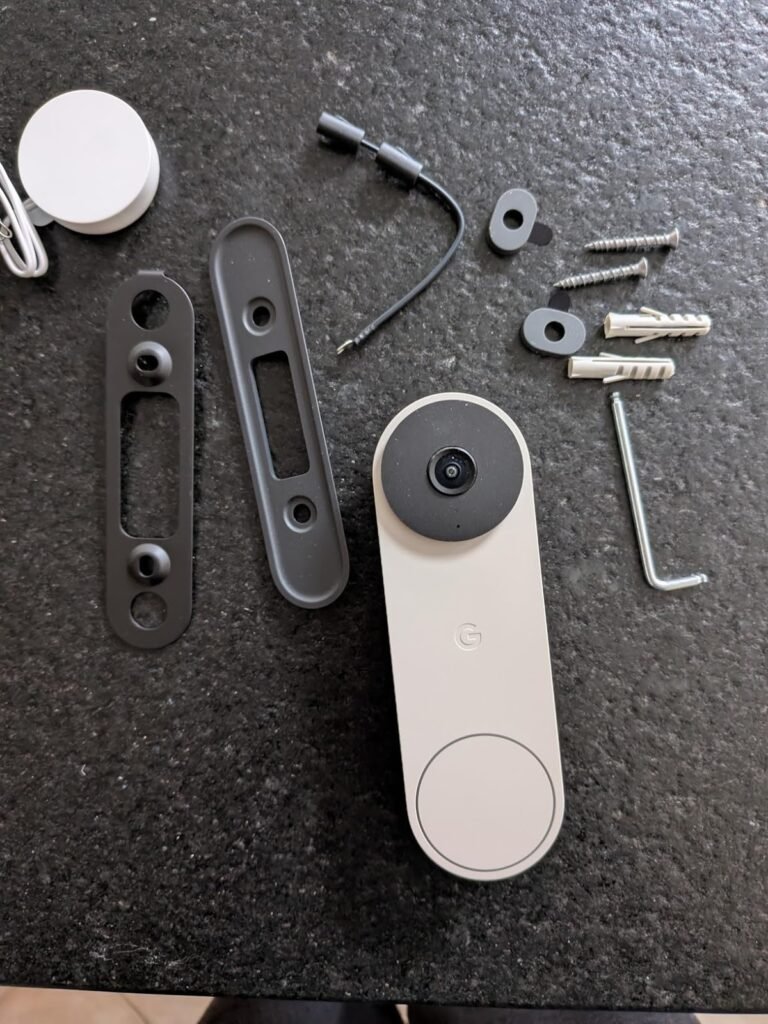
| Having compatible wiring and transformer power | It needs 16–24VAC, 10–40VA |
| Deciding whether subscription economics make sense | Core features work free, but the strongest retention and Gemini tools do not |
| Accepting the wider visual style | More usable does not always look more “natural” |
| Managing expectations in very low light | Some buyers still want stronger night performance |
This is the calm version of the truth. The device does not remove trade-offs. It arranges them more intelligently than most front-door cameras do.

Final Compression
The Google Nest Doorbell (wired, 3rd gen) is not a universal recommendation.
It is a threshold recommendation.
If your current doorbell already gives you enough context to settle porch events without replaying, guessing, or wishing you had a longer history, you are probably outside the problem.
If your current setup keeps leaving you with partial evidence, low-angle blind spots, thin retention, or Google-home friction, you are inside it.
That is the dividing line.
Not “2K.”
Not “AI.”
Not “latest model.”
The real line is simpler: when front-door clarity starts breaking in ways that cost you confidence, this wired Nest becomes one of the cleanest fixes in its category—especially if you already live inside Google Home and want the option to move from alerts to full event recovery over time.
If this is the condition you are actually dealing with, this is the logical next step.
Transparency Note:
This analysis is not based on quick personal impressions.
It is derived from documented system behavior, verified user patterns, and the physical constraints of storage capacity.
The goal is to translate complex technical behavior into a realistic performance model that helps you make a clear decision.