Your Floors Can Look Clean While the Misses Keep Repeating
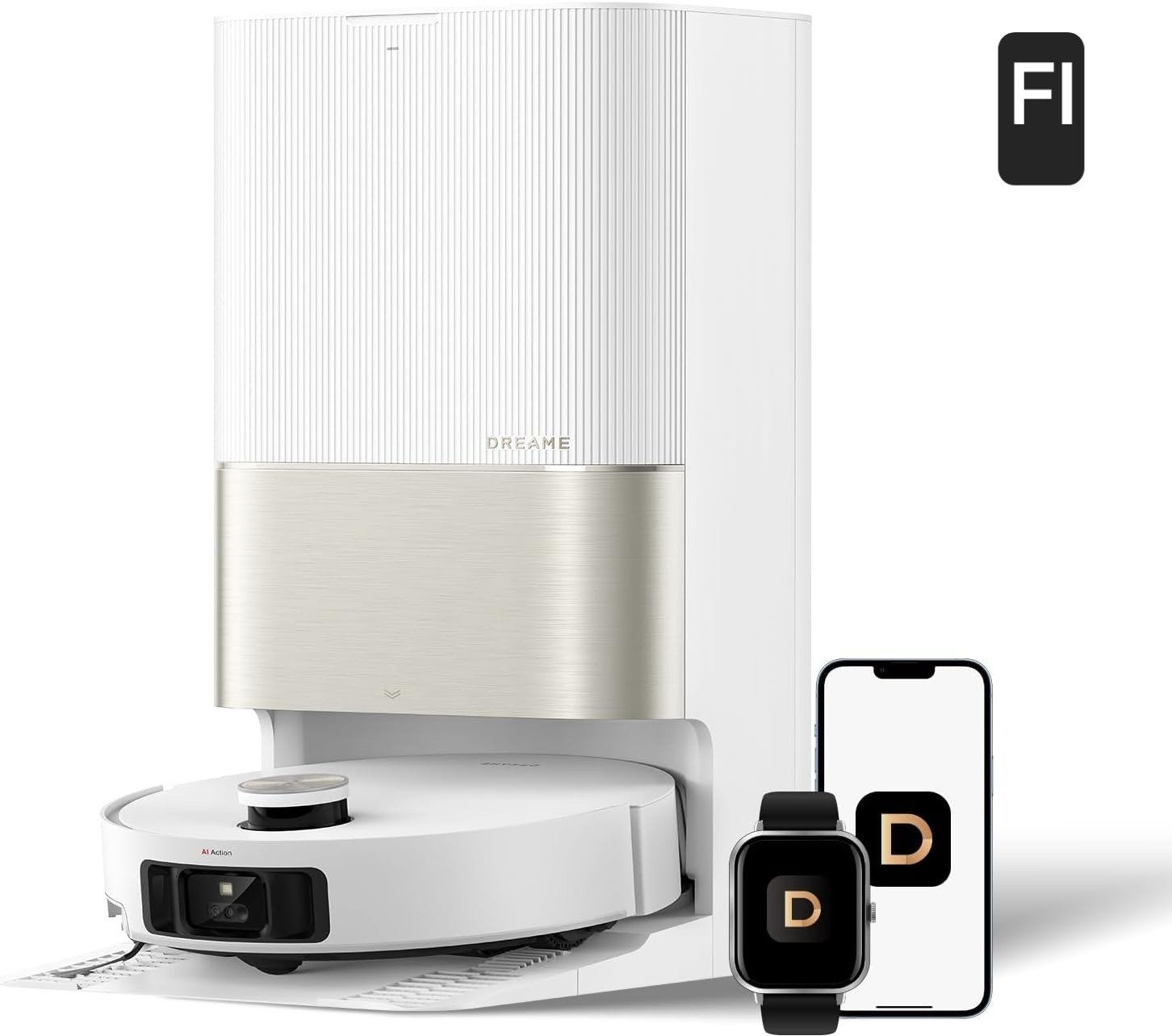
Dreame X60 Max Ultra Complete
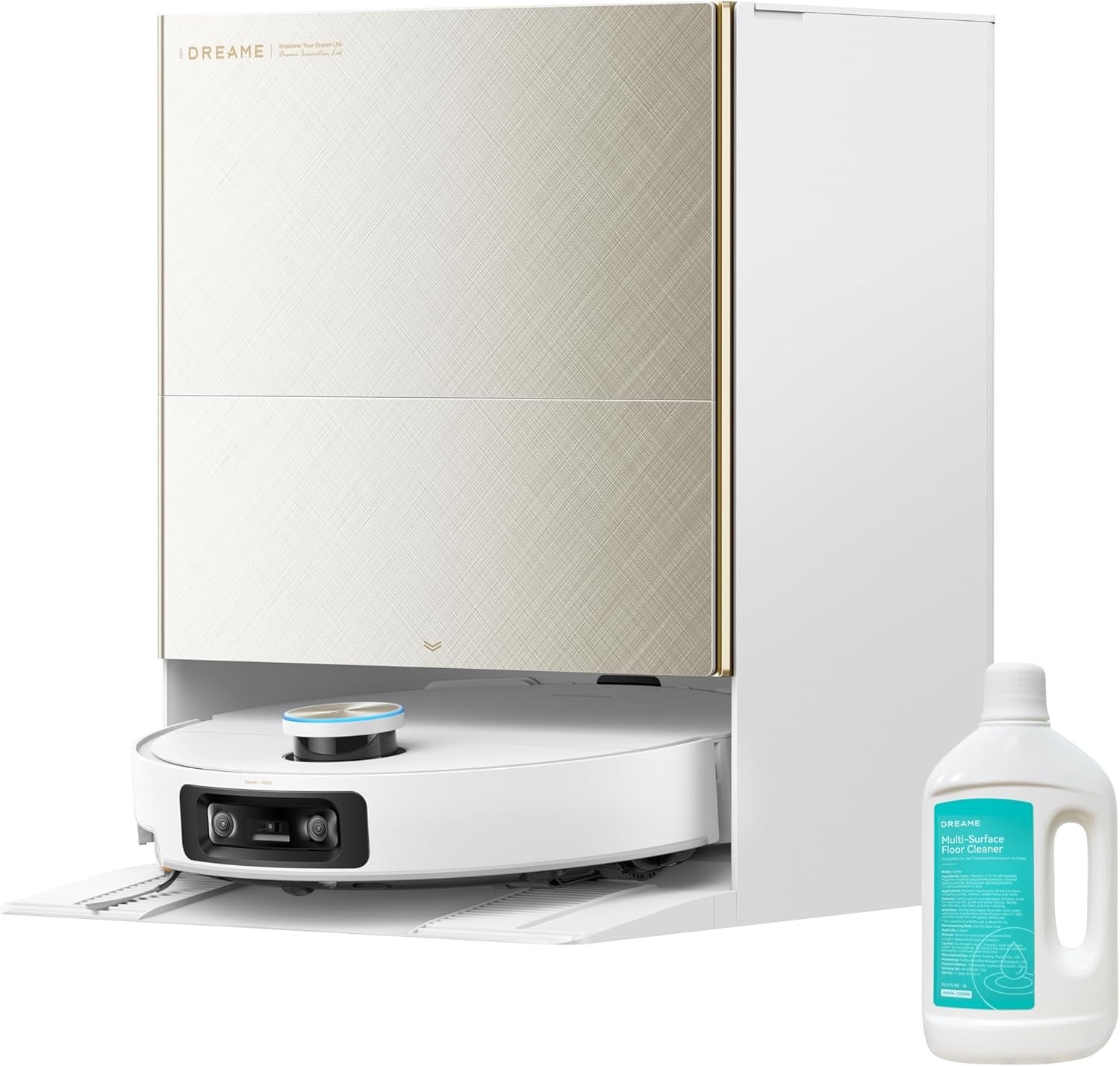
I kept running into the same pattern while studying the Dreame X60 Max Ultra Complete: the most expensive robot vacuums rarely disappoint first on paper. They disappoint at the exact points people stop watching—under the sofa, at the room transition, around clutter, and in the awkward handoff between mopping and carpet. That is the real break point here, and it matters more than another inflated suction number. The X60 arrives with a 3.13-inch body, retractable LiDAR, 35,000Pa rated suction, recognition for 280+ object types, and threshold claims up to 45mm single-layer or 88mm dual-layer. In independent testing, it also posted unusually strong obstacle avoidance, anti-tangle, carpet extraction, and pet-hair results. But the story is not “this robot does everything.” The story is narrower, and more useful than that.
The Result Looks Fine. The Problem Isn’t.
What wears people down is not the obvious mess. It is the repeated micro-failure.
The room looks finished, yet the dust line under the media unit is still there. The rug transition still interrupts coverage. The robot avoids the shoe, misses the corner, crosses the room, and somehow the part that bothered you yesterday is still bothering you today. That is why premium robot vacuum dissatisfaction often feels irrational at first. The machine ran. The map exists. The app says the job is done. But the missed area is always the same area.
That is exactly why the X60 is interesting. Its strongest claims are not cosmetic add-ons. They are all aimed at the places where routine automation usually starts leaking: low-profile reach, threshold clearance, edge extension, hot-water spinning mops, carpet-safe mop lift, dock-side mop removal, and higher-end obstacle handling. In Vacuum Wars testing, it cleared a 51mm single threshold, scored 22/24 in obstacle avoidance, hit 89% in carpet deep cleaning, 100% in flattened pet-hair pickup, and 0% hair wrap in a 7-inch hair test. Those are not random wins. They point to one thing: this robot is built to keep coverage intact when the home stops being ideal.
What You’re Actually Feeling but Not Naming
Most people describe the wrong symptom.
They say they want stronger suction. Or smarter AI. Or better mopping. What they usually want is fewer cleanup leftovers after the robot has supposedly finished. That is a different problem. It is not a power problem first. It is a continuity problem.
The hidden irritation sounds like this: I do not want to babysit a robot with premium branding. I do not want to pre-lift chairs, pre-check rugs, untangle hair, inspect corners, then manually finish the exact areas I bought the machine to handle. That is why owners respond so strongly to good avoidance and anti-tangle performance. On Amazon, the positive reviews keep circling the same lived benefits: smarter navigation, better edge reach, under-furniture access, and less daily intervention. The one negative review that stands out is revealing for the opposite reason—it praises early mapping and avoidance, then collapses on repeated stuck events, carpet issues, and redocking trouble after about ten days. That is the whole category in miniature: the machine wins or loses on whether autonomy survives real repetition.
The Hidden Mechanism Behind the Miss
Here is the mechanism most shoppers underweight: access continuity.
A robot vacuum does not clean what it cannot physically preserve access to. That sounds obvious, but the category keeps training buyers to think in isolated specs. One number for suction. One phrase for AI. One badge for mopping. Real homes do not fail one spec at a time. They fail where height, transitions, obstacles, hair, and mixed surfaces stack on top of each other.
That is why the X60’s hardware package matters as a system. The slim 79.5mm body with retractable LiDAR is about reaching under furniture where taller robots hesitate. The threshold system is about not stopping at the lip between rooms. The dual AI cameras and proactive illumination are about preserving movement in clutter and low light. The side brush and extending mop are about closing edge leakage. The 21.5mm mop lift and dock-side mop removal are about not dragging a wet cleaning strategy into a dry-floor problem. I do not see this robot as a suction purchase. I see it as an access-preservation purchase. That is the real variable.
The Threshold Where the Outcome Quietly Breaks
I would name the decisive line here the Access Threshold.
A home crosses that threshold when the robot is no longer judged mainly by whether it can clean an open room, but by whether it can keep cleaning once the room becomes inconvenient. Low beds. Sofa clearances. Transition strips. Toy clutter. Pet bowls. Cables. Edge buildup. Mixed hard floor and carpet. Long hair. Repeated mop cycles. That is where the glossy promise usually breaks.
The Dreame X60 Max Ultra Complete is unusually strong after that threshold. Its official profile is 3.13 inches; it is rated for 45mm single-layer and 88mm dual-layer threshold crossing; Vacuum Wars says it even cleared 51mm in testing. Its obstacle system avoided 22 of 24 test objects versus roughly 16 of 24 average in that test set. Its brush system produced 0% hair wrap in a long-hair test. That combination is not normal. It means the machine has a better chance of staying useful in homes that would slowly expose the fragility of a more ordinary premium robot.
Why Most Buyers Misread This Too Early
They shop from the clean-room fantasy.
In that fantasy, the robot lives in a mostly open house, moves between rooms cleanly, never meets clutter, never hits a strange rug, never has to choose between preserving vacuum performance and protecting carpets from wet pads. From that angle, every flagship starts to look interchangeable.
The broader evidence says otherwise. RTINGS’ review of the earlier Dreame X50 already pointed to the series’ real identity: exceptional obstacle handling, low-furniture clearance, and threshold performance, even when some rivals delivered better hard-floor pickup. That matters because the X60 is not just “more Dreame.” It doubles down on the same family advantage—reach and avoidance—while improving mopping, suction claims, and anti-tangle behavior. The shopping mistake is comparing feature counts instead of comparing failure points. If your home rarely presents clearance, transition, or clutter problems, a machine like this can be overbought fast.
Who Is Actually Inside This Problem
This is the right problem for you if you are tired of a robot that technically runs but keeps leaving behind the exact kind of miss that makes automation feel fake.
You are inside it if your home has low furniture, mixed floors, transition strips, pet hair, frequent small obstacles, or edge zones that keep collecting debris. You are also inside it if your annoyance is not the weekly deep clean, but the daily friction of small leftovers and repeated intervention.
| Need | Fit |
|---|---|
| Low furniture clearance | Strong |
| Room transitions / thresholds | Strong |
| Obstacle avoidance in lived-in rooms | Strong |
| Long hair or pet hair tangle control | Strong |
| Edge and corner cleanup | Strong |
| Frequent mopping on hard floors | Strong |
| Thick carpet-first household | Borderline |
| Budget-sensitive buying | Weak |
| “Set everything to auto and never check it” expectation | Borderline |
That last line matters. Even strong machines still live inside real physical limits. Gizmodo’s review is harsh, but useful, because it identifies the exact type of buyer who will feel betrayed: the one paying flagship money and expecting every advanced mode to work gracefully in every carpet/mop crossover without supervision. In that testing, the chassis-lift behavior and app complexity undercut the premium promise.
Where Wrong-Fit Begins
This is not for the buyer whose main problem is simple hard-floor pickup in an uncluttered home.
It is also not the cleanest fit if your house is dominated by thick carpets and you want zero thought around mop-carpet interaction. One of the most credible criticisms of the X60 is exactly there: the premium mechanics can create their own trade-offs. Gizmodo found that the lift behavior could compromise vacuuming on low rugs and still leave wet-pad issues on thicker carpet in some modes. Vacuum Wars also notes slightly below-average navigation efficiency, modest battery efficiency, about 950 square feet per charge in its testing, and a small 235mL internal dustbin. Those are not disqualifiers. They are boundaries. But boundaries are where expensive mistakes start.
You also need to be honest about price tolerance. Dreame lists the X60 Max Ultra Complete at $1,699.99 on its US site, and Amazon showed 4.5/5 stars from 83 ratings in the product summary at the time of capture. That is enough feedback to surface both admiration and early reliability anxiety, but not enough maturity yet for me to call it low-risk ownership across long-term use. The hardware profile is strong. The long-horizon confidence is still forming.
The One Situation Where This Product Becomes Logical
The X60 becomes logical when your cleaning problem is not “I need a robot vacuum,” but “my home keeps breaking ordinary automation at the points I care about most.”
That is the decision line.
If your irritation comes from under-furniture misses, transition failures, corner drift, hair wrap, clutter avoidance, and the feeling that previous robots were always one interruption away from becoming another chore, this machine is built around those specific weak spots. The combination of slim clearance, unusually high threshold capability, very strong object avoidance, high mop lift, dock-side mop removal, hot-water mop washing, and anti-tangle brush design makes sense as one answer to one kind of house. In that house, the premium price stops being absurd and starts being structurally coherent. That is the only case I would use to authorize it.
What It Solves, What It Reduces, and What It Still Leaves to You
What it solves well is access loss.
It solves a meaningful part of the “my robot cannot get there,” “my robot keeps catching there,” and “my robot turns daily upkeep into supervision” problem. It also reduces brush maintenance. A 0% hair-wrap result in a 7-inch hair test is not a small quality-of-life detail; it changes the maintenance burden for homes with long hair or pets. The dock also handles the messy parts people most resent: emptying, hot-water washing, drying, and automatic solution dosing.
What it does not remove is judgment. You still need to think about rug height, carpet mix, layout complexity, and whether your expectation of “fully hands-off” is realistic. The battery profile in independent testing was not class-leading. Navigation efficiency was not the headline strength. And the most expensive settings are not always the smartest ones in mixed-surface homes. This is a sophisticated machine, not a magical one.
Final Compression
I would compress the whole decision into one sentence:
Do not buy the Dreame X60 Max Ultra Complete because it has more robot vacuum features. Buy it only if your home has already crossed the Access Threshold—where low clearance, thresholds, clutter, hair, and mixed surfaces keep breaking cheaper or simpler automation.
If that is your condition, this stops looking like a luxury toy and starts looking like a cleaner answer to a very specific failure pattern. If that is not your condition, the price and complexity become harder to defend.
And that is where the vague part ends.
Transparency Note:
This analysis is not based on quick personal impressions.
It is derived from documented system behavior, verified user patterns, and the physical constraints of storage capacity.
The goal is to translate complex technical behavior into a realistic performance model that helps you make a clear decision